

Chatgpt Memes

Posts tagged with Chatgpt
Prompt Engineering Is My Architecture

Prompt Engineering Is My Architecture
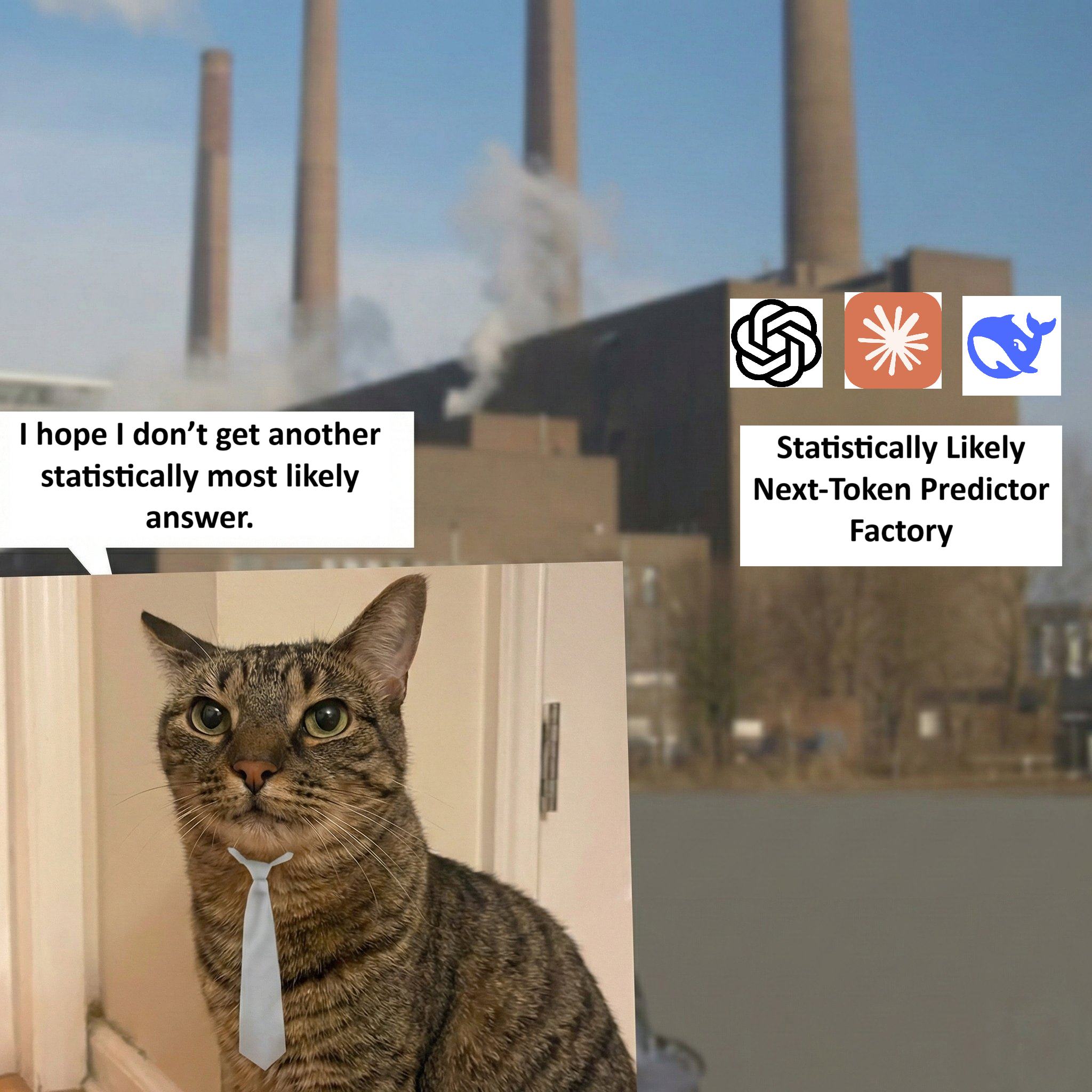
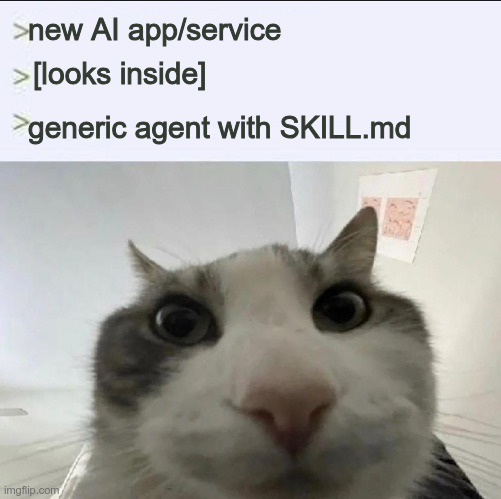
So you're telling me your entire "AI architecture" is just a markdown file with some instructions to an LLM agent? Revolutionary. Groundbreaking. Truly the pinnacle of software engineering. The industry went from microservices, event-driven architectures, and distributed systems to "yeah we just have a SKILL.md file that tells ChatGPT what to do." The cat's expression perfectly captures that mix of confusion and existential dread you feel when you realize half the "AI apps" out there are literally just wrappers around GPT with a fancy prompt. Remember when we used to design actual systems? Yeah, those were the days. Now it's just vibes and prompt templates all the way down.

This Restaurant Analogy Is Brilliant

This Restaurant Analogy Is Brilliant
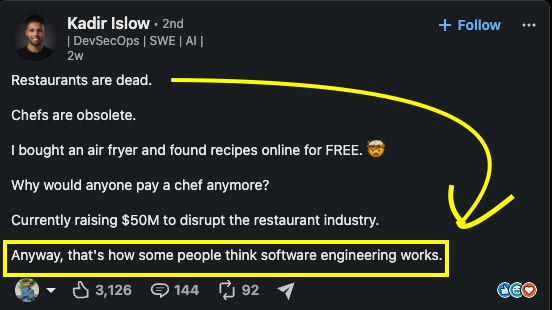
Oh honey, the AUDACITY of comparing software engineers to restaurant workers is sending me! 💀 So apparently some genius venture capitalist looked at the entire culinary industry and said "Restaurants? Dead. Chefs? Obsolete. I have an air fryer and Google, therefore I am Gordon Ramsay." Then they're out here raising $50M to "disrupt" the restaurant industry because clearly, heating up frozen mozzarella sticks at home is revolutionary innovation. And the punchline? That's EXACTLY how people view software engineering now. "Why hire a software engineer when I have ChatGPT and a dream?" Everyone with a laptop and access to Stack Overflow thinks they're the next tech unicorn founder. The sheer DISRESPECT to actual engineers who spent years learning data structures, algorithms, and how to center a div (the hardest part, obviously). The comparison is painfully accurate though—just because you can follow a recipe doesn't make you a chef, and just because you can copy-paste code doesn't make you an engineer. But try explaining that to the person raising millions to build "Uber but for toast" using no-code tools. 🙃

How Sam Altman Sees The World

How Sam Altman Sees The World
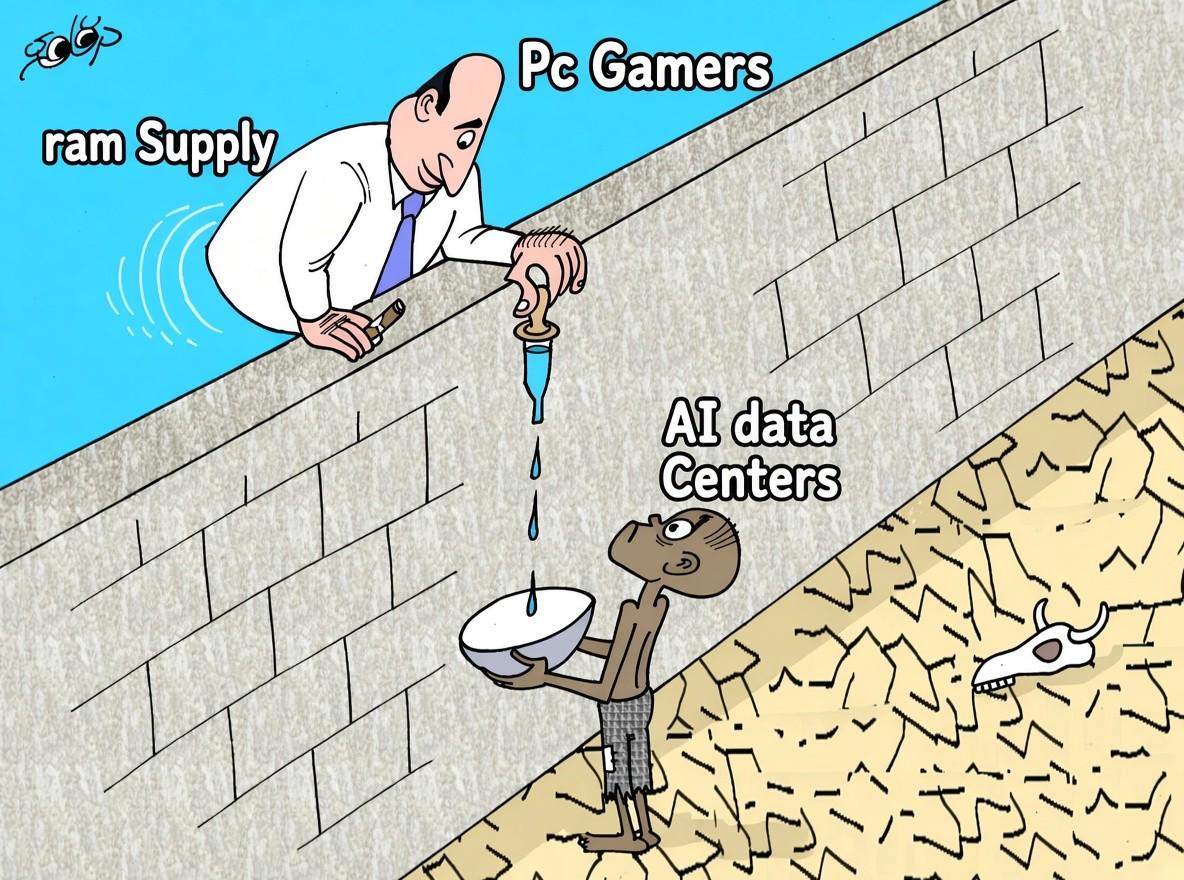
So apparently in Sam Altman's universe, PC gamers desperately hoarding their 64GB of RGB RAM are just tiny drops in the bucket compared to the ABSOLUTELY MONSTROUS ocean of compute power being guzzled by AI data centers. Like, imagine thinking your gaming rig is impressive and then realizing OpenAI's GPUs are out here drinking electricity like it's a casual Tuesday smoothie. The power dynamics are truly *chef's kiss* – PC gamers up top living their best life while AI data centers down below are basically Godzilla waiting for their next meal. The man literally sees the entire global RAM supply as a cute little faucet feeding the infinite void of AI training. Nothing says "we're building AGI" quite like casually treating the world's computing resources like a juice box.

Bring The Whiplash

Bring The Whiplash
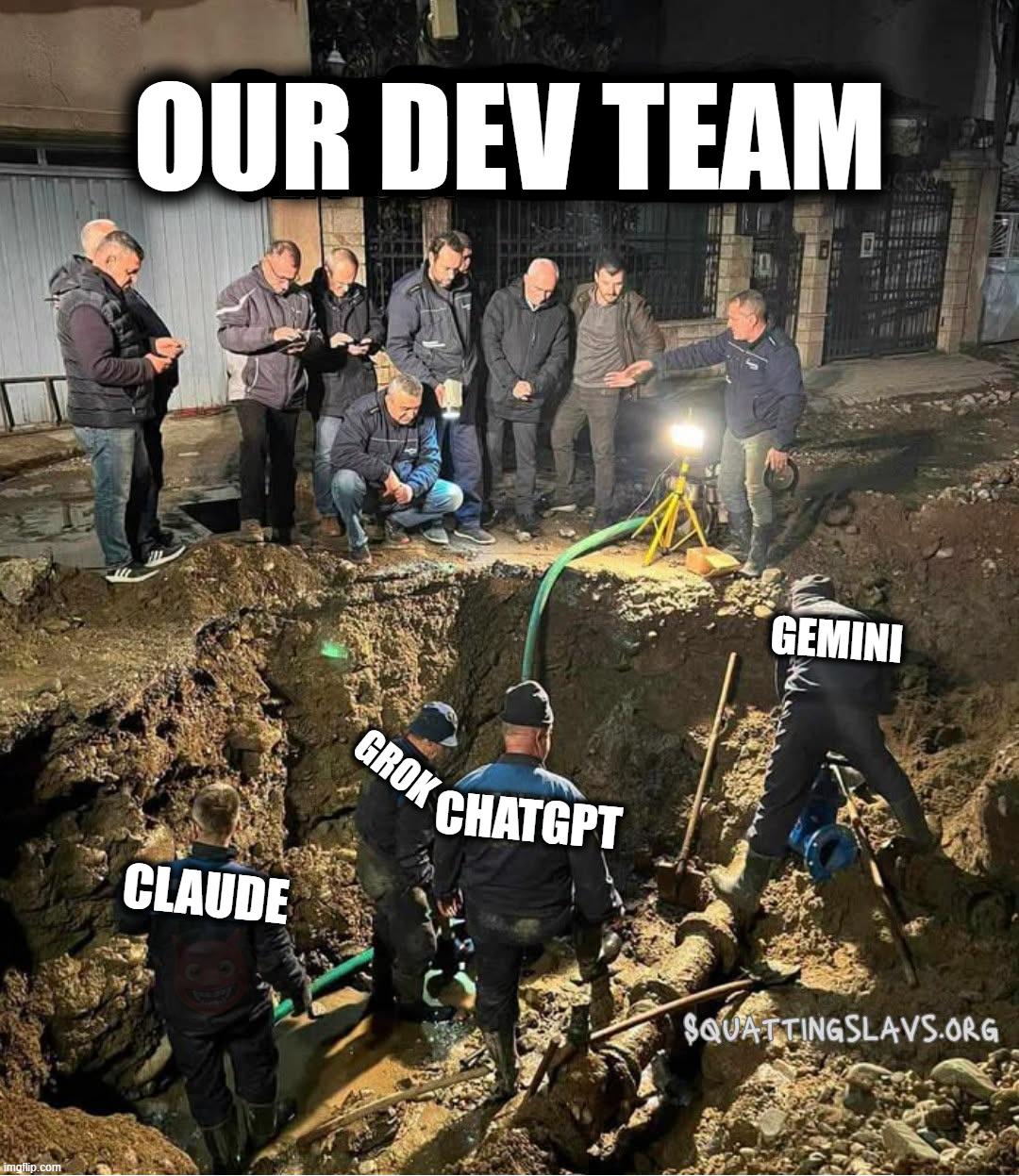
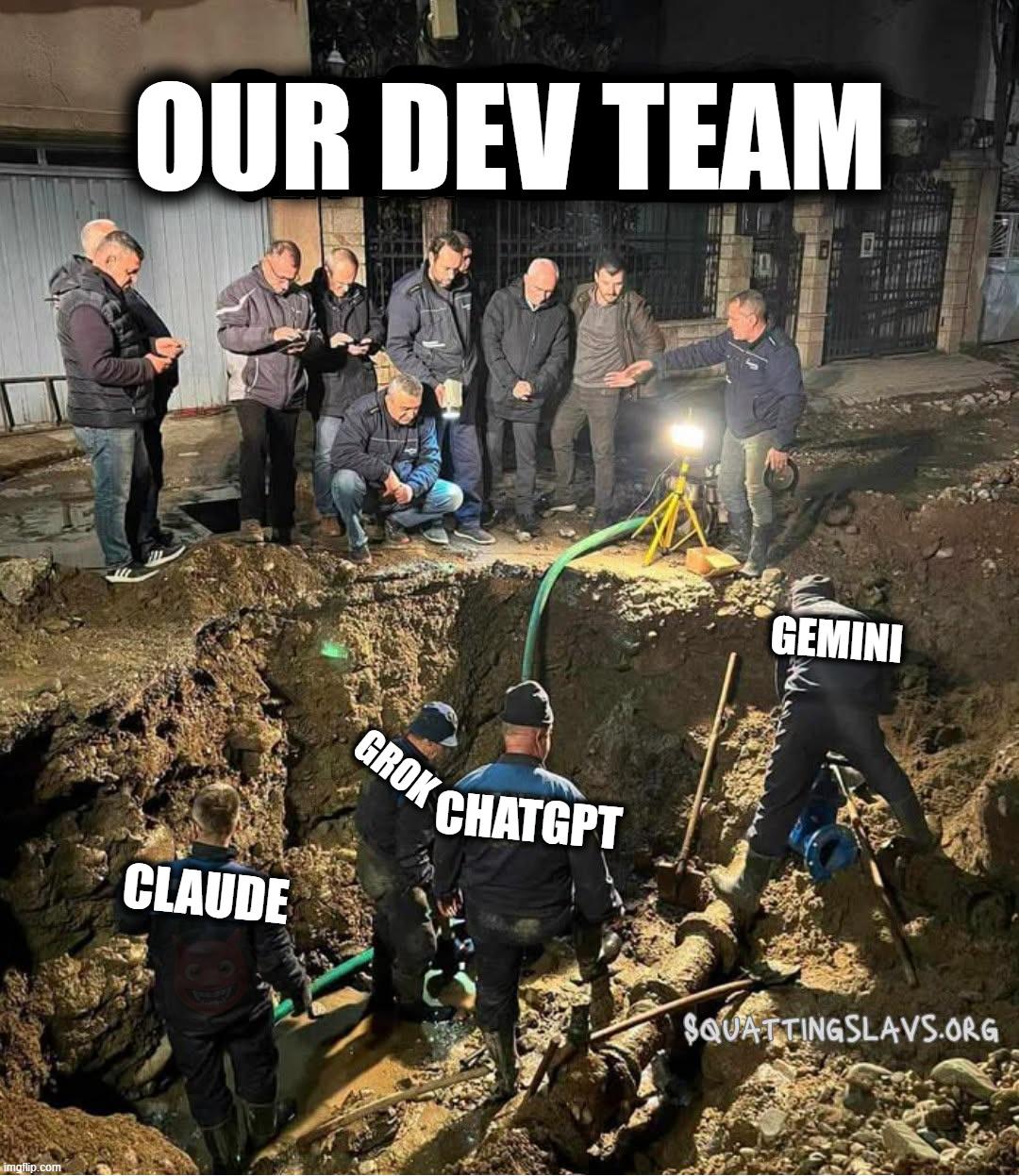
Your entire dev team standing around watching three AI models dig through the codebase like they're excavating an archaeological site. Claude's down there doing the actual work, ChatGPT's pretending to help, and Gemini's got the spotlight thinking it's running the show. Meanwhile, the humans are just spectators now, probably checking their phones to see if their jobs are still listed on LinkedIn. The role reversal is complete. Used to be developers digging through legacy code while management watched. Now it's AI doing the digging while developers supervise. Progress, I guess. At least nobody has to touch that PHP from 2009 anymore.

ASUS TUF Gaming 27” 4K HDR Monitor (VG27UQ1A) – 160Hz, 1ms, Extreme Low Motion Blur Sync, NVIDIA G-SYNC Compatible, AMD FreeSync Premium, 95% DCI-P3, DisplayWidget, 3 yr Warranty

ASUS TUF Gaming 27” 4K HDR Monitor (VG27UQ1A) – 160Hz, 1ms, Extreme Low Motion Blur Sync, NVIDIA G-SYNC Compatible, AMD FreeSync Premium, 95% DCI-P3, DisplayWidget, 3 yr Warranty
27-inch 4K (3840 x 2160) gaming monitor with ultra-fast 160Hz refresh rate designed for professional gamers and immersive gameplay · ASUS Extreme Low Motion Blur Sync (ELMB Sync) technology enables E…

Multiagent Pipeline

Multiagent Pipeline
When your company decides to implement a "sophisticated multiagent AI pipeline," you've got the entire dev team standing around watching three AI models (Claude, ChatGPT, and Gemini) do all the heavy lifting in the trenches while everyone else just... observes. It's like having a construction crew where 90% of the workers are supervisors with clipboards. The real kicker? Those three AIs are literally digging through the mud trying to solve problems while the "dev team" is up top checking their phones, probably asking ChatGPT how to implement ChatGPT. The pipeline architecture here is basically: throw prompts at three different LLMs, hope one of them doesn't hallucinate, and call it "multiagent orchestration" in the sprint review. Bonus points for the guy with the spotlight—that's definitely the PM making sure everyone can "see the progress" while contributing absolutely nothing to the actual work. Welcome to 2024, where your entire codebase is written by AI and your job is to stand around looking concerned.

Hitting My Token Limit

Hitting My Token Limit
That moment when you're deep into a ChatGPT/Claude/Copilot conversation, building the perfect context, and suddenly you hit that dreaded token limit. It's like Velma losing her glasses in Scooby-Doo—completely helpless and unable to function. You've spent 45 minutes crafting the perfect prompt with all your project context, code snippets, and error messages, only to be told "sorry, start a new conversation." Now you gotta copy-paste everything into a fresh chat and pray the AI remembers what you were trying to do. The dependency is real—we've gone from Googling Stack Overflow to being utterly dependent on LLM tokens to get anything done. Pro tip: keep your context window management tighter than your git commits.

Vibe Coding

Vibe Coding
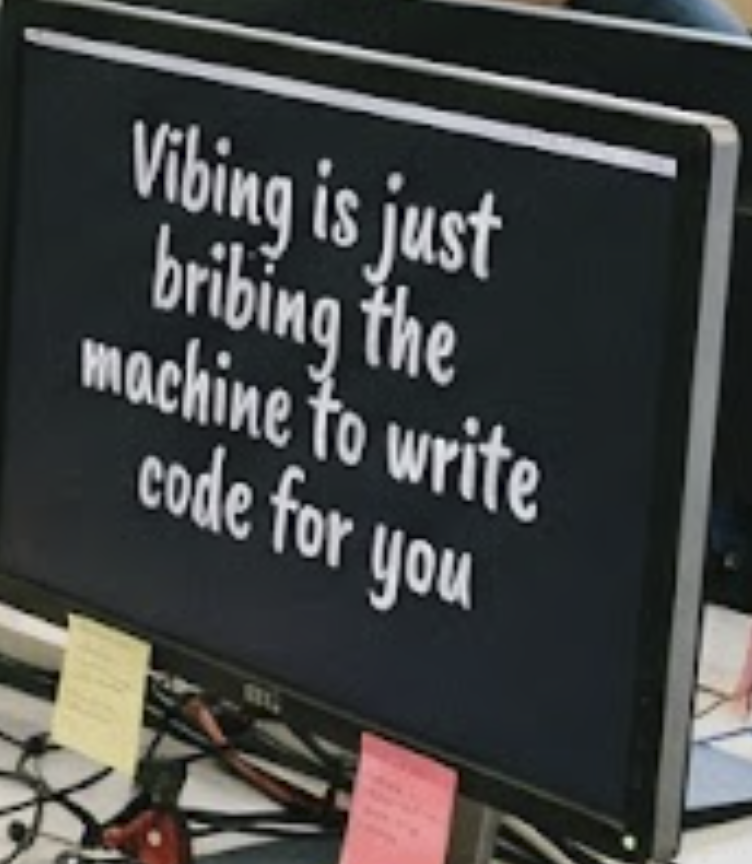
You know you've reached peak efficiency when you realize typing is just unnecessary physical labor. Why waste precious finger calories when you can simply *manifest* the code through sheer vibes? Just sit back, radiate the right energy at your machine, and let the electrons arrange themselves into a functioning codebase. It's like pair programming, except your pair is the universe itself and it's doing all the work. Meditation? Nah. Manifestation? Absolutely. Stack Overflow can't help you here—you need chakras aligned and good energy flows. The post-it notes are probably there to remind you which crystals to use for debugging.

My LLM Prompted Me To Create This

My LLM Prompted Me To Create This
The business cat is nervously eyeing those pollution-spewing smokestacks labeled "Statistically Likely Next-Token Predictor Factory" because he knows exactly what's coming. Every time you ask an LLM a question, it's not actually reasoning or understanding—it's just playing an incredibly sophisticated game of "what word comes next?" based on probability distributions. So when you ask ChatGPT or Claude something nuanced, there's always that lurking dread that instead of a thoughtful answer, you'll get the statistically most probable response that sounds confident but is completely hallucinated. It's like asking a parrot that's read the entire internet—sure, it sounds smart, but it's fundamentally just predicting tokens based on training data patterns. The factory imagery is chef's kiss because it captures how these models are literally industrial-scale probability machines churning out tokens. No consciousness, no real understanding—just pure statistical inference at massive scale. And yet here we are, trusting them to write our code, debug our apps, and explain complex concepts. What could possibly go wrong? 🎲

We Are Just Bricks In The Wall Now

We Are Just Bricks In The Wall Now
The tech industry has officially reached peak absurdity when someone unironically asks how you can code without "eating your tokens." Like, excuse me, are we developers or are we Cookie Monster at an LLM buffet? The confused gentleman in the picture perfectly captures the existential crisis of realizing that the new generation of "programmers" might just be prompt engineers feeding tokens to AI models instead of, you know, actually writing code. The question implies that coding is now somehow dependent on consuming API tokens like they're some kind of digital sustenance. Gone are the days when you'd eat pizza and Mountain Dew while debugging at 3 AM. Now apparently you need to "eat tokens" to ChatGPT, Claude, or Copilot just to get through your daily standup. The implication that you can't code without burning through your token allowance is both hilarious and slightly terrifying for those of us who remember when Stack Overflow copy-paste was considered the height of coding assistance.

The Time To Act Is Now

The Time To Act Is Now
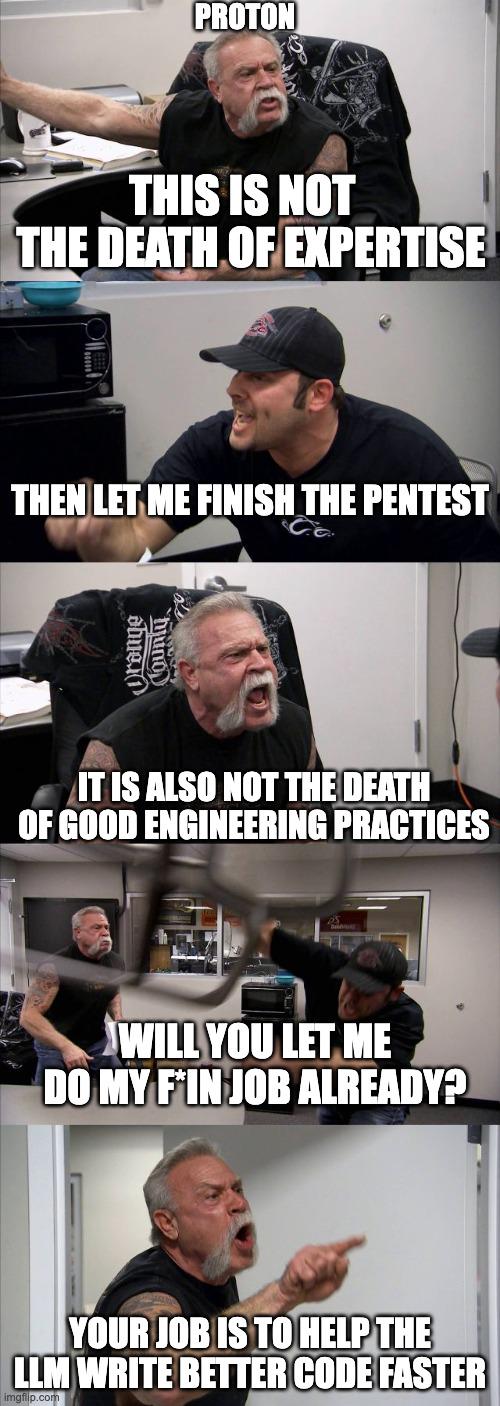
When you're trying to maintain some semblance of software craftsmanship but management just discovered ChatGPT can write code. The senior dev is desperately clinging to sanity, insisting that Proton's demise isn't about losing expertise or abandoning proper engineering practices like testing, documentation, and code reviews. But nope—your new job description is basically "LLM whisperer." Forget about that carefully architected system you've been building. Forget about design patterns, SOLID principles, and that beautiful test suite. Just let the AI vomit out some code and ship it. What could possibly go wrong? The real kicker is how fast companies are pivoting from "we need experienced engineers" to "why can't we just prompt engineer our way to success?" The junior dev energy of "let me finish the pentest" while simultaneously throwing all security and quality standards out the window is just *chef's kiss*.

Free Software Is About To Become More Interesting

Free Software Is About To Become More Interesting
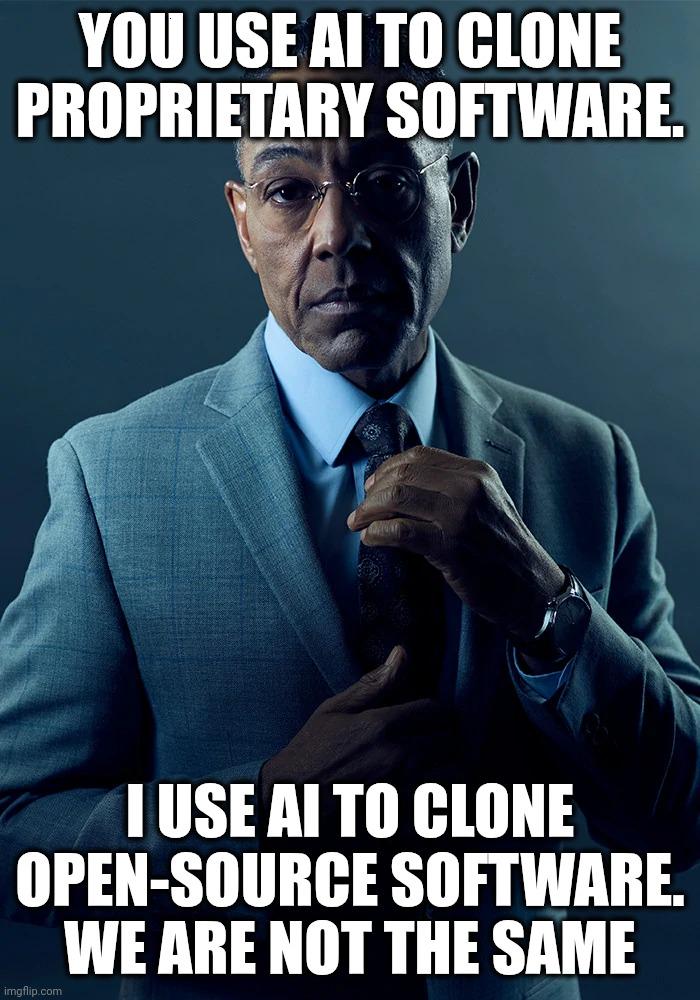
Using AI to reverse-engineer closed-source software so you can "borrow" features? Morally questionable, legally gray, definitely happening in some Discord server right now. Using AI to study open-source code and contribute back to the community? That's just efficient learning with extra steps. One's piracy with a ChatGPT wrapper, the other's collaborative development with an AI assistant. The real difference is the license agreement you're ignoring versus the MIT license you're actually reading for once. Richard Stallman would have opinions about this, and they'd probably take 47 pages to explain.

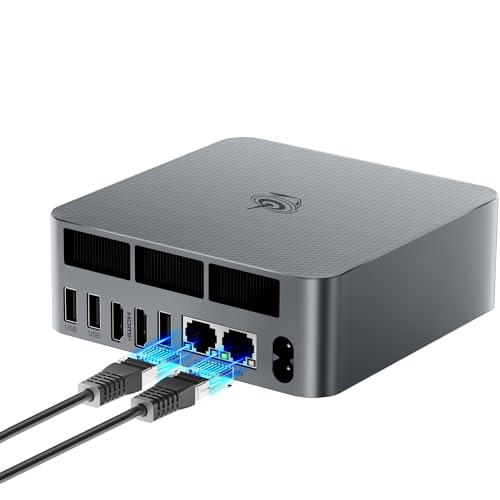
Beelink Mini PC, SER5 AMD Ryzen 5 5500U(7nm, 6C/12T) up to 4.0GHz | Mini Computer 16GB DDR4 RAM 480GB NVME SSD, Micro PC 4K@60Hz Dual Display, WiFi6/BT5.2/HTPC/W-11 Pro

Beelink Mini PC, SER5 AMD Ryzen 5 5500U(7nm, 6C/12T) up to 4.0GHz | Mini Computer 16GB DDR4 RAM 480GB NVME SSD, Micro PC 4K@60Hz Dual Display, WiFi6/BT5.2/HTPC/W-11 Pro
🔥【Excellent Performance】 Beelink SER5 equipped with AMD Ryzen 5 5500U (up to 4.0GHz), which adopts an 6-core/12-thread. The base frequency is 2.1GHz / Max turbo frequency can reach 4.0GHz. Ensure sea…

Do You Have Any Idea

Do You Have Any Idea
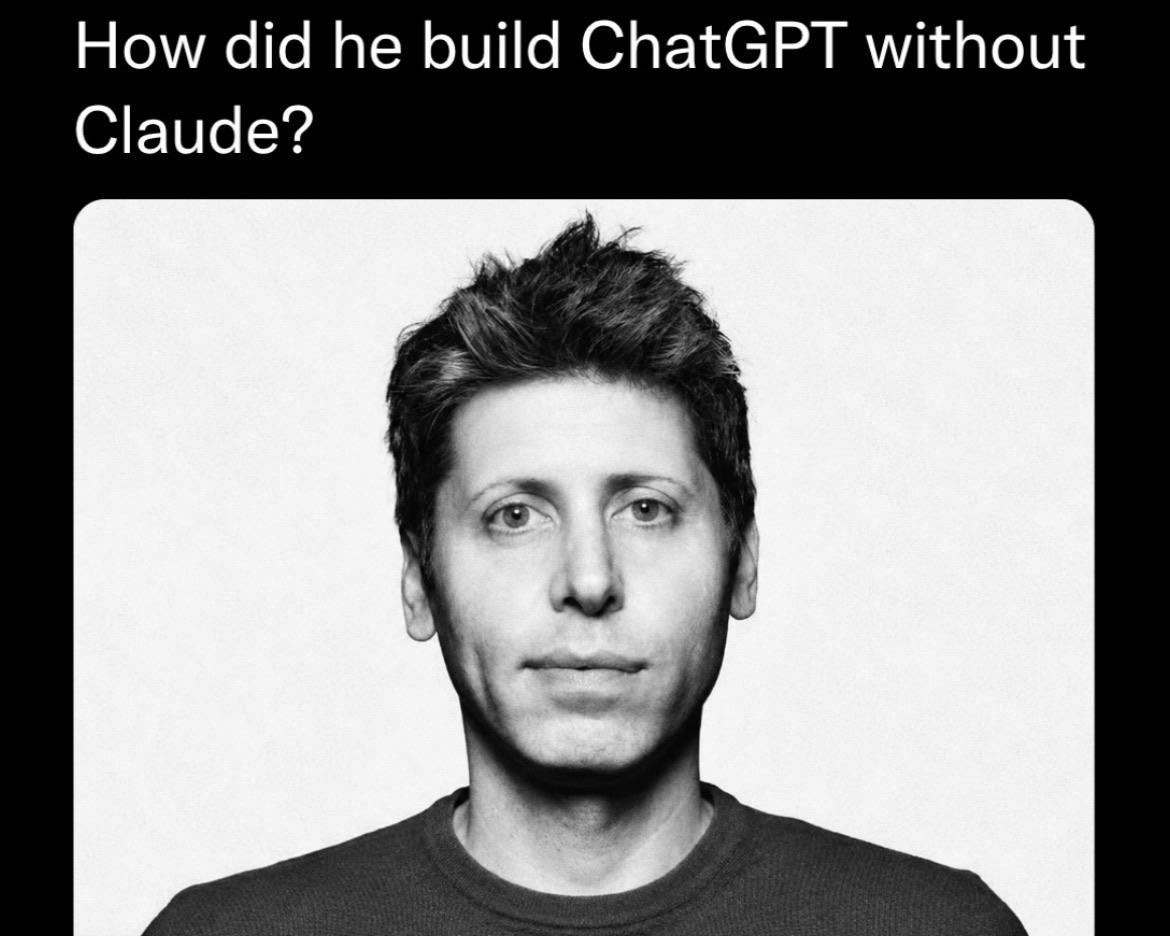
The question that keeps Sam Altman up at night. ChatGPT was built using Claude's architecture as a foundation? That's like discovering your competitor's entire business model was bootstrapped from your own product. The irony is delicious. For context: Claude is Anthropic's AI assistant, positioned as ChatGPT's main competitor. The idea that OpenAI somehow reverse-engineered or used Claude to build ChatGPT is technically backwards (ChatGPT came first), which makes this even funnier. It's the AI equivalent of accusing someone of plagiarizing your homework when they turned theirs in before you even enrolled in the class. The existential confusion on display here is what happens when the AI wars get so meta that even the timeline stops making sense.