


Learning The Raspberry Pi Foundation's C/C++ SDK For The Pico

Learning The Raspberry Pi Foundation's C/C++ SDK For The Pico
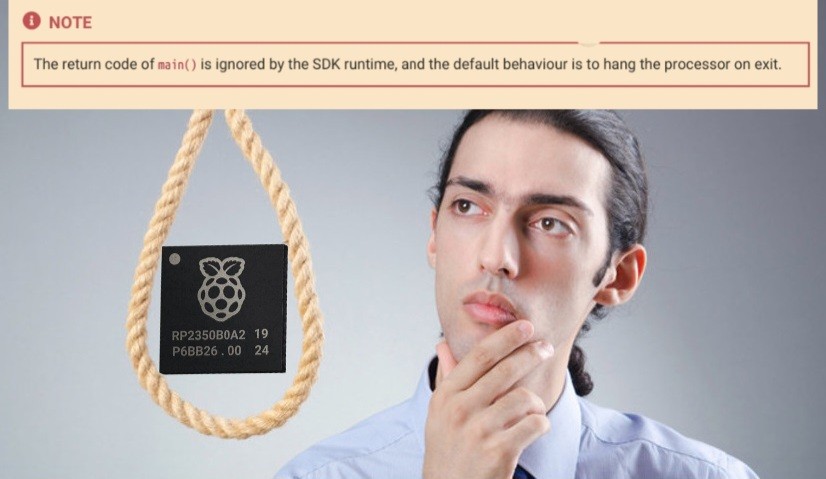
Nothing says "embedded systems excellence" quite like discovering your microcontroller will literally hang itself if your main() function dares to return. The Raspberry Pi Pico SDK just casually mentions that returning from main() causes the processor to hang on exit, as if that's a totally normal design choice. Because why would you ever want graceful program termination on a $4 microcontroller? The visual of the Pico chip in a noose perfectly captures that moment when you realize your embedded programming assumptions from desktop development mean absolutely nothing here. No cleanup, no exit codes, just... eternal limbo. It's the embedded equivalent of "you can check out any time you like, but you can never leave." Welcome to bare-metal programming, where the documentation reads like a threat and your processor has commitment issues.

Java For Shell

Java For Shell
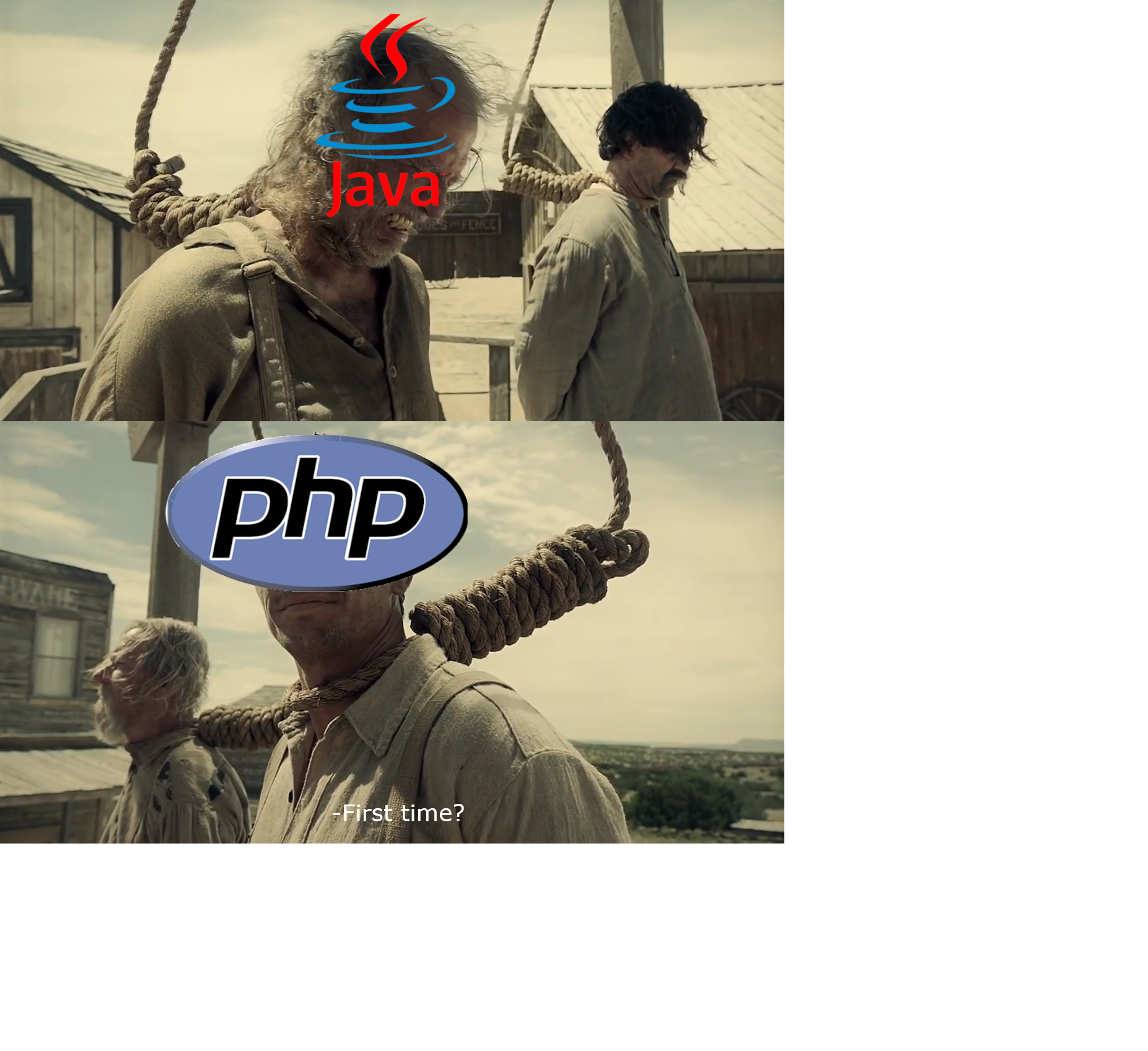
Nothing says "I've been through some stuff" quite like watching Java get hanged while PHP nervously asks if it's your first execution. Java's been the enterprise workhorse for decades, taking all the blame for verbose code and boilerplate hell, while PHP just casually survived the early web era by being everywhere despite everyone roasting it. The hangman's noose is basically a metaphor for how the dev community treats these languages—Java gets the corporate death sentence for being too ceremonious, but PHP? PHP's been to the gallows so many times it's basically immune at this point. "First time?" indeed. Both languages have survived more hate threads than you've had stand-ups.

Harden Attack Surfaces

Harden Attack Surfaces
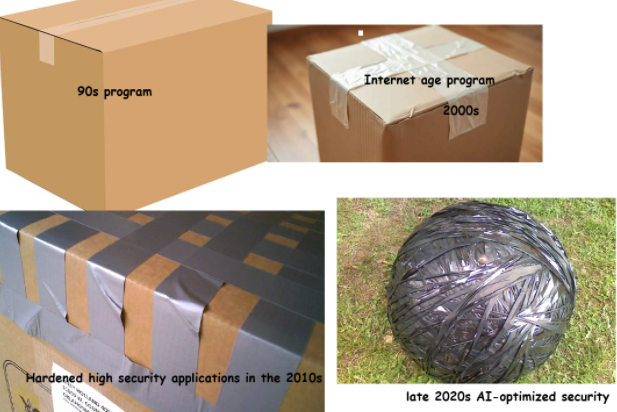
The evolution of security hardening visualized through increasingly paranoid packaging strategies. Started with a simple cardboard box in the 90s when nobody cared about security because the internet was basically just nerds emailing each other. Then came the 2000s with some bubble wrap—cute, we're starting to worry about attacks. By the 2010s, security teams went full duct tape mode with layers upon layers of defense-in-depth strategies. But now? With AI-optimized security in the late 2020s, we've basically wrapped everything in so much protective tape that even WE can't access our own systems anymore. The irony is that the package is now so hardened it's completely unusable. Mission accomplished, I guess? At least the hackers can't get in either... because nobody can.

Yeah Lgtm

Yeah Lgtm
When you're reviewing a 2000+ line PR at 4:47 PM on a Friday and your brain has already left for the weekend. That "LGTM" (Looks Good To Me) is doing some heavy lifting here. The real code review process: scroll through the diff, see some changes that probably won't break production (probably), type those four magic letters, and hit approve. Will you actually catch that off-by-one error in the nested loop? The memory leak in the async handler? The SQL injection vulnerability hiding in plain sight? Not today, Satan. Bonus points if this is a 275-file refactor that touches core business logic. Ship it! What could go wrong? 🚢

ASUS ROG Strix 34” Ultrawide QD-OLED HDR Gaming Monitor (XG34WCDG) - 3440x1440, 175Hz, 0.03ms, OLED Care Pro, True 10-bit, G-SYNC Compatible, DisplayWidget, Extreme Low Motion Blur, 3 yr Warranty

ASUS ROG Strix 34” Ultrawide QD-OLED HDR Gaming Monitor (XG34WCDG) - 3440x1440, 175Hz, 0.03ms, OLED Care Pro, True 10-bit, G-SYNC Compatible, DisplayWidget, Extreme Low Motion Blur, 3 yr Warranty
34-inch 3440 x 1440 QD-OLED gaming monitor with 175Hz refresh rate and 0.03ms response time · New ASUS OLED Care Pro functions with Neo Proximity Sensor that precisely detects when the user is away, …

Technically It Compiles

Technically It Compiles
Zero errors? Ship it. The fact that your compiler just vomited 847 warnings is merely a suggestion, not a requirement. It's like your code is screaming "I have concerns!" but you're already pushing to production because technically, it builds. Warnings are just the compiler's way of being dramatic. Sure, maybe you're using deprecated functions, have unused variables scattered everywhere, and your type conversions are questionable at best. But does it compile? Yes. Case closed. The "this is fine" energy while sitting in a room engulfed in flames is the perfect representation of every developer who's ever silenced warnings with compiler flags instead of, you know, actually fixing them. Future you will definitely thank present you for this decision.

So Now That The AI Bubble Is Showing Cracks, You Want To Be A 'Gamer First' Company And Keep The Overinflated Hardware Prices? Nah I'll Just Playing My Steam Backlog

So Now That The AI Bubble Is Showing Cracks, You Want To Be A 'Gamer First' Company And Keep The Overinflated Hardware Prices? Nah I'll Just Playing My Steam Backlog
GPU manufacturers spent years jacking up prices to absurd levels because "AI workloads" and "machine learning infrastructure" became the golden goose. Gamers? Yeah, they were just collateral damage paying $1,600 for a card that should've cost $800. Now that the AI hype train is derailing and those sweet enterprise contracts are drying up, suddenly these companies remember gamers exist and want to pivot back with their "we've always cared about gaming" PR nonsense. Except they conveniently forgot to adjust those prices back down. Meanwhile, PC gamers are sitting there with a Steam library containing 847 games they've never touched, realizing their 5-year-old GPU can still run most of their backlog just fine. Why drop two grand on new hardware when you haven't even started that copy of Witcher 3 from the 2019 sale? The ultimate power move: financial discipline disguised as gaming patience.

Recursion

Recursion
So you crack open a book about recursion, and what's inside? The same exact book. And inside that book? Yep, another copy of itself. The book literally demonstrates recursion by being recursive. It's the programming equivalent of "to understand recursion, you must first understand recursion." The best part? You can see the slight realization dawning on his face in the last panel. That moment when the concept clicks and you're not sure if you're enlightened or just trapped in an infinite loop of existential dread. Just remember to add a base case or you'll be stuck reading forever—your call stack can only handle so much.

Forget SSDs, I Just Upgraded To A 3.5" Fluffy Disk

Forget SSDs, I Just Upgraded To A 3.5" Fluffy Disk
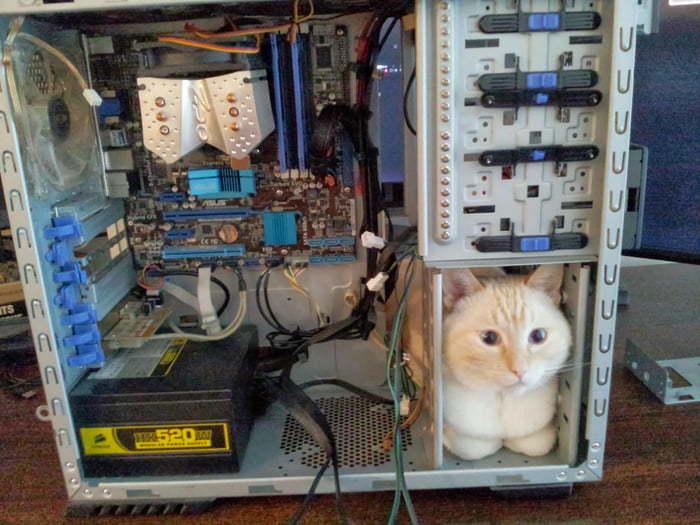
When your PC case has a 3.5" bay and you decide to optimize for warmth instead of write speeds. The cat's sitting there like it's the most natural storage solution in the world, probably running at a solid purr-formance of 7200 RPM (rubs per minute). Sure, SSDs are fast, but can they generate heat, provide emotional support, AND occasionally knock your USB cables loose? Didn't think so. This is what peak engineering looks like—liquid cooling is overrated when you have a self-heating, self-maintaining biological component that doubles as a debugging rubber duck. The real question is whether this setup supports hot-swapping or if you need to schedule downtime for feeding and litter box maintenance.

Thank You For Your Service

Thank You For Your Service
Console gamers out here doing the Lord's work by beta testing GTA6 before it drops on PC. While we're sitting pretty with our mechanical keyboards and 144Hz monitors, they're out there in the trenches finding all the game-breaking bugs, glitches, and performance issues. By the time Rockstar finally graces us with the PC release (probably 18 months later), the game will be polished to perfection thanks to these brave souls. It's basically free QA labor, but with extra steps and a $70 price tag. Respect to the troops.

Andaz Press Funny 11oz. Stainless Steel Campfire Coffee Mug Gag Gift, Playful, World's Okayest Web Developer, 1-Pack, Camping Camp Cup with Gift Box with Gift Box

Andaz Press Funny 11oz. Stainless Steel Campfire Coffee Mug Gag Gift, Playful, World's Okayest Web Developer, 1-Pack, Camping Camp Cup with Gift Box with Gift Box
HILARIOUS GIFT FOR COFFEE LOVERS & CAMPERS: Bring laughter to every sip with this funny camping coffee mug that’s perfect for coffee lovers who appreciate humor and adventure. Great for birthdays, ho…

In A Nut Shell

In A Nut Shell
Just another Tuesday in cybersecurity. You patch one CVE and suddenly seventeen more spawn like you're playing whack-a-mole with vulnerabilities. The developer sitting there with their morning coffee watching the CVE notifications roll in faster than they can compile their code. By the time 2026 rolls around, we'll probably need a separate database just to store all the CVE IDs from that year alone. The yellow lemons perfectly represent the never-ending cascade of security patches—sour, relentless, and somehow always multiplying. At least they're all documented with proper CVE identifiers, right? That's what we tell ourselves to sleep at night.

Now You Know The Real Reason

Now You Know The Real Reason
So Jensen Huang's legendary leather jacket collection isn't a fashion statement—it's just memory leak paranoia. Every C programmer knows that calling free() after malloc() is technically optional if you enjoy watching your RAM slowly evaporate into the void. Apparently Jensen decided to apply this philosophy to his personal life and just... never freed himself from his commitments. The man's been running for decades without garbage collection, and honestly? Respect. That's some serious uptime.

Comparisons Are Odorous

Comparisons Are Odorous
The eternal showdown between running your own distributed computing cluster at home versus renting a small country's GDP worth of GPU time from Big Tech. On one side, you've got the chad homelab warrior with their recycled hardware, zero cloud bills, and complete autonomy. On the other, there's the crying AI startup founder who needs to take out a second mortgage just to train their model, can't keep enough RAM in their laptop, and has to write a paragraph-long justification to finance every time they spin up another instance. The real kicker? That "nice idle RAM" comment. Yeah buddy, enjoy your 32GB while the cloud bros are explaining to their investors why they need another $2M to raise some primes. Meanwhile, distributed computing has been quietly chugging along since the 90s, proving you don't need a nuclear power plant to do science—just patience and a willingness to hear your spouse complain about the server noise. The monopoly man icon really seals it. Nothing says "sustainable business model" like AWS bills that require their own line of credit.