

8 Characters? How About We Make It 16?

8 Characters? How About We Make It 16?
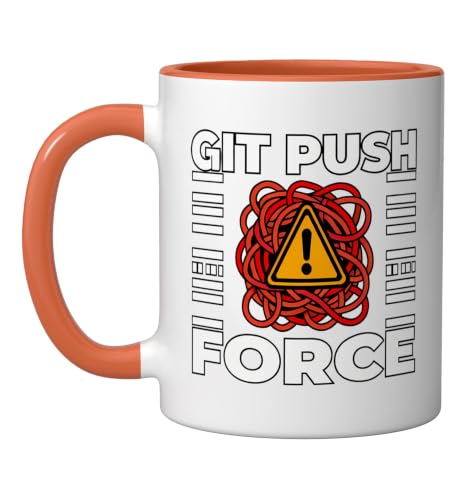
When password requirements get so absurdly complex that you need a physical weapon to remember them all. The bungee whip here represents every user's relationship with modern password policies—stretched to the breaking point and ready to snap back at any moment. Security teams keep adding requirements like they're collecting Pokémon: "Gotta enforce 'em all!" Meanwhile, users are out here writing passwords on sticky notes because nobody can remember "P@ssw0rd123!MyD0g$N@me" without having a stroke. The irony? All these requirements often make passwords LESS secure because people just increment numbers at the end or use predictable patterns to meet the criteria. Fun fact: The guy who invented password complexity requirements, Bill Burr, actually apologized in 2017 for making everyone's life miserable. Turns out length matters way more than special characters. Who knew?

DLSS 5 Be Like:

DLSS 5 Be Like:
NVIDIA's DLSS has evolved from "upscaling low-res frames" to "generating an entire game from a single pixel and your GPU's fever dreams." The left side shows a normal tree. The right side shows what happens when AI gets a little too creative with frame generation—suddenly your peaceful forest scene has gained sentience and is staring into your soul. At this rate, DLSS 6 will just hallucinate the entire game while you're still installing drivers.

I Thought It Was An April Fools Joke

I Thought It Was An April Fools Joke
Game developers spent literal years painstakingly scanning Harrison Ford's face to recreate Indiana Jones with photorealistic detail. Then Nvidia drops their AI face generation tech and just... casually does it instantly. Bethesda's out here endorsing technology that basically makes their entire facial scanning pipeline obsolete. It's like spending months hand-crafting a masterpiece only to watch someone 3D print the same thing in 5 minutes. The look on Indiana Jones' face says it all – that's the exact expression of every technical artist who just realized their job got automated. Nothing says "we support innovation" quite like publicly backing the tech that makes your own workflow look like you're still using punch cards.

Man I Love Job Search

Man I Love Job Search
The job market for junior devs visualized as a bipartite graph where literally every company is connected to the same pool of "normal people" candidates, but there's exactly ONE company with a direct edge to that mythical "femboy with 500 IQ" node. The graph structure perfectly captures the recruiting paradox: companies claim they want diverse talent and fresh perspectives, yet somehow they're all competing for the exact same candidate profile. Meanwhile, that one enlightened company has discovered the untapped talent pool and secured themselves a genius who probably codes in Rust, uses Arch BTW, and can solve LeetCode hards while applying eyeliner. The rest of us normies are stuck in a many-to-many relationship nightmare where every application goes into the void. It's giving "we want 5 years of experience in a technology that's been out for 2 years" energy.

Who Hasn't Typed A Risky Command? Throw The First Stone!

Who Hasn't Typed A Risky Command? Throw The First Stone!
Ah yes, the classic escalation from "let me try to be specific" to "screw it, nuke everything from orbit." God literally getting permission denied on his own server is chef's kiss irony. The progression is beautiful: first trying to delete just "devil", then "devil*", then "*devil.*", then the desperate "ANYTHING", then "*.*" and finally... the forbidden fruit: sudo rm -rf *.* The result? Biblical flood 2.0, but this time it's not intentional—just a sysadmin who got frustrated with permissions. Even the Almighty isn't immune to the rage-induced sudo moment that wipes out civilization. At least he didn't run it from root directory, or we wouldn't even have the ocean left. Fun fact: The -rf flags stand for "recursive" and "force"—basically "delete everything inside and don't ask questions." It's the digital equivalent of "burn it all down and salt the earth."

HP Will Stick An SSD Anywhere

HP Will Stick An SSD Anywhere
HP engineers really looked at their motherboard layout, saw they had three perfectly good SATA ports, and decided "nah, let's just dangle this M.2 SSD vertically like a Christmas ornament." Because why use standard mounting when you can create a gravity-defying installation that makes every tech support person question their career choices? The best part? There's literally an M.2 slot RIGHT THERE on the board, but HP said "too easy" and went with the aesthetic of a drive just... hanging out. It's like they're testing how much abuse an SSD can take before it files for workers' comp. Cable management? Never heard of her. This is what happens when your hardware design team is paid by the hour and really wants to stretch that budget.

Real Things

Real Things
The holy trinity of programmer survival: coffee, internet, and a good salary. Remove one ingredient and watch the whole operation collapse like a poorly implemented recursive function without a base case. First panel shows the ideal state—all three inputs present, clean output in one week. Second panel? No coffee. Suddenly that one week becomes one month and the programmer looks like they've been debugging segfaults for 72 hours straight. Third panel removes internet access. Now we're in full panic mode, drowning in Stack Overflow withdrawal, surrounded by dusty programming books from 2003, staring at an infinity symbol because the product will literally never ship. You can almost hear the desperate googling of "how to center a div offline." Final panel takes away the good salary. One year later, you get a product so bug-ridden it makes Windows Vista look stable. The programmer has aged 15 years, probably spent most of that time updating their resume and doing the absolute minimum to avoid getting fired. Turns out you can't just remove critical dependencies from the production environment and expect the same results. Who knew?

Weekend Tech Humor

Weekend Tech Humor
Two very good boys staring at cookies with pure determination, claiming to be from tech support and they're here to delete your cookies. The irony? They look way more trustworthy than actual tech support scammers calling about your "Windows license." The double meaning hits different when you realize browser cookies are actually something tech support legitimately tells you to delete, but these pups are taking a more... direct approach to cookie deletion. Through their digestive system. Honestly, I'd trust these two with my session tokens before I'd trust half the third-party analytics scripts on most websites.

How Software Is Used

How Software Is Used
The user stands confidently on a tiny rock, using about 2% of the software's capabilities, while the developer sits awkwardly crammed on a massive boulder, intimately familiar with every edge case, deprecated function, and that one weird bug in the authentication module that only triggers on Tuesdays. You spent six months building a feature-rich platform with OAuth2, WebSocket support, and a custom caching layer. Users? They're just happy the login button is blue. Meanwhile, you're over here knowing exactly which database index is slowing down queries by 3ms and why the CI/CD pipeline fails when someone names a branch with an emoji. The size difference between those rocks perfectly captures the gap between "what users need" and "what developers know exists." It's like giving someone a Ferrari and watching them use it exclusively to drive to the mailbox.

Just Need Some Fine Tuning I Guess

Just Need Some Fine Tuning I Guess
AI company: "Yeah, our model doesn't actually comprehend anything, it's just really good at pattern matching and statistical predictions based on training data." Tech bro CEO with zero technical knowledge: "Perfect! Fire everyone and let's pivot to healthcare!" Because nothing screams "responsible AI deployment" quite like replacing your entire medical staff with a glorified autocomplete that learned to speak by reading the internet. What could possibly go wrong when you're diagnosing life-threatening conditions with a system that fundamentally doesn't understand what a "disease" even is? The real joke here is how accurately this captures the current AI hype cycle: companies rushing to slap LLMs onto every problem without understanding their limitations. Sure, your chatbot can write poetry and debug code, but maybe—just maybe—we should pump the brakes before letting it prescribe medication.

Slow Servers

Slow Servers
When your music streaming service is lagging, the only logical solution is obviously to physically assault the server rack with a hammer. Because nothing says "performance optimization" quite like percussive maintenance on production hardware. The transition from frustrated developer staring at slow response times to literally walking into the server room with malicious intent is the kind of escalation we've all fantasized about. Sure, you could check the logs, profile the database queries, or optimize your caching layer... but where's the cathartic release in that? The beer taps integrated into the server rack setup really complete the vibe though. Someone designed a bar where the servers ARE the decor, which is either brilliant or a health code violation waiting to happen. Either way, those servers are about to get hammered in more ways than one.

Shakespeare Of Our Time

Shakespeare Of Our Time
Garry Newman just dropped the most poetic take on AI coding tools I've ever heard. The guy who built Garry's Mod basically said relying too heavily on AI for programming is like watching so much adult content that you can't... perform creatively anymore. And honestly? He's not wrong. When you let Copilot or ChatGPT write all your code, your brain stops doing the heavy lifting. You lose that ability to architect solutions from scratch, to think through problems, to actually create instead of just prompting. It's the difference between being a chef and being really good at ordering DoorDash. The comparison is crude but brilliant. Both involve instant gratification that atrophies your natural abilities. Your problem-solving muscles need exercise, not an autocomplete button. Sure, AI tools are useful—but if you can't code without them, you're not a developer. You're a prompt engineer with a dependency problem.