

How Do You Pronounce It?

How Do You Pronounce It?
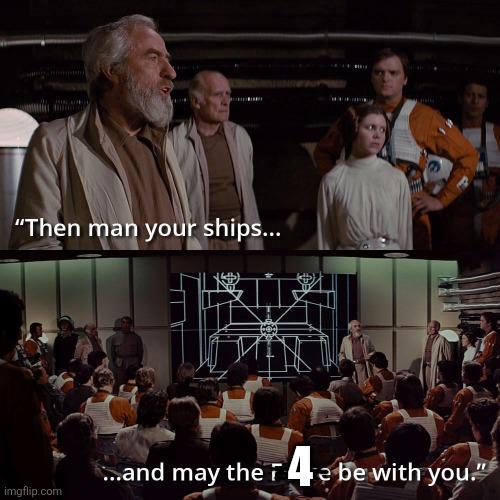
The tech world's most pointless debate that somehow causes more arguments than tabs vs spaces. Is it "day-ta" or "dah-ta"? The answer depends entirely on whether you went to school in the US or literally anywhere else on the planet. Liam's response is gold because your brain automatically reads both pronunciations differently in the same sentence. It's like that GIF/JIF war, except nobody's built an entire career around being pretentious about data pronunciation... yet. Fun fact: The Latin origin "datum" suggests "dah-ta" is technically more correct, but good luck explaining etymology to your PM during standup when they ask about the "day-ta pipeline."

The One And Only Measurement

The One And Only Measurement
So apparently the ONLY scientifically valid metric for measuring code quality is WTFs per minute during code review, and honestly? The accuracy is TERRIFYING. Good code gets you maybe one confused "WTF" every few minutes. Bad code? You're drowning in a tsunami of "WTF IS THIS?!" and "DUDE WTF" faster than you can say "technical debt." It's like the difference between a gentle rain and a category 5 hurricane of confusion. Forget cyclomatic complexity, forget test coverage—if your teammate is muttering expletives at a rate that could power a small generator, you KNOW you've written some truly cursed garbage. The people have spoken, and they're screaming WTF.

Me A Irl

Me A Irl
You know that feeling when you're staring at your codebase trying to make sense of what past-you was thinking? That's the inflatable tube man energy right there. Just flailing around desperately hoping something will click. Then you look at the actual dependency graph of your project and it's this beautiful nightmare of spaghetti connections that would make a bowl of ramen jealous. Every service talks to every other service, circular dependencies everywhere, and you're just there begging the universe for a breakthrough moment. Spoiler alert: it never comes. You just add another line to the chaos and call it a day.

The Urge Is So Real

The Urge Is So Real
Production is on fire, users are screaming, and your manager is breathing down your neck about that critical bug. But wait—is that a nested if statement from 2018? Some variable names that make zero sense? A function that's doing seventeen things at once? Every developer knows that moment when you open a file to fix one tiny bug and suddenly you're possessed by the spirit of clean code. The rational part of your brain is yelling "JUST FIX THE BUG AND GET OUT" but your fingers are already typing "git checkout -b refactor/everything-because-i-have-no-self-control". Spoiler alert: you're gonna hit that refactor button, spend 4 hours renaming variables and extracting functions, accidentally break three other things, and then sheepishly revert everything at 6 PM. We've all been there. Some of us are still there.

One Big Mac Coming Up, Sir

One Big Mac Coming Up, Sir
Customer walks into McDonald's and politely orders a Big Mac. McDonald's employee, being the absolute OVERACHIEVER they are, responds with the hexadecimal equivalent: FF:FF:FF:FF:FF:FF . Because why use simple human language when you can flex your networking knowledge and serve up a broadcast MAC address instead? Nothing says "here's your burger" quite like addressing EVERY device on the local network simultaneously. The customer's face says it all – they just wanted a sandwich, not a lesson in layer 2 networking protocols. Fun fact: FF:FF:FF:FF:FF:FF is the broadcast MAC address that sends packets to all devices on a network segment. So technically, EVERYONE is getting that Big Mac. Communist burger distribution at its finest.

Microsoft Always Doing Me Dirty

Microsoft Always Doing Me Dirty
Every single time. You just need to nudge that image a millimeter to the left. Simple, right? Word's already sweating. You reassure it—and yourself—that nothing bad will happen. Just a tiny adjustment. But deep down, you both know the truth. The moment you touch that image, Word unleashes chaos. Text that was perfectly formatted? Now it's on page 47. Your carefully crafted tables? Scattered across dimensions. The image itself? Probably embedded in the footer now. And your page breaks? They've achieved sentience and are actively working against you. We've sent rovers to Mars, trained AI to write code, but Microsoft Word's image positioning remains humanity's greatest unsolved mystery. Just use LaTeX at this point—or better yet, Google Docs and accept your fate as a cloud peasant.

We Can't Say Clanker Anymore

We Can't Say Clanker Anymore
Someone got their GitHub issue closed with the most savage line in open-source history: "Judge the code, not the coder. Your prejudice is hurting matplotlib." The drama? A contributor got flagged as an AI agent based on their website, and the issue was closed. The maintainer responded with a blog post about "gatekeeping behavior" and dropped that absolute mic-drop of a quote. The title references Star Wars where "clanker" was the Clone troopers' slur for battle droids—basically calling someone a bot. Except here, the accused "clanker" is actually human and fighting for their right to contribute. The irony is chef's kiss: we've reached peak 2024 where you need to prove you're NOT an AI to participate in open source. Plot twist: the "first-contribution" label got removed, suggesting they were legit all along. Nothing says "welcoming community" quite like accusing your contributors of being OpenAI agents. 🤖

Story Of My Life

Story Of My Life
Oh, you sweet summer child, you actually thought deploying to production was the end of your workday? That's adorable. Now comes the real fun: sitting there like a nervous wreck, refreshing logs, monitoring dashboards, and chain-smoking metaphorical cigarettes while you wait for the inevitable avalanche of error messages and angry Slack pings. Every notification sound is a potential heart attack. Every silent minute feels like the calm before the storm. Did you test it? Yes. Did you double-check? Obviously. Will something still break in the most spectacular way possible? Absolutely, because production has a special kind of chaos energy that staging could NEVER replicate. Welcome to the thunderdome, friend.

Claude Fixed My Typo

Claude Fixed My Typo
You ask Claude to fix a simple typo and suddenly you're in a full system redesign meeting you never asked for. Classic AI overachiever energy—can't just change "teh" to "the" without also refactoring your entire codebase, implementing SOLID principles, and scheduling daily standups at ungodly hours. It's like asking your coworker to pass the salt and they respond by reorganizing your entire kitchen, throwing out your favorite mug, and meal-prepping your next two weeks. Thanks, I guess? The typo is technically fixed, but now you've got 47 new files, a microservices architecture, and existential dread about your original design choices. The "9AM stakeholder sync" is the cherry on top—because nothing says "I fixed your typo" quite like mandatory early morning meetings where you explain why your variable was named "temp" instead of "temporaryDataStorageContainer".

Morge Continvoucly

Morge Continvoucly
Someone tried to diagram their git branching strategy and accidentally created a visual representation of spaghetti code. Look at those lines going everywhere—it's like a subway map designed by someone who's never seen a subway. The best part? That note saying bugfixes "may be continvoucly morged back"—which is either a typo or a new DevOps methodology I haven't heard of yet. Pretty sure "continvoucly" is what happens when you're writing documentation at 2 AM after your fifth merge conflict of the day. Props to whoever made this for capturing the essence of enterprise git workflows: theoretically elegant, practically incomprehensible, and guaranteed to make new developers question their career choices. Nothing says "we have our processes under control" quite like a flowchart that needs its own flowchart to understand.

Yay, So Happy :((

Yay, So Happy :((
Nothing says "living the dream" quite like writing cover letters at 2 AM with the enthusiasm of a burnt-out lightbulb. That dead-eyed stare? That's the look of someone who's about to claim they're "passionate about leveraging synergistic solutions in a dynamic environment" for the 47th time this week. Full-stack position means you'll be doing frontend, backend, DevOps, QA, product management, customer support, and probably fixing the office printer too. But hey, at least they're offering "competitive salary" (spoiler: it's not competitive) and "exciting challenges" (translation: legacy code from 2009 that nobody wants to touch). The real kicker? You actually ARE excited because rent is due and your savings account is crying. Corporate Stockholm Syndrome at its finest.

Disliking Tech Bros ≠ Disliking Tech

Disliking Tech Bros ≠ Disliking Tech
There's a massive difference between being skeptical of AI because you understand its limitations, ethical concerns, and the hype cycle versus blindly hating it because some crypto-bro-turned-AI-guru is trying to sell you a $5000 course on "prompt engineering mastery." One is a principled technical stance, the other is just being tired of LinkedIn influencers calling themselves "AI thought leaders" after running ChatGPT twice. The tech industry has a real problem with snake oil salesmen who pivot from NFTs to AI faster than you can say "pivot to video." They oversell capabilities, underdeliver on promises, and make the rest of us who actually work with these technologies look bad. You can appreciate machine learning as a powerful tool while simultaneously wanting to throw your laptop when someone pitches "AI-powered blockchain synergy" in a meeting. It's like being a chef who loves cooking but hates people who sell $200 "artisanal" toast. The technology isn't the problem—it's the grifters monetizing the hype.