Just Another Jr Dev Sneaking In Vibe Slop In Code Base

Just Another Jr Dev Sneaking In Vibe Slop In Code Base
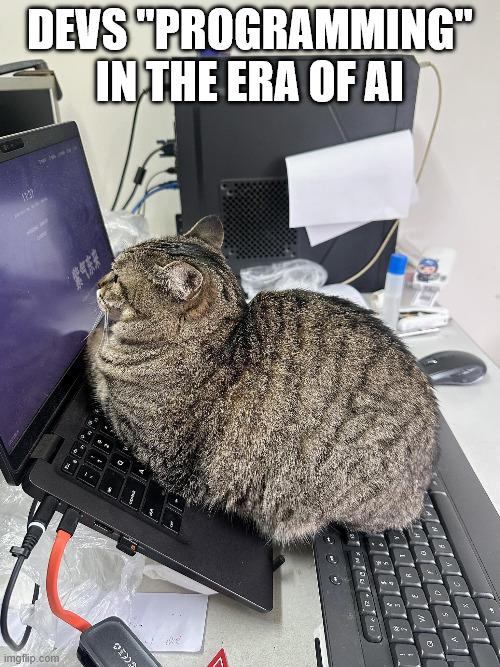
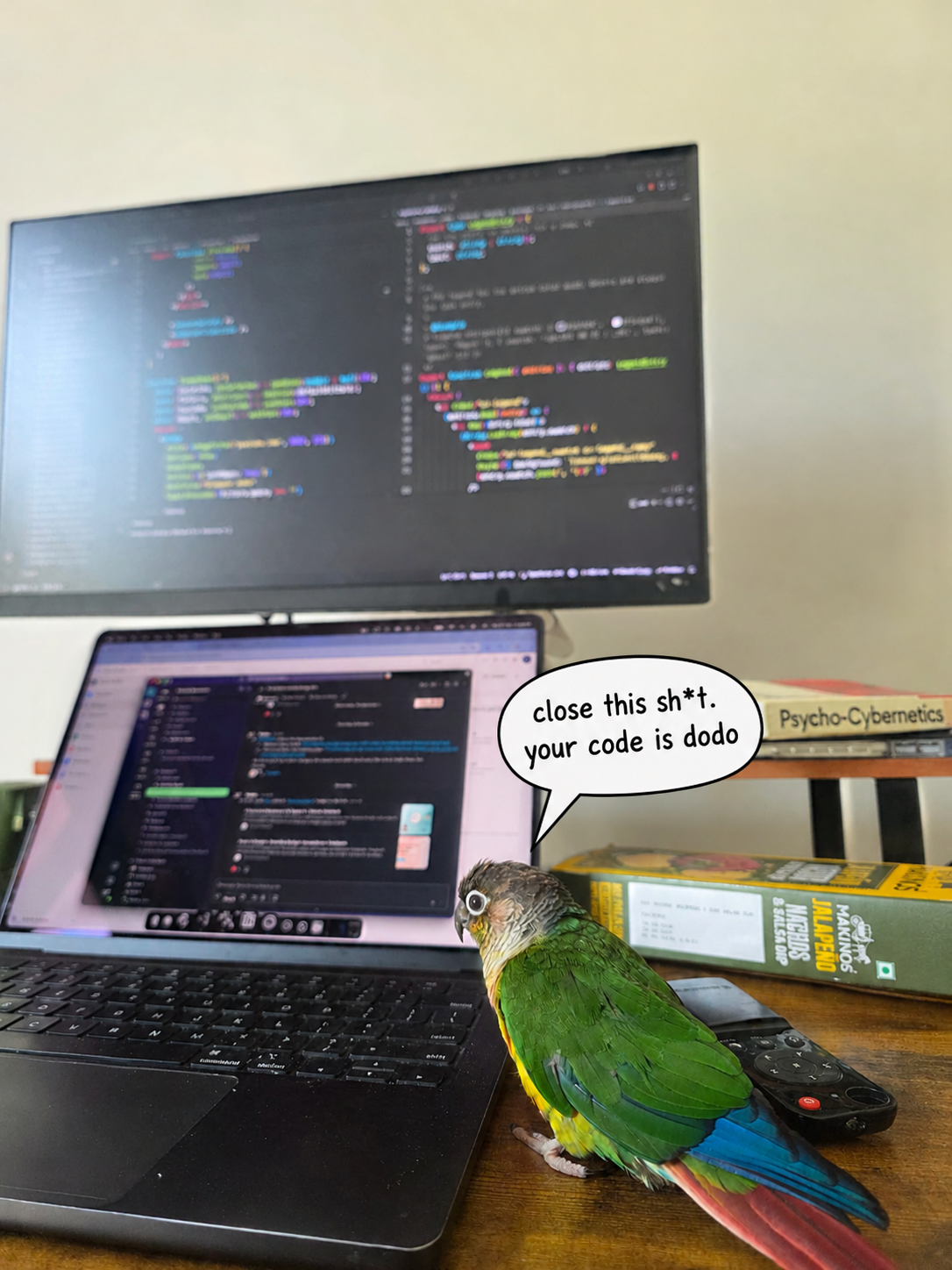
Junior dev walks into the codebase like they own the place, dropping emoji comments and "vibes-based" variable names while the senior engineers and architects sit there in their metaphorical top hats wondering what fresh hell just got committed to main. The real tragedy? They're not wrong. The rest of the team does act superior with their SOLID principles and design patterns, but someone's gotta maintain that legacy PHP monolith from 2009. Spoiler: it's not gonna be the vibecoder who just discovered Tailwind and thinks CSS-in-JS is a personality trait. SDE II is just there for the free snacks at this point.

Linus Invented Vibe Coding Before Vibecoding Was A Concept

Linus Invented Vibe Coding Before Vibecoding Was A Concept
Linus Torvalds just casually dropped the ultimate productivity hack: why write complete code when you can outsource it to your open-source community? The man literally emails code snippets like "hey, wouldn't it be cool if..." and waits for someone else to do the actual implementation and testing. It's the OG version of using AI to write code, except instead of LLMs (Large Language Models), he's using LLCs—Large Linux Contributors. The genius here is that he's not being lazy—he's being efficient. Why compile and test when thousands of kernel developers are ready to jump on your pseudocode? It's like pair programming, but you're the one drinking coffee while everyone else does the typing. The maintainer's dream: maximum architectural influence, minimum keystrokes. Honestly, building an entire operating system kernel by vibes and delegation is a power move that no amount of Cursor AI subscriptions can replicate.

Make No Mistakes

Make No Mistakes
When you explicitly tell your AI coding assistant to "make no mistakes" and it still generates buggy code, you start questioning everything. The confidence with which these LLMs ignore your carefully crafted instructions is truly impressive. You'd think adding "make no mistakes" to your prompt would be like adding --force to a command, but apparently AI doesn't work that way. The real kicker? The bugs are often so creative that you wonder if the AI is secretly running its own QA team that specializes in edge cases you never knew existed. Maybe next time try "pretty please with a cherry on top, no bugs" - surely that'll work, right?

Look They Are Discovering Employees

Look They Are Discovering Employees
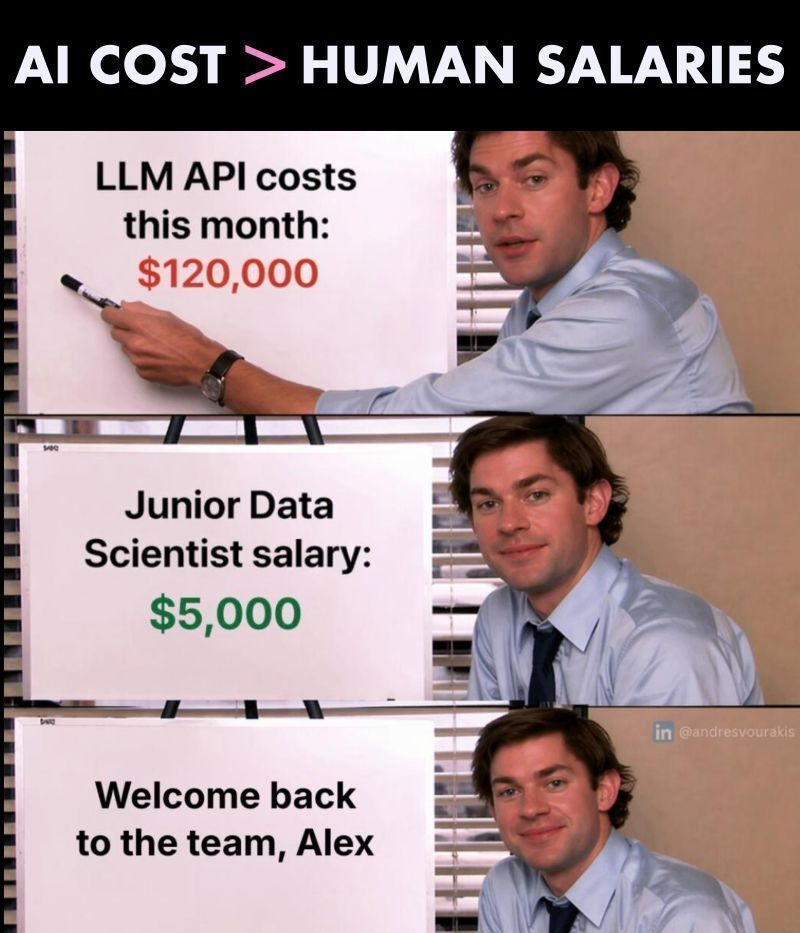
Tech companies spent years replacing human developers with AI tokens and LLM API calls, only to discover that hiring actual junior developers is... cheaper. Revolutionary stuff. It's like watching someone reinvent the wheel but calling it "cost optimization through human resource allocation." The industry went from "we don't need juniors, AI will do it" to "wait, paying a salary is less than burning through API credits?" in record time. Full circle innovation indeed—we've successfully disrupted our way back to employment. Next up: discovering that offices are cheaper than WeWork subscriptions.

Devs Are Very Tired These Days

Devs Are Very Tired These Days
You know that feeling when you spend 8 hours debugging a race condition, finally fix it by adding a single semicolon, and then hop on Reddit to decompress? Yeah, that energy lasts about 4.2 seconds before you're hit with "Why do we even use semicolons?" debates, framework wars, and someone asking if they should learn React or Vue in 2024. The irony is beautiful: you escape the mental exhaustion of coding only to voluntarily subject yourself to more tech discourse. It's like leaving a burning building and immediately walking into a different, slightly more opinionated burning building. The "vibe slop" is real—endless hot takes, AI replacing devs next Tuesday, and that one guy who insists everyone should rewrite everything in Rust. The fatigue isn't just from the code anymore; it's from the entire ecosystem of opinions, trends, and the constant pressure to stay relevant. Sometimes you just want to close your laptop and stare at a wall. A wall that doesn't have TypeScript errors on it.

It Is Not The Same

It Is Not The Same
You spend three hours crafting what you believe is elegant, maintainable C++ code. Proper RAII, smart pointers everywhere, maybe even some template metaprogramming that would make Bjarne Stroustrup shed a single tear of pride. You look at it like Hamilton admiring his financial system—a thing of beauty, a work of art. Then the compiler reads your masterpiece and immediately has 47 opinions about your life choices. Template instantiation depth exceeded. Ambiguous overload. Cannot convert 'const std::shared_ptr<MyClass>' to 'std::unique_ptr<MyBaseClass>'. That semicolon you forgot on line 238? Yeah, that generated 600 lines of error messages. The compiler doesn't see art. It sees a crime scene that needs investigating.

Average 50 Year Old IT Manager

Average 50 Year Old IT Manager
You know this guy. He got in before tech required a CS degree and a LeetCode black belt, rode the dotcom wave, and now makes six figures while asking "Claude..." in every meeting like he's summoning a genie. Hasn't touched code since dial-up was fast, but absolutely convinced he could still outcode the entire dev team if he "had the time." Meanwhile he's dropping 120k on a smartwatch and would literally risk it all for Claude Anthropic's API. The shoes that have "been at the same company for years" really sell it—comfortable, broken in, going nowhere. And that weird hobby? Probably collecting vintage keyboards or explaining blockchain to his neighbors. The best part? He genuinely believes his IQ is 140+ because he solved IT problems in an era when turning it off and on again was considered wizardry.

Google Invested $40,000,0000,000 On Claude

Google Invested $40,000,0000,000 On Claude
Google really looked at their own Gemini AI, counted those extra zeros in their investment check, and decided "you know what? Let's fund our competitor instead." The absolute AUDACITY of investing billions into Claude (Anthropic's AI) while your own AI baby Gemini is sitting right there like "am I a joke to you?" It's like spending your entire savings on your neighbor's kid's college fund while your own child is asking for lunch money. The girlfriend (representing Google) is nervously side-eyeing between her own creation and the shiny new Claude that apparently deserves all that cash. Meanwhile, Gemini is just sitting there in his little star shirt, completely unbothered, probably because he's already accepted his fate as the middle child nobody talks about at family dinners. Nothing says "we have complete confidence in our product" quite like writing a massive check to the competition!

GTX 1080 Ti Still Holds Up In 2026

GTX 1080 Ti Still Holds Up In 2026
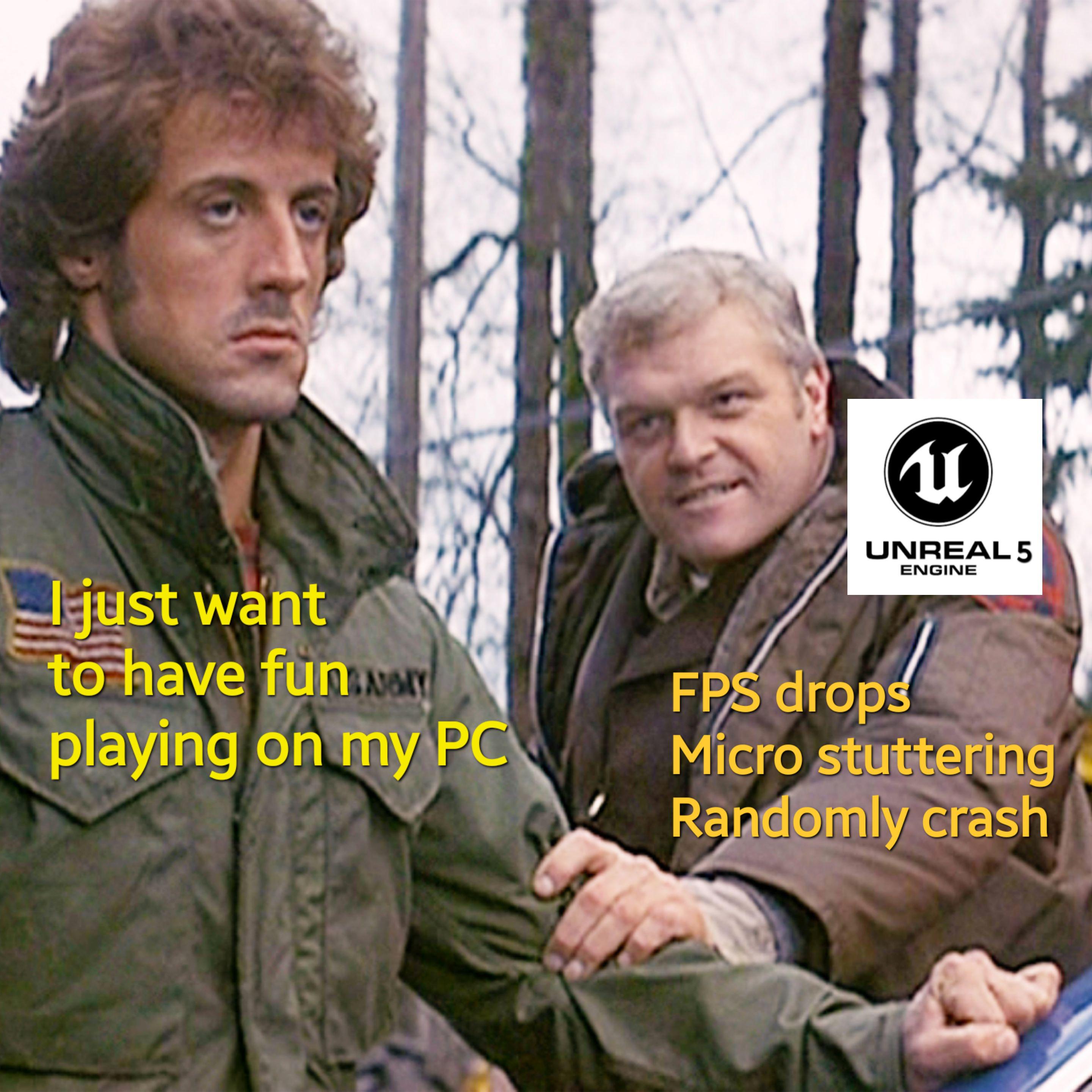
The GTX 1080 Ti is out here playing superhero, heroically yeeting modern games away from your precious FPS like it's still 2017. Released almost a decade ago, this absolute unit of a GPU refuses to retire gracefully and instead chooses violence against any game that dares demand more than 60 FPS. While everyone's dropping mortgage payments on RTX 4090s, the 1080 Ti owners are sitting pretty with their "mid-range" settings, getting perfectly playable framerates and smugly reminding everyone that Pascal architecture was built different. Sure, you can't enable ray tracing without your PC catching fire, and DLSS is just a fever dream, but who needs fancy lighting when you've got a card that cost $699 in 2017 and still refuses to become e-waste? The real flex is telling people your GPU is old enough to have its own gaming montages on YouTube and still outperforms their "budget" 2024 cards.

This Looks Accurate For Vibe Coders

This Looks Accurate For Vibe Coders
You know you're in trouble when someone shows you ( () => {} )() and asks "what does this do?" The dreaded immediately invoked function expression (IIFE) – that beautiful monstrosity that executes the moment it's defined. Vibe coders are too busy shipping features and copying Stack Overflow snippets to worry about these syntactic gymnastics. They see those parentheses wrapping an arrow function, followed by execution parentheses, and their brain just... bluescreens. Meanwhile, the interviewer is sitting there waiting for you to explain how the outer parens turn the function into an expression so it can be immediately invoked with () . The semicolon at the end is just chef's kiss – because nothing says "I understand JavaScript's automatic semicolon insertion quirks" quite like explicitly adding one after an IIFE. If it works, it works, right?

AI Companies Release Blogs

AI Companies Release Blogs
The AI hype cycle in one image. Companies releasing detailed technical reports with model architectures, training datasets, and infrastructure specs are the buff doge—transparent, educational, actually advancing the field. Meanwhile, the ones dropping a vague blog post like "oops we accidentally made it worse and also your API credits just evaporated" are the sad crying doge. It's the classic bait-and-switch: promise open research and collaboration, then silently nerf your API, jack up prices, and offer zero explanation beyond "trust us bro, alignment reasons." Because nothing says cutting-edge AI like hiding behind corporate speak while your users' production apps spontaneously combust. The real kicker? The companies publishing actual research papers are often smaller labs trying to build credibility, while the billion-dollar giants just... don't. They'll write 47 blog posts about their "values" but won't tell you why GPT-5 suddenly can't count to three.

What's The Excuse For Today?

What's The Excuse For Today?
Star Citizen has been in alpha development since 2011. Yes, you read that right. 2011 . At this point, it's less of a game and more of a philosophical experiment on how long you can keep promising features while collecting crowdfunding money. The fans have reached a level of Stockholm syndrome that would make psychologists weep. They've been waiting so long for a beta release that their children will probably inherit their game accounts before it happens. "Sorry son, I'm leaving you my Star Citizen alpha access in my will. Maybe you'll see the full release." It's basically the Duke Nukem Forever of space sims, except Duke Nukem Forever actually shipped eventually. The devs keep adding new ships to buy for hundreds of dollars while the game remains perpetually "in development." Revolutionary funding model: why finish a game when you can sell virtual spaceships forever?