

Nerds Are Built Different

Nerds Are Built Different
Government cybersecurity out here flexing like they're ready to take on any threat, batting away script kiddies like flies at a picnic. Meanwhile, some random homelabber who spent their weekend setting up a Raspberry Pi cluster and learning Kubernetes for fun has achieved FINAL FORM and ascended to godhood. The homelabber's cybersecurity setup is so absurdly overpowered it makes government infrastructure look like a toy. We're talking VLANs, firewalls, intrusion detection systems, zero-trust architecture, and probably a custom-compiled kernel because why not. All protecting... what exactly? Their Plex server and a collection of Linux ISOs? The dedication is absolutely unhinged and we love it. Turns out when you're spending your own money and actually care about learning, you build Fort Knox. When it's a government contract with the lowest bidder... well, you get Windows XP running critical infrastructure in 2024.

Bloated Ticket

Bloated Ticket
Nothing says "I care about this project" quite like a 47-paragraph ticket that reads like a doctoral thesis but was actually generated by ChatGPT in 3 seconds. You open it expecting clarity, instead you get five pages of corporate buzzwords, redundant acceptance criteria, and suspiciously perfect formatting. The real kicker? Buried somewhere in paragraph 23 is the actual requirement: "make button blue." Meanwhile you're sitting there like a rain-soaked anime protagonist, dead inside, knowing you'll have to parse through this AI slop to figure out what they actually want. The ticket looks impressive in standup though, so there's that.

Things Change, People Change

Things Change, People Change
The beautiful journey of watching your once-beloved PC deteriorate from "oh dear, oh dear, gorgeous" in 2024 to "you f***ing donkey" by 2026. In just two years, that machine went from being your precious baby to a sluggish betrayer that takes 10 minutes to boot up and sounds like a jet engine warming up. The relationship decay is REAL. What was once cutting-edge hardware is now struggling to open Chrome tabs, and you've gone from lovingly wiping its screen to aggressively slamming the keyboard when it freezes for the 47th time today. Time is cruel, thermal paste dries up, and your patience? Completely evaporated.

Epic Games Store Leaks 2027 Roadmap

Epic Games Store Leaks 2027 Roadmap
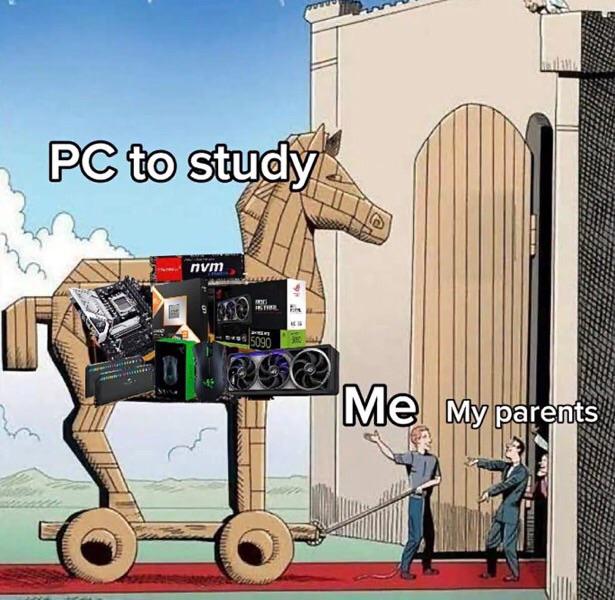
Epic Games has been throwing free games at us for years trying to compete with Steam, but apparently by 2027 they're just gonna start giving away actual hardware. DDR5 RAM and an RTX 5090? Sure, why not. At this rate, by 2030 they'll be offering free houses with every Fortnite skin purchase. The joke here is that Epic has been hemorrhaging money on their free game strategy for so long that the logical next step is just giving away thousand-dollar GPUs and RAM sticks. Because nothing says "sustainable business model" like literally giving away the means of production. Tim Sweeney's credit card must be crying in a corner somewhere.

I Love LoRA

I Love LoRA
When she says she loves LoRA and you're thinking about the wireless communication protocol for IoT devices, but she's actually talking about Low-Rank Adaptation for fine-tuning large language models. Classic miscommunication between hardware and AI engineers. For the uninitiated: LoRA (Low-Rank Adaptation) is a technique that lets you fine-tune massive AI models without needing to retrain the entire thing—basically adding a lightweight adapter layer instead of modifying all the weights. It's like modding your game with a 50MB patch instead of redownloading the entire 100GB game. Genius, really. Meanwhile, the other LoRA is a long-range, low-power wireless protocol perfect for sending tiny packets of data across kilometers. Two completely different worlds, same acronym. The tech industry's favorite pastime: reusing abbreviations until nobody knows what anyone's talking about anymore.

I Bet You Use Both

I Bet You Use Both
Two developers meet cute at a bookstore bonding over their shared love of "the hub." Sweet, innocent moment. Then the logos reveal they're talking about completely different platforms. He's on PornHub (wait, what?), she's on GitHub. The awkwardness is palpable. Though let's be real, if you're a developer working from home, your browser history probably has both in the top 10 most visited sites. No judgment. We all need to push commits and, uh, decompress.

Sorry

Sorry
So you casually mentioned you don't have Netflix and suddenly you're being held at gunpoint while someone forces you to read Windows Internals documentation, Sysinternals articles, browser exploitation CVEs, and reverse engineering repos. Because apparently that's the ONLY logical explanation for why you'd skip Netflix—you must be spending your evenings doing deep dives into kernel architecture and memory management like some kind of masochist. The intervention energy here is absolutely unhinged. "Take off your shoes, we're gonna talk about the Windows kernel" has the same vibe as "we need to talk about your life choices" except somehow MORE terrifying because it involves Pavel Yosifovich's 350-minute exploit development articles and Dave's Garage videos. Your friends really said "no Netflix? You must be one of THOSE people" and decided to stage a full confrontation about your extracurricular OS deep-dive habits.

Introducing Windows 12

Introducing Windows 12
Microsoft's design team went absolutely wild with those fancy new wallpaper curves, but apparently forgot to allocate any budget for the actual UI. We've got this gorgeous, futuristic Windows 12 backdrop that looks like it was rendered on a NASA supercomputer, and right in the middle sits "Message Copilot"—a window so aggressively blank it makes a fresh index.html look feature-rich. The contrast is *chef's kiss*—they're pushing AI assistants as the next big thing while the interface itself looks like it's still loading from a dial-up connection. Nothing says "cutting-edge operating system" quite like a completely empty dialog box photobombing your $200 wallpaper. At least the taskbar icon matches the window's energy: minimalist to the point of nonexistence. Classic Microsoft move: revolutionize the aesthetics, ship the functionality as "coming in a future update."

Pic Of The Day

Pic Of The Day
Imagine walking past a coffee shop and being personally ATTACKED by a chalkboard sign. The absolute AUDACITY of this barista flexing their JavaScript skills while simultaneously roasting anyone who can actually decipher their spaghetti code! 😭 The code itself is a masterpiece of chaos: they're splitting an empty string, reversing it, joining it back (which does absolutely NOTHING), and then building a "secret word" by concatenating three strings. Spoiler alert: str2 + str3 + str1 gives you "rcne" + "ypt" + "ion" = "rcneyptio"... wait, that's not even a word. Unless they meant "encryption" and had a stroke while typing? The tragedy is REAL. But hey, if you spent more than 10 seconds trying to debug their intentionally broken code instead of just ordering your latte, congratulations! You've earned that free coffee through sheer determination and questionable life choices. ☕

Super SWE

Super SWE
So you're telling me this "Super SWE" role wants someone who's done something remarkable, ships features before breakfast, has "undeniable proof-of-talent," believes in manifesting physical engineering futures, AND has built exceptional UIs... but LinkedIn can't even generate a job match summary because there's not enough information? Classic. The job requirements read like a tech bro's fever dream written at 3 AM after watching too many startup documentaries. "Go from 0 → 1 on an idea before breakfast" – buddy, I can barely go from 0 → 1 cup of coffee before breakfast. And "manifesting the future of physical engineering"? What is this, a software job or a TED talk audition? Over 100 people clicked apply though. Either everyone's delusional about their qualifications or we're all just that desperate for remote work. Probably both.

Don't Mind Me Just Making Some ASCII

Don't Mind Me Just Making Some ASCII
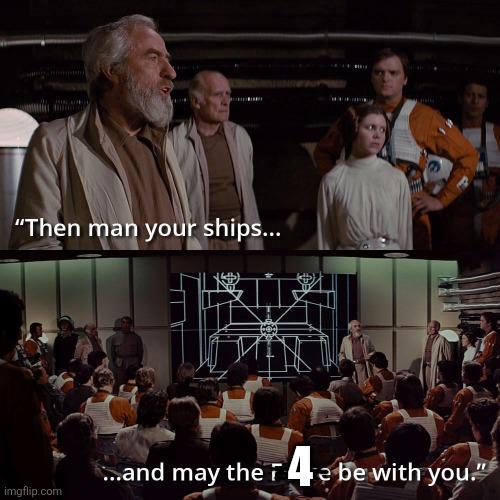
When you tell yourself you're just gonna make "some ASCII art" and suddenly you've spent 4 hours meticulously placing percentage signs and hashtags to create what appears to be the Death Star. Because nothing says "productive coding session" like abandoning your actual project to manually position 10,000 characters into a perfect sphere. The best part? You started with a simple smiley face in your console output, and now you're basically a digital Michelangelo painting the Sistine Chapel with monospace fonts. Your pull request can wait—this masterpiece needs more shading with equals signs. Pro tip: This is what happens when developers discover that terminals can display more than just error messages. Next thing you know, they're rendering entire Star Wars movies in ASCII and calling it "learning about character encoding."

So Many Levels

So Many Levels
The five stages of grief, but make it hardware failure. Someone's hard drive went from "perfectly fine" to "abstract art installation" real quick. What starts as a normal HDD standing upright gradually transforms into increasingly creative interpretations of what a hard drive could be. First it's standing, then lying flat, then someone thought "what if we bent it a little?" and finally achieved the ultimate form: a hard drive sandwich with extra platters. The title "So Many Levels" is chef's kiss because it works on multiple levels itself (pun absolutely intended). Physical levels of the drive's position, levels of destruction, and levels of desperation when you realize your backup strategy was "I'll do it tomorrow." Fun fact: those shiny platters inside spin at 7200 RPM, which is roughly the same speed your heart rate reaches when you hear that clicking sound. RAID stands for Redundant Array of Independent Disks, but after seeing this, it clearly stands for "Really Avoid Inadequate Disaster-planning."