

Can't Wait

Can't Wait
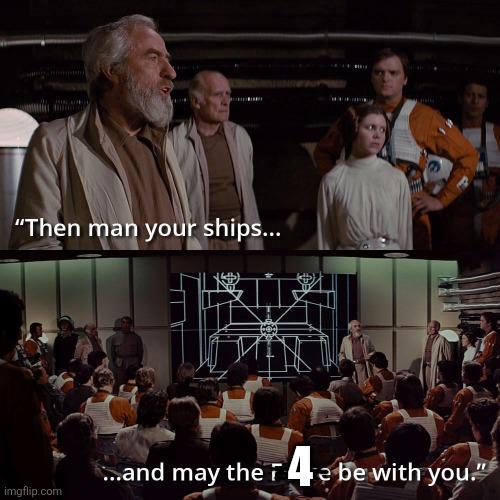
Every PC gamer's journey with DLSS in a nutshell. You boot up your game with DLSS off, squinting at your 45 FPS like some kind of peasant. Then you flip that switch to DLSS 5 and suddenly you're ascending to a higher plane of existence—buttery smooth frames, your GPU purring like a kitten instead of sounding like a jet engine about to achieve liftoff. DLSS (Deep Learning Super Sampling) is NVIDIA's AI-powered upscaling tech that basically lets your GPU render at lower resolution and then use machine learning to make it look like native resolution. It's like performance steroids, but legal. The difference between OFF and ON is so dramatic that going back feels like voluntarily choosing to suffer.

Linux Users

Linux Users
The Linux user's ultimate nightmare: being forced to use Windows. Even in a life-or-death situation where the house is literally on fire and the only escape route is through the windows, they'd rather perish than compromise their principles. It's not just an operating system preference—it's a lifestyle, a philosophy, a hill they're willing to die on. Literally. Because touching Windows would mean admitting that maybe, just maybe, not everything needs to be compiled from source with custom kernel flags. The commitment is real, folks.

Different Conditions

Different Conditions
Normal programming: cute binary logic where things are either TRUE or FALSE. Simple. Clean. Predictable. Quantum programming: your boolean exists in superposition and is somehow both TRUE and FALSE simultaneously until you observe it, at which point it collapses into... "Frlse"? "Talse"? Whatever that abomination is supposed to be. It's like Schrödinger's cat decided to become a software engineer and now your conditionals are having an existential crisis. Good luck debugging that with your traditional if-else statements. You'll need a PhD in physics just to understand why your code returns "maybe" as a valid state.

How To Become A Software Engineer Without Learning How To Code

How To Become A Software Engineer Without Learning How To Code
So you wanted to be a software engineer but coding seemed too hard? Just let AI write everything for you! Problem solved, right? Wrong. Now you're sitting on a codebase that's slowly morphing into a Lovecraftian nightmare of spaghetti logic, and you have zero idea how to fix it because—plot twist—you never learned to code. The question here is genuinely haunting: how do you prevent your AI-generated code from becoming technical debt incarnate? The answer is simple but painful: you actually need to understand what the AI is writing. Which means... you need to learn to code. Full circle, baby. It's like hiring a chef who's never tasted food to run your restaurant. Sure, they can follow recipes from ChatGPT, but when something tastes off, they're just vibing and hoping for the best. Except in this case, the "food" is production code and the "customers" are your users experiencing mysterious bugs at 2 PM on a Friday.

Important Work

Important Work
It's 2 AM and you're building a to-do app with 47 microservices, blockchain integration, and a custom ORM because the existing ones "just don't feel right." Your partner asks if you're coming to bed. You explain that you're vibecoding—that sacred ritual where you pour your soul into a project that will join the graveyard of 300+ repos in your GitHub account, each one abandoned at precisely 73% completion. Tomorrow you'll use Notion like everyone else, but tonight? Tonight you're an architect of dreams that nobody asked for.

Less Tokenless Fluff

Less Tokenless Fluff
Someone discovered ChatGPT's "caveman mode" and thought they'd found a life hack to save tokens. The logic: shorter prompts = fewer tokens = more money saved. ChatGPT, ever the patient AI therapist, had to gently explain that tokens aren't charged by conversation length, they're charged by word count. Both sides being concise just means fewer words total, not some magical token-saving loophole. It's like thinking you'll save on electricity by typing faster. The misunderstanding of how API pricing works is chef's kiss. Not magic. Just less words.

I Mean..

I Mean..
The classic tech bro solution to performance problems: just slap some AI on it and call it innovation. Your database query is taking forever because you wrote a nested SELECT with 47 JOINs and no indexes? Nah, don't optimize that garbage—just throw an LLM at it and suddenly you're not lazy, you're "leveraging cutting-edge AI solutions for query optimization." The "Thinking..." spinner is chef's kiss because it's probably burning through more compute cycles than your original slow query ever did. But hey, at least now you can put "AI integration" on your resume instead of "learned what EXPLAIN ANALYZE does."

As Easy As This

As Easy As This
Oh honey, the BETRAYAL! They really had you out there fighting bears and solving the traveling salesman problem in O(n) time during the interview, only to have you spend the next six months updating CSS padding values and fixing typos in email templates. The technical interview is basically a boss battle from Dark Souls where they ask you to reverse a binary tree while standing on one leg, but then the actual job is just you sitting in meetings discussing whether the button should be #0066FF or #0066FE. The whiplash is absolutely DEVASTATING.

So Accurate

So Accurate
You know that special Windows feature where it won't let you delete a file because "something" is using it, but refuses to tell you what that something is? Classic Windows move right there. It's like asking your roommate to stop eating your leftovers and they're like "oh no someone's definitely eating those" while actively chewing. The best part is when you open Task Manager, close literally everything, and Windows still gaslights you into believing some phantom process needs that random .txt file from 2019. After 15 years of dealing with this, I've learned the solution is either rebooting or just accepting that file lives there forever now.

The Mist Of The Www

The Mist Of The Www
You know that moment when you're frantically trying to log in and the website hits you with the classic "Wrong username or password" error? And you're sitting there like a detective trying to figure out which credential you messed up, but the website just stares back at you with zero helpful information. You ask "Which one did I get wrong?" and the website's response is basically "I missed the part where that's my problem." This is security theater at its finest. Sure, it prevents attackers from knowing whether they got the username right, but it also means you're stuck playing credential roulette with your own accounts. Was it the email? The username? Did I fat-finger the password? Is caps lock on? The website knows exactly what went wrong but chooses violence instead of clarity.

Good Luck Figuring It Out Since It Also Doesn't Come With Man Pages

Good Luck Figuring It Out Since It Also Doesn't Come With Man Pages
Mozilla drops a non-binary mascot named "Kit" that uses they/them pronouns, and someone immediately asks the only question that matters: how do you even run a non-binary executable? Because in the world of computers, everything is literally binary - ones and zeros, true or false, executable or not. The title nails it though. Not only is this conceptually confusing for anyone who thinks in bits and bytes, but there's probably no documentation either. Just like that one critical library your entire stack depends on that has a README.md with "TODO: Write documentation" from 2019. Fun fact: In Unix systems, you can actually set file permissions to be non-executable (chmod -x), which technically makes it... non-binary in the execution sense? So maybe Kit just doesn't have execute permissions. Problem solved.

Found This On Linkedin

Found This On Linkedin
Two cats chilling on rocks at completely different heights, perfectly capturing the eternal struggle between users and developers. The user is down there on street level, just vibing on their tiny rock, blissfully unaware of reality. Meanwhile, the developer is perched up HIGH on this massive boulder, looking down with the weight of a thousand sprint meetings and bug reports crushing their soul. It's giving "different perspectives" energy. Users think they're on the same page as devs, but developers are literally operating on a whole other elevation, drowning in technical debt, legacy code, and the crushing realization that the "simple feature request" requires refactoring the entire codebase. The developer cat looks absolutely DONE with existence, probably contemplating why they didn't become a gardener instead.