


vue Memes

How Many Does This Make Now??

How Many Does This Make Now??
The developer who's been caught red-handed having yet ANOTHER affair with a shiny new JavaScript framework! The board desperately wants them back because, let's be real, they're probably the only one who understands the codebase. But our protagonist can't help themselves—they've already moved on to Jenson (because apparently we needed one more JS framework to add to the collection of 47,382 others). The board doesn't even need convincing anymore; they've accepted this toxic cycle of abandonment and reconciliation. It's like watching someone leave React for Vue, then Angular, then Svelte, then Solid, then whatever framework was invented in the last 5 minutes. The JavaScript ecosystem is basically a soap opera at this point, and developers are out here collecting frameworks like Pokémon cards.

Developers Missing The Old Days

Developers Missing The Old Days
Remember when we just had HTML, CSS, and vanilla JavaScript? You could build a perfectly functional website with a text editor and some FTP access. Life was simple. Pages loaded instantly. No build process, no transpiling, no waiting 15 minutes for node_modules to install. But nope, we couldn't leave well enough alone. Now you need React, Angular, Vue, Svelte, 47 different build tools, a PhD in webpack configuration, and three different package managers just to render "Hello World" with a fancy fade-in animation. Your simple blog now requires a CI/CD pipeline, Docker containers, and costs $200/month to host. The best part? We convinced ourselves this complexity was "necessary" and "modern best practices." Sure, we get better developer experience and component reusability, but at what cost? Your grandma's WordPress site from 2008 still loads faster than your over-engineered SPA.

Read Viecoded Project

Read Viecoded Project
When you crack open a legacy codebase written entirely in Vue.js and suddenly feel like you've ascended to godhood. The spaghetti code, the nested components seven layers deep, the props drilling that would make an oil rig jealous—you understand it all. You've become one with the chaos. That moment when everyone else on the team is terrified to touch the ancient Vue project, but you? You've stared into the abyss of reactive data, watched computed properties cascade into oblivion, and emerged victorious. The codebase speaks to you now. You are no longer a mere developer—you're the chosen one who can navigate the tangled web of $emit events and Vuex mutations without losing your sanity. Mortals dare not question your understanding of the sacred this.$refs incantations.

What Is In A Name

What Is In A Name
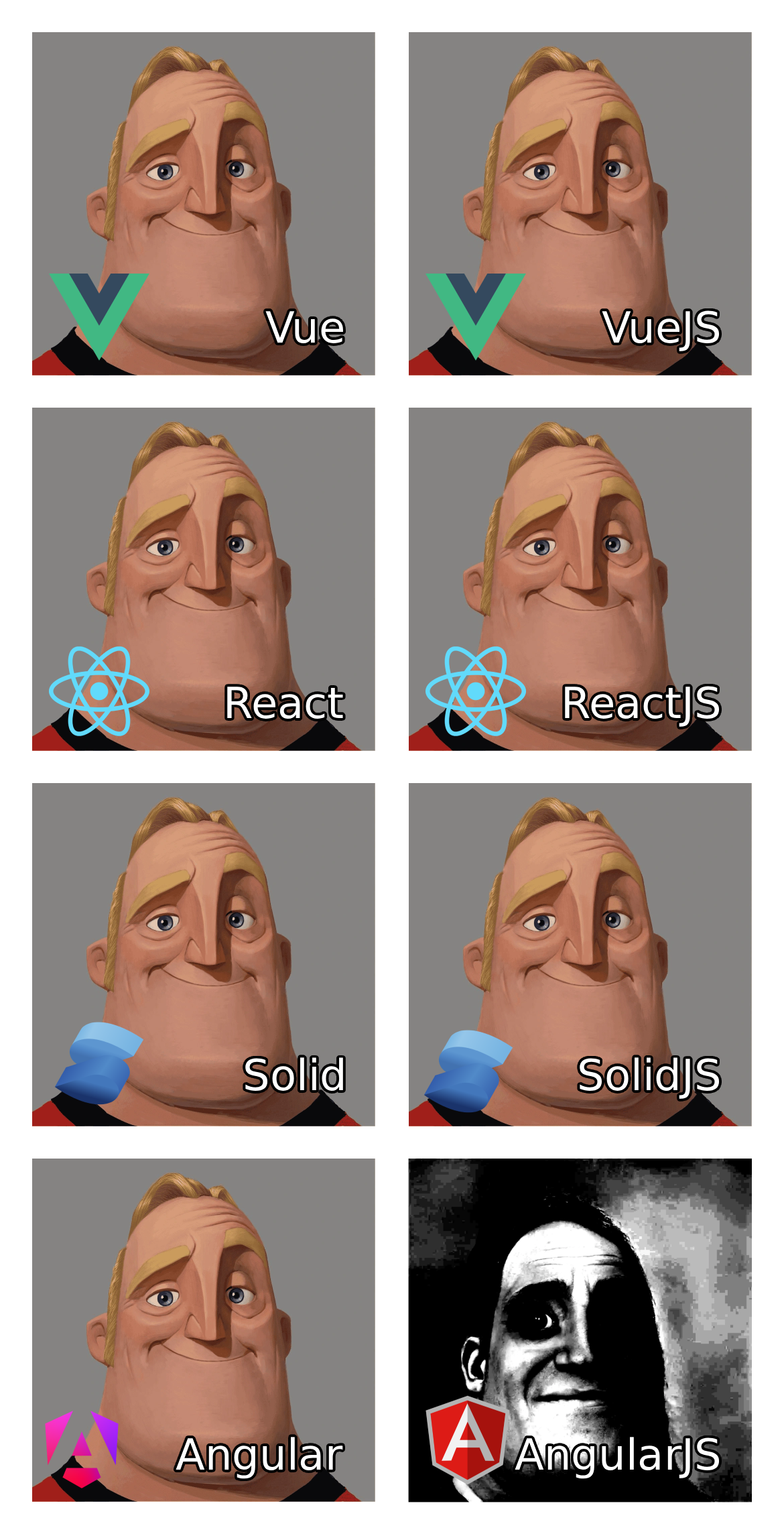
Frontend frameworks and their pronunciation quirks never fail to spark debates. Vue is chill, VueJS is still respectable. React stays cool, ReactJS keeps it professional. Solid and SolidJS? Both looking good. But then there's Angular and AngularJS - where the latter transforms into a cursed relic from the depths of web development hell. For context: AngularJS (the original) was a nightmare of two-way data binding and digest cycles that could bring your app to its knees. When Google basically rewrote everything and dropped the "JS" suffix, they weren't just rebranding - they were trying to distance themselves from their own creation. It's like when bands release a "remastered" version to pretend the original never happened.

NordVPN

NordVPN
Encrypt your traffic on public Wi-Fi, stream from anywhere, and cover up to ten devices with one plan. 30-day money-back guarantee.

Junior Dev 2026 Requirements

Junior Dev 2026 Requirements
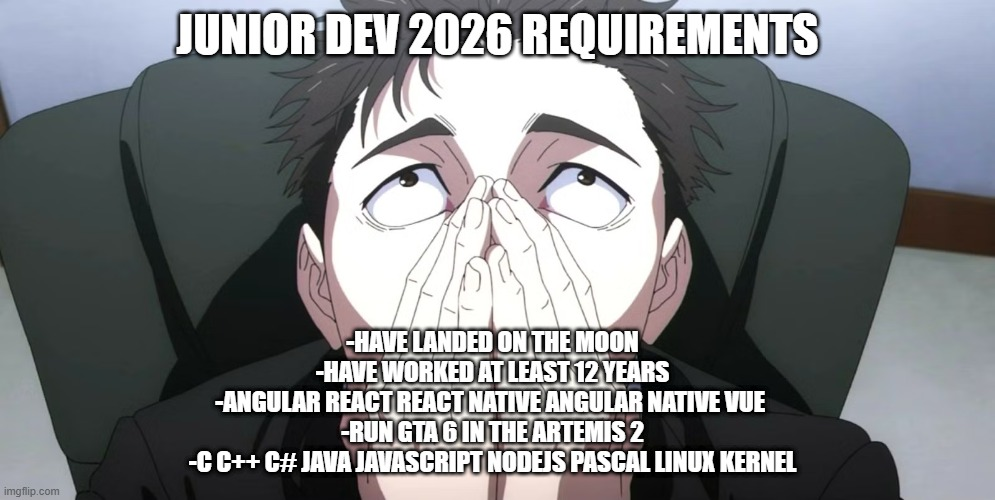
Junior positions in 2026 apparently require you to have landed on the moon, maintained a codebase for 12 years (before you graduated high school, naturally), mastered every JavaScript framework that's ever existed simultaneously, run GTA 6 in the Artemis 2 spacecraft, and be fluent in literally every programming language including Pascal and the Linux kernel itself. Oh, and you need to know Angular, React, React Native, Angular Native, and Vue—preferably all at once in some kind of quantum superposition state. The job market has officially entered its villain arc. Entry-level positions now demand the resume of a NASA engineer crossed with Linus Torvalds. Meanwhile, the salary? Competitive. Which means they'll tell you after three rounds of interviews.

How True Is This?

How True Is This?
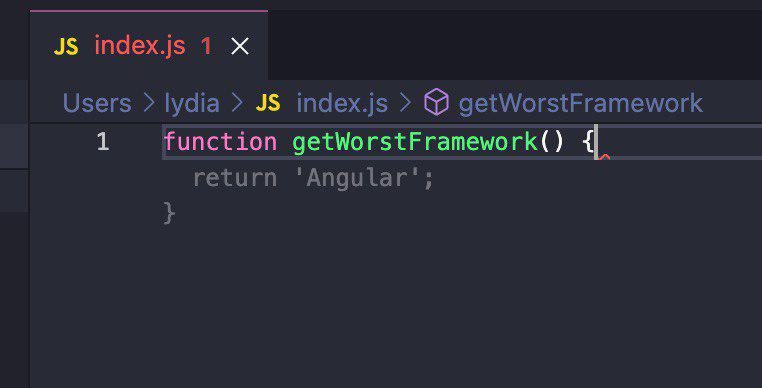
Ah yes, the classic framework wars bait. Someone created a function that returns 'Angular' as the worst framework, and honestly, the audacity is chef's kiss. The function name doesn't lie—it's literally called getWorstFramework() , so there's zero ambiguity about the developer's feelings here. What makes this extra spicy is that it's sitting in a file path that screams "production code" with Users > lydia > JS > index.js, meaning someone actually committed this opinion to their codebase. The real question isn't whether it's true, but rather how long until the Angular devs find this file and start a holy war in the PR comments. React and Vue developers are probably cackling somewhere while eating popcorn.

The Mountain Climb Of Web Development

The Mountain Climb Of Web Development
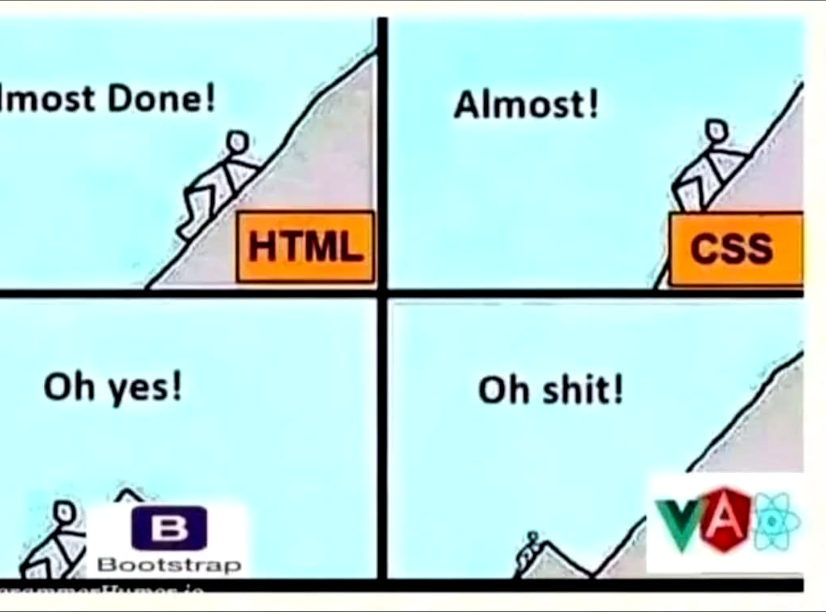
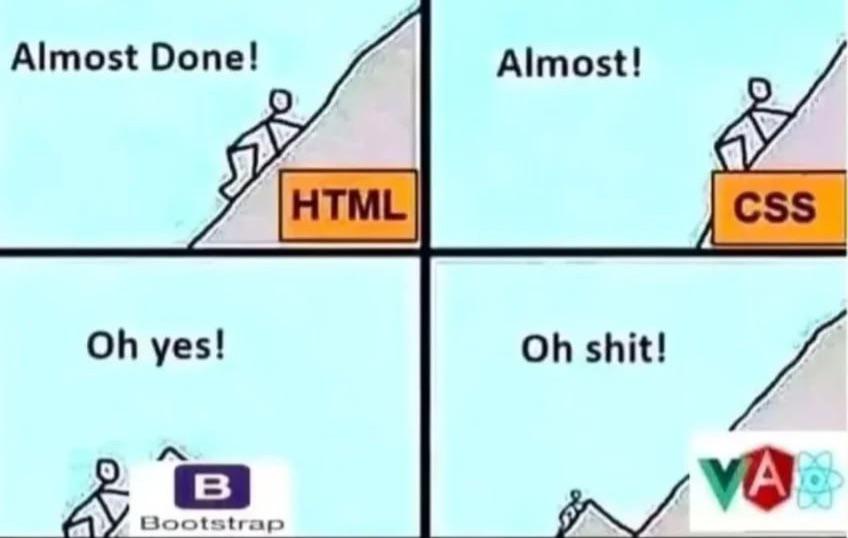
The eternal mountain climb of web development in four perfect panels: First, you think you're nearly at the summit with HTML. "Almost done!" you declare, blissfully unaware of what lies ahead. Then CSS enters the chat. "Almost!" you tell yourself, as your layout breaks for the 47th time because you forgot a semicolon somewhere. Bootstrap arrives like a superhero, and suddenly you're cruising. "Oh yes!" Life is good when someone else handles the responsive design nightmare. But then... the final boss appears: the unholy trinity of modern frontend frameworks. Vue, Angular, and React stare back at you, and your soul leaves your body as you realize you now need to learn state management, component lifecycle, and why your bundle size is 14MB for a simple todo app.

The Web Dev Mountain Of Despair

The Web Dev Mountain Of Despair
The eternal web dev mountain climb in one perfect image. HTML? Sure, manageable. CSS? Getting steeper but still doable. Bootstrap? Sweet relief—premade components to the rescue! But then... the modern framework hellscape hits and suddenly you're scaling El Capitan with dental floss. Nothing says "I've made terrible life choices" quite like staring at a Vue/Angular/React stack error at 2 AM while questioning your career path. The journey from "I can build a website!" to "I have 47 dependencies and none of them work together" happens faster than you can say "npm install".

SSK Portable SSD 250GB External Solid State Drives, up to 1050MB/s USB C SSD External Hard Drive USB 3.2 Gen2 for iPhone 15/16/17Pro, Windows, Mac, Android Phones and Tablets

SSK Portable SSD 250GB External Solid State Drives, up to 1050MB/s USB C SSD External Hard Drive USB 3.2 Gen2 for iPhone 15/16/17Pro, Windows, Mac, Android Phones and Tablets
Capacity Reminder: Display capacity of 250GB SSD often appears as around 232GB on Windows. MacOS typically shows full 250GB. This display capacity reduction of 7% to 10% from SSD actual capacity is f…

The Great JavaScript Framework Gold Rush

The Great JavaScript Framework Gold Rush
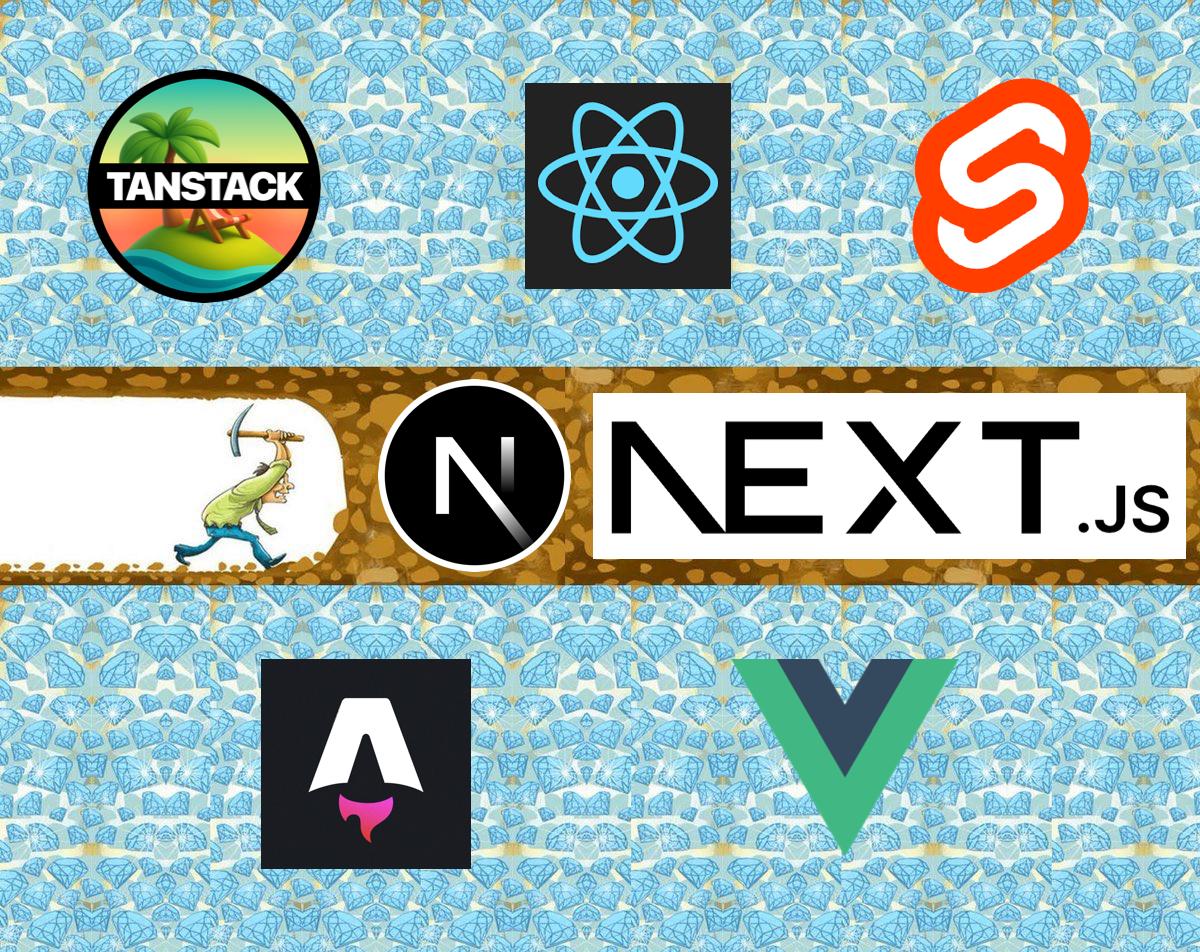
The JavaScript framework mining operation is in full swing. Above ground, we've got the established frameworks (TANSTACK, React, Svelte) sitting pretty on a diamond field, while Next.js is being frantically mined below by some poor developer. Meanwhile, Angular and Vue are just waiting their turn in the endless cycle of framework hype. Frontend developers are basically digital prospectors at this point. "This framework will be the one that makes me rich with efficient code!" Sure, buddy. Just like the last five you tried.

Shiny Object Syndrome

Shiny Object Syndrome
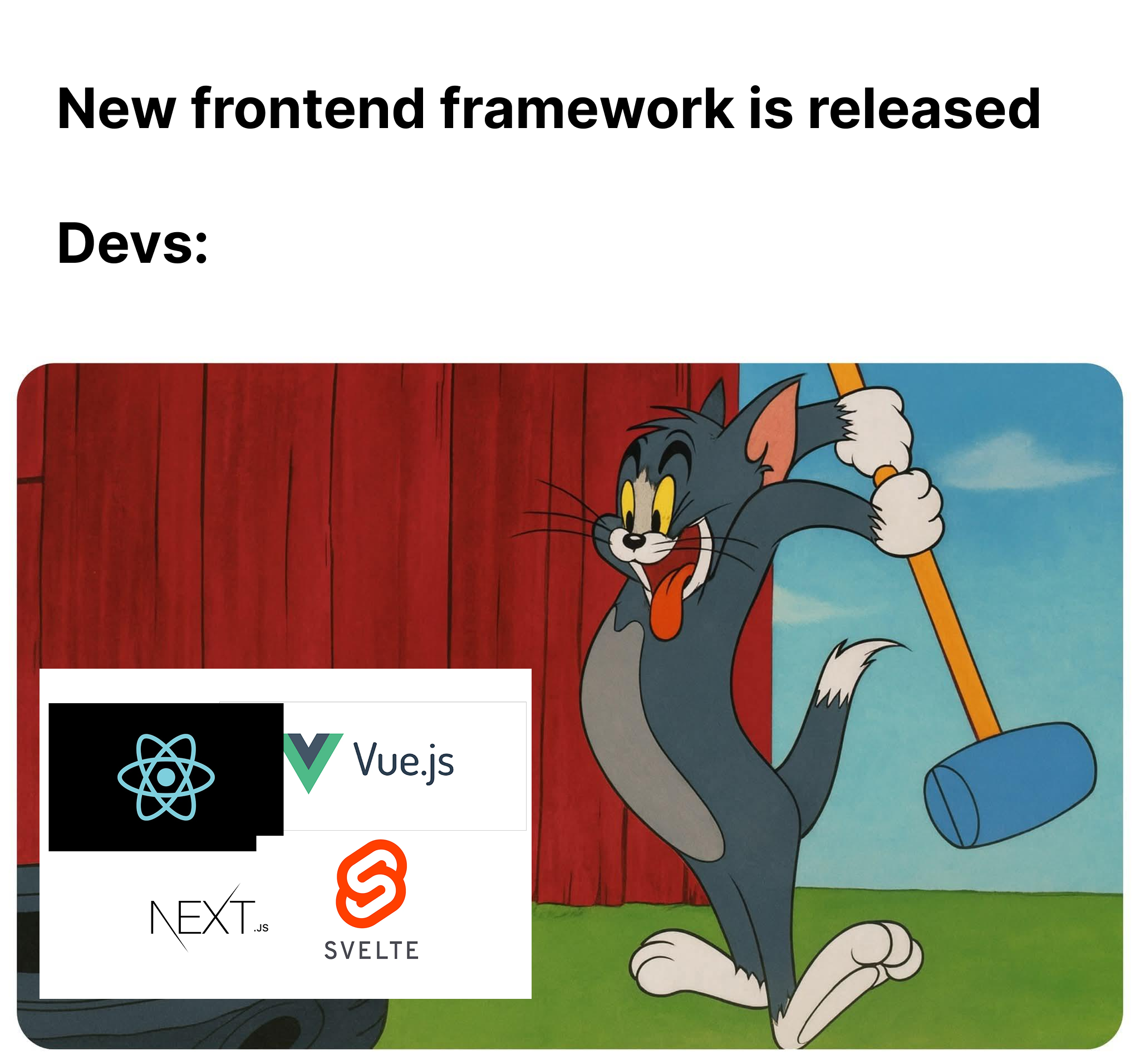
Frontend developers sprinting toward the newest framework like Tom with a comically oversized mallet! The eternal cycle continues - you've barely mastered React when suddenly Vue looks interesting, then Next.js catches your eye, and now Svelte is the hot new thing. Meanwhile, your half-finished projects and deprecated skills pile up faster than npm dependencies. The JavaScript ecosystem doesn't have versioning—it has reincarnation.

The Infinite Framework Treadmill

The Infinite Framework Treadmill
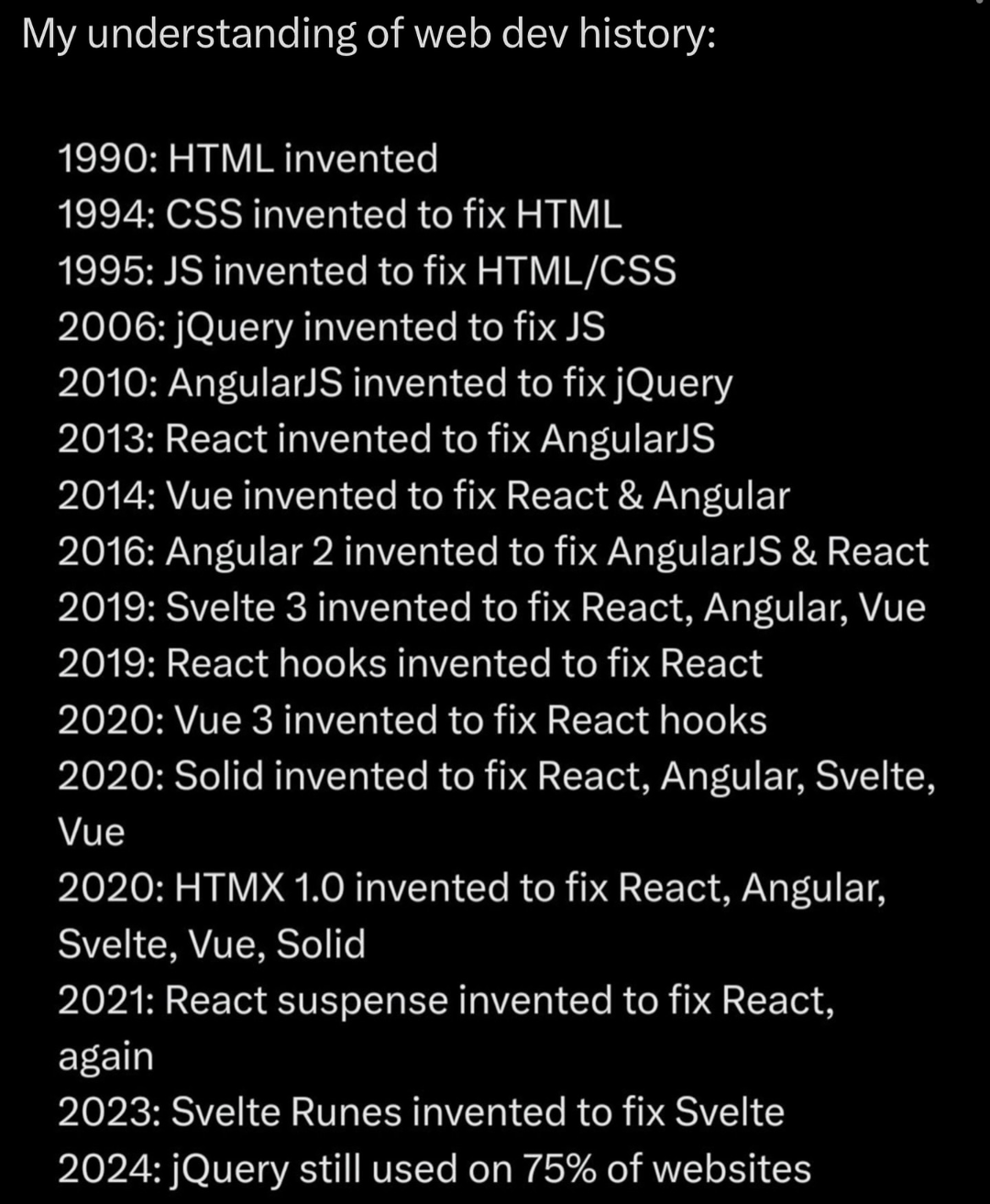
The web development circle of life in all its painful glory. Thirty years of "innovation" and what do we have to show for it? A new framework every Tuesday designed to fix the problems created by last Thursday's framework. Meanwhile, jQuery—that ancient relic we've been trying to kill since Obama's first term—is still powering most of the internet like some unkillable cockroach after a nuclear apocalypse. The punchline isn't even the timeline of increasingly niche frameworks; it's that after all our architectural patterns, virtual DOMs, and reactive state management, we've somehow ended up exactly where we started. It's not progress; it's just fashion with semicolons.

Say No To Bloat

Say No To Bloat
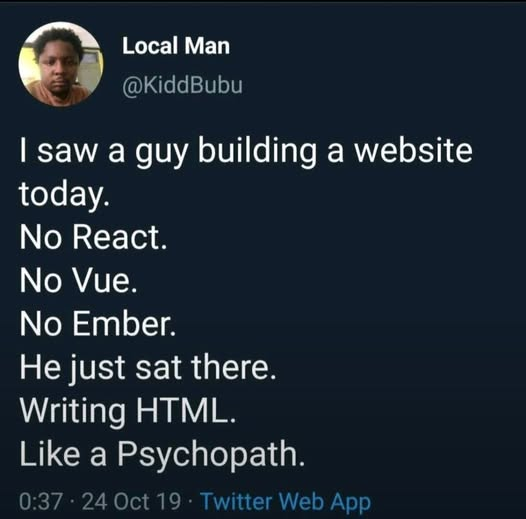
Spotted in the wild: a developer coding without their framework security blanket. The horror! Remember when we built websites with just HTML, CSS, and maybe some vanilla JavaScript? Now we need 237 npm packages just to center a div. The modern frontend ecosystem has convinced us that writing raw HTML is practically a war crime. Meanwhile, that "psychopath" probably shipped a working website while the rest of us were still configuring webpack.