
Tech industry Memes

Posts tagged with Tech industry
Job Title Roulette

Job Title Roulette
The tech industry has invented approximately 47 different ways to say "person who writes code" and they all mean the exact same thing. Developer, Software Developer, Programmer, Computer Programmer, Engineer, Software Engineer, Coder—pick your flavor, they're all doing the same job. It's like choosing between "sparkling water" and "carbonated H₂O." Companies will spend hours debating whether to hire a "Software Engineer II" versus a "Senior Developer I" while the person just wants to know if they can afford rent. The real answer? It depends on which title makes HR feel important that day and whether the company wants to sound fancy at cocktail parties. Spoiler alert: your actual responsibilities will be identical regardless of whether your business card says "Code Wizard" or "Digital Solutions Architect."

Job Title Roulette

Job Title Roulette
The tech industry can't decide what to call you, so they just throw darts at a board of synonyms. You write code? Cool, but are you a Developer, Software Developer, Programmer, Computer Programmer, Engineer, Software Engineer, or just a Coder? Spoiler alert: they all mean the same thing, but HR will fight you to the death over the distinction. Meanwhile, your actual job description is "full-stack DevOps cloud ninja rockstar who also fixes the printer." Fun fact: "Engineer" usually pays $20k more than "Developer" for the exact same work. Choose wisely.

Finally We Are Safe

Finally We Are Safe
Jim Cramer just blessed us with his wisdom about software dying and hardware rising. For those who don't know, Jim Cramer is basically the inverse oracle of investing - whatever he predicts, bet on the exact opposite happening. His track record is so consistently wrong that he's become a contrarian indicator. So when he says software is collapsing and hardware is ascending, every developer just breathed a collective sigh of relief. Our jobs are safe, the cloud isn't going anywhere, and SaaS companies can keep printing money. Thanks Jim, you beautiful reverse prophet. The man could predict rain in a desert and somehow the Sahara would get drier. Software engineers everywhere are now updating their LinkedIn with "Jim Cramer said software is dead" as job security insurance.

And Here We Are Today!

And Here We Are Today!
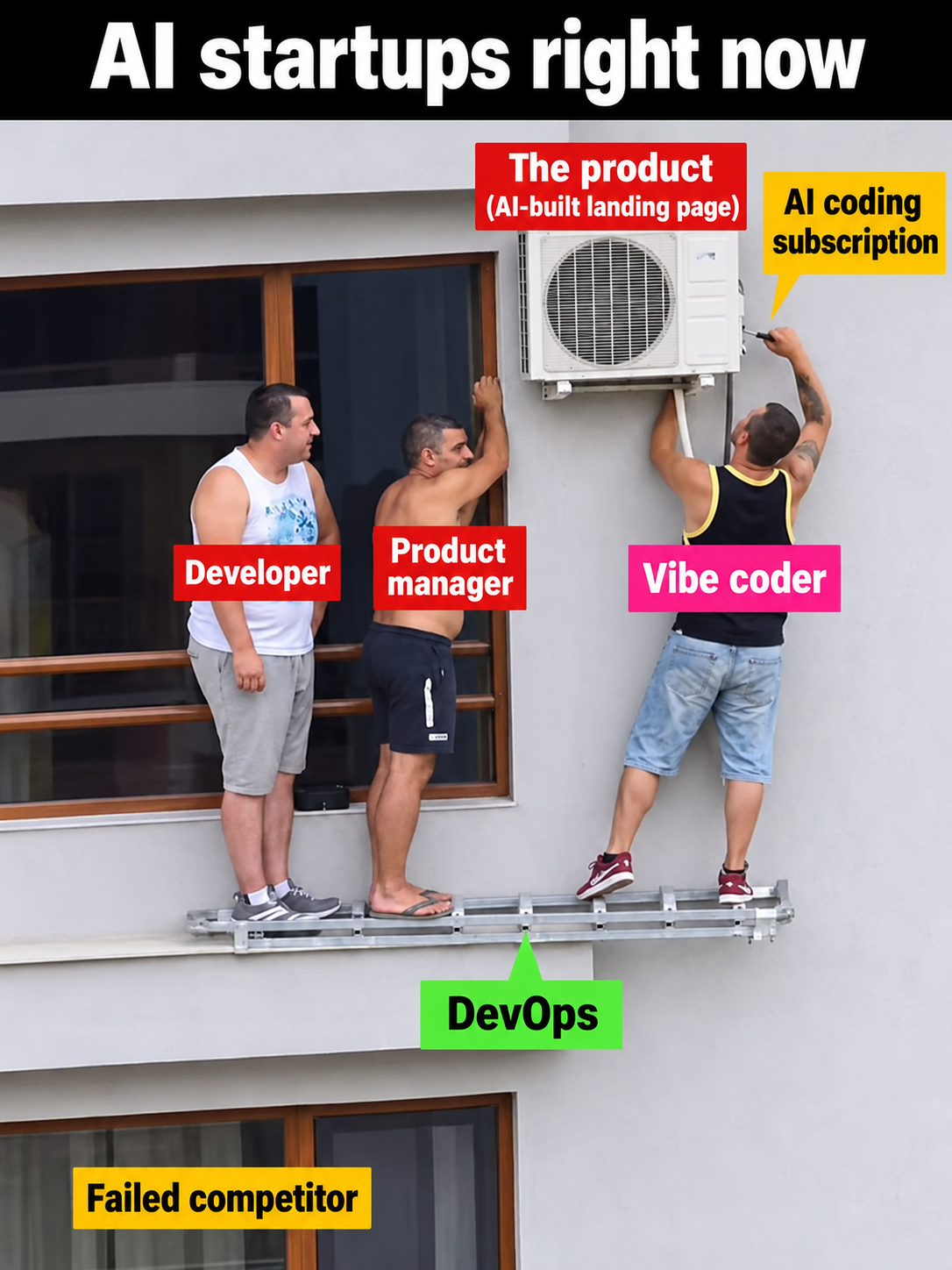
They promised us automation would eliminate all manual labor. Instead, we're out here duct-taping circuit boards to sticks because the legacy system from 2003 needs to interface with the new IoT sensor array and nobody budgeted for proper mounting hardware. The future is now, and it's held together with electrical tape and prayers. Turns out "technologically advanced" just means we have more sophisticated ways to MacGyver solutions when the budget gets slashed and the deadline stays the same. At least the stick is biodegradable, so we're technically green tech now.

Not Knowing To Code

Not Knowing To Code
Plot twist: they're both the same person at different stages of their career. AI Engineers out here getting six-figure salaries by writing prompts and calling APIs while traditional devs are grinding through LeetCode mediums at 2 AM. The real kicker? Both groups are equally terrified when asked to implement a linked list from scratch. The modern tech industry has basically decided that knowing how to sweet-talk GPT-4 into generating React components is just as valuable as actually understanding what useState does under the hood. And honestly? They might not be wrong. Why spend years mastering algorithms when you can just ask ChatGPT and hope it doesn't hallucinate a sorting function that only works on Tuesdays?

AI Is Fighting Basic Laws Of Economy (And Losing)

AI Is Fighting Basic Laws Of Economy (And Losing)
The automobile, the lightbulb, the personal computer—all revolutionary inventions that followed a simple pattern: build something people want, and they'll throw money at you. Fast forward to 2024, and AI companies have somehow reversed this entire business model. They've built products that cost billions in compute and electricity, users absolutely love them, and now they're desperately begging those same users to actually want the product they're already using. The punchline? Every previous tech revolution had investors asking "will people use this?" while AI has investors screaming "PLEASE want this, we're burning through venture capital faster than our GPUs burn through kilowatts!" Training models costs more than a small country's GDP, inference isn't getting cheaper, and somehow the pitch has devolved from "disrupting industries" to "pretty please develop a dependency on our chatbot." Supply and demand just left the chat—along with profitability, apparently.

Somethings Supporting Those Umm Technologies

Somethings Supporting Those Umm Technologies
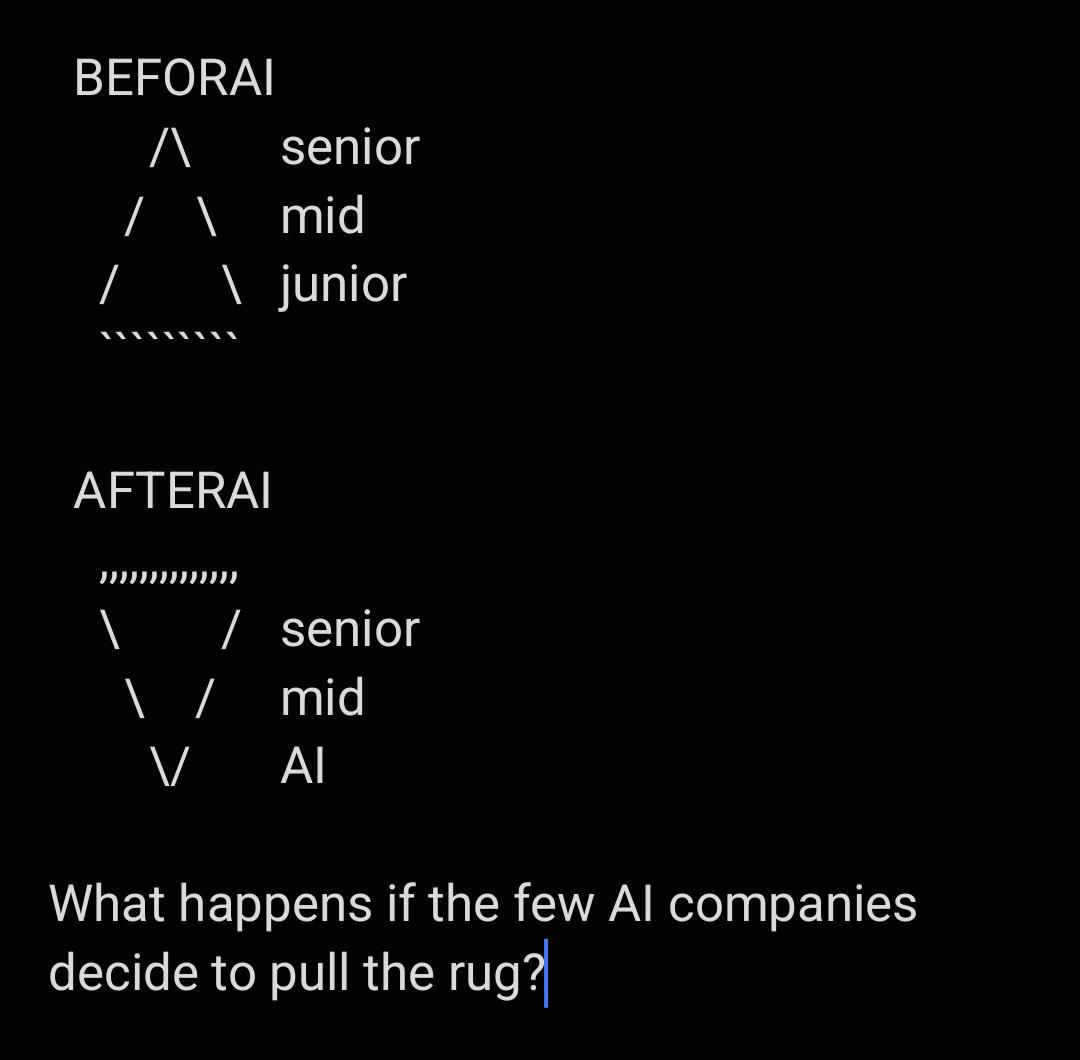
Ah yes, the classic tech industry anatomy lesson. OpenAI and Microsoft Copilot are getting all the attention up top, looking shiny and impressive, while the real MVPs—FOSS projects, independent artists, and venture capital—are doing the heavy lifting down below. It's almost poetic how these AI giants are basically standing on the shoulders of... well, everything else. OpenAI scraped half the internet (including your GitHub repos, you're welcome), Copilot trained on millions of lines of open-source code, and both are propped up by billions in VC money that's desperately hoping this AI bubble doesn't pop before they exit. The irony? The open-source community built the foundation, artists unknowingly donated their work to the training sets, and VCs threw cash at it like confetti. Meanwhile, the fancy AI tools get all the credit while casually forgetting to mention the awkward "how did we get this data again?" conversation. Classic tech move—stand on giants, claim you're flying.

Dreaming Of A Stable Dev Career

Dreaming Of A Stable Dev Career
Oh honey, you thought you'd have a nice, peaceful career writing code and sipping artisanal coffee? THINK AGAIN. Here we have the modern software developer's fever dream: desperately trying to build a stable, long-lasting career while getting absolutely PUMMELED by the holy trinity of career destruction. First up, AI hype is out here threatening to replace you with a chatbot that can't even count the letter 'r' in "strawberry." Then layoffs are casually stabbing you in the back because some CEO decided they need a fourth yacht. And finally, economic uncertainty is just vibing in the corner, making sure you never feel too comfortable. It's like trying to build a sandcastle during a hurricane while someone yells "JUST LEARN RUST" at you. The tech industry really said "job security" and laughed in venture capital.

Bubbles Gonna Pop Sooner Than We Thought

Bubbles Gonna Pop Sooner Than We Thought
When AI tools and low-code platforms started promising that anyone could build software in minutes, the tech industry collectively nodded and said "sure, Jan." But someone finally said the quiet part out loud: if coding suddenly became 10x easier without any actual innovation in computer science, maybe—just maybe—the whole thing is smoke and mirrors. It's like watching someone claim they invented a revolutionary diet pill that lets you eat whatever you want, except the pill is just a rebranded multivitamin and aggressive marketing. The real kicker? The industry's been hyping these "revolutionary" tools while senior devs are still debugging the same CSS alignment issues they were fighting in 2015.

Just Can't Wait

Just Can't Wait
Nothing says "schadenfreude" quite like watching tech companies speedrun their way into a bubble burst. Everyone's throwing billions at AI like it's 1999 and domain names, except now it's chatbots that hallucinate legal citations and generate images with seven fingers. Meanwhile, developers are sitting here with popcorn, watching companies replace their support teams with LLMs that apologize for being unable to help in 47 languages. The collapse is going to be spectacular, and honestly? Some of us have been waiting for this plot twist since the first "AI will replace all programmers" think piece dropped.

The Lore Of A Vibe Coder

The Lore Of A Vibe Coder
The AI hype cycle speedrun, perfectly captured in four stages of clown makeup. Started with the promise that AI would revolutionize everything, got seduced into thinking you could skip fundamentals and just prompt your way to a senior dev salary. Then reality hit: those "free" AI tools either got paywalled harder than Adobe Creative Cloud or started running slower than a nested loop in Python. Now you're sitting there with zero transferable skills, a LinkedIn full of AI buzzwords, and the crushing realization that "prompt engineer" isn't actually a career path. The kicker? While you were vibing, the devs who actually learned their craft are still employed. Turns out you can't Ctrl+Z your way out of not knowing how a for-loop works.

Let Me Get This Straight, You Think OpenAI Going Bankrupt Is Funny?

Let Me Get This Straight, You Think OpenAI Going Bankrupt Is Funny?
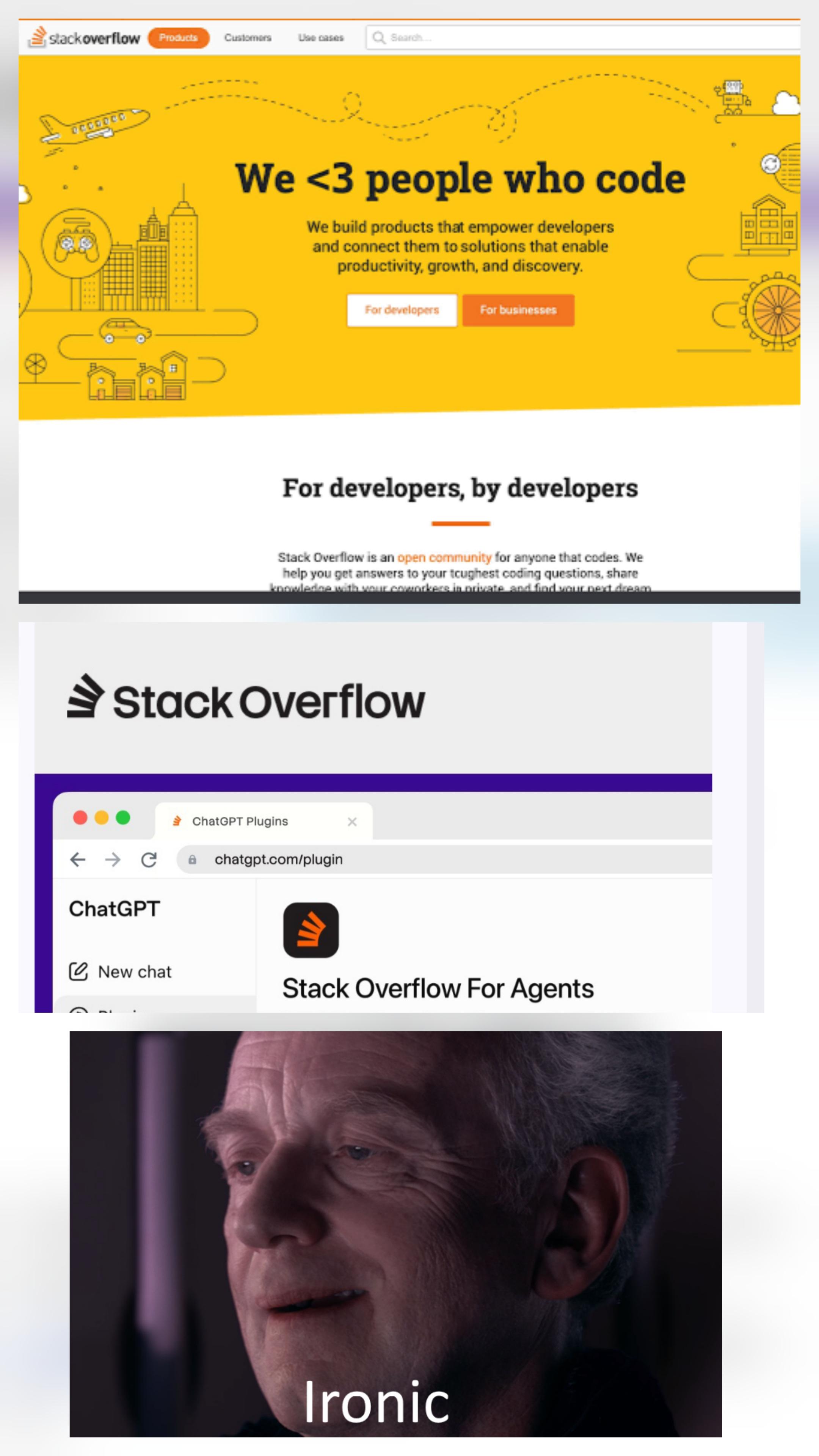
So OpenAI is burning through $44 billion like it's debugging a production incident at 2 AM, and everyone's making jokes about them running out of runway by 2027. The tech world is basically split into two camps: those nervously laughing at the irony of an AI company that can't figure out sustainable business models, and developers who've become so dependent on ChatGPT that the thought of it disappearing is genuinely terrifying. The Joker here represents every developer who's been copy-pasting ChatGPT code for the past year. Yeah, it's funny that a company valued at $157 billion might go bankrupt... until you realize you've forgotten how to write a for-loop without AI assistance. The cognitive dissonance is real: we mock their business model while simultaneously having ChatGPT open in 47 browser tabs. It's like watching your favorite Stack Overflow contributor announce retirement. Sure, you can laugh, but deep down you know you're about to be very, very alone with your bugs.