System design Memes

Posts tagged with System design

Why Is It So Hard

Why Is It So Hard
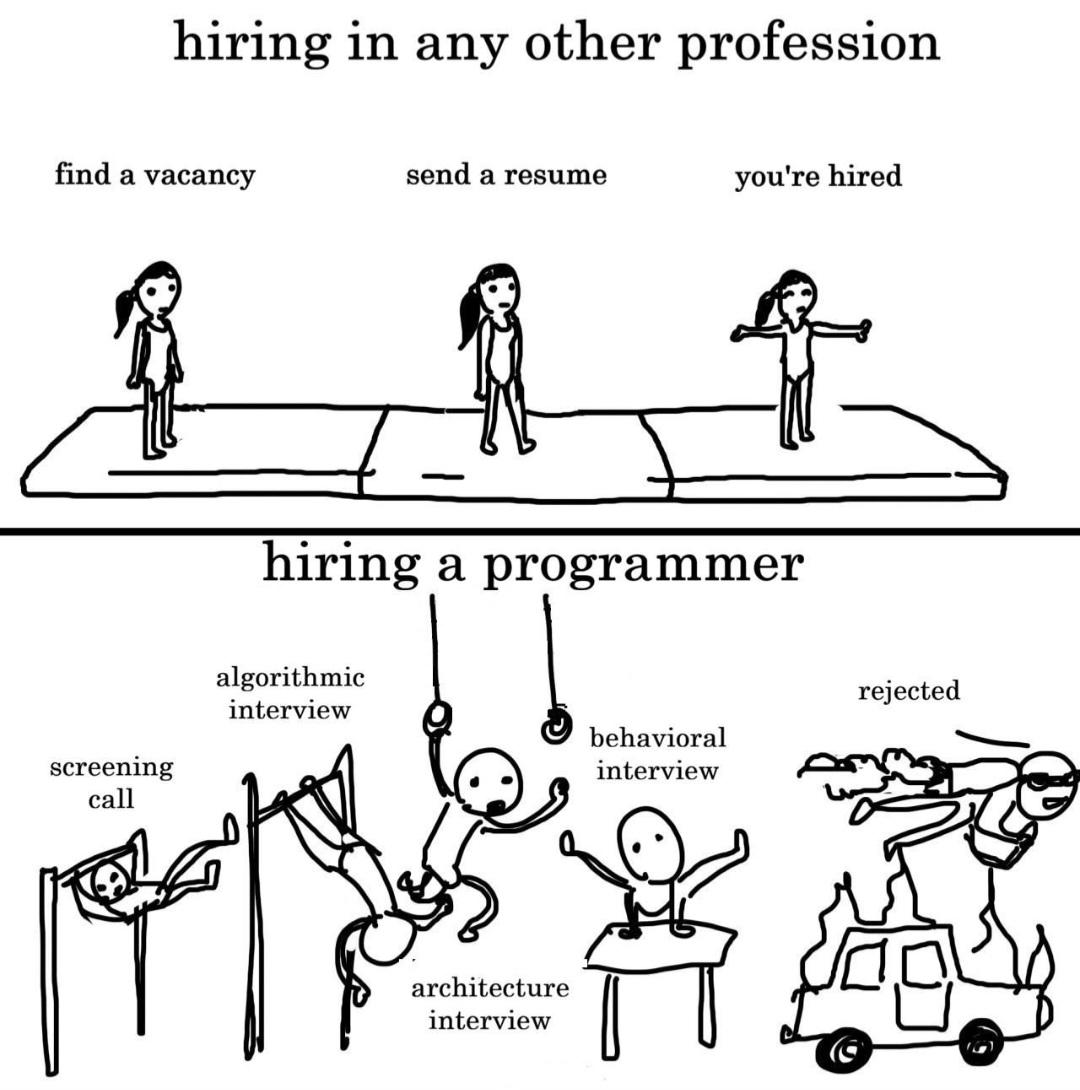
Oh, you thought getting a job was supposed to be a normal human experience? WRONG. Welcome to the programmer hiring gauntlet where companies have decided that a simple "can you code?" is too pedestrian. Instead, you get to navigate an Olympic-level obstacle course complete with: a screening call where you awkwardly explain your GitHub for 30 minutes, an algorithmic interview where you're expected to reverse a binary tree while someone watches you sweat, an architecture interview where you design Netflix from scratch on a whiteboard, and a behavioral interview where you pretend you've never had a single conflict with a coworker in your entire life. Meanwhile, literally EVERY other profession gets to just... send a resume and have a conversation like civilized humans? The audacity! The drama! The unnecessary complexity of it all! And after surviving this circus of chaos, they hit you with "sorry, we went with someone else." Absolutely unhinged.

Every Damn Time

Every Damn Time
You start with good intentions, reading all the Medium articles about how microservices will solve all your problems and make you scalable like Netflix. Fast forward six months and you're debugging why Service A can't talk to Service B because Service C is down, which somehow broke Service D's authentication, and now you're maintaining 47 different repos with their own CI/CD pipelines. Meanwhile, your buddy's startup is running a "distributed tightly coupled monolith" - basically a monolith that they split across multiple servers for absolutely no reason except to put "microservices" on their resume. It's got all the complexity of microservices with none of the benefits. Beautiful disaster. The real kicker? Both architectures will work until they don't, and when they fail, you'll be the one on call at 2 AM trying to figure out which service decided to have an existential crisis.

Distributed Stress

Distributed Stress
You know what's funny? The entire industry convinced itself that breaking one application into 700 tiny pieces would somehow make life easier. Spoiler alert: it didn't. Now instead of debugging one codebase, you're playing detective across a distributed nightmare where service A can't talk to service B because service C is down, and nobody knows why because the logs are in three different monitoring tools. Meanwhile, that one company still running a monolith? Their dev is literally chilling on a boat with normal cortisol levels, deploying with a single button press, and actually going home at 5 PM. The grass isn't always greener on the microservices side—sometimes it's just more complicated grass that requires Kubernetes to water it.

In My Time I Used To Know The Needs Of All Of The Savanna

In My Time I Used To Know The Needs Of All Of The Savanna
You spend 3000 hours meticulously managing every animal in Zoo Tycoon, knowing exactly when the hippo needs enrichment and what temperature the penguins prefer, but someone tells you video games are a waste of time? The audacity. The beautiful irony here is that those "wasted" hours taught you resource management, optimization, budgeting, and complex system thinking—basically the same skills you now use to architect microservices and manage cloud infrastructure. Except back then, the stakes were whether your digital crocodile had enough swamp space, not whether your Kubernetes cluster can handle Black Friday traffic. Every senior dev has that one game they sunk thousands of hours into. Zoo Tycoon, SimCity, Factorio, Dwarf Fortress—they're all just distributed systems with better graphics. Your parents said it was a waste. Your manager now pays you six figures for the exact same problem-solving skills.

WHTYEFZ But Did You Document It Acrylic Organizer Pencil Pen Holder, HR Humor Office Desk Accessories Holder, Funny Office Decor Gifts for Women Human Resources Accountant Programmer Graphic Coworker

WHTYEFZ But Did You Document It Acrylic Organizer Pencil Pen Holder, HR Humor Office Desk Accessories Holder, Funny Office Decor Gifts for Women Human Resources Accountant Programmer Graphic Coworker
Material: Made of high-transparency acrylic, it is sturdy, durable, and easy to clean. The edges are finely polished, smooth and rounded, ensuring safety when handling items without injury, making it…

I Don't Want To Play With MCPs Anymore

I Don't Want To Play With MCPs Anymore
When you finally discover microservices and suddenly your monolithic codebase feels like that embarrassing childhood friend you've outgrown. MCPs (Master Control Programs—those giant, unwieldy monolithic applications) getting tossed aside faster than deprecated jQuery plugins. The Dev here represents every engineer who just attended their first Docker workshop and now thinks splitting a perfectly functional app into 47 different services communicating through REST APIs is peak architecture. Sure, your deployment pipeline now takes 3 hours instead of 10 minutes, and you need a PhD to debug anything, but at least you can tell people at meetups that you "do microservices." Reality check: Sometimes that monolith was actually holding things together pretty well, but we don't talk about that after we've already rewritten everything.

Average Architecture Meeting

Average Architecture Meeting
That moment when your entire system architecture is already a tangled mess of microservices, message queues, and three different database types, but the CEO bursts in with the revolutionary idea to "just add AI" to everything. The wall behind him is literally covered in architectural diagrams that look like a bowl of spaghetti had a baby with a subway map, but sure, let's sprinkle some machine learning on top. That'll definitely simplify things. The best part? Everyone in that room knows it'll take 6 months to untangle the existing architecture, but the CEO already promised AI features to investors next quarter. Time to add another node to that beautiful chaos wall and hope the load balancer doesn't cry.

It's Not Microservices If Every Service Depends On Every Other Service

It's Not Microservices If Every Service Depends On Every Other Service
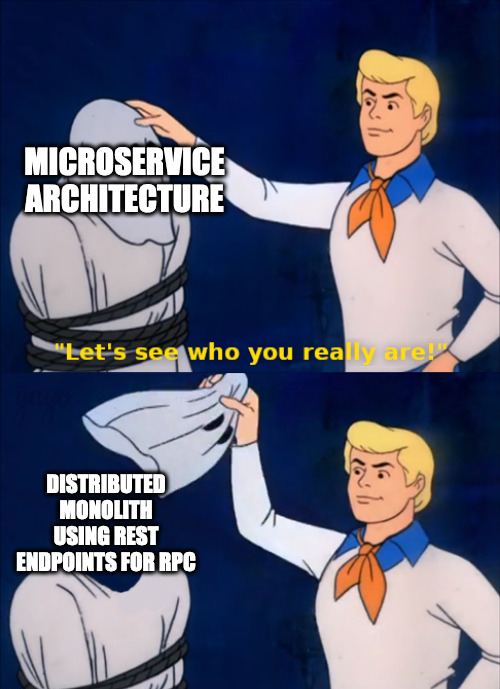
Oh honey, someone said "microservices" in a meeting and suddenly the entire engineering team went feral and split their beautiful monolith into 47 different services that all call each other synchronously. Congratulations, you've created a distributed monolith with extra steps and network latency! 🎉 The unmasking here is BRUTAL. You thought you were being all fancy with your "microservice architecture," but really you just took one tangled mess and turned it into a tangled mess that now requires Kubernetes, service mesh, distributed tracing, and a PhD to debug. When Service A needs Service B which needs Service C which needs Service A again, you haven't decoupled anything – you've just made a circular dependency nightmare that crashes spectacularly at 2 PM on a Friday. The whole point of microservices is LOOSE COUPLING and independent deployability, not creating a REST API spaghetti monster where changing one endpoint breaks 23 other services. But sure, tell your CTO how "cloud-native" you are while your deployment takes 45 minutes and requires updating 12 services in the exact right order. Chef's kiss! 💋

Trust Me Bro We Don't Need Caching

Trust Me Bro We Don't Need Caching
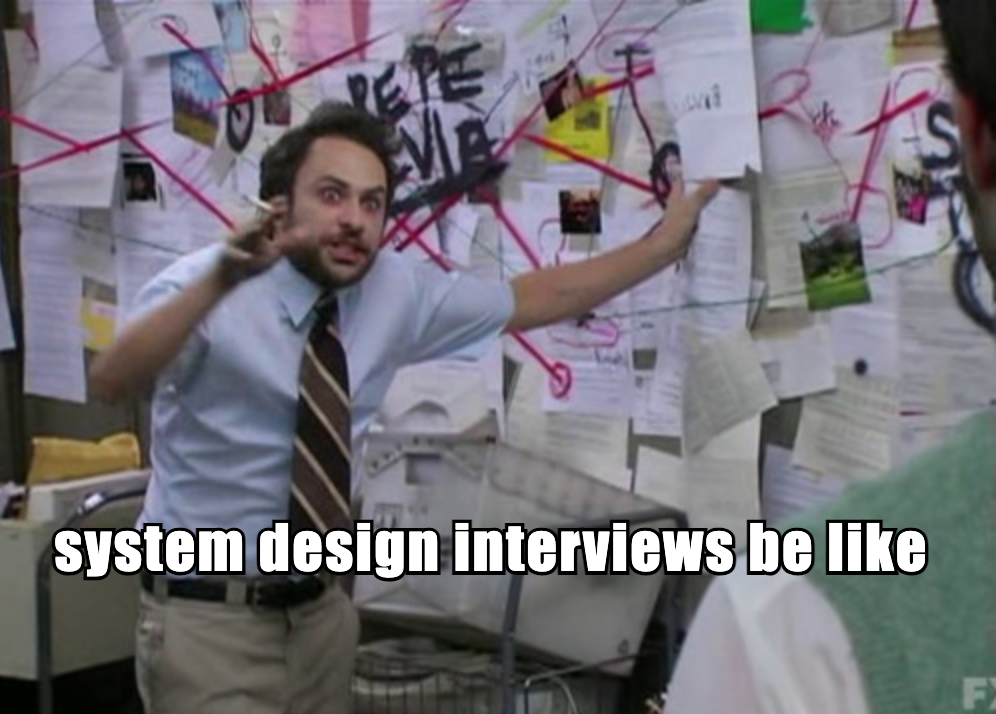
You know that one senior dev who shows up to the system design interview with a conspiracy theorist's wall of chaos? Red strings connecting random boxes, sticky notes everywhere, and somehow they're convinced their architecture that hits the database 47 times per page load is "fine actually." Meanwhile they're out here explaining why caching is "premature optimization" while their API response times are measured in geological epochs. Sure buddy, let's just query that unindexed table with 50 million rows on every request. What could go wrong? The confidence-to-competence ratio here is absolutely off the charts. They've got the energy of someone who's never been paged at 2 AM because Redis went down and suddenly realized why everyone kept saying "just cache it."

Stay In Your Lane Bruv

Stay In Your Lane Bruv
You know that junior dev who just finished a React tutorial and suddenly thinks they're qualified to redesign your entire microservices architecture? That's what's happening here. The vibe coder—bless their heart—has wandered into a system design meeting armed with nothing but confidence and a Figma account. The architects are giving them that look. You know the one. The "please stop talking before you suggest we store everything in localStorage" look. System design meetings are where you discuss scalability, data flow, and whether your database will survive Black Friday traffic. It's not the place for "what if we just made it look cooler?" Stay in your lane, focus on those CSS animations, and let the backend folks argue about CAP theorem in peace.

Wonder Where Are Those System Design Experts

Wonder Where Are Those System Design Experts
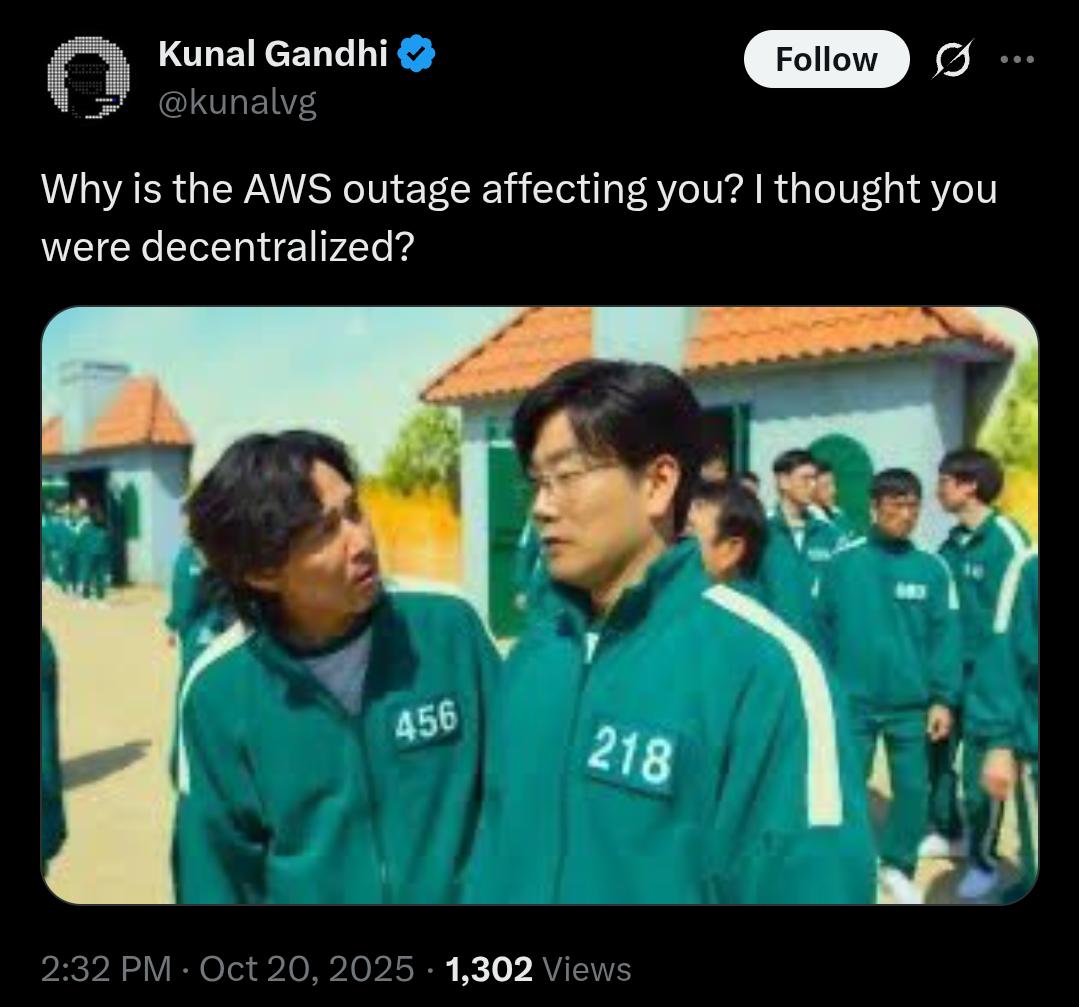
The classic "we're decentralized" sales pitch vs. reality check when AWS goes down. Blockchain bros and Web3 evangelists love preaching about decentralization until their "revolutionary" platforms crash because they're secretly running on the same centralized cloud infrastructure as everyone else. It's like claiming your car doesn't need gas while hiding a full tank under the hood. The irony is delicious - nothing exposes tech hypocrisy faster than an AWS outage revealing your single point of failure!

Endian Justifies The Means

Endian Justifies The Means
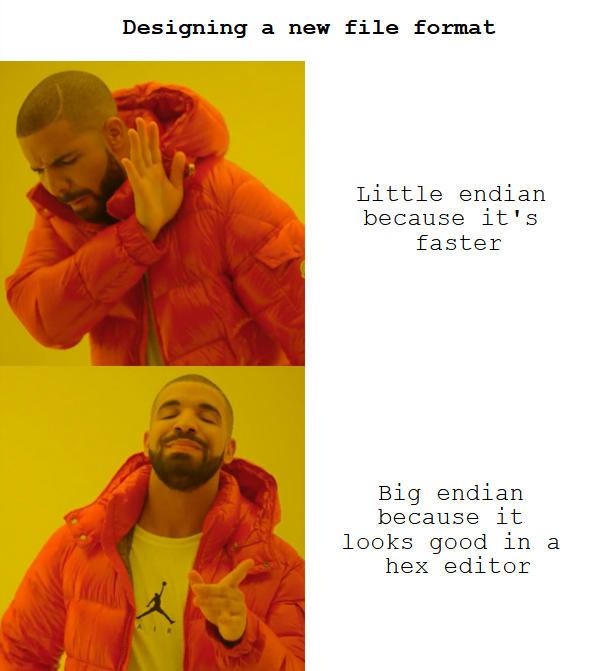
Nobody in the history of programming has ever chosen an endianness based on performance. But choosing big endian because it "looks pretty" in a hex editor? That's the kind of arbitrary decision that haunts codebases for decades. Some dev probably made this call back in 2003 and now there's an entire team maintaining compatibility layers for it. For the uninitiated: endianness determines how bytes are ordered in memory. Little endian (0x01 0x02 0x03 0x04) reads as 0x04030201, while big endian reads naturally as 0x01020304. Absolutely nobody cares until you need to transfer data between systems, then suddenly everyone cares very much .

Corsair Galleon 100 SD RGB Mechanical Wired Gaming Keyboard – Black

Corsair Galleon 100 SD RGB Mechanical Wired Gaming Keyboard – Black
Elgato Stream Deck Integration: Customizable Stream Deck keys and dials give you precise, real-time command of your entire gaming setup—without adding another device to your desk · Streamline your pl…

The Perfect Architectural Diagram

The Perfect Architectural Diagram
The perfect architectural diagram doesn't exi— Backend: chaotic outdoor cooking with multiple fires, pots bubbling over, smoke everywhere. Just raw functionality with zero aesthetics. The digital equivalent of "it ain't pretty but it works." Frontend: pristine white wedding reception setup. Everything perfectly aligned, clean, and ready to impress the users who'll never know about the kitchen chaos that makes it all possible. APIs: The stoic waiters standing between these two worlds, silently transferring data back and forth with emotionless efficiency. They don't care about the mess they're carrying or how pretty the destination is - they just pass the payload and move on. And we call this masterpiece "modern architecture." Chef's kiss.