Surveillance Memes

Posts tagged with Surveillance
The Un Abomber. Otherwise, I Agree.

The Un Abomber. Otherwise, I Agree.
You know things have gotten weird when a manifesto written by a literal terrorist starts sounding like reasonable tech criticism. Back in 1997, his anti-technology rants probably seemed unhinged and extreme. Fast forward to today, and we're all nodding along like "yeah, surveillance capitalism is kinda messed up" and "maybe giving every app access to our entire lives wasn't the best idea." Between data breaches every other week, AI scraping everything we've ever posted, social media algorithms destroying mental health, and tech companies treating privacy policies like a creative writing exercise, suddenly those 1997 warnings hit different. The guy was wrong about the solution, but the problem diagnosis? Chef's kiss accurate. We built the dystopia he warned about, except instead of fighting it, we just accepted it and now argue about which subscription service has the best UI.

If Something Is Free, You Are The Product

If Something Is Free, You Are The Product
That sketchy free VPN promising to "protect your privacy" is basically selling your browsing history to the highest bidder faster than you can say "data breach." Sure, you're not paying with money—you're just paying with every single website you visit, your location data, and probably your firstborn's social security number. The absolute AUDACITY of these services acting like they're doing you a favor while literally monetizing your entire digital existence. They're out here running a full-blown surveillance operation disguised as a security tool. It's like hiring a bodyguard who secretly films you 24/7 and sells the footage to tabloids. Pro tip: If you actually care about privacy, pay for a reputable VPN. Your data is worth way more than that $5/month subscription, trust me.

Dumb Glasses

Dumb Glasses
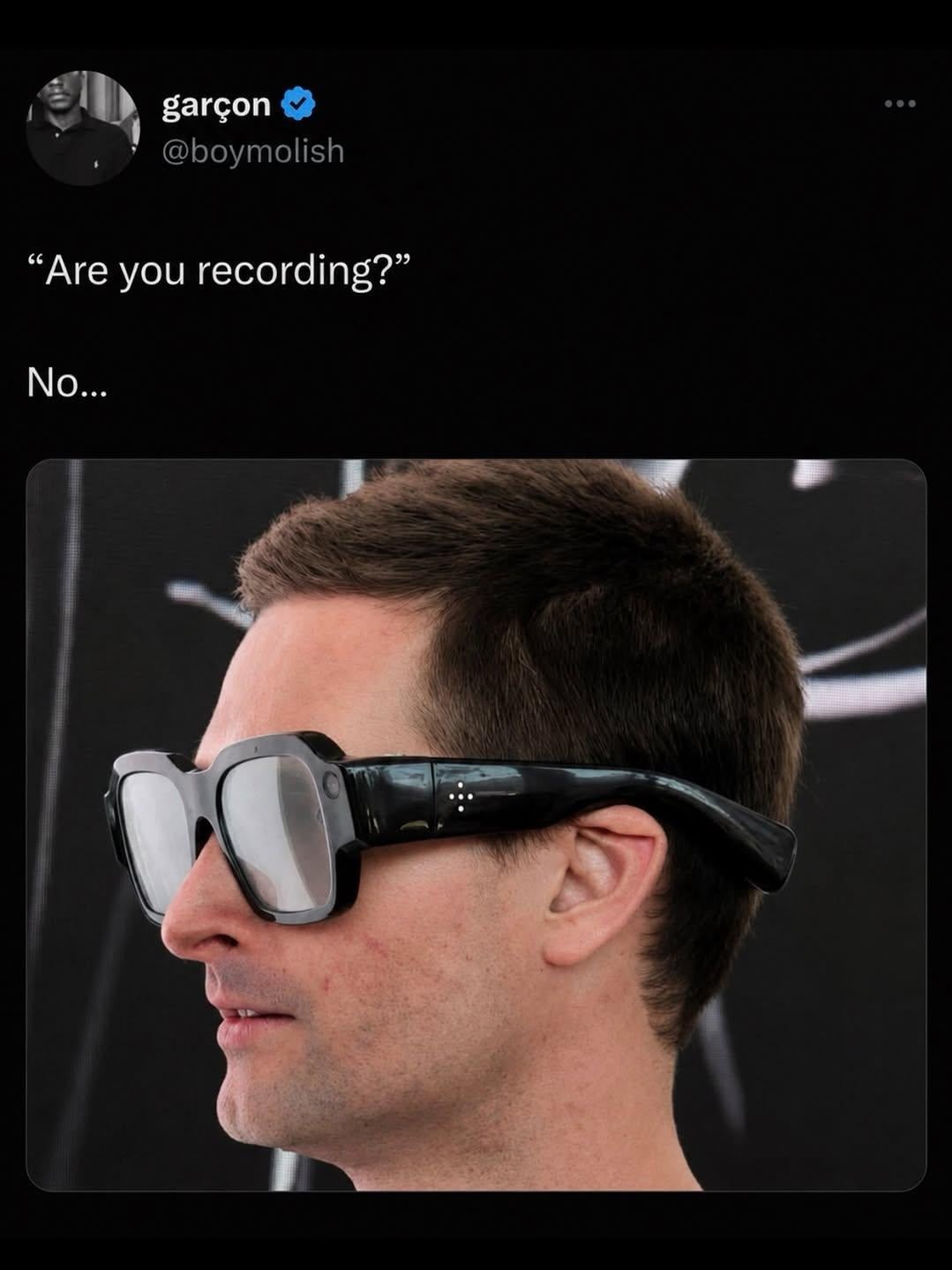
Meta releases smart glasses with hidden cameras that can secretly record people, and someone's immediate response is "I want a shirt with a QR code that installs malware to brick anyone's phone who tries to film me." That's some next-level defensive programming right there. Instead of just asking people not to record, we're going straight for the nuclear option: weaponized QR codes that turn phones into expensive paperweights. The "Modern day Medusa" comment is *chef's kiss* because instead of turning people to stone by looking at them, you're bricking their devices by being looked at. It's like implementing a reverse Denial of Service attack where the attacker becomes the victim. The irony? Meta's already been collecting your data for years through their apps, but NOW everyone's worried about cameras in glasses. Where was this energy when we all installed Facebook Messenger? The real programmer move here is treating privacy invasion as an API vulnerability and patching it with malicious payload delivery via QR code scanning. It's basically SQL injection for the physical world.

I Love Having To Put My Id To Do Anything! Yay! Protecting The Children!

I Love Having To Put My Id To Do Anything! Yay! Protecting The Children!
Oh, so the ENTIRE age verification crusade was just a Trojan horse for mass surveillance? *shocked Pikachu face* Who could have POSSIBLY seen this coming?! New York's Attorney General wanted Steam to collect invasive data on users worldwide (because apparently jurisdiction is just a suggestion now) to catch people using VPNs. You know, for the CHILDREN. Except... payment methods already verify age. So really they just want to know everything about you, track your location, and build a nice little data profile. But hey, it's all about protecting kids, right? RIGHT?! The astronaut meme format absolutely DELIVERS here. "Wait, the whole lawsuit demanding more data collection and age verification was never about protecting children?" *points gun* "Always has been." Just corporate surveillance dressed up in a "think of the children" costume. Classic move—wrap privacy invasion in moral panic and watch everyone hand over their data willingly. Fun fact: Valve basically said "our users actually care about privacy, so no thanks" and called out this nonsense. Rare corporate W.

I Mean...

I Mean...
Microsoft out here trying to defend telemetry while Google's like "yeah but I only track your browsing history, search queries, location, emails, and literally everything you do online." Apple's playing the privacy card while still collecting data, just with better PR. And then there's Linux—the only one genuinely confused why anyone would even want to spy on users. The beauty here is that Linux is the kid at the party who doesn't understand why everyone else is being shady. Open source transparency hits different when you realize you can literally read the code and see there's no telemetry nonsense baked in. Meanwhile, the big three are just arguing over who's less invasive, which is like debating who's the tallest dwarf.

Spitting The Facts

Spitting The Facts
Remember when AI coding assistants were supposed to make us more productive? Turns out they also make excellent surveillance tools. Copilot's out here collecting your keystrokes, analyzing your coding patterns, and probably judging your variable names. That function you copied from Stack Overflow at 2 PM? Yeah, Microsoft knows. That hacky workaround you're too embarrassed to commit? Logged. Your tendency to write "TODO: fix this later" and never come back? Documented. Nothing says "developer productivity tool" quite like an AI that's simultaneously autocompleting your code and building a comprehensive dossier on your programming habits. At least it hasn't started suggesting therapy sessions based on your commit messages. Yet.

Linux Be Like

Linux Be Like
Linux sitting there like the only kid in class who didn't cheat on the exam while everyone else is comparing notes. Microsoft's out here with telemetry baked into every corner of Windows, Google's entire business model is literally "we know what you searched at 2 PM last Thursday," and Apple's playing the privacy card while still knowing your exact location down to the centimeter. Meanwhile, Linux is just genuinely confused why anyone would even want to collect user data in the first place. Open source means open code—can't hide spyware when thousands of neckbeards are reading every line you commit. It's like showing up to a surveillance capitalism party and being the only one who brought actual privacy.

Out Of Touch Corpo's Think We're Really Gonna Accept Their Surveillance Slop

Out Of Touch Corpo's Think We're Really Gonna Accept Their Surveillance Slop
When Discord announced they're adding AI features and TeamSpeak suddenly started showing signs of life after being in hibernation since 2009, developers everywhere felt a disturbance in the Force. Discord (the corpo overlord) thought devs would just roll over and accept their new "features" that definitely won't be used to train AI models on your private conversations. Meanwhile, TeamSpeak – the OG voice chat that everyone thought was six feet under – casually strolls back into the scene like "reports of my death were greatly exaggerated." Turns out self-hosted, privacy-respecting software doesn't look so ancient when the alternative is having an AI bot lurking in your voice channels. Who knew that not wanting your debugging sessions fed into a language model would make TeamSpeak relevant again? The irony is delicious: companies keep adding "features" nobody asked for, and suddenly software from the dial-up era becomes the hot new thing.

Microshit And Co-Fuckup At Its Finest

Microshit And Co-Fuckup At Its Finest
So Microsoft recalled their Recall feature (the irony is chef's kiss) because people rightfully freaked out about their AI taking constant screenshots of everything they do. Privacy concerns? Nah, never heard of 'em. But here's the kicker: they're like that sketchy ex who can't take a hint. Every. Single. Update. They keep trying to slip Recall back in, hoping you won't notice. "Oh sorry, did we accidentally enable screenshot surveillance again? Our bad! Must've been a bug." It's the digital equivalent of someone saying "I respect your boundaries" while actively climbing through your window. Classic Microsoft move—when users say no, they hear "try again later with more persistence."

Hail Massgrave!

Hail Massgrave!
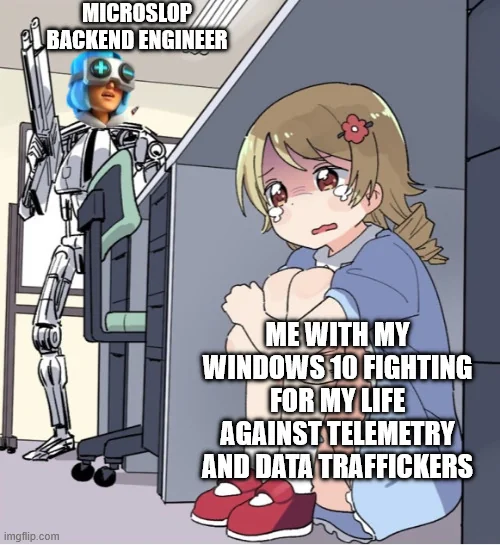
Oh, the sheer AUDACITY of opening PowerShell twice during a fresh Windows setup! Microsoft's surveillance system is apparently on high alert, watching you like a hawk because clearly you're about to do something absolutely SCANDALOUS with that command line. For context, Massgrave is a popular open-source Windows activation tool that runs via PowerShell scripts. So Microsoft sees you launching PowerShell for the second time and is like "Hold up, wait a minute, something ain't right here..." 👀 The paranoia is REAL. You could literally be checking your IP address or creating a directory, but nope—Microsoft's already writing your name down in their naughty list. Big Brother Bill is watching, and he's VERY concerned about your PowerShell habits.

When Someone Shares A Social Media Link

When Someone Shares A Social Media Link
You know that friend who sends you a YouTube link that's basically a novel? Yeah, those URLs with ?utm_source=facebook&utm_medium=social&utm_campaign=spring2024&fbclid=IwAR2x... going on for three miles. Every single one of those parameters is tracking where you came from, what you clicked, and probably what you had for breakfast. The privacy-conscious dev in you wants to strip all that surveillance garbage before you click, but then you realize you'd need to explain UTM parameters to your non-tech friends and suddenly you're the paranoid guy at the party. Just smile, nod, and mentally note that Facebook now knows you two are connected. Again. Pro tip: Everything after the ? is usually tracking. You're welcome.

The Illusion Of Privacy

The Illusion Of Privacy
Chrome asking which website you'd like to see is like a stalker asking what you want for dinner—they already know, they're just being polite. User thinks incognito mode is some kind of witness protection program, but Chrome's just putting on a trench coat while still taking notes. Spoiler: Google knows. Google always knows. Incognito mode stops your roommate from seeing your search history, not the entire internet infrastructure from logging your every move. It's the digital equivalent of closing your eyes and thinking you're invisible.