react Memes

Tree Shaking Maybe Works

Tree Shaking Maybe Works
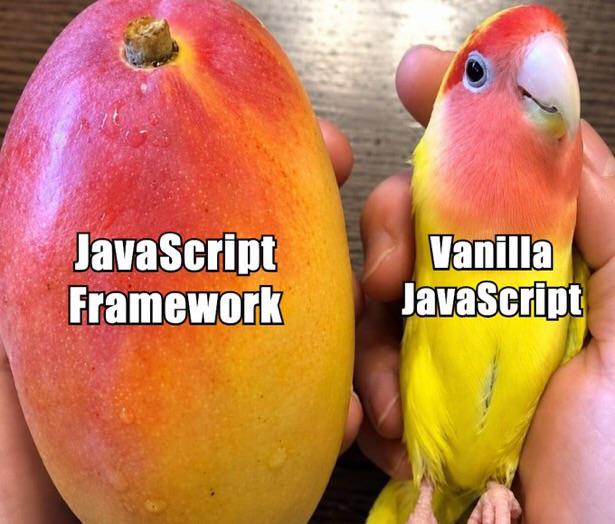
You install one tiny date formatting library and suddenly your node_modules folder is the size of a 747. Then you build your "tiny React app" and somehow it's still pulling in half the internet despite tree shaking supposedly removing unused code. Tree shaking is that magical build optimization that's supposed to eliminate dead code from your bundle. In theory, it only includes what you actually import. In practice? Well, your final bundle is still mysteriously 2MB because some dependency deep in the chain decided to import the entire lodash library for one function. The ratio here is painfully accurate. You start with a massive airplane hangar of dependencies, shake the tree real hard, and end up with... a slightly smaller airplane hangar. But hey, at least webpack says it's optimized.

Tomato Tomato

Tomato Tomato
Someone's got a hot take about React being "the worst web framework," and the React devs are standing outside like concerned parents shielding their children from profanity. The irony? React isn't even a framework—it's a library. But try explaining that distinction at a tech meetup and watch everyone's eyes glaze over faster than a useEffect with missing dependencies. The beauty here is that React devs have heard every criticism imaginable: "It's too complicated!" "JSX is ugly!" "Why do I need 47 dependencies for a button?" Yet they remain unfazed, quietly building SPAs while the framework wars rage on. Whether you call it a framework or library, whether you love it or hate it—tomato, tomato. The React ecosystem keeps chugging along with its 200MB node_modules folder regardless.

Here Comes The New React Vulnerability But This Time You Go Down In Style

Here Comes The New React Vulnerability But This Time You Go Down In Style
Someone really looked at SQL injection vulnerabilities and thought "you know what this needs? More aesthetic." TailwindSQL is the cursed lovechild of utility-first CSS and database queries that absolutely nobody asked for but everyone secretly deserves. Imagine writing className="db-users-name-where-id-1" in your React Server Components and having it ACTUALLY QUERY YOUR DATABASE. It's like someone took the concept of separation of concerns, threw it in a blender, added some Tailwind magic, and created the most beautifully dangerous footgun in web development history. The security team is having an aneurysm, the frontend devs are cackling maniacally, and somewhere a database administrator just felt a disturbance in the force. At least when your app gets hacked, your SQL injections will be perfectly styled with consistent spacing and responsive breakpoints!

Memory

Memory
React needs memory for its virtual DOM. Angular needs memory for bindings, subscriptions, and observables. Meanwhile jQuery just vibes with direct DOM manipulation, whistling past the graveyard of modern frontend architecture. The real joke here is that both modern frameworks are stressed about their memory footprint while jQuery is out here living its best life with zero abstractions and maximum selector chaos. Sure, your app might be unmaintainable spaghetti code, but at least you're not debugging memory leaks in a reactive state management system at 2 PM on a Friday.

What The Sigma

What The Sigma
The eternal cycle of React development: you close your eyes for a brief moment of peace, and boom—another CVE drops. It's like playing whack-a-mole with your dependencies, except the moles are security vulnerabilities and the hammer is your rapidly deteriorating mental health. React's ecosystem moves so fast that by the time you finish your morning coffee, three new vulnerabilities have been discovered, two packages you depend on are deprecated, and someone on Twitter is already dunking on your tech stack. The tinfoil hat cat perfectly captures that paranoid developer energy when you realize your "npm audit" output looks like a CVE encyclopedia. Pro tip: Just run npm audit fix --force and pray nothing breaks. What could possibly go wrong?

Svelte Is Better

Svelte Is Better
You know what's wild? The frontend framework wars have gotten so tribal that people will confidently argue about which one is superior without ever touching the "inferior" one. It's like reviewing a restaurant you've never been to based on Yelp comments. React devs catching strays from Svelte enthusiasts who sleep peacefully knowing they've never had to deal with useEffect dependencies or the joy of explaining why you need three different state management libraries. Meanwhile, they're out here living their best life with reactive declarations and no virtual DOM overhead. The real kicker? Both frameworks will be replaced by something else in 2 years anyway. Sweet dreams, framework warriors.

I Am Built Different

I Am Built Different
Your body is literally optimized for survival, reproduction, and energy conservation. But here you are, a biological marvel powered by mitochondria and ATP, running a JavaScript framework that re-renders the entire DOM every time someone breathes near a state variable. The skeleton knows what's up—it's grinding those bones into dust converting JSX into browser-compatible JavaScript, then watching React's reconciliation algorithm desperately try to figure out which components changed. Your CPU fans are screaming, your RAM is crying, and somewhere deep in your system monitor, a process called "node" is consuming 4GB just to display a button. Meanwhile, your ancestors survived saber-toothed tigers with less computational effort than it takes your laptop to run `npm install`. Evolution really didn't prepare us for the bundle size of modern web development.

Only React Devs Will Relate

Only React Devs Will Relate
When you've been writing JavaScript for so long that you forget how to use normal words anymore. That moment when someone says "use using" and your brain immediately autocorrects it to using use = useUsing("use") because you've been drowning in React hooks for the past 6 months. The guy whispering looks like he just discovered a revolutionary pattern while the other dude is having an existential crisis realizing he's been useState -ing, useEffect -ing, and useContext -ing so much that the word "use" has lost all semantic meaning. Welcome to the hook life, where everything is a use and nothing hurts... except your sanity.

Use Me

Use Me
The React hooks hierarchy of social acceptance visualized. Poor use is literally at the party wearing a dunce cap while everyone ignores them. Meanwhile useState is getting all the attention like the popular kid, and useEffect is down there making out with someone because developers just can't resist reaching for it. The irony? The use hook (introduced in React 19) is actually pretty powerful for handling promises and context, but it's the awkward newcomer that nobody invited. Meanwhile useEffect is getting way more action than it deserves—half the time you're using it, you probably shouldn't be. But here we are, slapping useEffect on everything like it's the solution to all our problems. Classic case of sticking with what you know versus learning the new kid's tricks.

The Mountain Climb Of Web Development

The Mountain Climb Of Web Development
The eternal mountain climb of web development in four perfect panels: First, you think you're nearly at the summit with HTML. "Almost done!" you declare, blissfully unaware of what lies ahead. Then CSS enters the chat. "Almost!" you tell yourself, as your layout breaks for the 47th time because you forgot a semicolon somewhere. Bootstrap arrives like a superhero, and suddenly you're cruising. "Oh yes!" Life is good when someone else handles the responsive design nightmare. But then... the final boss appears: the unholy trinity of modern frontend frameworks. Vue, Angular, and React stare back at you, and your soul leaves your body as you realize you now need to learn state management, component lifecycle, and why your bundle size is 14MB for a simple todo app.

Just One More Provider

Just One More Provider
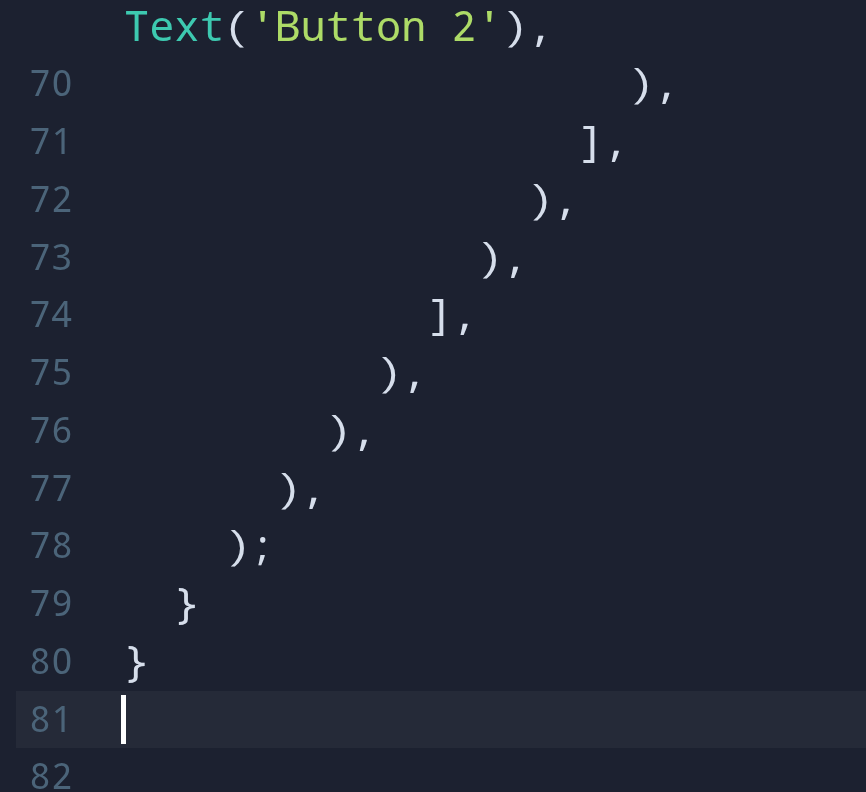
OMG, BEHOLD THE REACT PROVIDER PYRAMID OF DOOM! 😱 What started as a "simple component" has morphed into this MONSTROSITY of nested providers that would make Russian dolls jealous! The absolute AUDACITY of React developers to say "just one more provider" when their render function already looks like the tech equivalent of a family reunion where NOBODY KNOWS WHEN TO LEAVE. At this point, the closing tags are in a different ZIP code from where they started. This isn't code—it's a cry for help wrapped in angle brackets!

There's No Place Like Localhost

There's No Place Like Localhost
The classic "I'm basically a developer now" phase strikes again! Someone downloaded Cursor (a coding-focused text editor) and immediately declared themselves an engineer. Their groundbreaking achievement? Running a local development server and sharing the legendary localhost:3000 link like they've created the next Facebook. Reminds me of that time my nephew installed Python and started calling himself a "machine learning specialist." The localhost link is essentially showing their friend a website that only exists on their own computer - like inviting someone to a party at your house but not giving them your address.