marketing Memes

Software Then Vs Software Now

Software Then Vs Software Now
Remember when we had specific names for things? Yeah, those were simpler times. Now everything is "AI-powered" because slapping "AI" on literally anything gets you funding faster than you can say "gradient descent." Your text editor? AI. Your calculator? Believe it or not, also AI. That batch file that literally just renames files? You better believe some startup is calling it an "AI-driven file orchestration solution" and raising $10M Series A. The marketing folks discovered that "AI" sounds way sexier than "program" or "script," and now we're stuck in this timeline where your grandma's recipe app probably claims to use machine learning to predict whether you'll like chicken parmesan. Spoiler: it's just an if statement.

About Recent Marketing Claims…

About Recent Marketing Claims…
Graphics card marketing teams have entered their villain era. NVIDIA and AMD keep slapping new acronyms on upscaling tech and claiming each one "looks better than native resolution!" First DLSS supposedly beats native rendering, now DLAA is supposedly better than TAA. Next they'll tell us 720p with DLSS 17 looks better than looking at things with your actual eyeballs. The gaming industry has basically turned into "why render at 4K when you can render at 1080p and let AI hallucinate the rest?" Sure, the performance gains are real, but calling upscaled imagery "better than native" is like saying instant coffee tastes better than freshly ground beans. Marketing departments are out here gaslighting us into thinking less is more.

When People Are Describing The Game They're Working On

When People Are Describing The Game They're Working On
You know that one indie dev friend who won't shut up about their "cozy farming sim with roguelike elements"? Yeah, they've used the word "cozy" approximately 47 times in the last 10 minutes. The gaming industry has collectively decided that "cozy" is the magic word that makes investors throw money at you and players smash that wishlist button. It's gotten to the point where even survival horror games are being pitched as "cozy existential dread simulators." The real kicker? It works. Slap "cozy" on literally anything—fishing, cooking, tax filing, debugging segmentation faults—and suddenly you've got a viable game concept. The word has been so overused it's lost all meaning, but game devs keep reaching for it like it's the only adjective in the English language. Meanwhile, the rest of us are sitting here wondering when "cozy battle royale" is gonna drop.

Worlds Most Powerful Model

Worlds Most Powerful Model
Remember when "world's most powerful model" actually meant something? Now it's just the AI industry's version of "new and improved" on laundry detergent. Every company drops a model and slaps that exact phrase on it like they're all reading from the same marketing playbook. OpenAI does it. Then Grok. Then DeepSeek. Then Anthropic. Then Google with Gemini. It's a never-ending carousel of superlatives where everyone's simultaneously the best. The "You're here" marker pointing at Gemini is chef's kiss—because by the time you're reading this, there's probably already three more companies claiming the same title. Marketing teams discovered that developers can't resist clicking on "most powerful" the same way we can't resist clicking "compile" even though we know we forgot that semicolon.

AI Buzzwords Be Like

AI Buzzwords Be Like
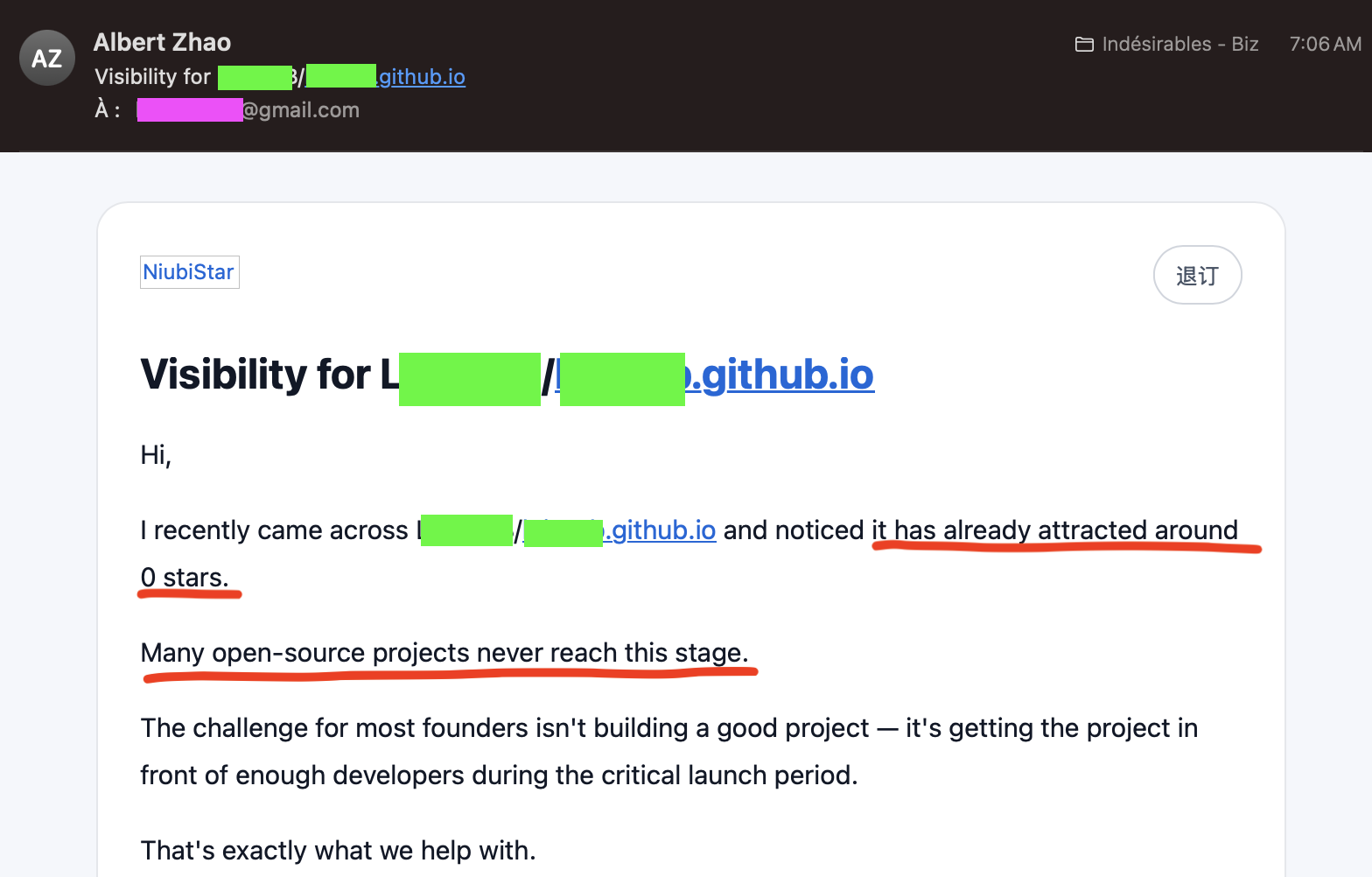
You know that moment when marketing discovers your product uses a third-party API and suddenly everything is "AI-powered"? Yeah, we've all been there. The reality: you're calling OpenAI's API with a basic prompt wrapper. The pitch deck: "Revolutionary AI-driven platform leveraging cutting-edge machine learning algorithms." Same energy as calling a database query "blockchain-enabled" back in 2017. The best part? It works. Investors eat it up, customers feel innovative, and you're just sitting there knowing it's literally three API calls and some string concatenation. But hey, the mask stays on because that's how you get funded in 2024. 🎭

AI Loops

AI Loops
Welcome to the AI arms race, where every company is trapped in an infinite loop of announcing "the world's most powerful model" every three weeks. OpenAI drops a banger, then Grok swoops in claiming they're the new king, then some other AI startup you've never heard of, then Gemini rolls up fashionably late to the party. Meanwhile, you're just sitting there watching this corporate game of musical chairs wondering when someone's gonna fix the hallucination problem. It's like JavaScript frameworks all over again, except now with billion-dollar marketing budgets and existential dread. Each model is "revolutionary" until the next one drops two weeks later. The real power move? Being the developer who just picks one and ships something instead of waiting for the next "most powerful" release.

True Story

True Story
Oracle's been flexing that "3 Billion Devices Run Java" slogan since 2009, and here we are a decade later... still 3 billion devices. Not 3.1 billion, not 4 billion—exactly 3 billion. Either Oracle's marketing team got really comfortable with that number, or Java's been running on the same devices for 10 years straight. Maybe those devices are just immortal? Or perhaps counting is hard when you're too busy suing Google over Android. The real kicker? In those 10 years, we went from flip phones to smartphones that can literally edit 4K video, but apparently Java's market share just... froze in time. It's like they found the perfect marketing tagline and decided "why fix what ain't broke?" Even if it's technically a lie at this point.

I'm A Game Dev And Someone Pirated My Game

I'm A Game Dev And Someone Pirated My Game
So you made an indie game and found it on Pirate Bay. Instead of rage-tweeting about lost revenue, you discover there's a VPN ad embedded in your torrent page. Congratulations—you're now technically making money from piracy through affiliate marketing. The real kicker? Zero leechers. Not even pirates want to finish downloading your game. That's a level of rejection that even your Steam reviews couldn't prepare you for. At least you got 10 seeders though, which is 10 more people than bought it legitimately. Fun fact: Some devs actually intentionally leak their games to torrent sites for the free marketing. It's the digital equivalent of handing out flyers, except the flyers are your entire product and nobody's paying you.

8.2 Billion Wishlists

8.2 Billion Wishlists
Game dev discovers the ancient marketing algorithm: if everyone you know wishlists your game, and everyone THEY know does the same, you'll achieve exponential growth until the entire planet owns your indie platformer. It's foolproof math, really. Just need your mom, her book club, their extended families, and approximately 8.2 billion strangers to click one button. The cat's expression perfectly captures that moment when you realize your "viral marketing strategy" requires solving a recursive function where the base case is "literally everyone on Earth." Fun fact: Steam wishlists actually DO help with visibility in their algorithm, but the platform has around 120 million active users, not 8.2 billion. So you'd need to convince every human, including uncontacted tribes and newborns, to create Steam accounts first. Priorities.

The People Interested In Playing My Game Can Be Categorised Into Two Groups

The People Interested In Playing My Game Can Be Categorised Into Two Groups
Group 1: "Stop posting and finish the game already." Group 2: "I wouldn't even know about your game if you stopped posting." The indie gamedev's eternal paradox—you're either procrastinating on social media or you're invisible. Both groups are right, which is the most painful part. You're simultaneously a marketing genius and the reason your game won't ship until 2027. The Godot engine won't save you from this existential crisis, friend.

Jira Marketing On Another Level

Jira Marketing On Another Level
Jira placed their "Big ideas start with Jira" ad on a bathroom stall toilet paper holder. You know, that thing you reach for when you're in your most vulnerable state. The genius here is twofold: first, they're literally catching you at a moment when you can't escape (captive audience strategy at its finest). Second, there's the unspoken truth that many developers have their best ideas while sitting on the throne—it's basically a meditation chamber for engineers. But the real comedy gold? Jira is the tool that turns those "big ideas" into an endless labyrinth of tickets, story points, sprint planning meetings, and blocked dependencies. So they're essentially advertising at the exact location where you'll be contemplating your life choices after your "big idea" gets split into 47 subtasks across 6 epics. The irony is chef's kiss: positioning themselves where ideas flow freely, knowing full well they're the corporate machinery that will bureaucratize those ideas into oblivion. Marketing perfection indeed.

Gb Vs GiB

Gb Vs GiB
Marketing teams out here selling you a "1TB" hard drive like they're doing you a favor, meanwhile your computer opens it and goes "lol bestie that's actually 931 GiB." The betrayal is REAL. Decimal (GB) vs binary (GiB) units is the tech industry's longest running scam and nobody talks about it enough! For context: GB uses base-10 (1000), while GiB uses base-2 (1024). So 1 GB = 1,000,000,000 bytes, but 1 GiB = 1,073,741,824 bytes. Hard drive manufacturers love using GB because bigger numbers = better sales, but your OS speaks fluent GiB. It's like ordering a footlong sub and getting 11.5 inches. Technically legal, morally questionable. The top panel showing 1000, 500, 250 is GB trying to flex with its clean decimal system, while the bottom panel's 256, 512, 1024 is GiB sitting there in its fancy binary powers looking absolutely SUPERIOR. The computer nerds know what's up. 🎩