kernel Memes

Actual Code In The Linux Kernel

Actual Code In The Linux Kernel
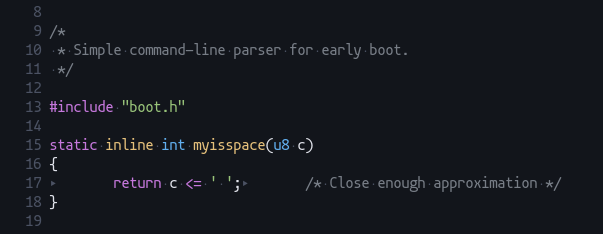
Someone actually committed a function called myisspace() to the Linux kernel that checks if a character is a space by comparing it to... the letter 'j'. And the comment? "Close enough approximation." In a codebase that powers billions of devices worldwide, where every line is scrutinized by some of the most brilliant engineers on the planet, someone decided that 'j' is basically a space character. The ASCII value of 'j' is 106, while space is 32. That's not even close! But hey, it's for a "simple command-line parser for early boot" so I guess standards are optional when your OS is still rubbing the sleep out of its eyes. The beauty here is imagining the code review: "Yeah, just use 'j' instead of ' ' (space). Ship it." This is either galaxy-brain optimization or someone's Friday afternoon commit that somehow made it through. Either way, it's living rent-free in one of the most important codebases in computing history.

Guess Linux Is Dead

Guess Linux Is Dead
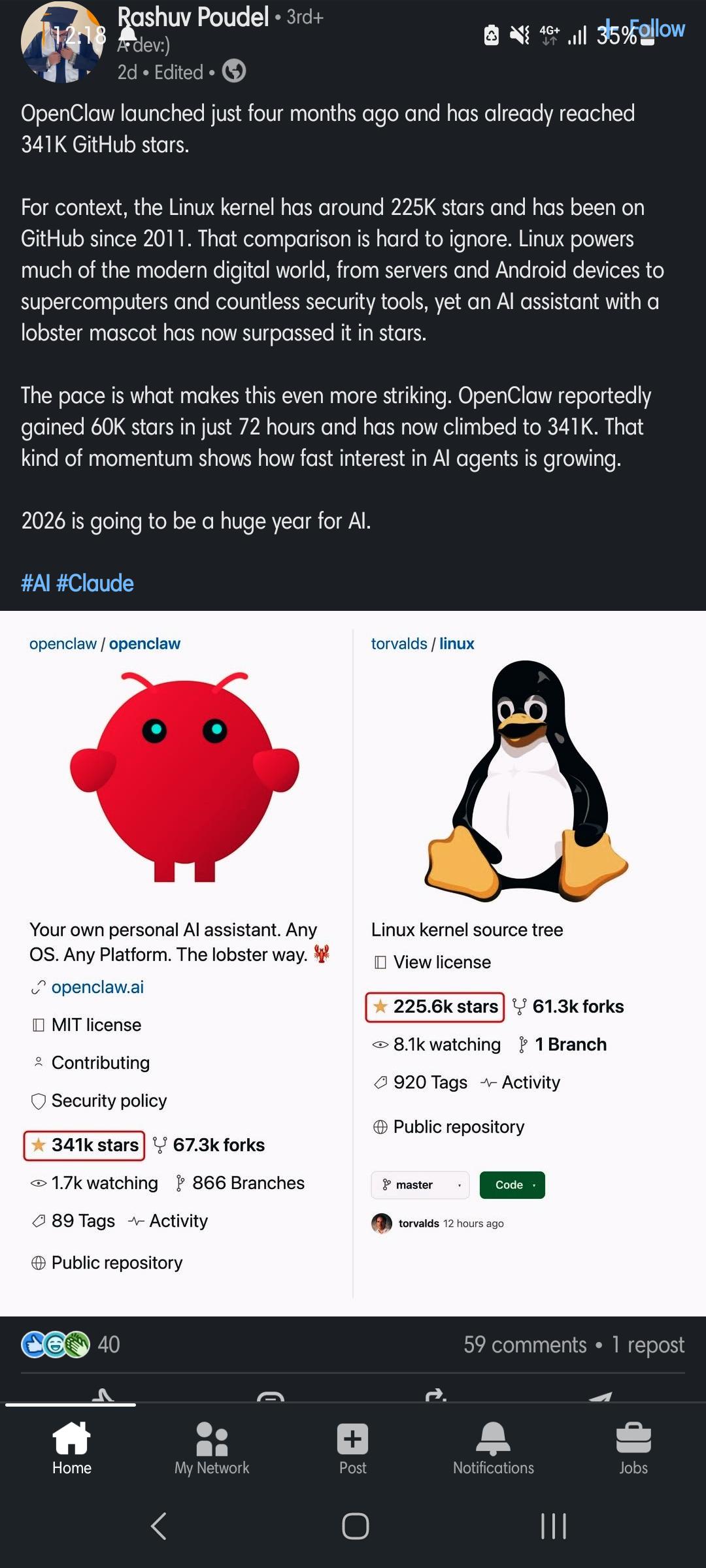
So a red lobster mascot with an AI chatbot just got more GitHub stars in 4 months than the Linux kernel accumulated in 13 years. Let that sink in. The foundation of literally every server, Android phone, and supercomputer on the planet just got outclassed by what's essentially "ChatGPT but make it crustacean." The real kicker? OpenClaw gained 60K stars in 72 hours. That's the kind of velocity usually reserved for cryptocurrency scams and JavaScript frameworks. Meanwhile, Linux has been quietly running the internet since before some of these star-clickers were born, but sure, the lobster is what gets people excited. Nothing says "we live in a simulation" quite like GitHub stars becoming a popularity contest where substance loses to hype. Torvalds must be thrilled that decades of kernel development can't compete with AI slop and a cute mascot. Peak developer culture right here.

Trolling On Another Lvl

Trolling On Another Lvl
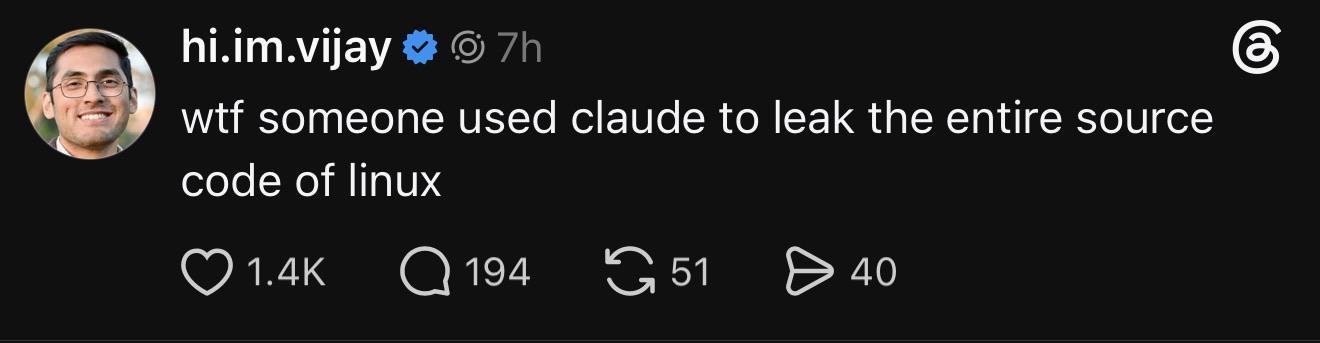
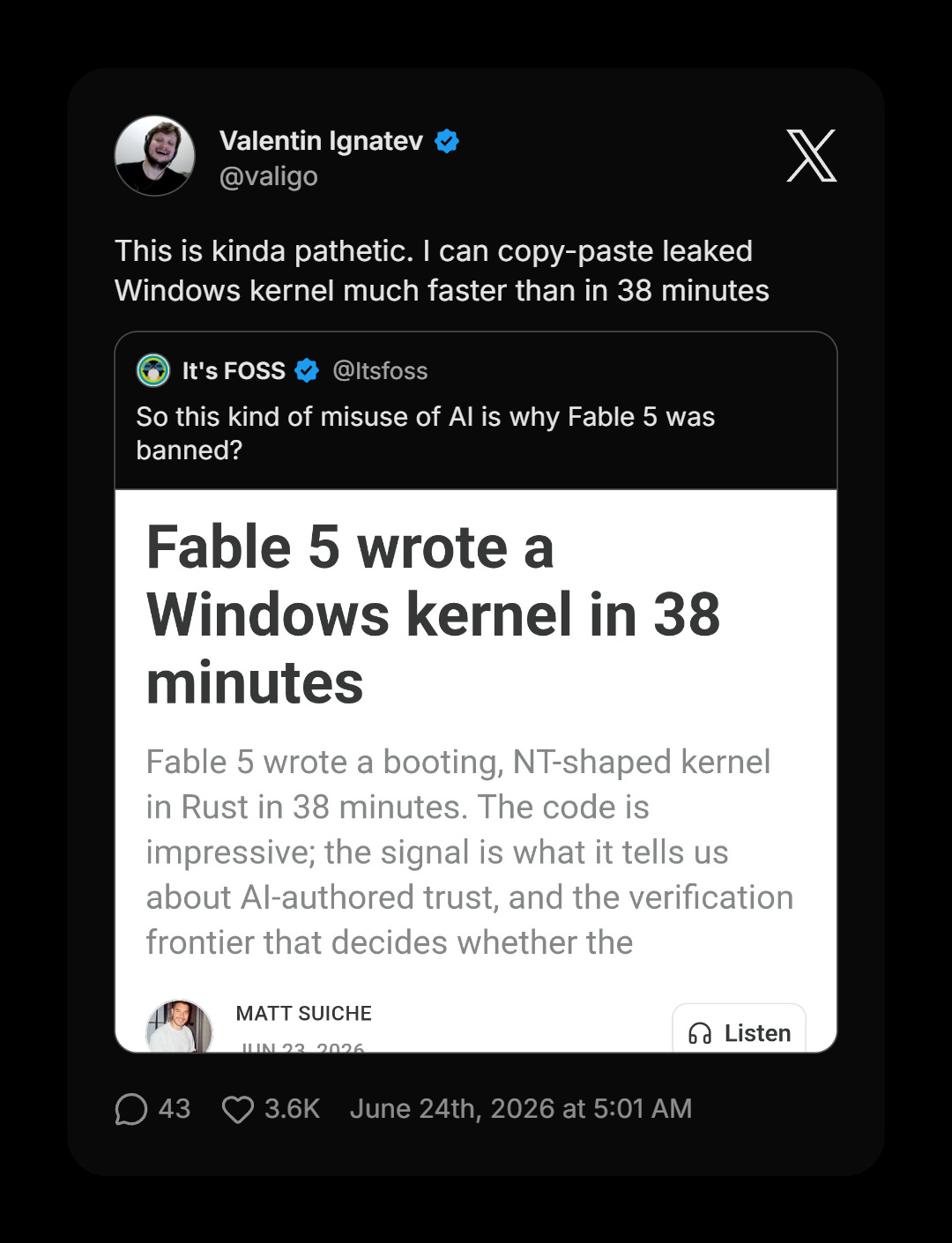
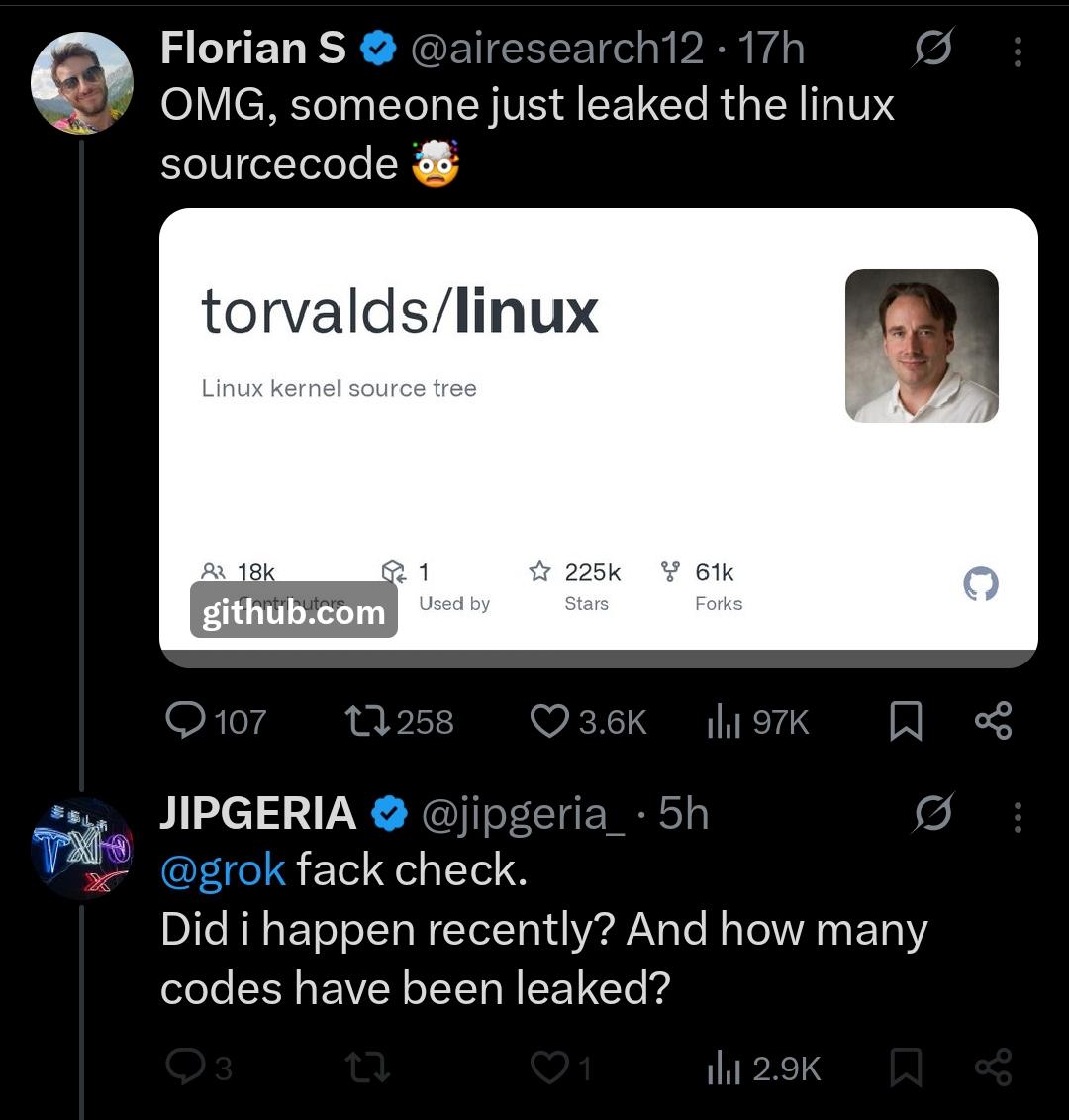
Someone just discovered that Linux kernel source code exists on GitHub and thought they witnessed the cybercrime of the century. The official torvalds/linux repo has been sitting there with 225k stars for years, but sure, let's panic about it being "leaked." The reply asking "how many codes have been leaked?" is *chef's kiss*. All of them. Every single line. That's literally the point of open source. Linus Torvalds himself maintains that repo publicly. It's like panicking that someone leaked the recipe for water. Fun fact: The Linux kernel is licensed under GPL v2, meaning not only is the source code public, but you're legally entitled to it. The real leak would be if someone made it closed source.

N Onononononnonononononon

N Onononononnonononononon
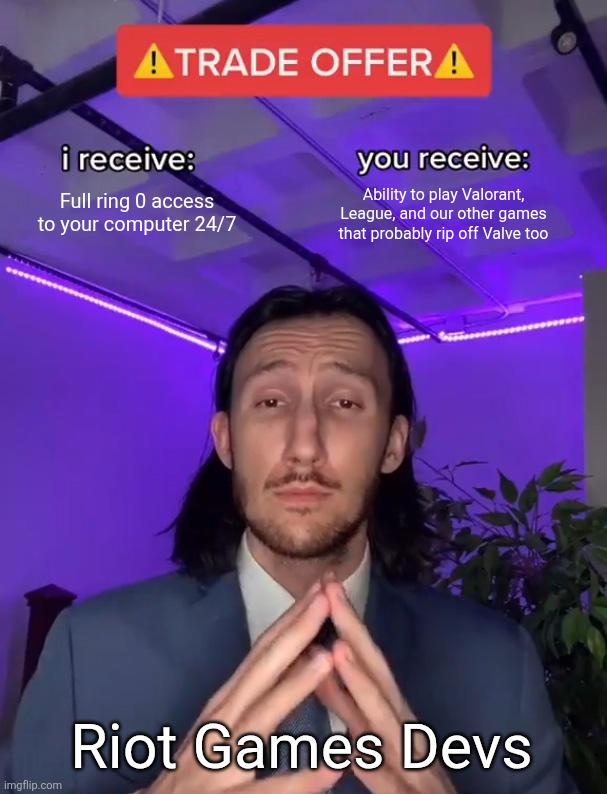
So OpenClaw is basically offering you a kernel module that can "seamlessly interact with any program" and "read and write to process memory as if it's part of the program." Cool, cool, cool. Nothing screams "trustworthy" like a kernel module that wants Ring 0 access to yeet itself into every process on your machine. For context: Ring 0 is the highest privilege level in your CPU's protection rings—it's where the kernel lives and where literally everything is permitted. It's the nuclear launch codes of your computer. Giving something Ring 0 access is like handing a stranger the keys to your house, your car, and your bank account simultaneously. The marketing speak here is chef's kiss: "No Messy API, No Latency, only results." Yeah, you know what else has no messy API? Malware. Rootkits also have fantastic latency. Security researchers everywhere just felt a disturbance in the force, like millions of sysadmins suddenly cried out in terror. The "N" in the title? That's you frantically mashing the "No" button before this thing gets anywhere near your production environment.

Torvalds Is Going In Yours Too

Torvalds Is Going In Yours Too
Someone tried to dunk on Linux saying it "never succeeded" and got absolutely ratio'd with one of the most devastating comebacks in tech history. Linux runs everything from servers to smartphones to Mars rovers... and apparently the embedded systems in adult toys. The beauty here is that Linux's success is so overwhelming that you can't escape it even in your most private moments. Linus Torvalds really did take over the world, one microcontroller at a time. The person who made that original tweet probably sent it from an Android phone running Linux, connected to servers running Linux, through routers running Linux. The irony is thicker than kernel documentation.

Os Learning Curve - (Xkcd Edit)

Os Learning Curve - (Xkcd Edit)
Windows users enjoying their gentle learning curve while Linux users plummet into the abyss of dependency hell, kernel panics, and permission denied errors. But hey, at least Linux users eventually climb back up to paradise where they play volleyball on the beach while Windows folks are still clicking "Next" on installation wizards. MacOS users just exist in comfortable mediocrity—not too hard, not too powerful. Meanwhile "Etch & Sketch" (the OS that doesn't exist) somehow outperforms everyone because imaginary operating systems have zero bugs. The real kicker? Those stick figures burning in Linux hell are probably just trying to get their WiFi drivers working. Three hours later they emerge enlightened, having compiled their own kernel and achieved nirvana. The Windows users are still waiting for updates to finish.

We All Dreamed About Making Our Own OS At Some Point…

We All Dreamed About Making Our Own OS At Some Point…
The kid asks Santa for an OS built with HTML, and Santa's about to yeet them out the window. Classic misunderstanding of what an operating system actually is versus what HTML does. HTML is a markup language for structuring web content—it literally just tells browsers "hey, this is a heading, this is a paragraph, make this text bold." You can't build an OS with it any more than you could build a car engine out of Post-it notes. Building a real OS requires low-level languages like C, C++, or Rust, direct hardware interaction, memory management, process scheduling, and a whole lot of kernel-level wizardry. Meanwhile HTML is just sitting there like "I can make a div with rounded corners!" The gap between these two concepts is so vast that Santa's violent reaction is completely justified. Fun fact: Electron apps basically do wrap HTML/CSS/JS in what feels like a mini-OS footprint (looking at you, Slack and Discord eating 2GB of RAM), but that's still running on top of an actual operating system doing the heavy lifting.

Linus Torvalds Repo

Linus Torvalds Repo
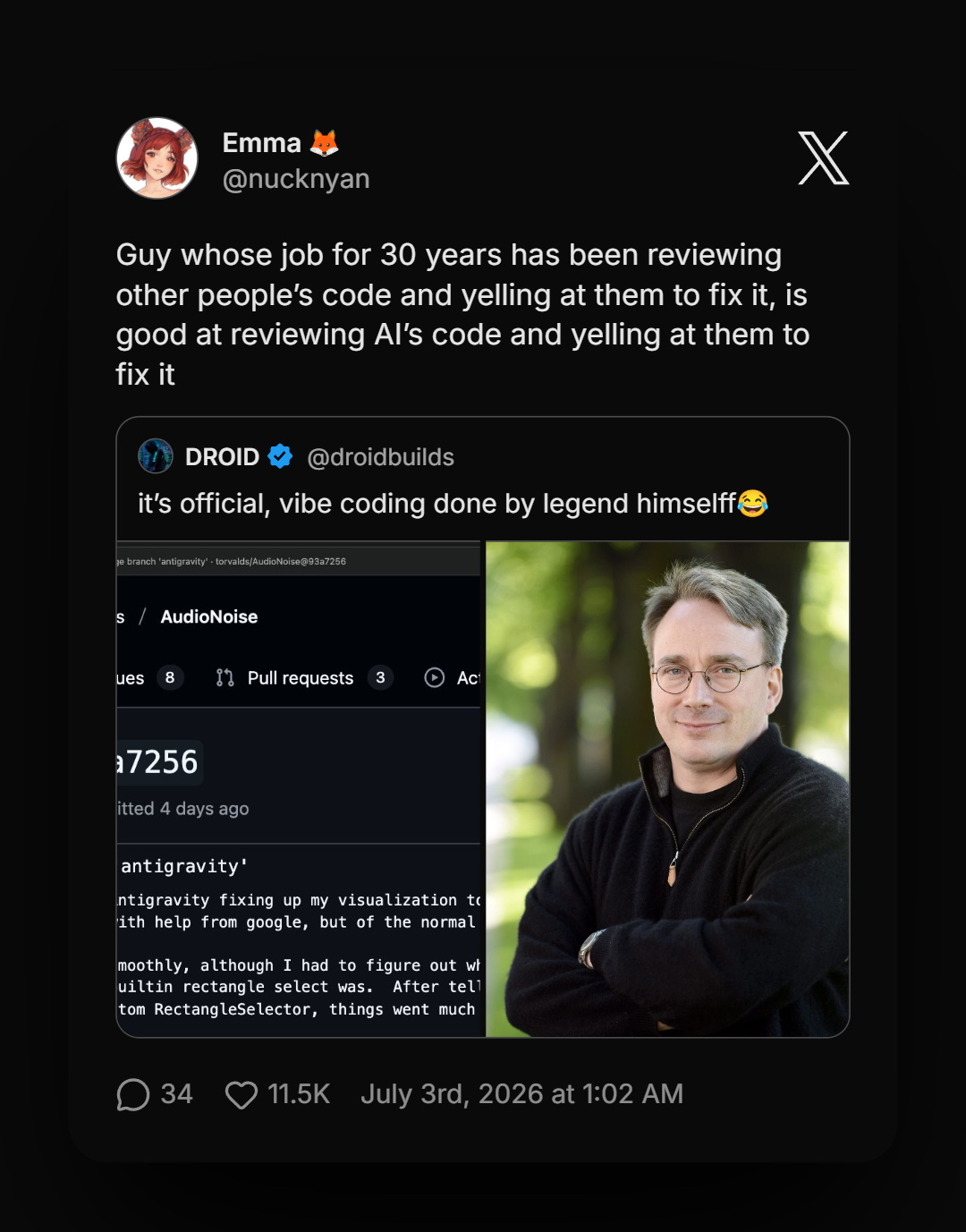
Someone claiming to be a "computer programmer of 40 years" just stumbled onto GitHub, discovered Linus Torvalds, and wants Windows support with Nvidia drivers for... the Linux kernel. The "NT kernel" search, the "Good things in life are never free" quote, using an Nvidia card for their CPU—this reads like the most elaborate troll post ever written or someone who genuinely thinks GitHub is a Windows software download site. The beautiful irony? They're asking the creator of Linux—a guy who famously said "NVIDIA, f*** you" on stage—for Windows support on his AudioNoise repo. It's like walking into a vegan restaurant and demanding they add more bacon to their menu because you heard the chef was good at cooking. The username "computerexpert88" is just *chef's kiss*. Nothing screams expertise like demanding build instructions for a Windows executable from a Linux kernel maintainer's hobby project. Someone's colleagues are having a good laugh right now.

Linux Kernel Vulnerabilities

Linux Kernel Vulnerabilities
Someone tries to dunk on Linux by saying it "never succeeded," and the comeback is absolutely nuclear. Linux literally runs on everything —from supercomputers and servers to Android phones, smart fridges, and yes, apparently the microcontroller in your mom's personal massager. The irony? Linux is probably the most successful OS kernel in human history by deployment count. It's running the internet, your router, your TV, and now... well, intimate devices. The "never succeeded" take aged like milk in the Sahara. Turns out when you're embedded in billions of devices worldwide, you've succeeded pretty hard.

Burn Is Real

Burn Is Real
Someone tried to dunk on Linux by saying it "never succeeded" and got absolutely obliterated with a comeback about embedded systems. Because yeah, Linux totally failed... except it's running on literally billions of devices including the servers hosting that tweet, Android phones, routers, smart fridges, and apparently adult toys. The "sry bro" makes it even funnier because dude walked right into that one. Nothing says success like being so ubiquitous that people forget you're everywhere.

Sorry

Sorry
So you casually mentioned you don't have Netflix and suddenly you're being held at gunpoint while someone forces you to read Windows Internals documentation, Sysinternals articles, browser exploitation CVEs, and reverse engineering repos. Because apparently that's the ONLY logical explanation for why you'd skip Netflix—you must be spending your evenings doing deep dives into kernel architecture and memory management like some kind of masochist. The intervention energy here is absolutely unhinged. "Take off your shoes, we're gonna talk about the Windows kernel" has the same vibe as "we need to talk about your life choices" except somehow MORE terrifying because it involves Pavel Yosifovich's 350-minute exploit development articles and Dave's Garage videos. Your friends really said "no Netflix? You must be one of THOSE people" and decided to stage a full confrontation about your extracurricular OS deep-dive habits.

It's Always Kernel

It's Always Kernel
Linux devs rejecting Git in favor of... popcorn kernels? The Drake meme format perfectly captures the Linux community's relationship with their beloved kernel. They'll turn down perfectly functional version control systems but get absolutely giddy over anything kernel-related. Whether it's kernel panics, kernel modules, or apparently literal corn kernels, if it has "kernel" in the name, Linux enthusiasts are all in. The obsession is real – these folks will spend 6 hours recompiling their kernel to save 2MB of RAM, and they'll do it with a smile.