

Internationalization Memes

Posts tagged with Internationalization

For The People Prepping For Worldwide Prod

For The People Prepping For Worldwide Prod
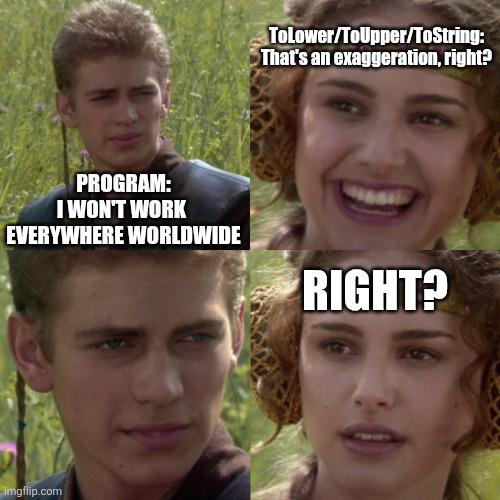
When your code's about to go live across the entire planet and someone casually suggests that maybe—JUST MAYBE—converting everything to lowercase or uppercase will fix those pesky case-sensitivity issues. Because nothing screams "production-ready" like slapping .toLowerCase() on your international deployment and calling it a day! The sheer AUDACITY of thinking that case manipulation is the magic bullet for worldwide production rollout. Like, sure Jan, let's just ignore timezones, character encodings, locale-specific formatting, right-to-left languages, and approximately 47 other things that will absolutely demolish your application the second it touches a server outside your cozy little development bubble. But yeah, let's focus on whether it's "Hello" or "hello" because THAT'S the real showstopper here. Spoiler alert: It was NOT just an exaggeration. Your program will, in fact, spectacularly implode worldwide. 🌍💥

The Ultimate Debugging Locale

The Ultimate Debugging Locale
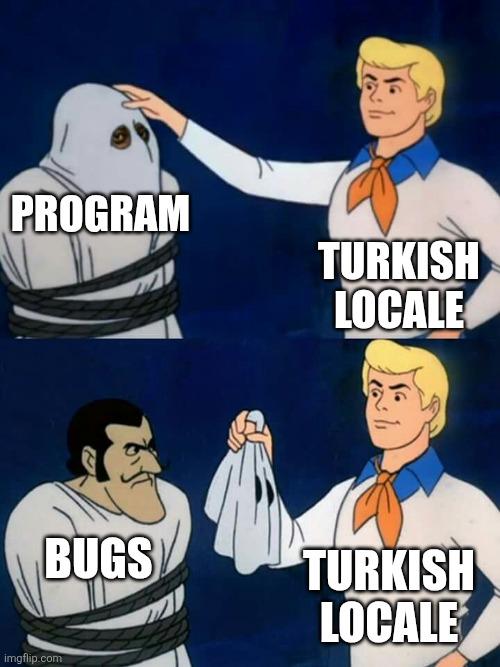
Turkish locale is literally the final boss of internationalization nightmares. While your program might be all polite and well-behaved with the Turkish locale, your bugs? They transform into an absolute MONSTER. Why? Because Turkish has this delightful quirk where the uppercase of 'i' is 'İ' (with a dot) and lowercase of 'I' is 'ı' (without a dot). So when you're doing case-insensitive string comparisons or transformations, BOOM – everything explodes in the most spectacular way possible. Your innocent .toUpperCase() calls suddenly become weapons of mass destruction. It's like giving your bugs a power-up mushroom and watching them absolutely demolish your code. Turkish locale: making developers question their entire existence since forever.

Regex Programming Email Parsing

Regex Programming Email Parsing
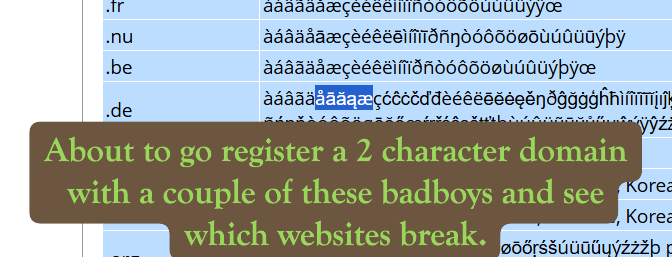
Someone really woke up and chose CHAOS by creating a regex pattern that accepts basically every Unicode character known to humanity in email addresses. Like, sure, let's just throw in every accent, diacritic, and symbol from every language ever invented because why not? The absolute AUDACITY of suggesting we register a 2-character domain with "a couple of these badboys" to see which websites break is honestly chef's kiss level chaos engineering. This is basically the email validation equivalent of "I'm not stuck in traffic, I AM the traffic." Instead of writing reasonable regex for email validation, someone decided to stress-test the entire internet's email parsing systems by exploiting the fact that technically, according to specs, emails can contain way more characters than most developers think. It's like finding out your calm, predictable friend is secretly an agent of anarchy.

The Unsung Heroes Of Csharp Projects

The Unsung Heroes Of Csharp Projects
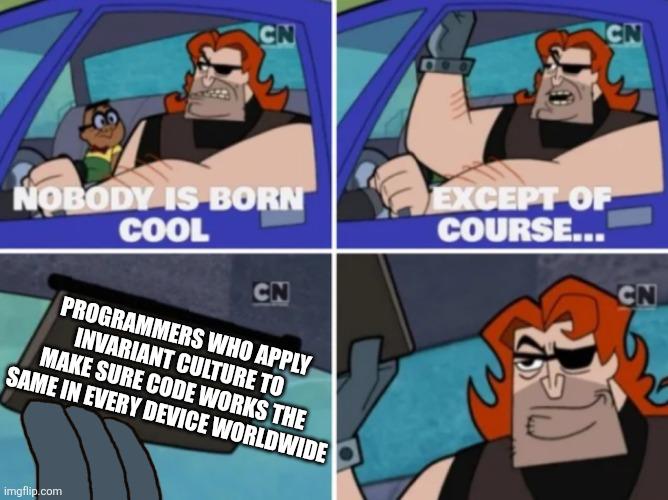
You know what's wild? While everyone's out here flexing their fancy design patterns and LINQ queries, there's always that one dev quietly adding InvariantCulture to every string operation like they're defusing bombs. They're the real MVPs—making sure your app doesn't implode when someone in Turkey tries to parse a date or a German user enters a decimal with a comma. These devs have seen things. They've witnessed production crashes at 2 AM because someone forgot that "i".ToUpper() returns "İ" in Turkish locale. They've debugged why currency formatting works in dev but breaks in prod. They're battle-scarred veterans who know that globalization bugs are the silent killers of enterprise apps. So yeah, nobody thinks culture-invariant code is cool... until your app ships to 47 countries and actually works. Then suddenly everyone's asking "who wrote this bulletproof string handling?" That's right. The unsung hero did.

Dear Localization Team: I'M Sorry.

Dear Localization Team: I'M Sorry.
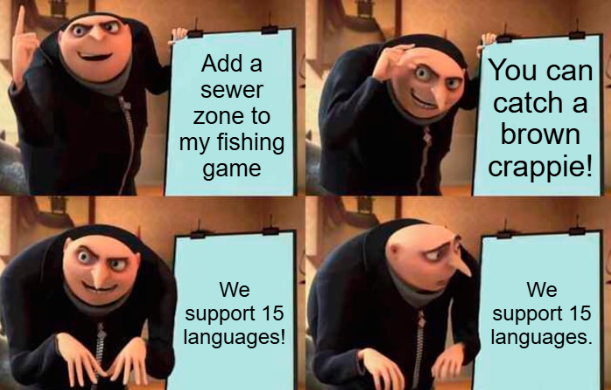
Product managers out here adding features like "sewer zones" and "brown crappie" to their fishing game, then casually dropping "btw we need this in 15 languages" on the localization team. Imagine being a translator trying to find the culturally appropriate equivalent of "brown crappie" in Mandarin, Arabic, or Finnish. Is it a fish? Is it... something else? The localization team is probably sitting there with their dictionaries wondering if this is a legitimate freshwater species or if the developers are just messing with them. Fun fact: brown crappie is indeed a real fish (Pomoxis nigromaculatus), but good luck explaining that context to someone translating fishing terminology at 2 PM on a Friday. The "sewer zone" probably isn't helping their confidence either. RIP to every translator who had to Google "is brown crappie a real thing" before submitting their work.

If You Will Test Your Program In One Non EFIGS Locale Let It Be Turkish No Joke

If You Will Test Your Program In One Non EFIGS Locale Let It Be Turkish No Joke
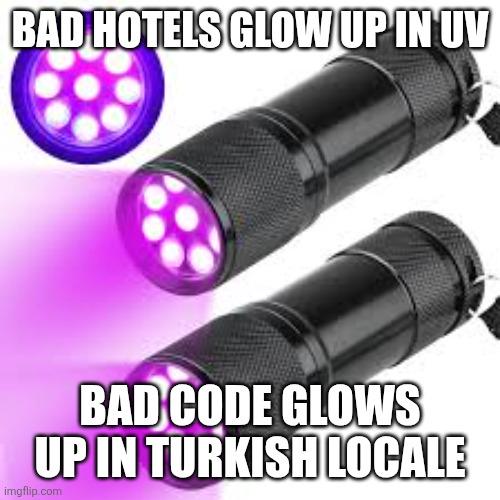
Turkish locale is the ULTIMATE nightmare fuel for your code and will expose every single case-sensitivity bug you've been ignoring. Why? Because Turkish has this absolutely DELIGHTFUL quirk where lowercase 'i' doesn't uppercase to 'I' - it becomes 'İ' (with a dot), and uppercase 'I' lowercases to 'ı' (without a dot). So when your code does case-insensitive string comparisons or conversions, it spectacularly combusts in ways that would make a dumpster fire jealous. Your innocent toUpperCase() calls? Broken. Your string matching? Destroyed. Your assumptions about the alphabet? Shattered into a million pieces. It's like Turkish locale has a UV light that makes all your hidden bugs glow in the dark, just like those sketchy hotel rooms. Chef's kiss for QA torture.

PLC Programmer Poster Print - I Speak Ladder Logic - 13x19 - Industrial Style Wall Art

PLC Programmer Poster Print - I Speak Ladder Logic - 13x19 - Industrial Style Wall Art
TECHNICAL DESIGN: Bold typography featuring 'I Speak Ladder Logic' with circuit symbols and ladder logic elements creates an authentic industrial aesthetic perfect for PLC programmers and automation …

An Unforeseen Romantic Surprise

An Unforeseen Romantic Surprise
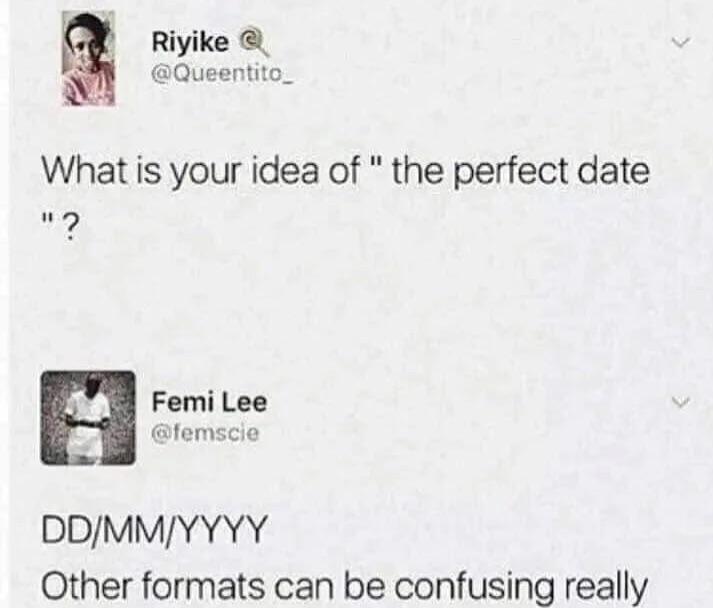
Someone asks about the perfect date, expecting some romantic answer about candlelit dinners or sunset walks. Instead, they get DD/MM/YYYY—the objectively superior date format that eliminates all ambiguity. Because nothing says "I love you" quite like proper data standardization. The response "Other formats can be confusing really" is chef's kiss. Looking at you, MM/DD/YYYY users who somehow convinced themselves that putting the month before the day makes sense. It's like organizing files as YYYY/MM/DD but someone had a stroke halfway through. Pro tip: If you really want to impress, go full ISO 8601 with YYYY-MM-DD. Now THAT'S romance—sortable, unambiguous, and internationally recognized. Your database will thank you.

To Lower And To Upper Aren't As Innocent As They Seem Just Saying

To Lower And To Upper Aren't As Innocent As They Seem Just Saying
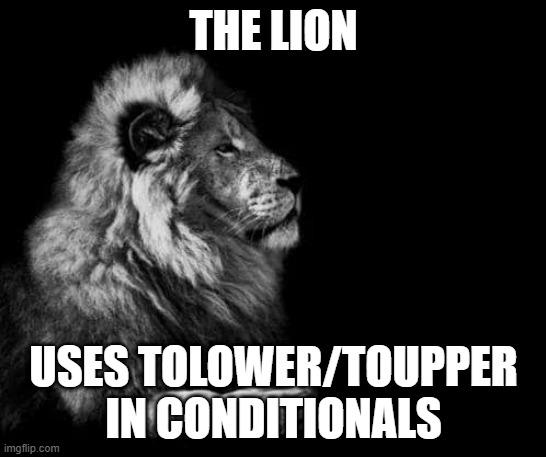
Using toLowerCase() or toUpperCase() in your conditional logic? That's some big brain energy right there. Most devs just slap these methods on strings for case-insensitive comparisons without a second thought, but the real ones know this is a minefield of locale-specific chaos waiting to explode. The Turkish İ problem is legendary: in Turkish locale, the uppercase of 'i' is 'İ' (with a dot), not 'I', and lowercase 'I' becomes 'ı' (without a dot). So your innocent if (userInput.toLowerCase() === "admin") suddenly breaks when deployed in Turkey. There's also the German ß that uppercases to "SS", and Greek sigma has different lowercase forms depending on position. Unicode is wild, and these methods respect locale by default in some languages. Pro tip: use toLocaleUpperCase() or toLocaleLowerCase() when you actually care about proper linguistic handling, or better yet, use case-insensitive comparison methods that don't mutate strings. The lion knows what's up.

What Should I Do Now

What Should I Do Now
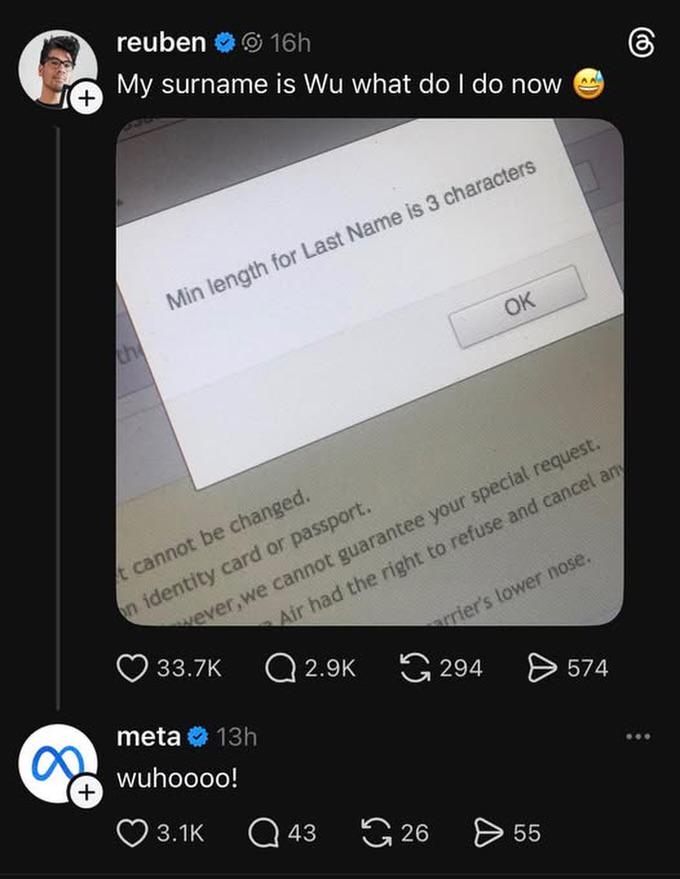
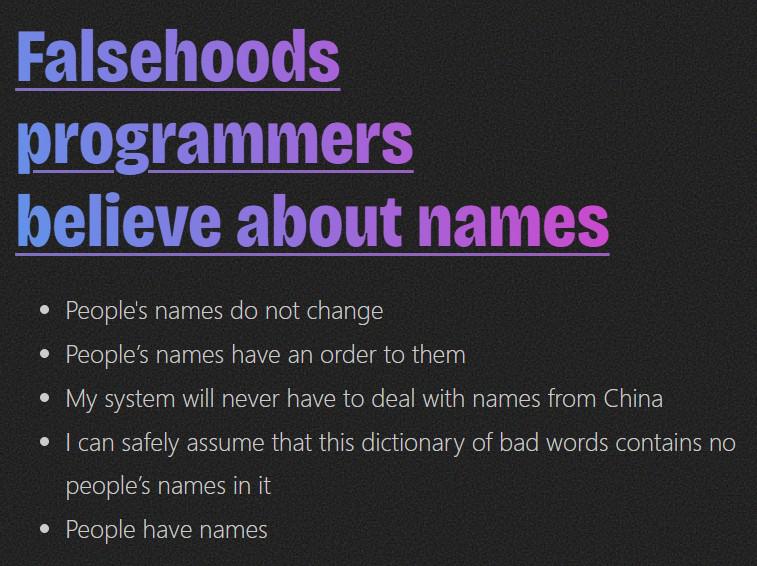
Guy's surname is "Wu" and some form system decided that two characters just isn't enough for a last name. Because clearly, every database architect in history assumed all humans follow the same naming conventions. The validation rule says minimum 3 characters, and Wu says "I exist." Meta's official account responding with "wuhoooo!" is either peak corporate humor or someone in their social media team is having way too much fun. Fun fact: This is a classic example of Falsehoods Programmers Believe About Names . Names can be one character, they can have no last name, they can be symbols, they can change daily. Your regex won't save you.

When Python Speaks Chinese

When Python Speaks Chinese
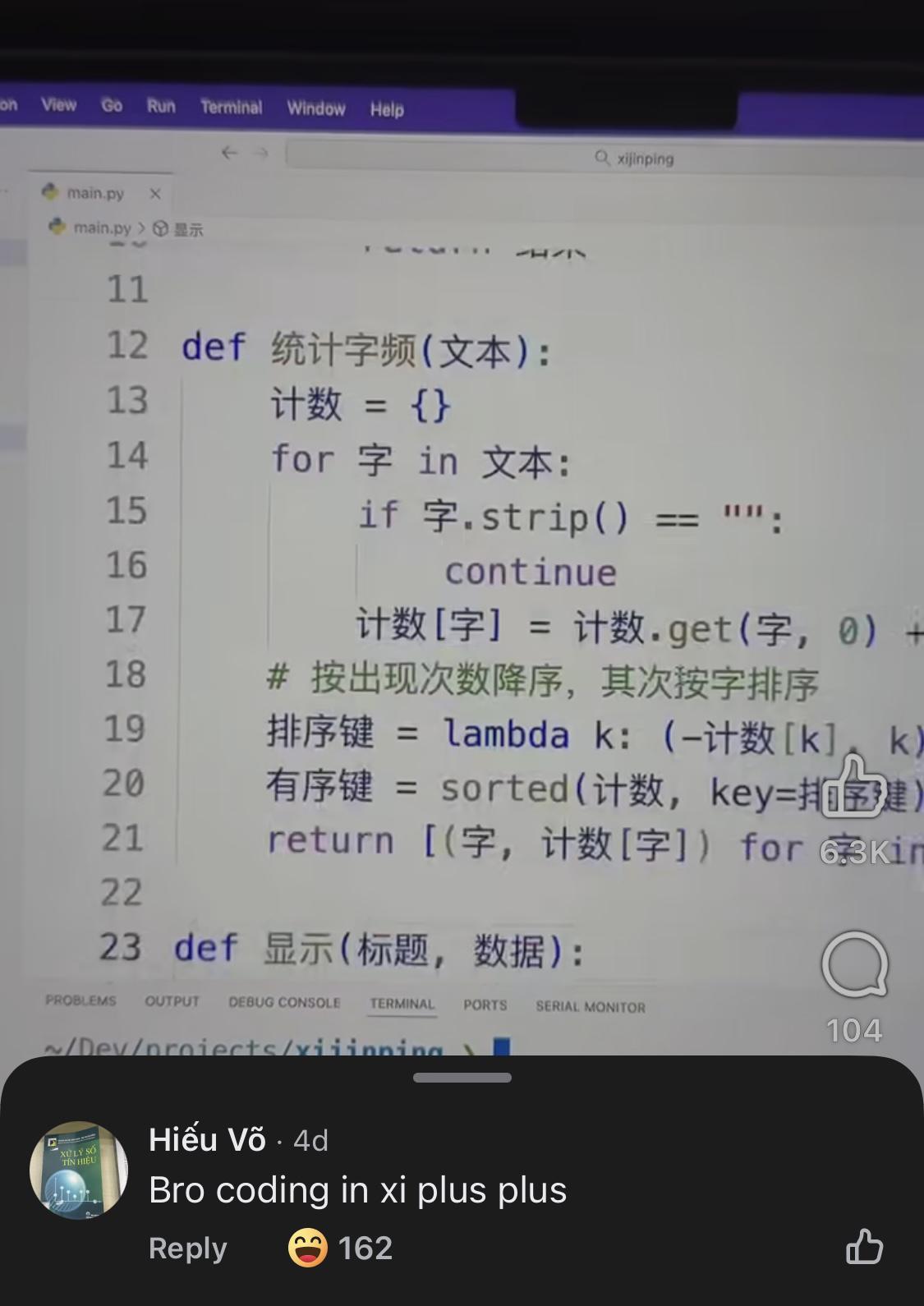
OH. MY. GOD. It's the most EXOTIC programming collab in history! Python syntax with Chinese variable names?! 🤯 This developer is living in 3023 while we're all stuck debugging semicolons! The comment "Bro coding in xi plus plus" is sending me to another dimension! Not C++, not Python... it's Xi++ now! The ultimate programming language that combines Python's simplicity with the political power of naming your variables in Chinese! Next thing you know, we'll all be declaring our variables in hieroglyphics just to feel something!

Falsehoods Programmers Believe About Names

Falsehoods Programmers Believe About Names
Oh honey, the AUDACITY of programmers thinking names are some kind of standardized, well-behaved data! 💅 Names change when people get married, divorced, or just FEEL LIKE IT. They don't follow your precious "first name, last name" format. And sweetie, if you think your system won't encounter Chinese names (or Arabic, Japanese, Korean...), you're living in a fantasy land! And that dictionary of "bad words"? Darling, it's DEFINITELY blocking legitimate names from cultures around the world. Some people literally don't have names! THE HORROR! Welcome to the chaotic hellscape of international name handling - where your beautiful database schema goes to DIE! ✨

Pzloz Led Desk Lamp for Office Home - Eye Caring Architect lamp with Clamp,Dual Screen Computer Monitor Work Smart Light: 24W 5 Color Flexible Adjustable Lighting Table Lamp for Study Drafting

Pzloz Led Desk Lamp for Office Home - Eye Caring Architect lamp with Clamp,Dual Screen Computer Monitor Work Smart Light: 24W 5 Color Flexible Adjustable Lighting Table Lamp for Study Drafting
Versatile Lighting Options: This LED desk lamp offers 25 light combination modes with 5 color temperatures (3000K-5500K) and 5 brightness levels (20%-100%), along with night light and reading modes, …

Jehovahscript: When Your Code Needs Divine Interpretation

Jehovahscript: When Your Code Needs Divine Interpretation
Ah, the classic "my code is unreadable" joke with a religious twist. Some poor soul is looking at code that appears to be written with Hebrew characters and asks if Google Translate is needed to convert it back. The punchline hits when they realize English coding exists, as if they've been living in some bizarre alternate universe where RTL programming is the norm. The real joke here is that we all write code that looks like ancient hieroglyphics to anyone who didn't write it. Your 3AM spaghetti code might as well be in Hebrew, Aramaic, or Klingon for all the sense it'll make to your teammates tomorrow morning.