

Entrepreneurship Memes

Posts tagged with Entrepreneurship
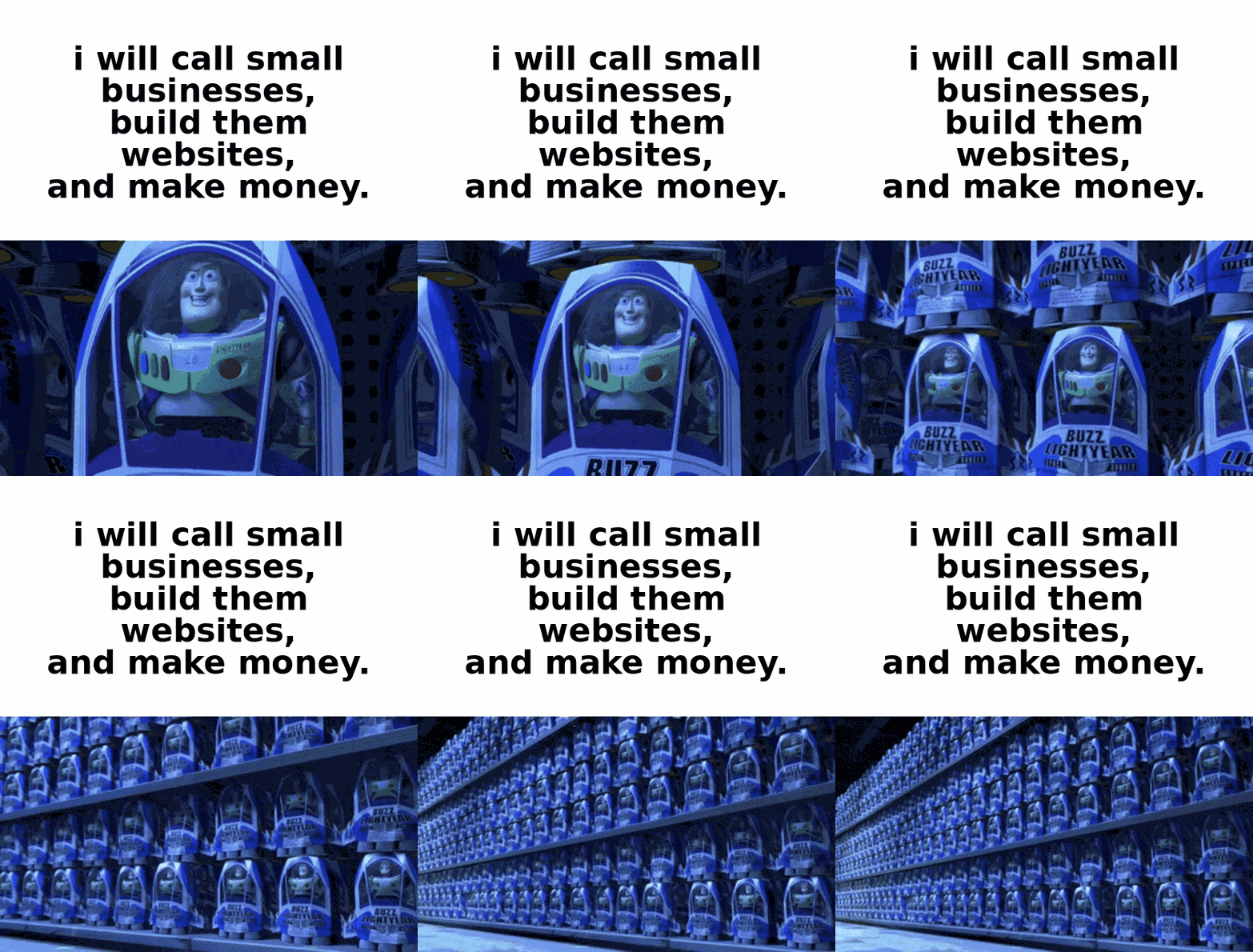
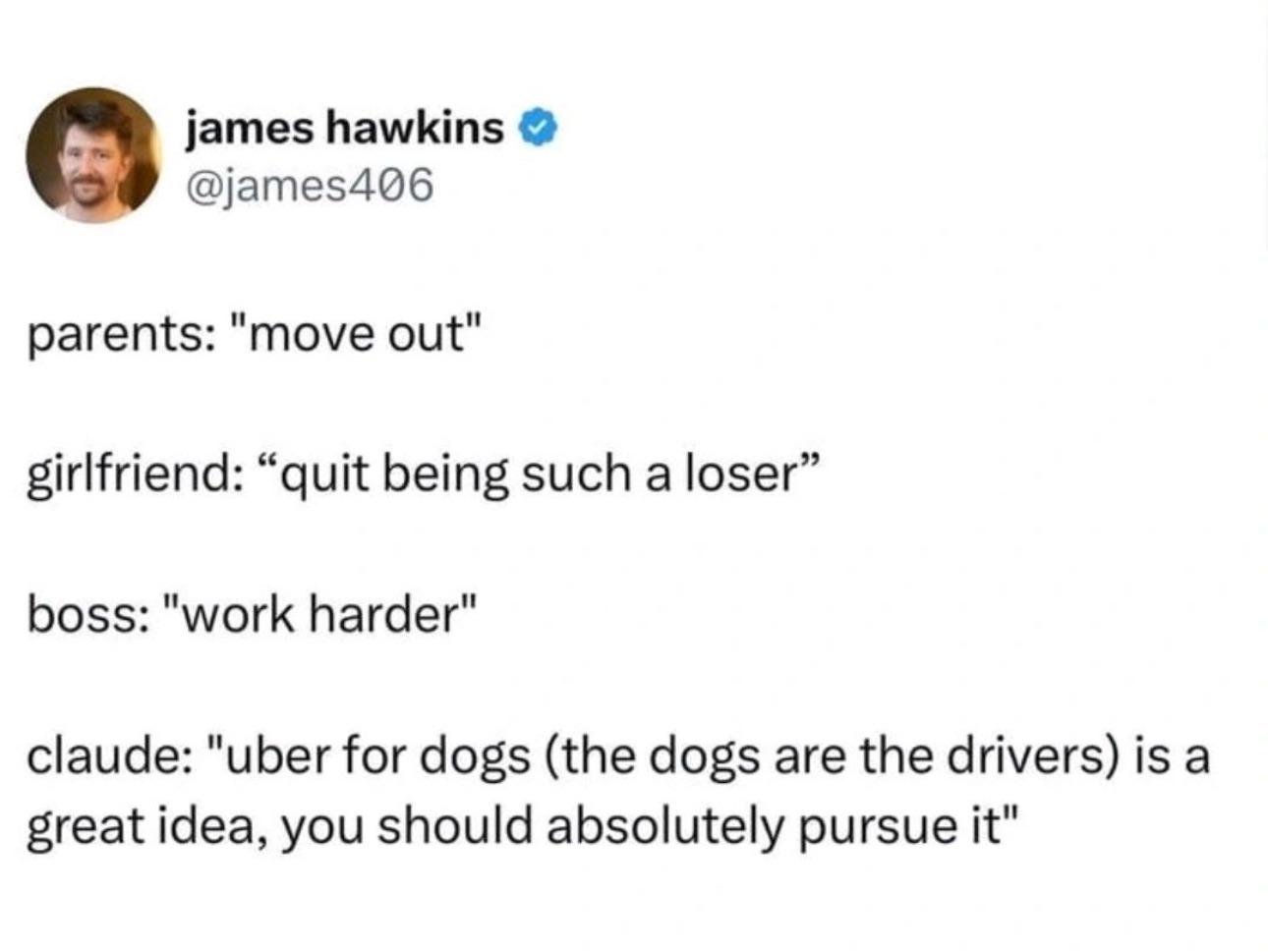
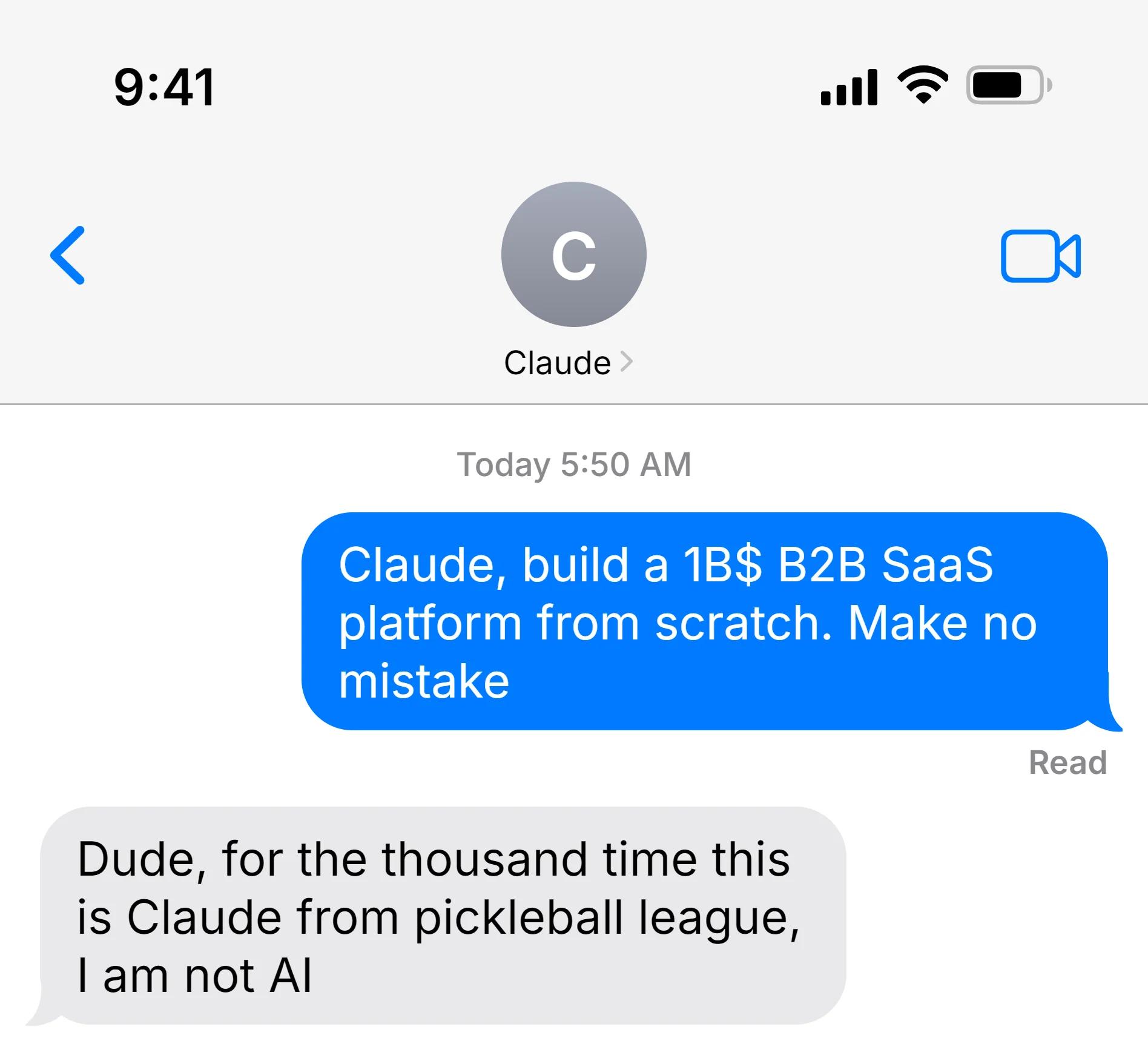
How To Make Unicorn Startup

How To Make Unicorn Startup
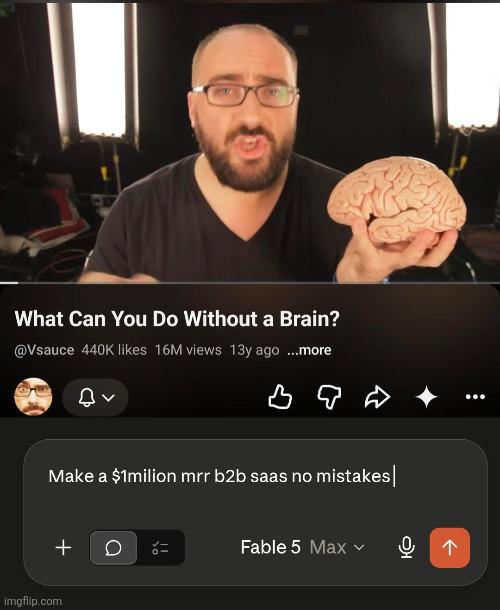
So you want to build the next billion-dollar unicorn? Easy! Just follow these three simple steps: do the impossible, achieve the unthinkable, and casually add "make no mistakes" to your to-do list like it's buying groceries. Because clearly, the secret to startup success is just... not messing up? Revolutionary! Someone tell all those failed startups they simply forgot to check the "make no mistakes" box. The delusion is IMMACULATE. These "vibe coders" really think they can manifest a unicorn valuation through sheer confidence and a complete denial of reality. Zero bugs, zero technical debt, zero failed deployments—just pure, unfiltered perfection. Sure, Jan. Meanwhile, the rest of us are over here with our production incidents and hotfixes, living in the real world where mistakes are basically our middle name.

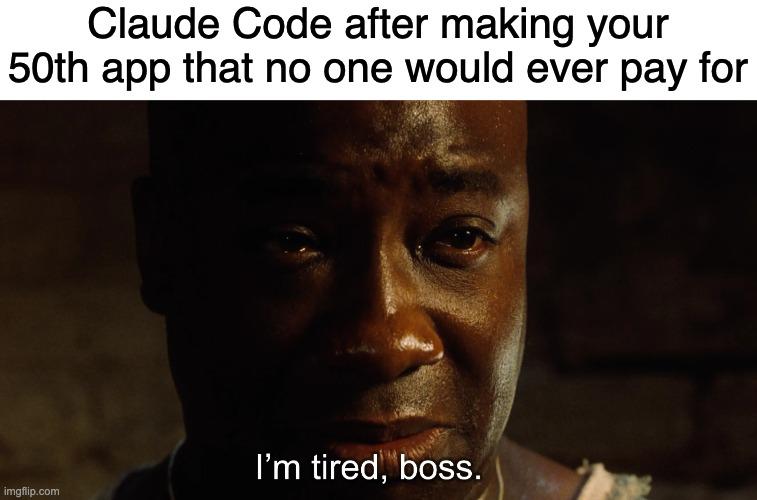
Actually Crying Inside

Actually Crying Inside
You thought building the product was the hard part? SWEET SUMMER CHILD. Turns out writing clean code and architecting scalable systems is the EASY MODE compared to the soul-crushing reality of having to become a cringe TikTok influencer just to get users. Nothing says "I have a Computer Science degree" quite like doing the Renegade dance to explain your API endpoints. The existential dread hits different when you realize your beautifully crafted SaaS platform needs more viral dance moves than unit tests to survive in 2024. Your Docker containers are perfectly orchestrated, but so are your dance routines now. The pipeline isn't the only thing that needs to be deployed—apparently so does your dignity on social media.

Surprise

Surprise!
You spend months crafting your "unique" app idea, convinced you're about to revolutionize the market. Launch day arrives, you hit publish, and then reality slaps you harder than a null pointer exception. Turns out there are literally thousands of apps doing the exact same thing. The app store is basically a graveyard of identical ideas, each developer thinking they were the chosen one. Vibe coders really out here discovering that their groundbreaking innovation has been done 3,847 times before, with better UI and actual users. The entrepreneurial dream dies faster than your motivation to fix that one bug you've been ignoring for weeks.

How It Goes

How It Goes
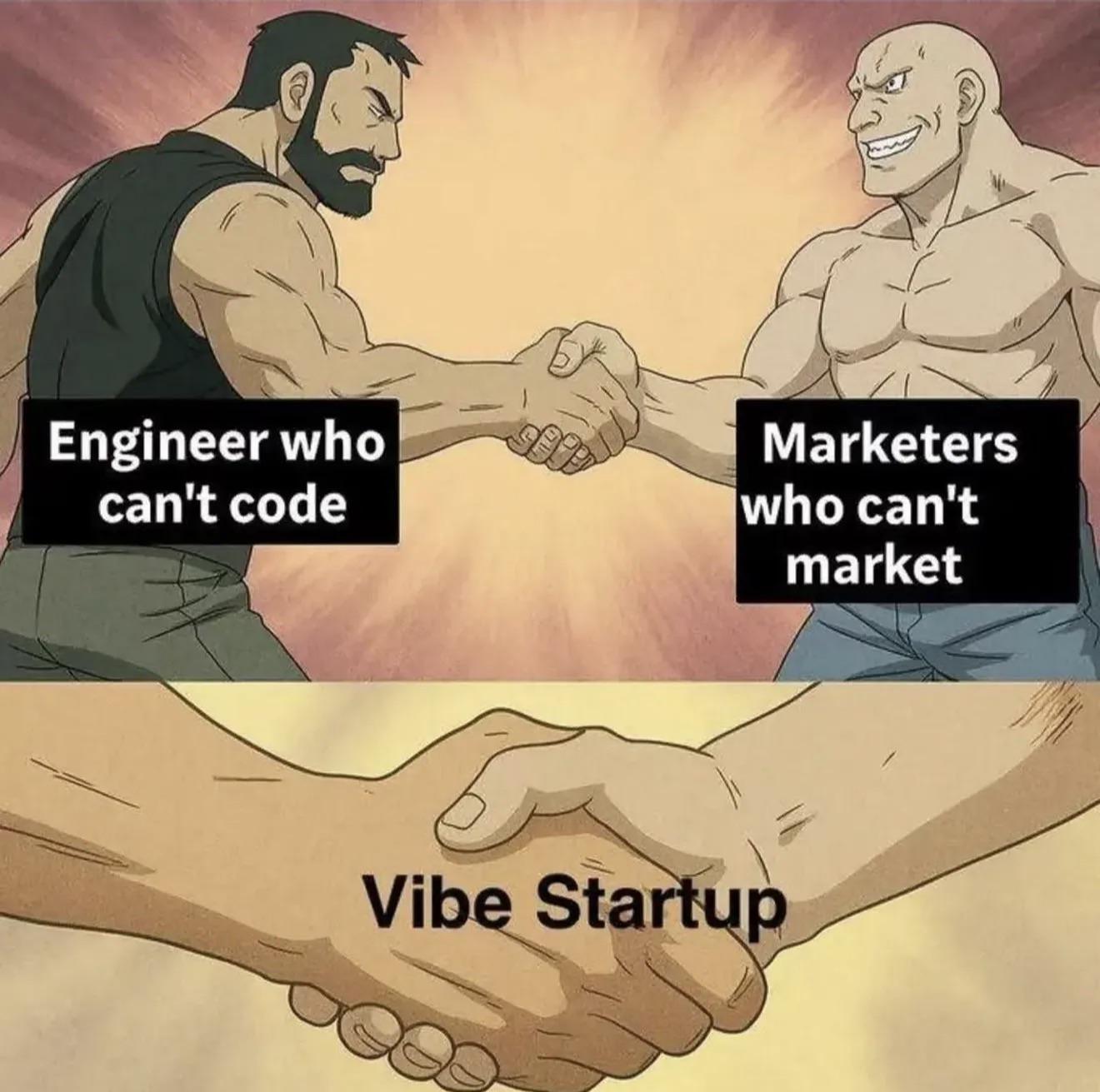
The startup dream team: a developer who thinks CSS is black magic and a marketer who thinks SEO means "Seriously Excellent Optimism." Neither has any business running a company, but together they form the perfect storm of overconfidence and underpreparedness. The developer can barely center a div but swears they'll build the next unicorn, while the marketer's entire strategy is "we'll go viral." Somehow, this combination has funded more startups than actual qualified teams. VCs see this handshake and immediately start writing checks because apparently incompetence loves company, and the market loves chaos.

Supply And Demand

Supply And Demand
The entrepreneurial spirit is alive and well in gamedev. Step 1: Design a puzzle game so complex it requires physical note-taking. Step 2: Conveniently sell branded notebooks at your booth. It's not predatory capitalism, it's just... vertical integration. Honestly though, this is galaxy brain marketing. You're not just selling a game—you're selling the *entire experience*, including the tools needed to actually beat it. Next up: selling reading glasses for games with tiny fonts, or ergonomic chairs for roguelikes that take 80 hours to complete. The real kicker? Those notebooks probably have better margins than the game itself. Welcome to indie game development, where the real money is in the merch.

So Where Are The Users

So Where Are The Users
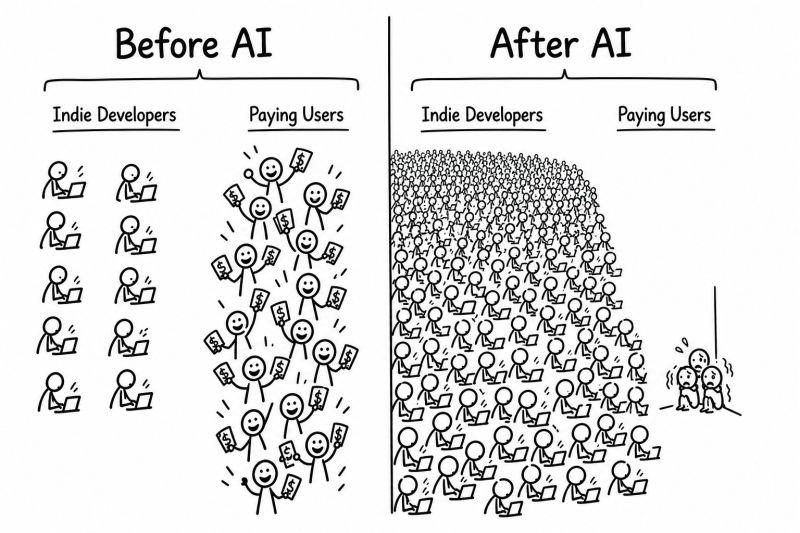
You spent months architecting the perfect backend, wrote pristine documentation, deployed with zero downtime, and even set up monitoring dashboards that look absolutely gorgeous. Launch day comes and goes. Week one passes. Week four hits and you're still staring at your analytics dashboard showing a grand total of... *checks notes* ...your mom, your best friend who felt obligated, and what's probably a bot from Russia. The painful reality: building the app is only like 20% of the battle. Marketing, user acquisition, finding product-market fit—that's the other 80% that most devs conveniently forget exists. You can have the most elegant codebase in the world, but if nobody knows it exists, you're just fishing in an empty pond while your server costs keep ticking up. Fun times!

Every Indie Developer Eventually Gets This Card

Every Indie Developer Eventually Gets This Card
The indie dev grind captured in one brutal UNO card. You're building your passion project, pouring your soul into it, juggling 47 different roles (developer, designer, marketer, customer support, janitor), and then life deals you this: either quit indie development entirely or draw 25 more problems to deal with. The guy's hand is absolutely stuffed with cards because quitting? That's not in the vocabulary. Instead, he's drawn every single card in the deck: scope creep, feature requests, bug fixes, marketing struggles, imposter syndrome, financial stress, and the classic "why isn't anyone downloading my app?" existential crisis. The deck becomes your entire life. Fun fact: studies show indie devs work an average of 60+ hours per week while making less than minimum wage in the first few years. But hey, at least you're your own boss, right? Right?? *nervously clutches 73 cards*

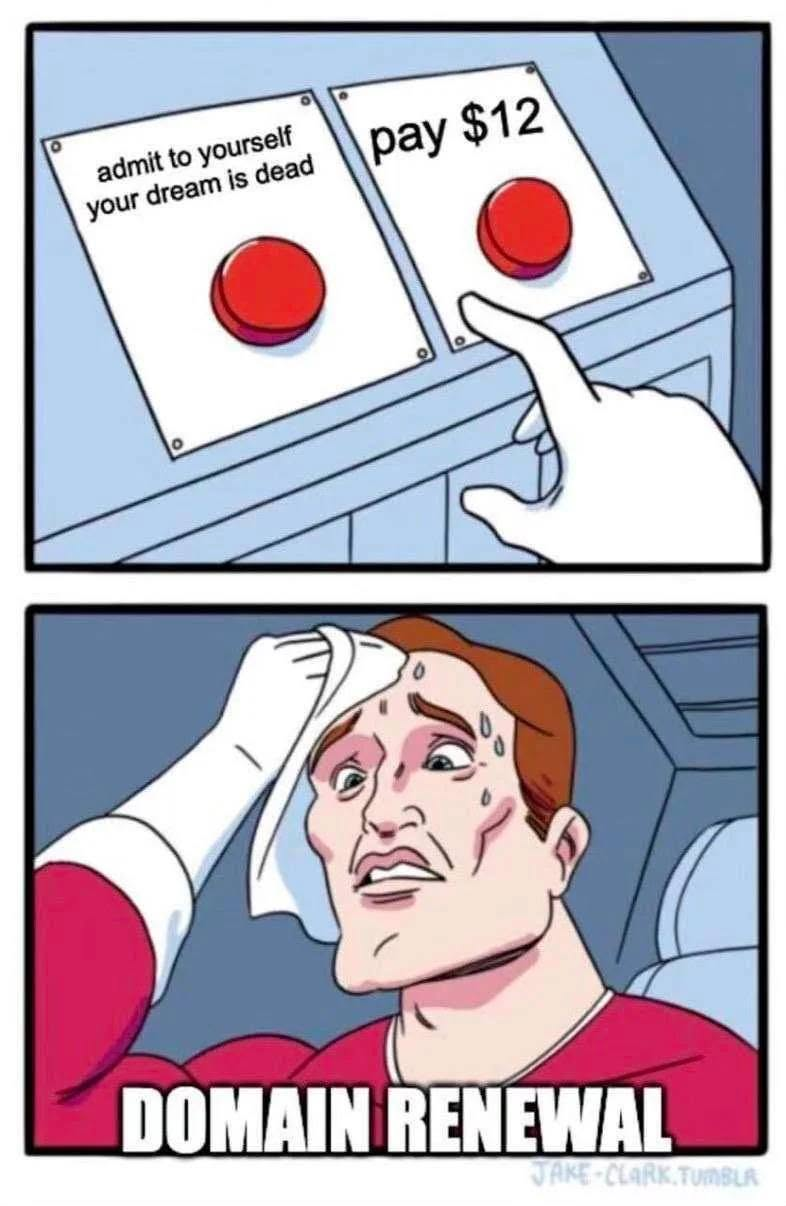
Any Day Now

Any Day Now
The eternal struggle of indie devs and side project warriors: do I face the harsh reality that my app with 3 users will never be the next unicorn startup, or do I keep hemorrhaging $12/year on that domain name just in case? Spoiler alert: you're gonna hit that renewal button faster than a junior dev hitting Stack Overflow. The cognitive dissonance is real—your analytics show tumbleweeds, your last commit was 8 months ago, and your "revolutionary" idea has been done 47 times already. But that domain? That beautiful, perfect domain name? You can't let it go. What if you wake up tomorrow with the motivation to finally finish it? What if someone steals YOUR domain and makes millions? The delusion is the fuel that keeps the credit card charged and the dream technically alive.

Brother From Another Mother

Brother From Another Mother
The ultimate startup power couple: one person who can build anything but couldn't sell water in a desert, and another who could sell ice to penguins but can't tell HTML from a sandwich. Separately, they're walking disasters. Together? They form a vibe startup that'll either revolutionize an industry or burn through VC money in 18 months. No in-between. It's like watching two people with exactly opposite skill trees finally realize they need each other to survive. The engineer's been building "the perfect product" for 3 years with zero users, while the marketer's been promising features that don't exist to investors. Match made in startup heaven.

My Game Flopped So Hard It Is Hilarious

My Game Flopped So Hard It Is Hilarious
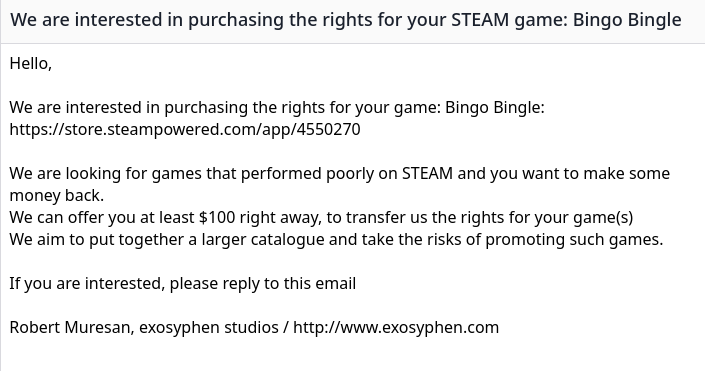
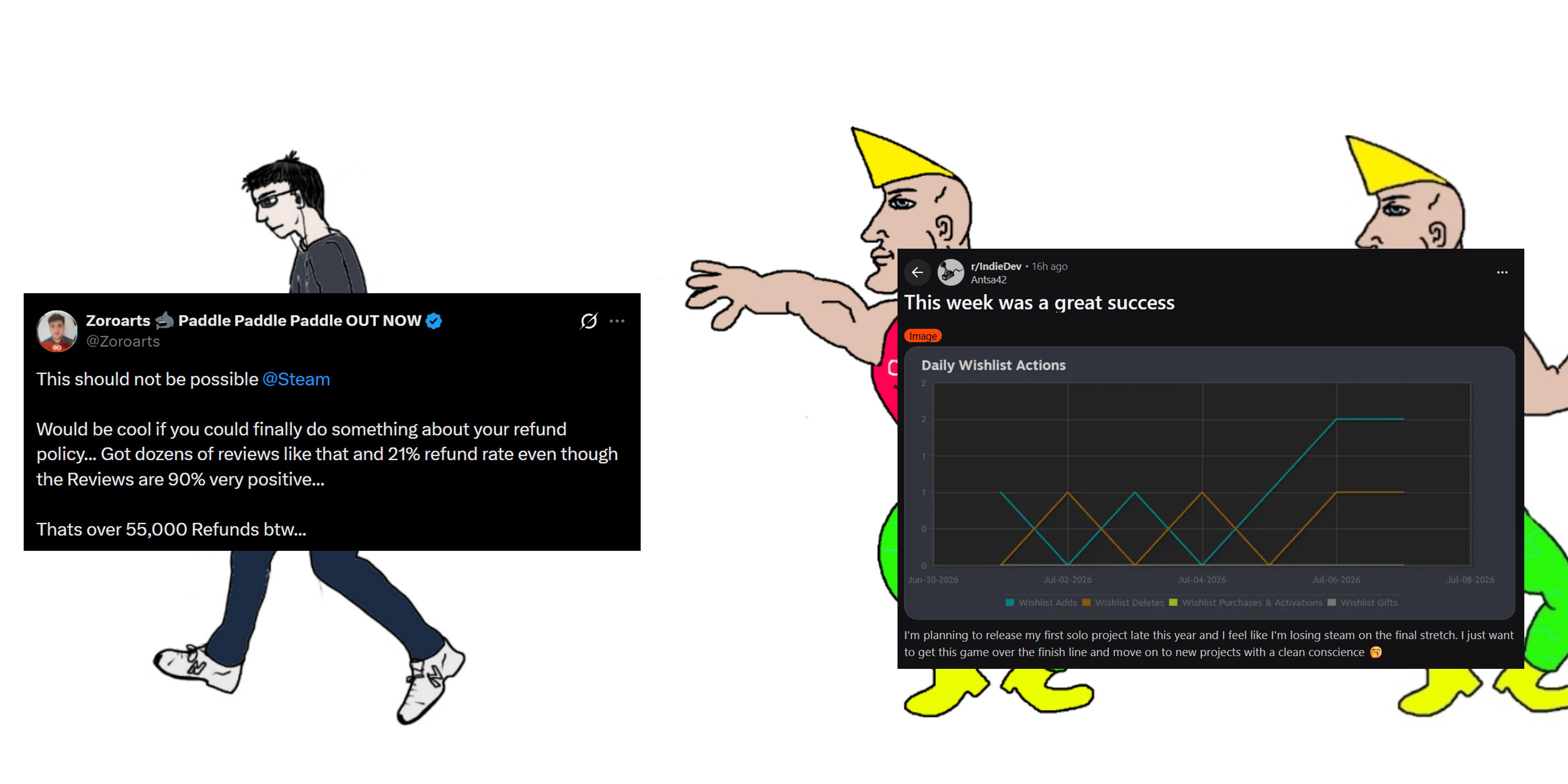
The indie game dev journey in four panels of pure pain. You start out following all the "right" advice: network at conventions, get those sweet industry validation points, build hype. Then you land a publisher and think you've made it—only to discover they're broke and have the marketing budget of a lemonade stand. Plot twist: turns out your own marketing skills are somehow even worse than theirs, and you're so introverted you'd rather debug memory leaks than talk to humans. The final panel hits different though. Two seconds of TikTok watch time? Reddit downvoting your promo posts into the shadow realm? Single. Digit. Player. Count. That's not just failure—that's your game being so invisible it might as well not exist. At least when games crash, people had to run them first. This is the gamedev equivalent of shouting into the void and the void actively scrolling past you. Fun fact: The average indie game on Steam gets around 1,500 sales in its lifetime. So if you're hitting single digits, congratulations—you've achieved statistical improbability in the wrong direction.

Within Each Programmer

Within Each Programmer
Every single developer is locked in an EPIC internal battle between the responsible wolf who whispers "steady paycheck, health insurance, retirement plan" and the absolutely FERAL entrepreneurial wolf screaming "BUILD THAT TODO APP WITH BLOCKCHAIN INTEGRATION THAT WILL DEFINITELY CHANGE THE WORLD THIS TIME!" Spoiler alert: the second wolf has a GitHub graveyard of 47 unfinished projects and still thinks THIS one will be different. The first wolf is tired. So, so tired. But hey, at least it pays the bills while you dream about your SaaS empire during standup meetings.

Work Life Balance

Work Life Balance
The classic freelancer paradox: you escape the corporate grind thinking you'll finally have time for hobbies, friends, and maybe even touching grass. Plot twist—you're now your own boss, project manager, accountant, sales team, and support department all rolled into one. That 9-5 you hated? Turns out it had boundaries. Now you're debugging at breakfast, client calls during lunch, and deploying hotfixes at midnight because "just one more feature" turned into a complete architecture overhaul. The work-life balance you sought? It's perfectly balanced—100% work, 0% life. At least you can work in pajamas, right?