Data breach Memes

Posts tagged with Data breach
Programmers Be Like

Programmers Be Like
Nothing says "I'm a catch" quite like bringing up catastrophic security incidents as your opening line! Because what gets hearts racing faster than discussing how thousands of API keys got exposed to the entire internet? Move over pickup artists, there's a new breed of romantic in town who thinks talking about data breaches is the ultimate icebreaker. Forget asking about hobbies or interests—let's dive straight into the existential dread of accidentally pushing credentials to a public GitHub repo! The person on the receiving end is absolutely *thrilled* to hear about your professional disasters instead of, you know, literally anything else. Romance is truly dead, and we developers are the ones who killed it with our inability to separate work trauma from human interaction. 💀

Glorious Source Code Leak

Glorious Source Code Leak
Nothing says "we're absolutely cooked" quite like the entire C-suite realizing someone just yeeted the company's proprietary source code onto GitHub for the whole world to see. The CEO wearing his metaphorical Burger King crown of shame while the security team frantically tries to explain how "password123" wasn't actually a secure credential for the production repository. The legal team is already drafting their resignation letters because they KNOW the lawsuits are about to rain down like merge conflicts on a Friday afternoon. Meanwhile, some junior dev is probably hiding under their desk wondering if deleting their LinkedIn is enough to escape this disaster.

Companies Should Be Glad, That Other People Are Helping Them With Their Offsite Backup

Companies Should Be Glad, That Other People Are Helping Them With Their Offsite Backup
When hackers steal your data, they're technically just creating an additional backup copy in a geographically distributed location. It's like having a disaster recovery plan you never asked for! Sure, the top panel shows the standard corporate panic response to a data breach, but the bottom panel reveals the silver lining: you now have a "decentralized surprise backup" courtesy of some friendly neighborhood cybercriminals. The reframing here is chef's kiss – turning a catastrophic security incident into an unexpected infrastructure upgrade. It's the ultimate glass-half-full perspective on ransomware attacks. Who needs AWS S3 cross-region replication when you've got threat actors doing it for free? Your CISO might not appreciate this hot take during the incident response meeting though.

Uber Hiring Security Engineers

Uber Hiring Security Engineers
Oh look, Uber is suddenly on a MASSIVE security hiring spree! Multiple senior security positions posted 3 days ago across different cities? Nothing suspicious about that AT ALL. It's almost like something catastrophic happened recently that made them realize "hey, maybe we should actually have people who know what they're doing protecting our systems?" The desperation is practically radiating off the screen. When a company drops this many security job postings simultaneously, you just KNOW someone's having a very bad week explaining to the board why the crown jewels got exposed. Fun fact: Companies typically hire security engineers BEFORE the breach, not after. But hey, better late than never, right? 🔥

Backup Supremacy🤡

Backup Supremacy🤡
When your company gets hit with a data breach: *mild concern*. But when they discover you've been keeping "decentralized surprise backups" (aka unauthorized copies of the entire production database on your personal NAS, three USB drives, and your old laptop from 2015): *chef's kiss*. The real galaxy brain move here is calling them "decentralized surprise backups" instead of what the security team will inevitably call them: "a catastrophic violation of data governance policies and possibly several federal laws." But hey, at least you can restore the system while HR is still trying to figure out which forms to fill out for the incident report. Nothing says "I don't trust our backup strategy" quite like maintaining your own shadow IT infrastructure. The 🤡 emoji is doing some heavy lifting here because this is simultaneously the hero move that saves the company AND the reason you're having a very awkward conversation with Legal.

Mongo Bleed Is Web Scale

Mongo Bleed Is Web Scale
A critical MongoDB vulnerability that sat dormant for 8 years (2017-2025) just got discovered, letting attackers yank out heap data like passwords and API keys through a malformed zlib request. The bug was literally committed in June 2017 and merged into production. The fix? Written in December 2025. That's an 8-year nap. But here's the kicker: there are over 213,000 potentially vulnerable MongoDB instances exposed to the internet. The punchline? "ensuring that this exploit is web scale ." 😂 For context, "web scale" is a legendary meme from a satirical video where someone hilariously defends MongoDB's design choices with buzzwords. Now it's come full circle—MongoDB's vulnerability is literally web scale with 213k+ exposed instances. MongoDB also claims "no evidence" of exploitation despite the bug being trivially simple for 8 years. Sure, Jan. Oh, and they haven't apologized yet. Classic.

Use Safe Passwords During Development

Use Safe Passwords During Development
Nothing says "security professional" quite like getting a data breach notification for your localhost development servers. Apparently someone out there managed to breach http://localhost:8081, http://localhost:8088, and the ever-vulnerable http://localhost. Your dev credentials with the ultra-secure combo of "[email protected]" were just too tempting for hackers worldwide. The real question is: which data breach consortium is monitoring your local machine? Did they break into your apartment, sit at your desk, and carefully document your test credentials? Or did you accidentally push these to production because "it's just temporary"? Spoiler: nothing is ever temporary. The lightbulb icon on the last entry really ties it together. Yes, that's the moment of realization when you figure out where those "localhost" credentials actually ended up.

Surprise Backup

Surprise Backup
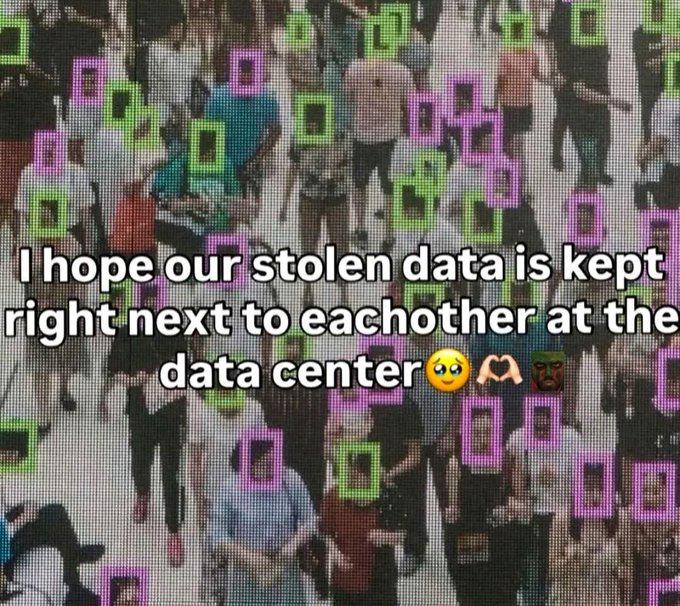
Oh, a data breach? How utterly devastating! But WAIT—plot twist of the century! Turns out your sensitive data was secretly living its best life scattered across a thousand sketchy torrent sites and random servers worldwide. Congratulations, you've been running a distributed backup system this ENTIRE TIME without even knowing it! Who needs AWS S3 when hackers have been thoughtfully archiving your database in the blockchain of crime? It's not a security nightmare, it's just aggressive data redundancy with extra steps. Your CISO is crying, but your data is immortal now. Silver linings, baby!

Honestly Some Of You Deserved To Get Hacked

Honestly Some Of You Deserved To Get Hacked
HONEY, THE NUCLEAR REACTOR IS LITERALLY MELTING DOWN, but you know what's TRULY catastrophic? Someone wanting to use their precious little password instead of two-factor authentication! 💅 The absolute AUDACITY of refusing basic security measures while the digital equivalent of Chernobyl happens to your accounts! You're basically BEGGING hackers to waltz into your digital home, raid your fridge, and leave dirty footprints on your metaphorical carpet! But sure, sweetie, keep rejecting those temporary codes. The hackers thank you for your service! 🔥

For This Network, Identify At Least One Security Threat

For This Network, Identify At Least One Security Threat
The biggest security threat? Publishing your entire IT department's names, faces, and roles on a bright yellow poster for the world to see! Nothing says "please target me for social engineering" like a comprehensive directory of exactly who manages your systems. That "Network Administator" typo is just the cherry on top of this security nightmare sundae. Somewhere, a pen tester is printing this out and planning their next "phishing expedition" while IT security professionals everywhere are experiencing physical pain looking at this image.

The Escalating Scale Of Developer Mistakes

The Escalating Scale Of Developer Mistakes
Regular coding mistakes: "Oops, I forgot a semicolon." Enterprise coding mistakes: "So I accidentally stored everyone's unencrypted photos with location data in a public Firebase bucket and now there's a map of all users circulating online." This is why we can't have nice things in tech. Some junior dev probably skipped the security training to finish that "urgent feature" and now lawyers are measuring their future yachts. The difference between "ship fast" and "shipwreck" is just a few lines of code and a complete disregard for basic security practices.

When Your API Key Goes Public Before Your Resume Does

When Your API Key Goes Public Before Your Resume Does
Ah, nothing says "top-notch security" like giving a 25-year-old access to government databases AND AI systems, then watching them accidentally paste an API key on GitHub. Because what could possibly go wrong when someone has access to both Social Security data and cutting-edge LLMs? This is peak "move fast and break things" energy, except the "things" are national security and AI safeguards. The sarcastic "should fill all Americans with a deep sense of confidence" is chef's kiss material. Future historians will call this the "control-C, control-V apocalypse."