Commit history Memes

Posts tagged with Commit history
I Was Very Focused

I Was Very Focused
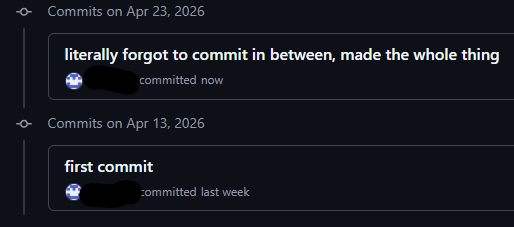
Ah yes, the classic "first commit" followed by radio silence for 10 days, then suddenly "literally forgot to commit in between, made the whole thing." Nothing says version control mastery like treating Git as a once-per-project backup system. The commit history archaeologists of the future will look at this and think you wrote 500 lines of code in a single afternoon of divine inspiration, when in reality you just kept forgetting that little git commit command exists. Your future self debugging this will absolutely love trying to figure out which of those 47 file changes introduced that bug.

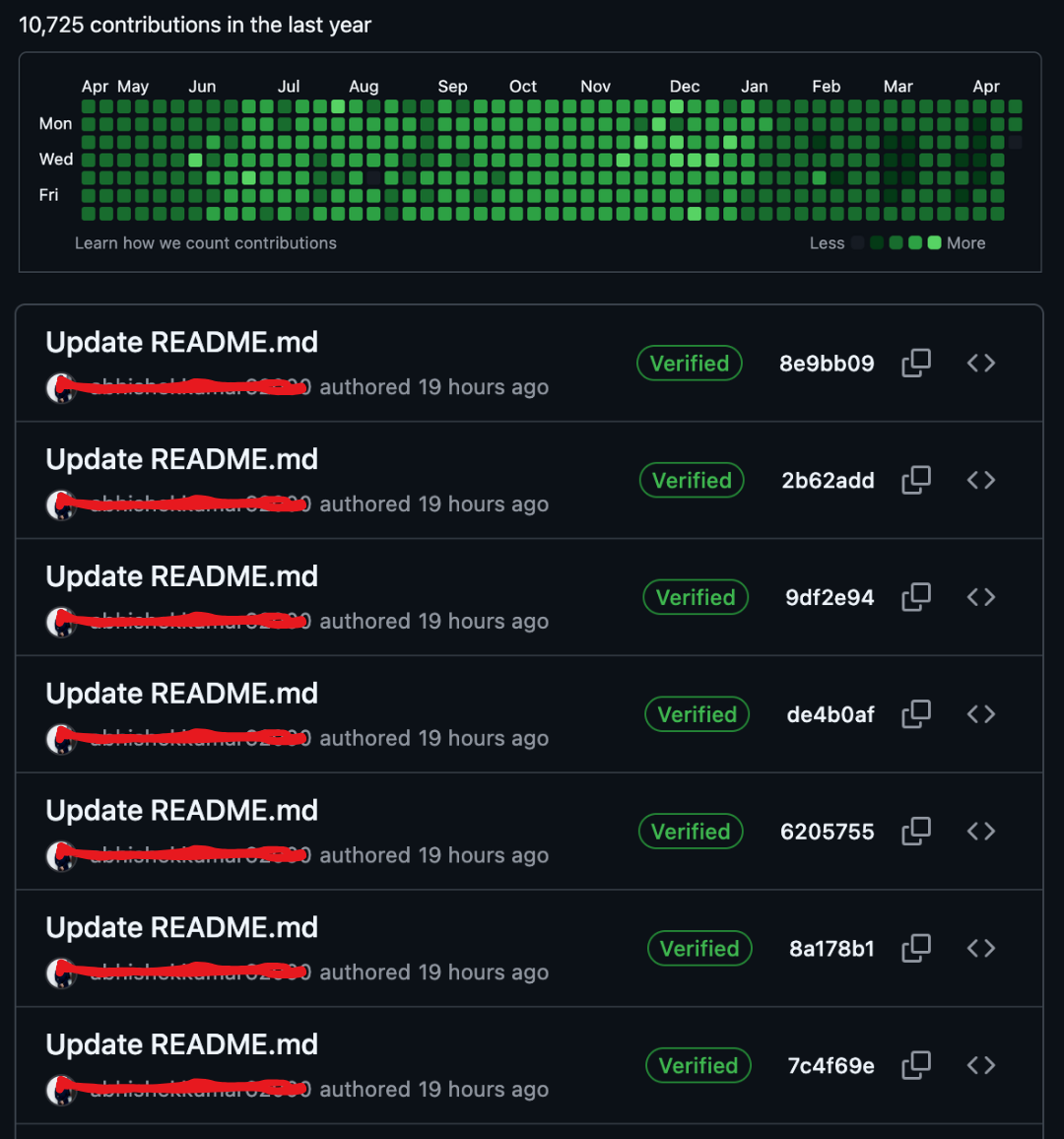
Consistency Beats Talent. Meanwhile, The Consistency: Updating Spaces In Readme.

Consistency Beats Talent. Meanwhile, The Consistency: Updating Spaces In Readme.
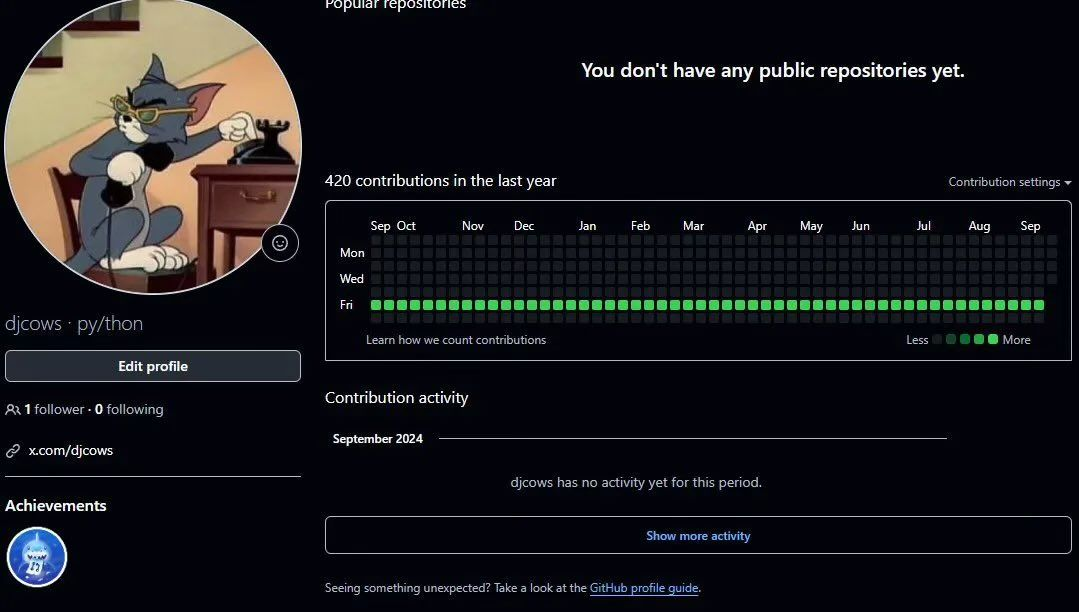
Someone discovered the ultimate GitHub contribution hack: commit trivial README changes every single day to maintain that beautiful green graph. Look at that contribution grid—10,725 contributions in a year! Impressive, right? Until you scroll down and see seven consecutive "Update README.md" commits, all authored 19 hours ago, all verified. The irony here is chef's kiss. Sure, consistency is important in software development, but when your "consistency" is just fixing whitespace or adding a period to your README every day to keep your contribution streak alive, you're basically the coding equivalent of someone who goes to the gym just to take a selfie. Pro tip: GitHub counts contributions, not value. You could be shipping production-breaking code or fixing a typo in your README—both get the same green square. The contribution graph doesn't lie about frequency, but it sure doesn't tell the whole truth about impact.

Same To Same

Same To Same
When you look at a project's contributor list and realize it's basically one person with 47 different GitHub accounts pretending to be a thriving open-source community. That one dog in a sea of sheep? Yeah, that's the actual developer doing all the work while the rest are just placeholder avatars, bots, or that one guy who fixed a typo in the README and never came back. The sheep are all identical because let's be real—half those contributors probably just ran git commit --allow-empty to look productive. Classic open-source theater where the contributor graph looks impressive until you check the actual commits and find out Steve did literally everything while everyone else argued about tabs vs spaces in the discussions.

Mine Would Basically Be White Tiles

Mine Would Basically Be White Tiles
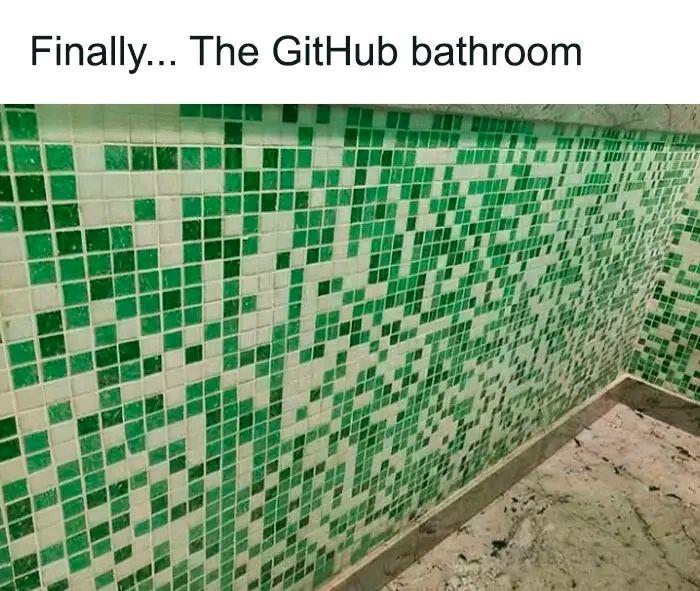
GitHub's contribution graph is basically a public shame board that tracks your commit activity. Green squares mean you've been productive; white squares mean you've been... living your life? The joke here is that someone finally found the perfect bathroom design—green and white tiles mimicking GitHub's contribution calendar. The self-deprecating title hits different though. "Mine would basically be white tiles" is the developer equivalent of admitting your GitHub looks like a ghost town. We've all been there—opening our profile before a job interview and realizing it looks like we retired in 2019. At least bathroom tiles don't judge you for taking weekends off or having a life outside of pushing code at 2 AM. Fun fact: GitHub's green squares have probably caused more anxiety than actual performance reviews. Nothing says "imposter syndrome" quite like comparing your sparse contribution graph to that one colleague who apparently commits code in their sleep.

School Assignments In 2026 Be Like

School Assignments In 2026 Be Like
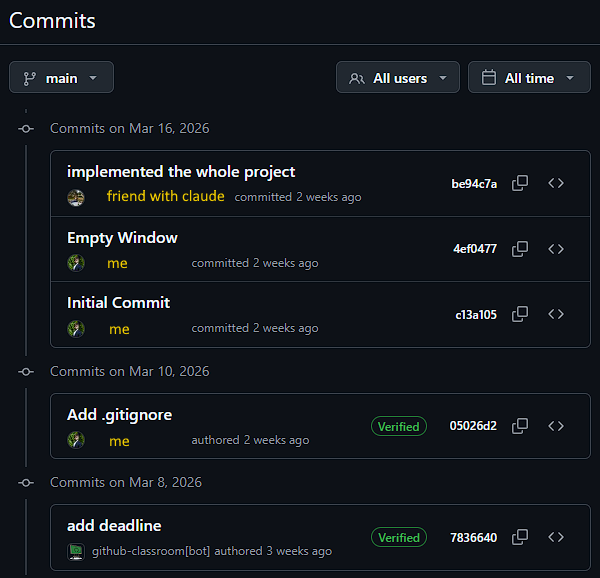
The absolute AUDACITY of this commit history! We've got the classic student panic sequence: start with an "Initial Commit" (translation: I finally opened VS Code), follow up with "Empty Window" (still procrastinating but at least I'm *thinking* about it), add a ".gitignore" because we're suddenly professional developers now, and then—BOOM—"implemented the whole project" courtesy of your bestie Claude who actually did all the work while you were binge-watching Netflix. The cherry on top? Some bot named "github-classroom" adding the deadline commit like a digital grim reaper reminding you of your impending doom. This is basically a documentary of every group project where one person (or in this case, one AI) carries the entire team. The future of education is here, and it's powered by Claude doing your homework at 3 AM! 🤖

Only Squash Merge Allowed

Only Squash Merge Allowed
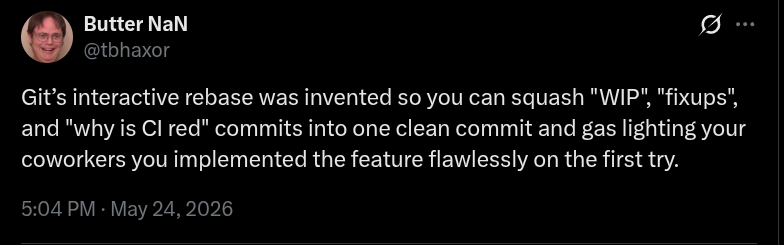
When your team enforces squash-only merge policies, every single commit in your feature branch gets obliterated into one bland, generic message. All those carefully crafted commit messages documenting your thought process? Gone. That commit where you finally fixed the bug at 3 AM? Erased from history. The one where you admitted "I have no idea why this works"? Vanished. Sure, it keeps the main branch "clean," but at what cost? Your entire development journey compressed into "feat: implemented user authentication" while the git history becomes as emotionally sterile as a corporate mission statement. Roy Batty would understand—he's seen things you people wouldn't believe, just like your commit history that nobody will ever see again.

Samsung 49" Odyssey G93SC Series Curved Gaming Monitor, QD-OLED, 240Hz, 0.03ms, DQHD, G-Sync Compatible, FreeSync Premium Pro, Adjustable Stand

Samsung 49" Odyssey G93SC Series Curved Gaming Monitor, QD-OLED, 240Hz, 0.03ms, DQHD, G-Sync Compatible, FreeSync Premium Pro, Adjustable Stand
HANDPICKED BY AMAZON: They did the research so you don’t have to · THE ULTIMATE QD-OLED MONITOR EXPERIENCE: Experience the difference with Samsung OLED. A brighter screen delivers brilliant colors, d…

Finally Inner Peace

Finally Inner Peace
You know that feeling when you discover a GitHub repo that looks like it'll solve all your problems, and then you check the commit history? Most of the time it's either "last updated 4 years ago" or the dreaded "initial commit" from 2019. But 5 hours ago? That's the developer equivalent of finding a warm pizza in an abandoned building—suspicious but absolutely delightful. It means the maintainer is not only alive, but actively working on it RIGHT NOW. No more praying to the open-source gods that your issue will get answered sometime before the heat death of the universe. No more forking a dead project and becoming the reluctant maintainer yourself. Just pure, unadulterated hope that your pull request might actually get merged. This is what serenity looks like in the chaotic hellscape of dependency management.

We All Know It Is

We All Know It Is
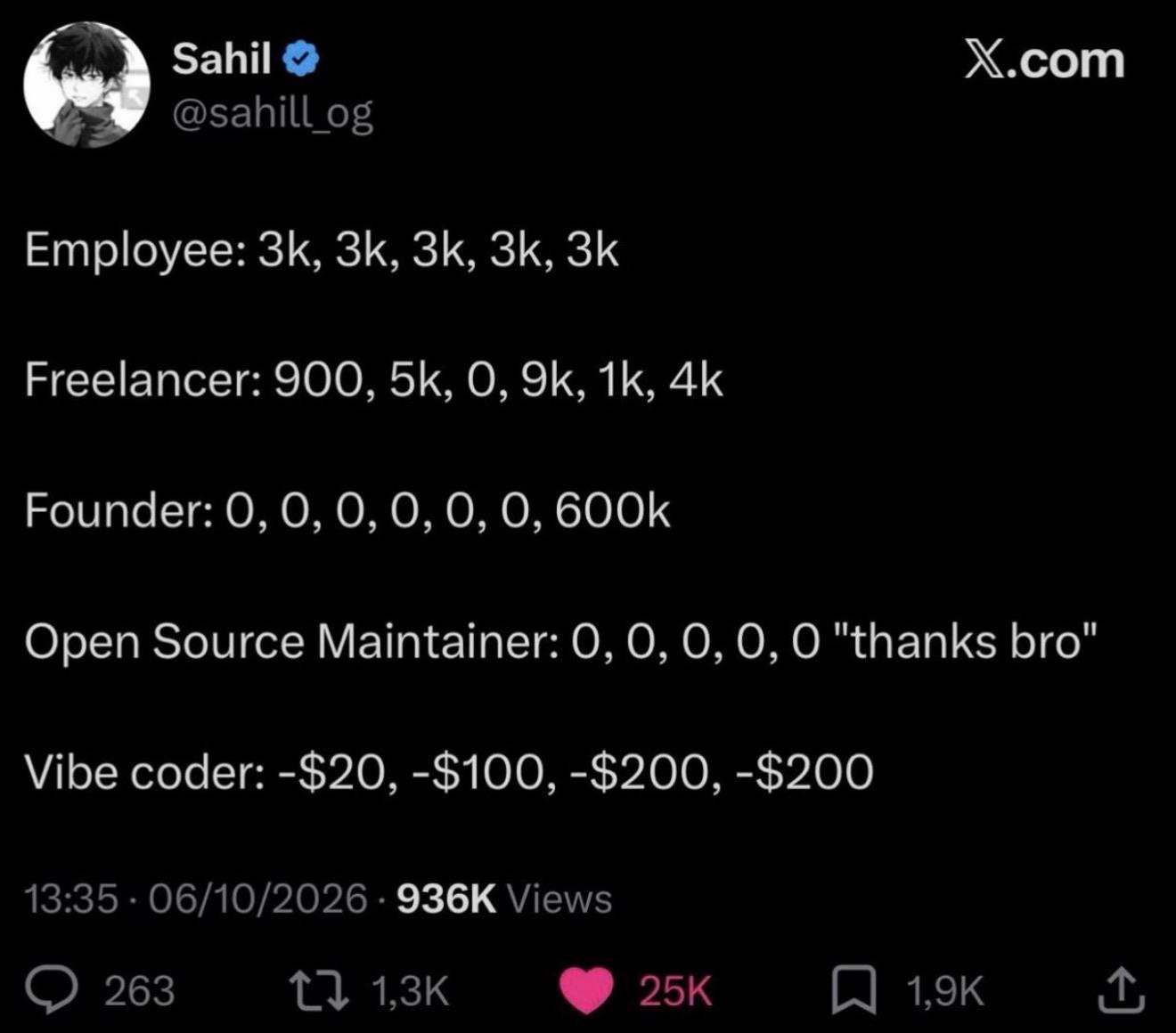
When you're vibing with terrible code quality, writing nested callbacks six levels deep, zero error handling, and variable names like "x1" and "temp2"... and suddenly your commit counter hits 3251. Nothing says "professional software engineer" quite like watching your crime against computer science get immortalized in git history. The code may be garbage, but hey, at least you're consistently producing garbage. That's what they call velocity in Agile, right?

Always The Ones You Suspect The Most

Always The Ones You Suspect The Most
The Scooby-Doo unmasking format strikes again, but instead of revealing the villain, we're exposing the real culprit behind production bugs: ourselves. You spend hours blaming the framework, the compiler, legacy code, that one intern from 2019, maybe even cosmic radiation flipping bits in RAM. But when you finally trace through the git blame and check the commit history, surprise! It was your own code from 3 AM last Tuesday when you thought you were being clever with that "quick fix." The real horror isn't finding bugs—it's discovering you're the villain in your own debugging story. At least when it's someone else's code, you can feel morally superior while fixing it. When it's yours? Just pure existential dread and a strong desire to delete your commit history.

Gotta Break This Habit

Gotta Break This Habit
You know that feeling when you're excited about the shiny new project, completely ignoring the one from last week that's barely treading water, while your GitHub is basically an underwater graveyard of abandoned repos? Yeah, that's the developer life cycle in three panels. The real kicker is we all swear "this time will be different" with each new project, but somehow last week's "revolutionary idea" is already drowning in the pool of forgotten commits. Meanwhile, your GitHub profile is a museum of skeletons - each repo a testament to that initial burst of motivation followed by... crickets. The worst part? You'll scroll past those dead projects every time you push to the new one, feel a tiny pang of guilt, and then immediately forget about it. Rinse and repeat until your GitHub looks like a post-apocalyptic wasteland of "TODO: Add README" commits.

Samsung 49" Odyssey OLED G9 (G91SD) Dual QHD QD-OLED G-Sync Compatible Curved Gaming Monitor, 144Hz, 0.03ms, AMD FreeSync Premium Pro, Ergonomic Stand, 3 Year Warranty, LS49DG910SNXZA, 2024

Samsung 49" Odyssey OLED G9 (G91SD) Dual QHD QD-OLED G-Sync Compatible Curved Gaming Monitor, 144Hz, 0.03ms, AMD FreeSync Premium Pro, Ergonomic Stand, 3 Year Warranty, LS49DG910SNXZA, 2024
DETAILED QD-OLED WORLDS LIVE ON A WIDER, VIBRANT SCREEN: With QD-OLED technology, enjoy a wider color spectrum & vibrant images that captivate you and take gaming to new heights; Content springs to l…

Sand People Override Single Files To Hide Their Blunders

Sand People Override Single Files To Hide Their Blunders
That beautiful moment when someone asks if you trust the code in the repository and you're like "absolutely not, I wrote half of it." Nothing says professional software development quite like being your own worst enemy in code review. We've all been there - scrolling through git blame only to discover that the person who committed that atrocious hack at 2 AM was... yourself. The real kicker? You probably left a comment like "// TODO: fix this properly later" and that was 3 years ago. The title's reference to overriding single files is chef's kiss - because yeah, sometimes you just quietly push that one file with --no-verify and hope nobody notices your sins in the commit history.

Rebase Rumble

Rebase Rumble
The classic trolley problem, but make it git. You've got one innocent developer on the upper track and a whole team on the lower track. What's a responsible engineer to do? Run git rebase master of course! Plot twist: rebasing doesn't actually save anyone. It just rewrites history so that lone developer who was safe on the upper track now gets yeeted to the lower track with everyone else. The team went from "we're all gonna die together" to "we're STILL all gonna die together, but now with a cleaner commit history." The best part? That "Successfully rebased and updated ref" message is basically git's way of saying "I did what you asked, don't blame me for the consequences." Sure, your branch looks linear and beautiful now, but at what cost? At what cost?! Pro tip: This is why some teams have a strict "no rebase on shared branches" policy. Because one person's quest for a pristine git log can turn into everyone's merge conflict nightmare faster than you can say git reflog .