

Code style Memes

Posts tagged with Code style
Imagine Not Using Camel Case

Imagine Not Using Camel Case
Nothing triggers a developer quite like someone using snake_case when they're a camelCase purist. The sheer horror of watching other programming communities embrace different naming conventions is enough to make you question everything. Meanwhile, the kebab-case folks are just chilling in their CSS files, and the PascalCase crowd is over there acting all superior. But hey, at least we can all agree that SCREAMING_SNAKE_CASE should be reserved for constants and angry commit messages.

This Is Quite Powerful

This Is Quite Powerful
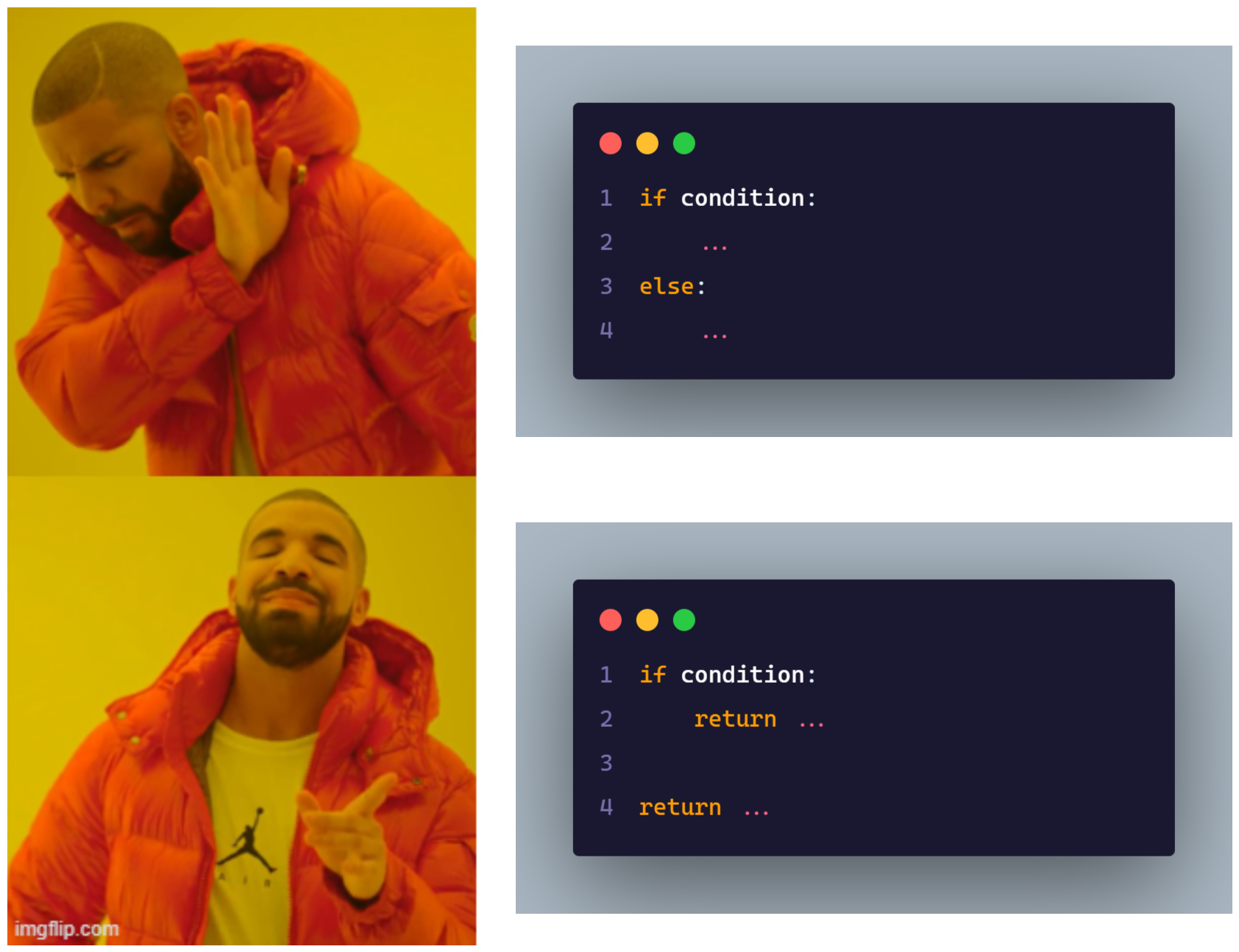
When you discover the ternary operator exists and suddenly feel like you've ascended to a higher plane of programming consciousness. Six lines of pedestrian if-else logic? Nah. One elegant line that makes you feel like you're wearing a tuxedo while coding? Absolutely. Sure, both do the exact same thing, but one makes you look sophisticated at code reviews. The other makes you look like you just finished a "Programming 101" course. We all know which one you're picking. Just wait until you nest three of these bad boys together and your coworkers need a PhD to decipher what you wrote. Peak elegance.

Vibe Coder

Vibe Coder
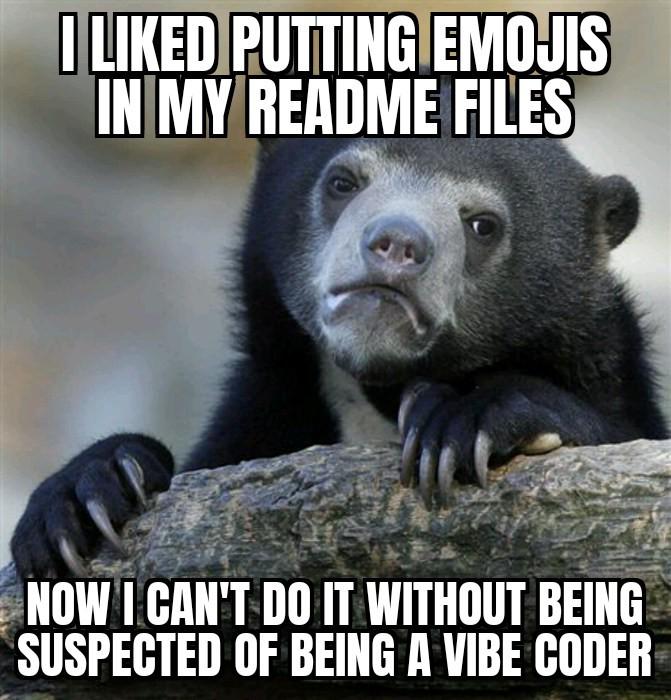
You know someone's coding purely on vibes when they start sprinkling emojis into their codebase like it's a text message to their bestie. Nothing screams "I have no idea what I'm doing but I'm having fun" quite like a `// TODO: fix this later ๐Ÿ˜…` comment or a variable named `isValidโœ…`. These are the developers who treat their IDE like a social media app, adding ๐Ÿš€ to deployment scripts and ๐Ÿ’€ next to buggy functions. Sure, your code might fail in production, but at least it'll fail with personality. The technical debt is real, but the aesthetic? *Chef's kiss* ๐Ÿ‘จโ€๐Ÿณ๐Ÿ’‹

X -= -1 Gang

X -= -1 Gang
When three Spider-Men argue about incrementing a variable, but then the fourth one shows up with x -= -1 and everyone loses their minds. It's like bringing a quantum physics textbook to a kindergarten math class. The beauty is that all four expressions do exactly the same thing, but the last one is just mathematical perversion wrapped in syntactic sugar. It's what happens when you code at 3 AM after your sixth espresso and think you're being clever. The compiler just sighs in binary.

X Minus Equals Minus One Gang

X Minus Equals Minus One Gang
The Spider-Men are fighting over increment operators when suddenly... the enlightened one appears. While these rookies are arguing about x++ , x = x+1 , and x += 1 (which all do the same thing), the true galaxy-brain move is x -= -1 . It's like showing up to a knife fight with quantum physics. Sure, it works exactly the same, but it's the coding equivalent of wearing a monocle while eating fast food. Completely unnecessary, wildly pretentious, and somehow... magnificent. Your code reviewer will either fire you or promote you on the spot.

The Evolution Of Conditional Syntax

The Evolution Of Conditional Syntax
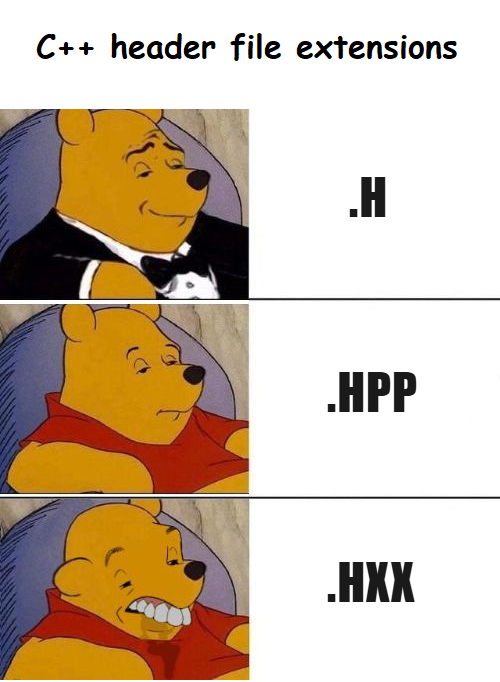
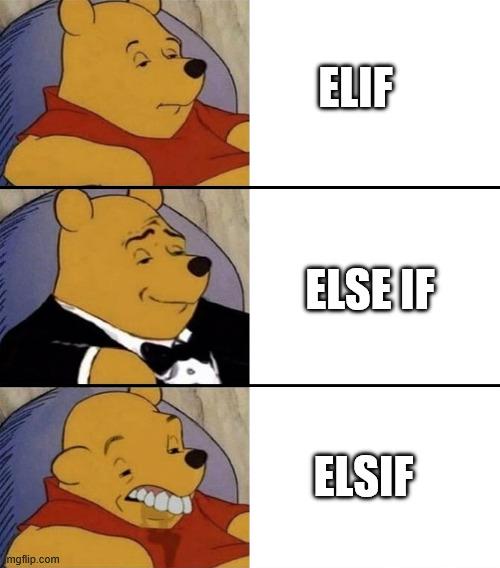
The syntax evolution of conditional statements is a wild ride! First we have "Elsif" - the fancy Pascal/Ada way that makes you feel like you're coding with a monocle. Then "elif" arrives as Python's sleek, minimalist approach (because who needs those extra letters anyway?). "else if" shows up as the sensible middle ground used in C/C++/Java that actually reads like English. But then... the posh British gentleman at the bottom with "otherwise" - that's some proper Ruby/Haskell functional programming elegance right there. It's like watching conditional statements get progressively more sophisticated until they're sipping tea with their pinky out.

We Have Names For The Styles Now

We Have Names For The Styles Now
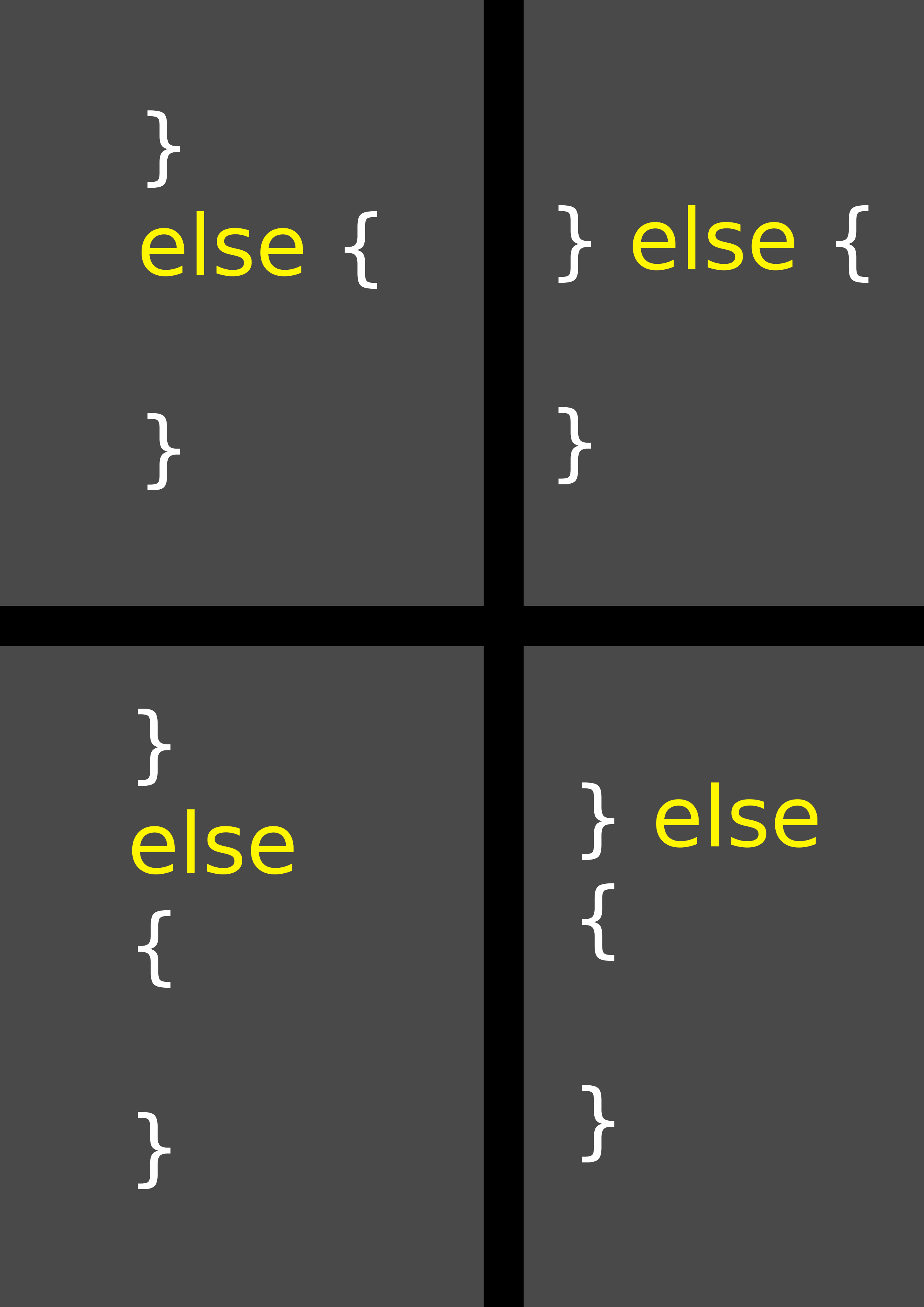
Remember when we just wrote code without caring about whose "style" it was? Now we've got eight different ways to place your damn curly braces and whitespace in a simple while loop. Kernighan & Ritchie put the opening brace on the same line, GNU indents it differently, and Lisp style crams everything together like code real estate costs a fortune. And don't get me started on Haskell style with those bizarre semicolons. The funniest part? We'll still argue for hours about which one is "correct" while the actual functionality remains identical. Twenty years in this industry and we're still fighting about cosmetics instead of solving real problems.

What Grinds My Gears: Naming Convention Chaos

What Grinds My Gears: Naming Convention Chaos
Three-headed dragon meme showing the naming convention struggle. Two fierce heads labeled "camelCase" and "snake_case" represent proper coding standards. Then there's the derpy third head with its tongue out labeled "This_Thing" โ€“ the abomination that combines both conventions and makes senior devs contemplate career changes. The code review is going to be brutal.

The Evolution Of Conditional Statements

The Evolution Of Conditional Statements
Programmers evolving their conditional statements like Pokรฉmon. First there's the clunky uppercase Elsif that nobody likes. Then the more refined lowercase elif that Python devs smugly prefer. But the final form? The proper else if that makes you feel like an adult who pays taxes. And then there's the British chap at the bottom with his fancy otherwise statement, sipping tea while the rest of us peasants use our barbaric syntax. It's the programming equivalent of saying "indeed" instead of "yeah."

I Don't Know Why But They All Post Like This

I Don't Know Why But They All Post Like This
The eternal struggle of variable naming conventions! Some developers just can't resist typing thisKindOfVariable or ThisKindOfClass while others go for this_kind_of_variable . But then there's that one colleague who commits monstrosities like thiskindofvariable to the codebase. You've seen it for months, but now it's too late to bring it up in code review without sounding like you've been secretly judging them (which, let's be honest, you absolutely have been).

Bython: The Forbidden Love Child Of Python And Curly Braces

Bython: The Forbidden Love Child Of Python And Curly Braces
The mythical "Bython" โ€“ where Python's readability meets curly braces! It's the unicorn language that solves the eternal tabs vs. spaces war by letting you write Python with C-style syntax. The code snippet shows Python's function definition and loops but with those sweet, sweet curly braces instead of whitespace indentation. Seasoned Python devs secretly dream about this. No more broken code because someone mixed tabs and spaces. No more staring at your screen trying to figure out if that's 4 spaces or 3. Just good old trusty braces telling you exactly where blocks begin and end! Ironically, the function still prints "Bython is awesome!" โ€“ which is technically true, except Bython doesn't actually exist (yet). It's the programming language equivalent of finding a unicorn that poops rainbows and compiles without errors on the first try.

The Snake Case Prophet

The Snake Case Prophet
The holy war of naming conventions rages on! Some brave soul dared to preach the gospel of snake_case in a world dominated by camelCase zealots. Just like in biblical times, speaking the truth about proper variable naming gets you crucified in code reviews. The underscores shall inherit the codebase! Meanwhile, the PascalCase disciples and kebab-case heretics watch from the sidelines as the great naming schism continues to divide developer communities since the dawn of programming.