

Client expectations Memes

Posts tagged with Client expectations
Spoiler Phase Two Never Gets Budget

Spoiler Phase Two Never Gets Budget
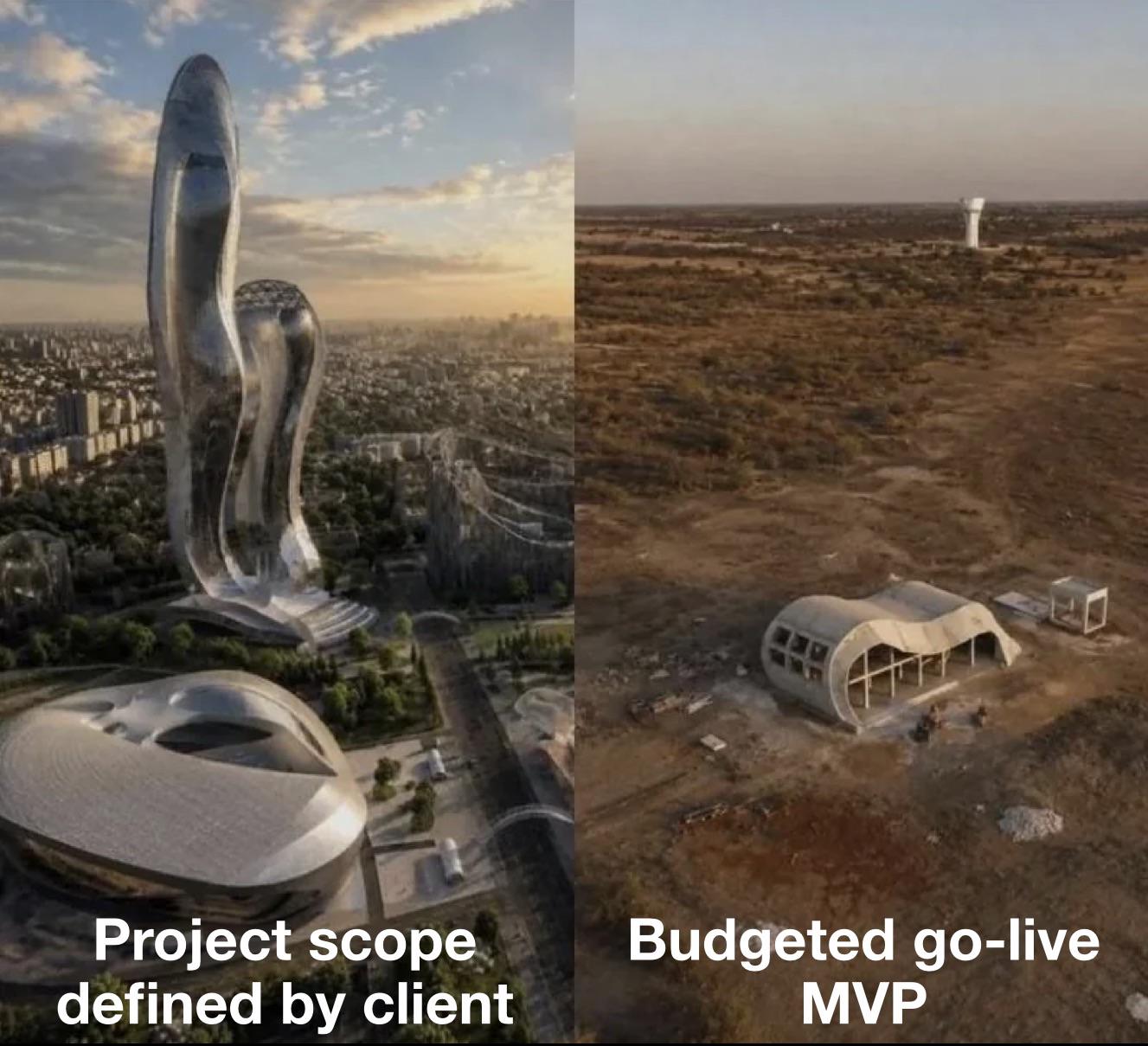
Left side: a futuristic architectural masterpiece that looks like it could house the next SpaceX headquarters. Right side: what appears to be an abandoned Hobbit house in the middle of a desert wasteland. The client walks in with dreams of building the Taj Mahal of software systems, complete with microservices, AI integration, blockchain (because why not), and a UI so smooth it makes butter jealous. Then reality hits: the budget committee approves just enough funding to keep the lights on and maybe buy a pizza for the dev team. So you ship the MVP - Minimum Viable Product, or as we like to call it, "Maximum Visible Pain." It's functional in the same way a cardboard box is technically shelter. Sure, it works, but nobody's winning architecture awards here. The real kicker? Management will still expect Phase Two improvements... with zero additional budget. Just sprinkle some "optimization" magic on it, right?

See Also Tree Swing Meme

See Also Tree Swing Meme
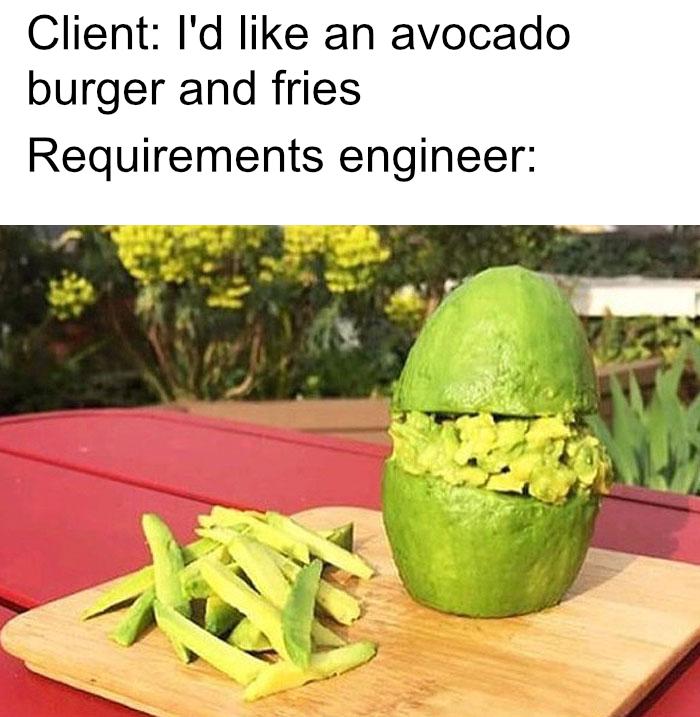
Client asks for a simple burger and fries combo. Requirements engineer, in their infinite wisdom and probably after three hours of deliberation, delivers... *checks notes* ...an avocado stuffed with scrambled eggs and a side of avocado skin strips masquerading as fries. Because apparently when someone says "burger," they CLEARLY mean "hollowed-out fruit vessel filled with breakfast protein." The requirements gathering phase strikes again! Nothing says "I totally understood the assignment" like turning a straightforward fast food order into an avant-garde culinary nightmare. At least they got the color palette right? Green is green, right? RIGHT?! This is basically the software equivalent of asking for a login page and getting a blockchain-powered quantum authentication system that requires a blood sacrifice.

When You Forget To Specify The Target

When You Forget To Specify The Target
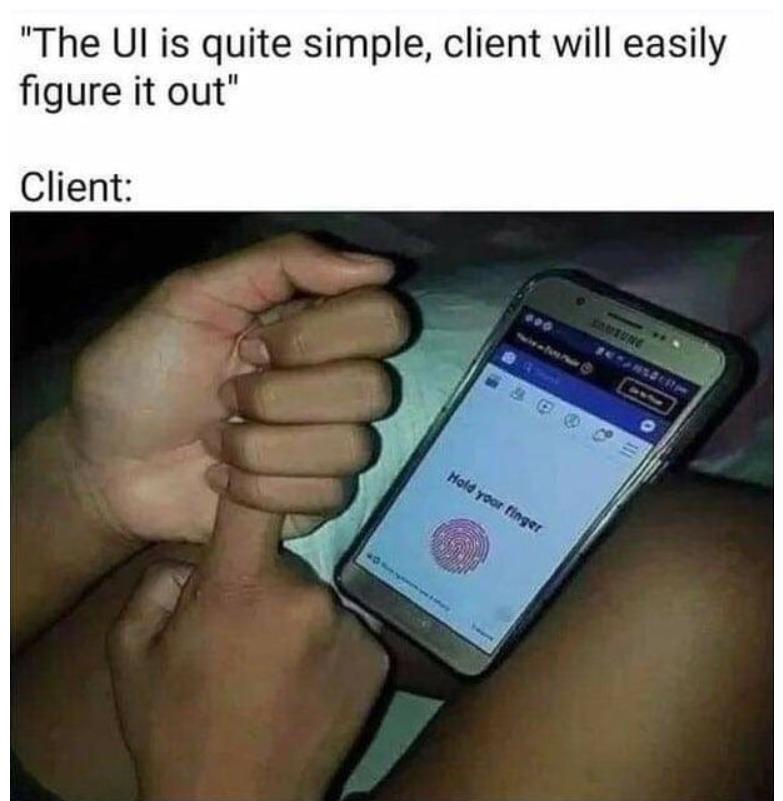
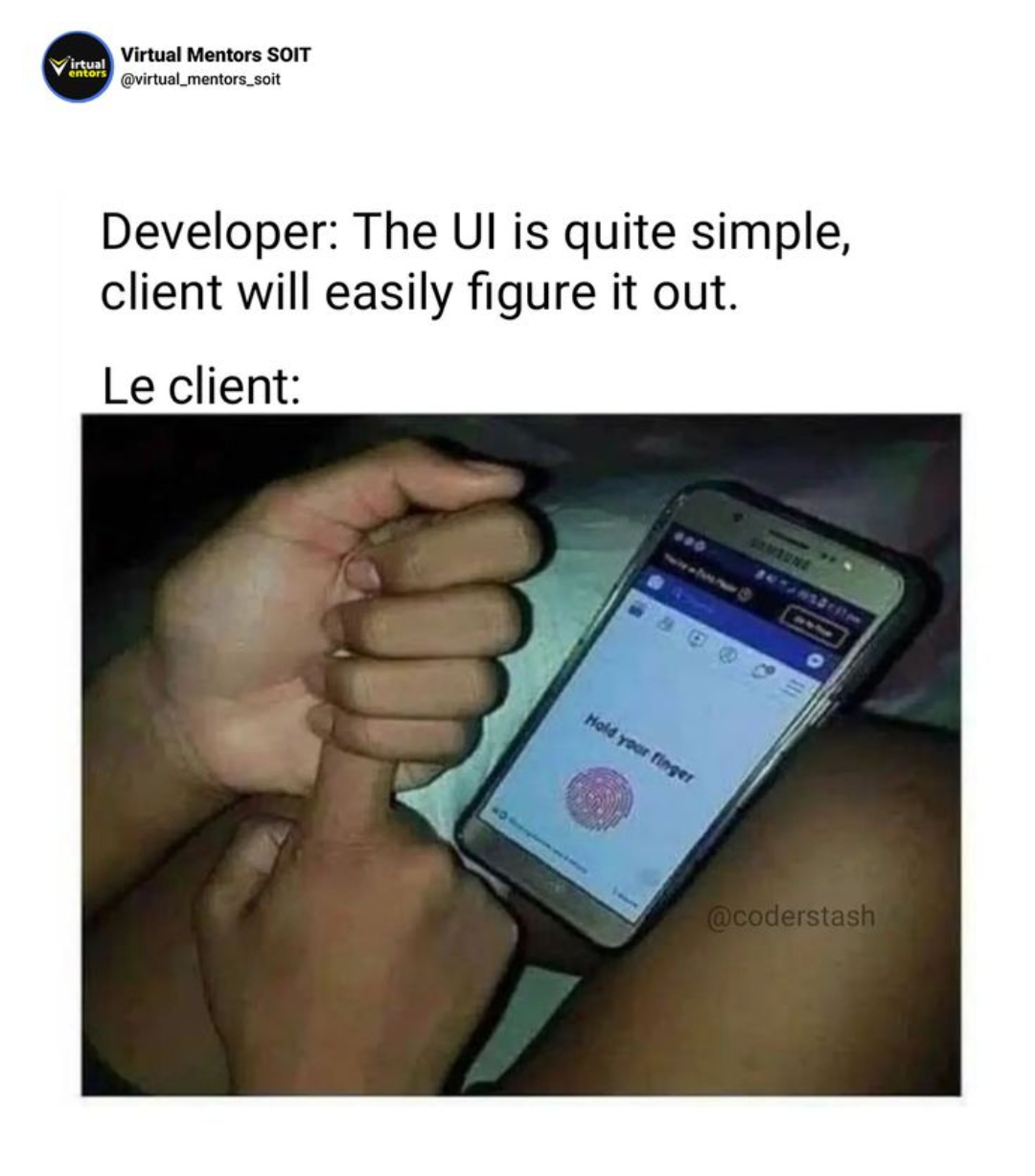
You know that moment when you confidently tell the client "the UI is intuitive, anyone can use it" and then they try to scan their toe as a fingerprint? Yeah, turns out "simple" is relative. What seems obvious to you after staring at wireframes for weeks apparently needs a 50-page manual and maybe some arrows pointing to the actual fingerprint sensor. But sure, let's keep pretending users read tooltips and hover states. The real kicker here is the developer probably spent hours perfecting the fingerprint authentication flow, making it "seamless" and "user-friendly," only to watch someone attempt biometric authentication with their big toe. Sometimes the gap between developer assumptions and user behavior is wider than the Grand Canyon.

Different Observation

Different Observation
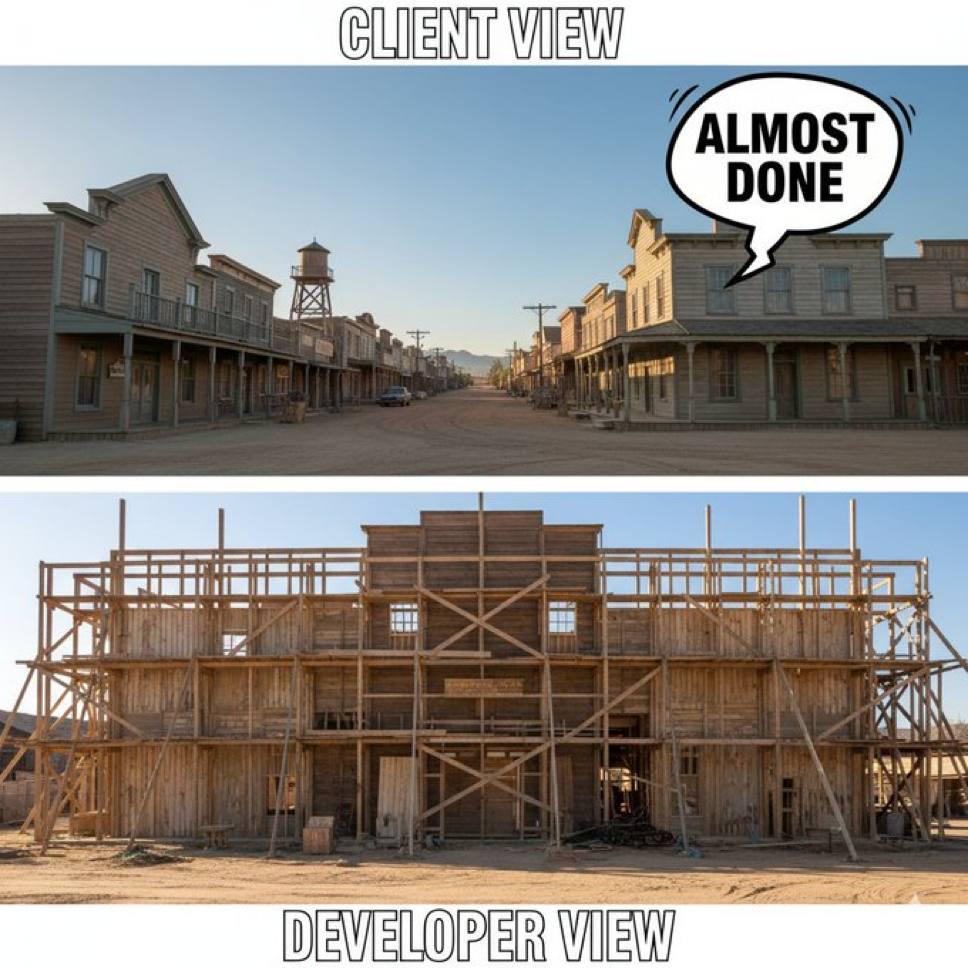
Ah yes, the classic project status delusion. The client sees a polished Wild West town facade and thinks "Almost done!" Meanwhile, developers are staring at the scaffolding nightmare behind the scenes—half the functions aren't implemented, the database is held together with duct tape, and don't even get me started on the tech debt propping everything up. It's like showing off a beautiful landing page while the backend is literally just console.log statements and prayers. The front-facing stuff might look production-ready, but peek behind the curtain and you'll find TODO comments from 6 months ago and functions named "doTheThing()". Pro tip: When a developer says "almost done," add at least 3 sprints to your timeline. That scaffolding isn't coming down anytime soon.

Designer Presents The Impossible Dream

Designer Presents The Impossible Dream
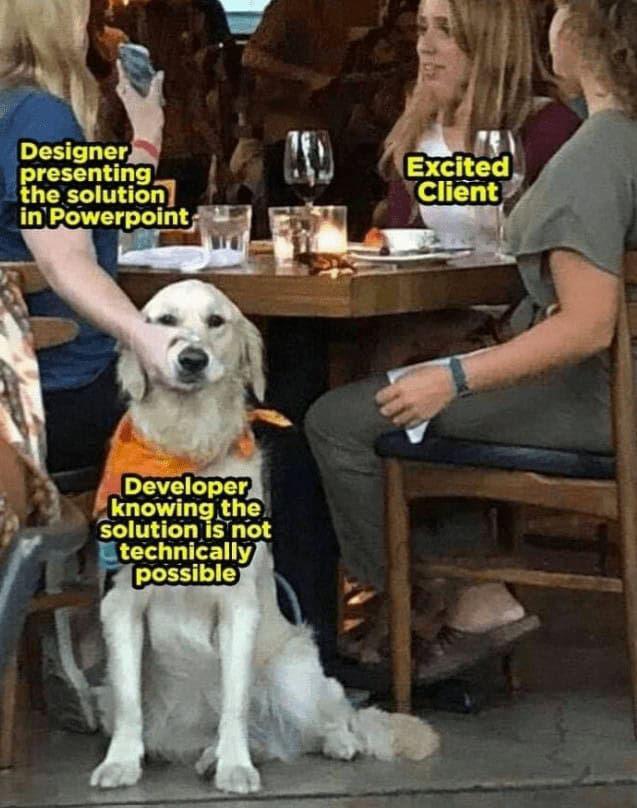
The eternal triangle of tech despair: Designer whips up some gorgeous mockup in PowerPoint with animations that would make Pixar jealous, Client's eyes light up like it's Christmas morning, and Developer sits there with that "I'm about to ruin everyone's day" energy. That dog's expression? That's the face of someone who's been asked to implement a button that morphs into a unicorn while playing Beethoven's 5th Symphony, all while maintaining sub-50ms load times. The designer promised it, the client wants it yesterday, and the developer knows the laws of physics (and CSS) simply won't cooperate. Pro tip: Next time, invite the developer to the design meeting. Or at least check if what you're proposing requires bending the space-time continuum before getting the client hyped.

Rapid Prototyping With AI

Rapid Prototyping With AI
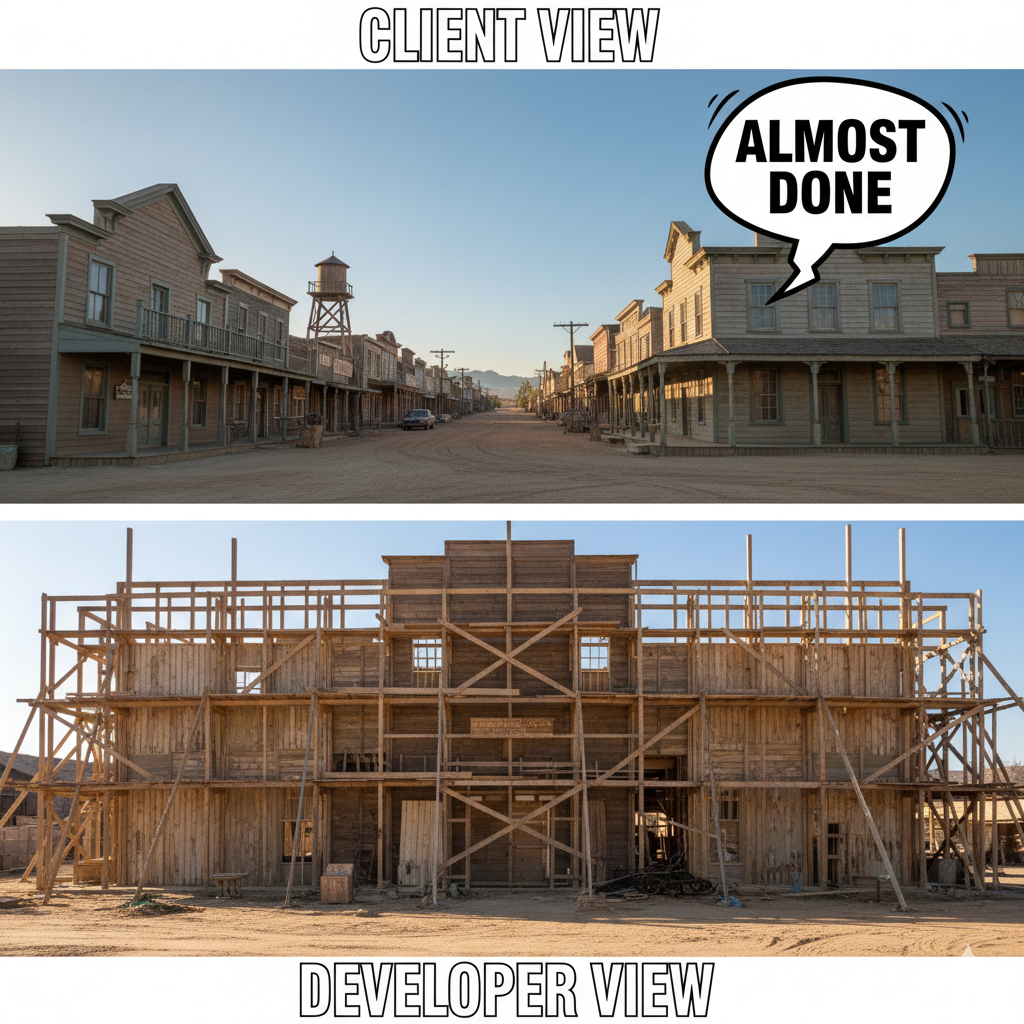
When you tell the client your AI-powered prototype is "almost done," they see a beautiful Old West town ready for action. Meanwhile, you're looking at a construction site held together by scaffolding, duct tape, and prayers to the TypeScript gods. Sure, the facade looks impressive from the street view, but behind the scenes? It's all exposed beams, missing walls, and architectural decisions that would make any code reviewer weep. That's AI-generated code for you—looks production-ready in the demo, but the moment you peek under the hood, you realize you're basically debugging a half-finished movie set. At least it compiles... sometimes.

I Quit My Job Ceramic Mug, White

I Quit My Job Ceramic Mug, White
Career Change design. I quit my job Design. · Congrats on quitting your job and not getting escorted out of the building! · 11-ounce ceramic mug is dishwasher and microwave-safe, lead and BPA free · …

When Project Is Not Ready But The Client Wants A Demo

When Project Is Not Ready But The Client Wants A Demo
When your client schedules a demo for tomorrow and your project is basically held together with console.log statements and prayers. You're out here doing the software equivalent of an excavator trying to high-five itself—technically impressive, wildly unnecessary, and definitely not what anyone asked for. But hey, if you present it with enough confidence and jazz hands, maybe they won't notice that half the features are just placeholder text and the backend is literally just you manually updating a JSON file. The art of the demo isn't showing what works; it's creatively avoiding what doesn't.

They Do It On Purpose

They Do It On Purpose
The eternal disconnect between developer expectations and user reality! The phone is asking for a fingerprint scan with the instruction "Hold your finger," but instead of using their fingertip like a normal human, the user is pressing their entire thumb sideways against the screen. This is why we need 75-page user manuals for features that should be self-explanatory. No matter how "intuitive" you think your UI is, somewhere out there is a user trying to scan their elbow because the instructions weren't specific enough. Pro tip: Always assume your users will interpret your UI in the most creative and incorrect way possible. It's not a bug, it's a feature of human creativity!

Richard's Guide To Software Development Hell

Richard's Guide To Software Development Hell
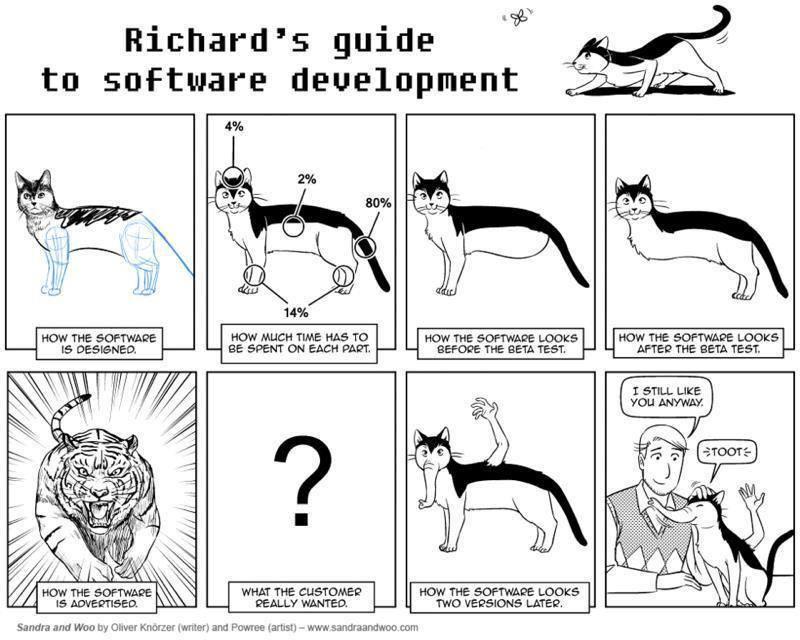
Ah, the classic software development cycle illustrated with feline precision! First panel: We start with a beautiful blueprint cat—meticulously designed with perfect proportions and elegant lines. Engineering perfection! Second panel: Resource allocation at its finest—80% of effort goes to the tail (that feature nobody will use), 14% to the legs (core functionality), 4% to the head (user interface), and a whopping 2% to the actual body (everything else that matters). Third and fourth panels: The pre-beta and post-beta cats look identical because let's be honest—nobody actually fixes anything during beta testing. Fifth panel: What the customer wanted? A FREAKING TIGER. Not even remotely close to a house cat. Sixth panel: Two versions later, the software has evolved into... a cat with an existential crisis and identity issues. Final panel: The ultimate truth bomb—despite delivering something completely wrong, users still stick around with a resigned "I still like you anyway." And the software's response? "TOOTS." Because at this point, it's just farting out updates.

Frankenstein Code: The AI-Powered Monster

Frankenstein Code: The AI-Powered Monster
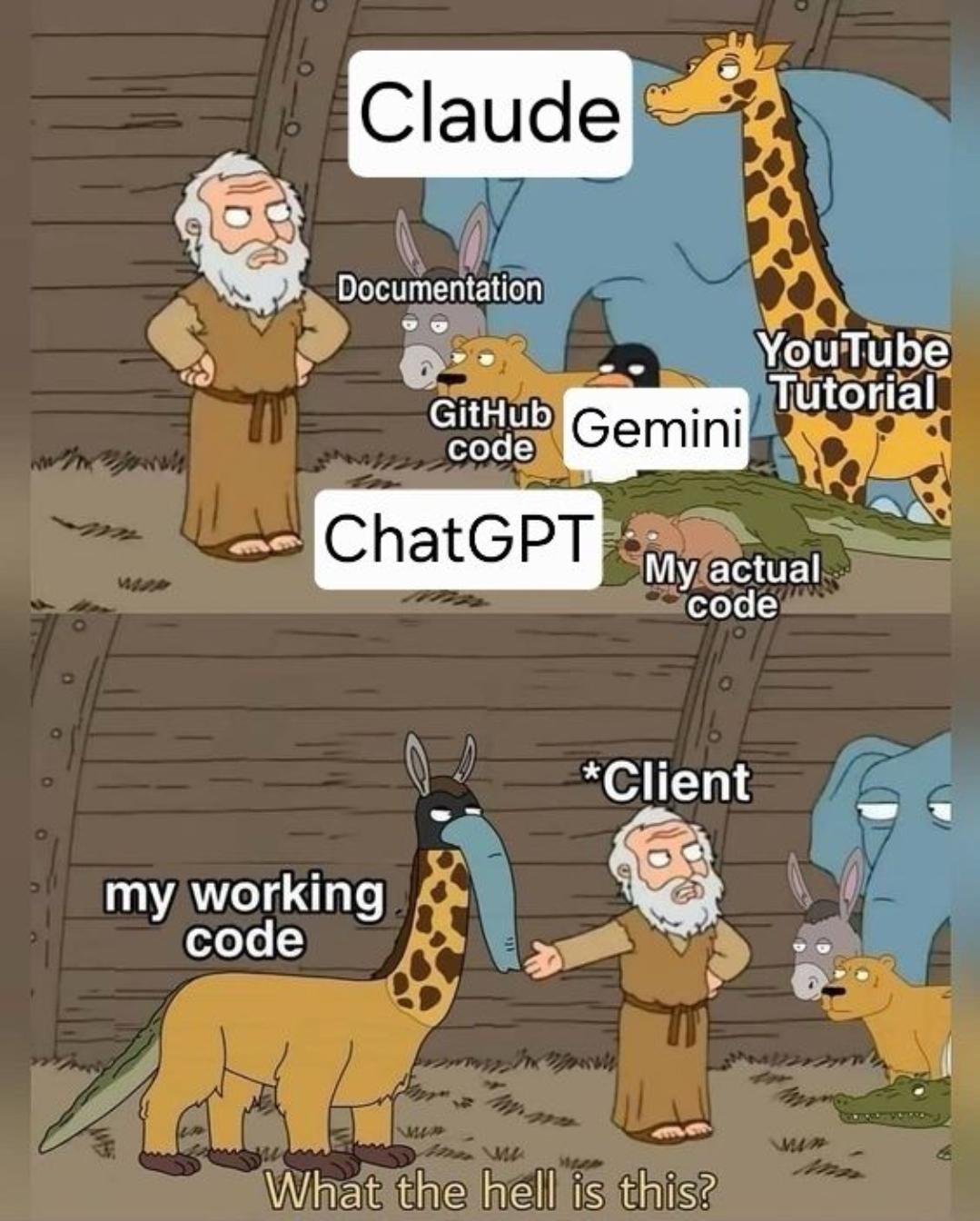
Behold the UNHOLY ABOMINATION that is modern development! 🧟‍♂️ Up top we have the absolute CIRCUS of ingredients - Claude, ChatGPT, Gemini, random GitHub code you found at 3AM, documentation you barely skimmed, and YouTube tutorials made by someone who sounds like they're 12 but somehow knows more than your entire CS degree taught you. And what emerges from this UNGODLY FUSION? That tiny, pathetic rodent labeled "My actual code" - which you somehow stitch together into the bizarre chimera that is your "working code." Then the client shows up, looks at your creation, and has the AUDACITY to ask "What the hell is this?" as if they didn't ask for "Netflix but better" with a budget of $12 and a deadline of yesterday. THE NERVE! 💅

Every Client Meeting Ever

Every Client Meeting Ever
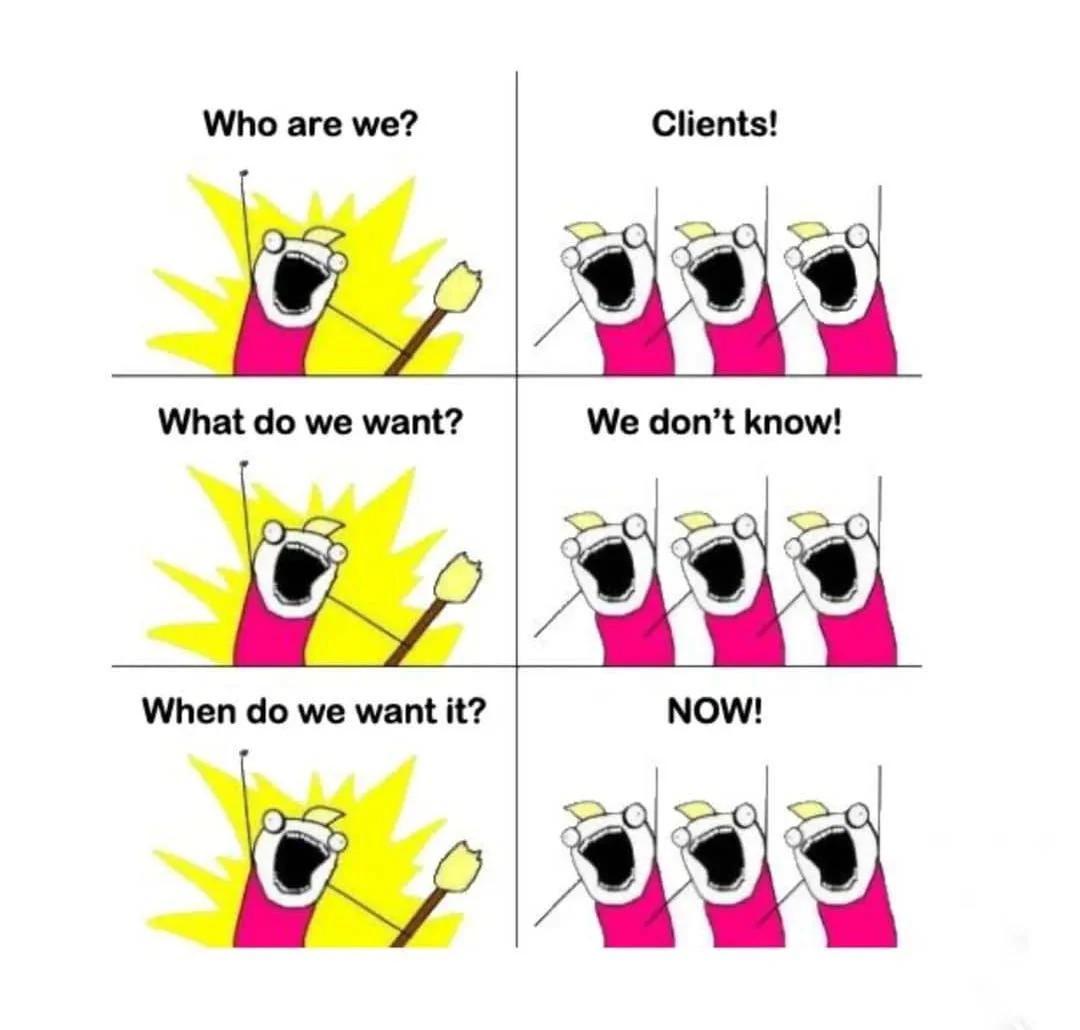
The sacred ritual of client meetings, distilled into its purest form. They're clients! What do they want? They have no freaking idea. When do they want their undefined requirements? YESTERDAY, of course! Nothing quite captures the existential dread of software development like trying to build something for someone who can't articulate what they want but will definitely know what they don't want when they see your first prototype. The best part? They'll change everything after you've written 10,000 lines of code. It's like playing darts blindfolded while the dartboard is being moved by someone who's never seen darts before.

Dev Dot Exe Has Stopped Working

Dev Dot Exe Has Stopped Working
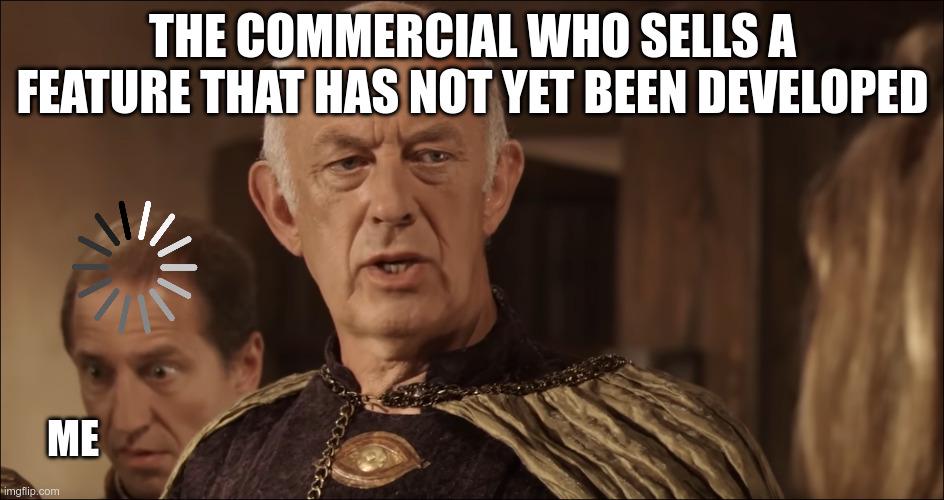
The eternal struggle of every developer who's ever been in a sales meeting. That spinning wheel of doom in your brain when the sales team proudly announces they've promised a client a feature that exists only in their imagination. Meanwhile, you're mentally calculating how many all-nighters and caffeine-fueled coding sessions it'll take to manifest this fantasy into reality before the "reasonable deadline" they've also promised. Nothing like building the airplane while it's already carrying passengers!