 AI
AI
 AWS
AWS
 Agile
Agile
 Algorithms
 Android
 Apple
Apple
 Azure
Azure
 Backend
 Bash
Bash
 C++
C++
 Cloud
Cloud
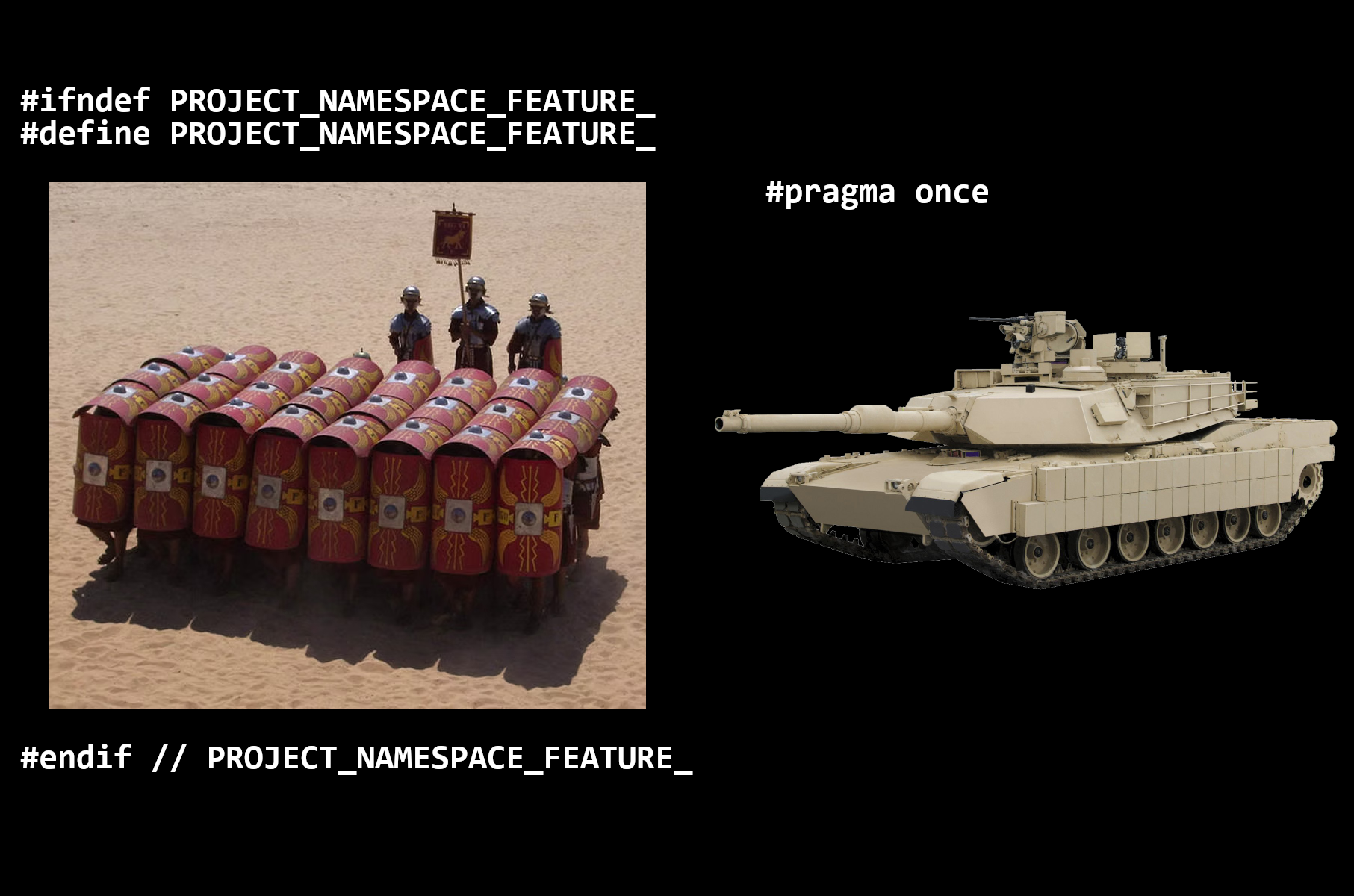
The traditional #ifndef/#define/#endif include guard pattern is basically the Roman testudo formation of C/C++ programming—a bunch of verbose lines working together to protect your header file from being included multiple times. It gets the job done, but requires three whole lines of boilerplate and a carefully crafted unique macro name that you hope nobody else in your codebase accidentally reused.
Then comes #pragma once—the modern military tank that just rolls in and does the exact same thing with literally two words. No macro naming conventions to memorize, no closing #endif to forget, no risk of copy-pasting the wrong guard name. Just pure, elegant simplicity.
The only reason people still use the traditional guards is for that sweet, sweet portability to compilers from 1987 that nobody actually uses anymore. Meanwhile, #pragma once has been supported by every major compiler for decades and is sitting there like "I could do this all day."