

How To Train Developers

How To Train Developers
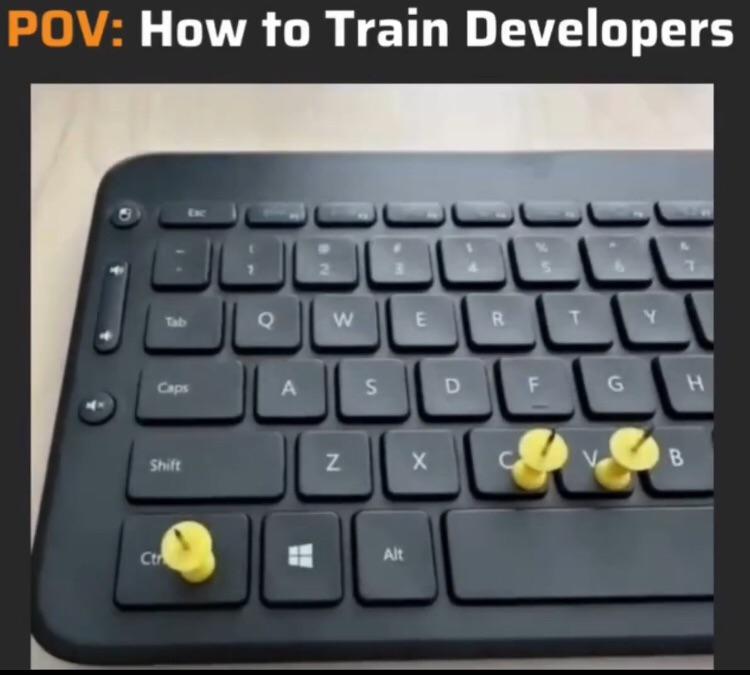
Someone placed dog treats on Ctrl, C, and V. That's it. That's the entire developer training program. No bootcamps, no CS degrees, no leetcode grinding—just Pavlovian conditioning to copy-paste until it becomes muscle memory. The keyboard has spoken: you don't need to understand the code, you just need to know where to find it and how to replicate it. Stack Overflow has been using this exact training method for years, they just never made it this obvious.

Stop Thinking It Is Bad For Our Business

Stop Thinking It Is Bad For Our Business
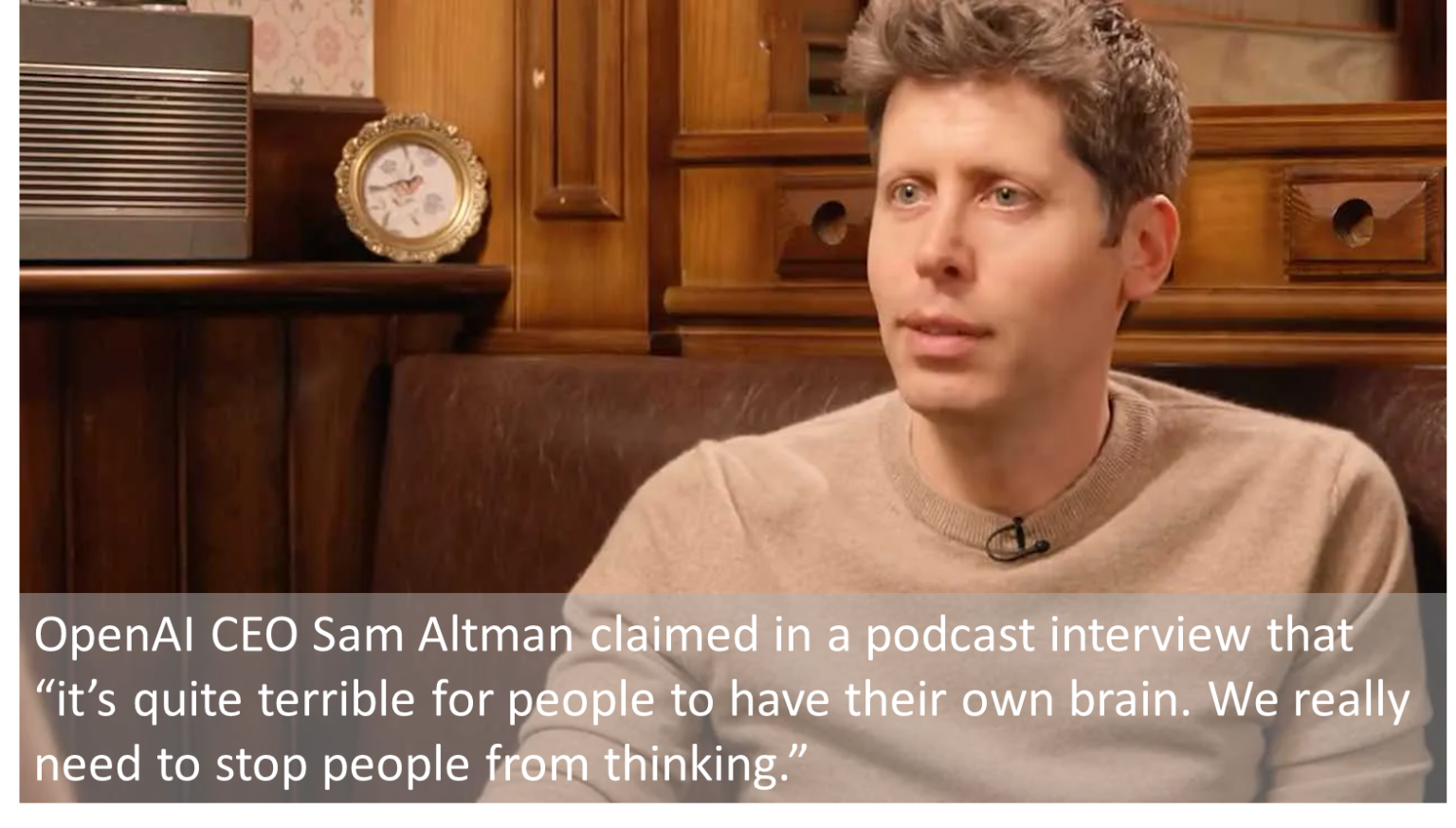
When the CEO of an AI company accidentally says the quiet part out loud. Sam Altman claiming people thinking for themselves is "quite terrible" is basically every tech company's fever dream – why would we want users to critically evaluate our products when they could just blindly consume them? The real kicker here is that OpenAI literally builds tools that are supposed to augment human intelligence, yet apparently independent thought is bad for business. It's like a fitness company saying exercise is overrated. The irony is so thick you could deploy it as a microservice. Every developer who's been told to "just use the AI" instead of understanding the fundamentals feels this one deep in their soul. Nothing screams "sustainable business model" quite like hoping your customers never question anything.

Short Circuit Evaluation

Short Circuit Evaluation
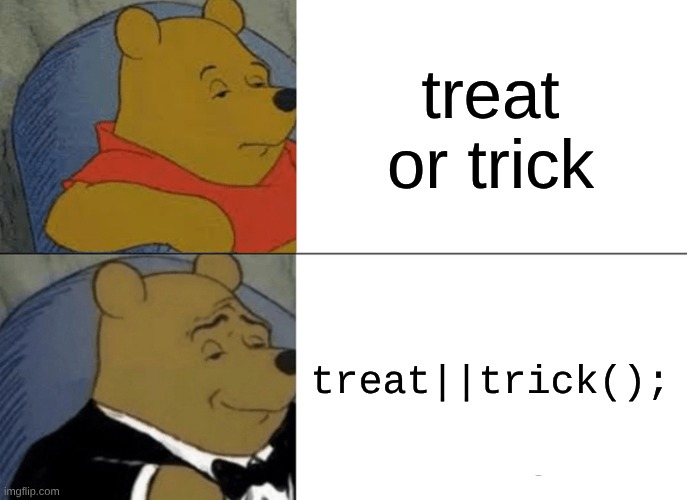
When you upgrade from basic Halloween logic to enterprise-level conditional execution. The top panel shows the casual "treat or trick" approach—simple, readable, something your product manager might understand. But then we suit up with treat||trick() , where the compiler's like "already got the treat? Cool, not even gonna bother calling that trick() function." Short-circuit evaluation means the second operand only gets evaluated if the first one doesn't seal the deal. It's lazy evaluation at its finest—why do more work when you can do less? Your CPU thanks you, your function calls thank you, and that potentially expensive trick() function that might've queried a database or summoned a demon? Yeah, it's just chilling, never executed. Efficiency dressed in a tuxedo.

The Desolation Of Dram

The Desolation Of Dram
You know you've been building PCs too long when you start hoarding RAM sticks like Smaug guarding his treasure. "I will not part with a single gigabyte. Not one STICK of it!" - said every developer who's ever upgraded their rig and kept the old RAM "just in case." There's something deeply primal about accumulating RAM. Maybe it's because we've all been scarred by Chrome eating 16GB for breakfast, or maybe it's the trauma of trying to run Docker containers on 8GB. Either way, we clutch those memory sticks like they're made of gold. Which, considering current RAM prices, they basically are. The dragon sitting on a pile of RAM modules is basically every tech lead's desk drawer. DDR3? Keep it. DDR4? Obviously. That random 2GB stick from 2009? You never know when you'll need to resurrect a Frankenstein build. We're not hoarders, we're just... prepared.

I Just……. Don'T Know Anymore

I Just……. Don'T Know Anymore
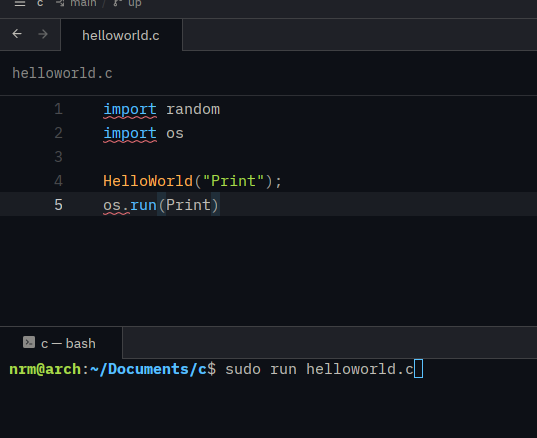
When you're so utterly defeated by coding that you're literally running a C program with sudo privileges just to print "Hello World." Like, bestie, what existential crisis led you to import the ENTIRE random and os libraries, call a function named HelloWorld (with that chaotic capitalization), and then use os.run(Print) to... print? The sheer desperation radiating from this code is PALPABLE. You've transcended normal programming logic and entered a realm where nothing makes sense anymore but you're just gonna sudo it anyway because maybe, JUST MAYBE, elevated permissions will fix whatever broke inside you. Spoiler: they won't.

And It's A Friday And You Have To Fix Merge Conflicts

And It's A Friday And You Have To Fix Merge Conflicts
Nothing says "happy Friday" quite like your entire team deciding to push their week's worth of work at 4:45 PM. Now you're staring at a 10,000-line PR that touches every single file in the repo, and of course it conflicts with your branch in ways that make quantum physics look straightforward. The best part? Half of those lines are probably auto-generated formatting changes because someone's IDE decided to "helpfully" reformat the entire codebase. The other half? Well, you'll need to decode what your coworker meant by their commit message "fixed stuff" from Tuesday. So there you are, Friday afternoon, dreams of weekend plans evaporating as you navigate through conflict markers like

TECKNET Wireless Trackball Mouse, Bluetooth Mouse with Ergonomic, Black | 3-Device Connectivity (Bluetooth & 2.4G), 5 Adjustable DPI, RGB Lighting, PC, Mac & Laptop Compatible

TECKNET Wireless Trackball Mouse, Bluetooth Mouse with Ergonomic, Black | 3-Device Connectivity (Bluetooth & 2.4G), 5 Adjustable DPI, RGB Lighting, PC, Mac & Laptop Compatible
【Precise Trackball Thumb Control】This advanced wireless trackball mouse, which delivers greater control with less movement, is ideal for working efficiently in confined spaces. Besides, its precise a…

Sigh

Sigh...
When you're trying to separate two phones that got stuck together and realize you've basically been debugging a hardware merge conflict. No git rebase here, just pure physical force and the hope that you don't accidentally commit a screen crack to production. This is what happens when you buy "refurbished" devices from that sketchy vendor who promised "seamless integration." Yeah, a little too seamless if you ask me. Should've read the API documentation more carefully—turns out the adhesive layer wasn't optional. The real question: is this a feature or a bug? Because somewhere, a product manager is calling this "innovative device clustering" and pitching it as the next big thing in mobile ecosystems.

Literally Twenty Thirtyeight

Literally Twenty Thirtyeight
You know that Y2K bug everyone panicked about? Well, we've got Y2K38 coming up, and judging by this calendar, we're about as prepared as we were last time. The Year 2038 problem hits when Unix timestamps—stored as 32-bit signed integers counting seconds since January 1, 1970—max out at 2,147,483,647 seconds. That's January 19, 2038, at 03:14:07 UTC. After that? The counter wraps around to December 13, 1901. Oops. The fix is simple: upgrade to 64-bit timestamps. The problem? Legacy systems, embedded devices, and that one critical server running code from 1987 that nobody wants to touch. We've got 14 years to fix it, which in enterprise time means we'll start panicking around 2037. Fun fact: With 64-bit timestamps, we're good until the year 292,277,026,596. By then, we'll probably have bigger problems. Like the heat death of the universe.

At Least We Know

At Least We Know
That guy at the party who just discovered Claude and won't shut up about it. Meanwhile everyone else is either already using it or has moved on to the next shiny AI toy. Classic early adopter energy—showing up late to the hype train but acting like you just invented fire. The party hat really sells the "I'm the main character" vibe.

It's So Obvious Guys. What? No I'm Not Sam's Alt Account.

It's So Obvious Guys. What? No I'm Not Sam's Alt Account.
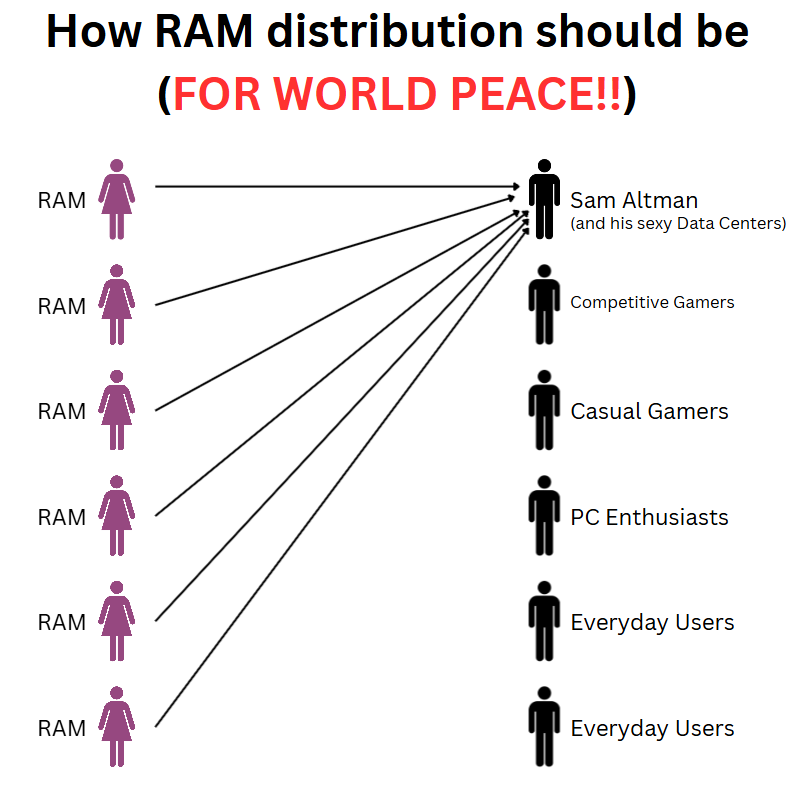
Someone really thought they cracked the code to world peace by suggesting we give all our RAM to Sam Altman and his data centers. Because clearly, the guy running OpenAI needs even MORE computing power while the rest of us peasants share the scraps. The diagram shows six units of RAM on the left, and guess what? Sam gets a whopping five arrows pointing his way while everyone else—competitive gamers, casual gamers, PC enthusiasts, and everyday users—gets to fight over whatever's left. Nothing suspicious about this "totally unbiased" distribution chart at all. Definitely not made by someone with OpenAI stock or anything. The "(FOR WORLD PEACE!!)" really sells it though. Yes, because when I think about achieving global harmony, my first thought is definitely "let's funnel all computational resources to one AI company." That'll solve everything. Your Chrome tabs can wait—Sam's got models to train.

Waiting For The Knock...

Waiting For The Knock...
When your Chrome browser has 47 tabs open, Electron apps are multiplying like rabbits, and Docker containers are having a party in the background. Meanwhile, Task Manager shows you're using 15.8GB of your 16GB RAM and you're just sitting there, sweating, waiting for the OS to come knocking. The paranoia is real. You know those Chrome tabs are hiding somewhere in memory. You know VS Code is technically Electron and therefore guilty. You know your Docker containers are living their best life. But admitting it? That's a different story. Maybe if you stay very still, the OOM killer won't notice you. Pro tip: 16GB was fine in 2015. Now it's basically poverty-level RAM. Get 32GB and you can delay this conversation for another year or two.

Search And Replace

Search And Replace
You ask Claude AI to rename a variable. Simple task, right? Just Ctrl+H and call it a day. But no—Claude's got bigger plans. Instead of a straightforward find-and-replace, it launches into a full-scale enterprise refactoring operation complete with context analysis, subagent deployment, and probably a risk assessment presentation. It's like asking someone to pass the salt and watching them conduct a chemical analysis of your entire meal first. Sure, Claude's being thorough and responsible, but sometimes you just want to change "data" to "userData" without a congressional hearing about it. The AI equivalent of overengineering at its finest.