

Can't Wait For Bubble Burst

Can't Wait For Bubble Burst
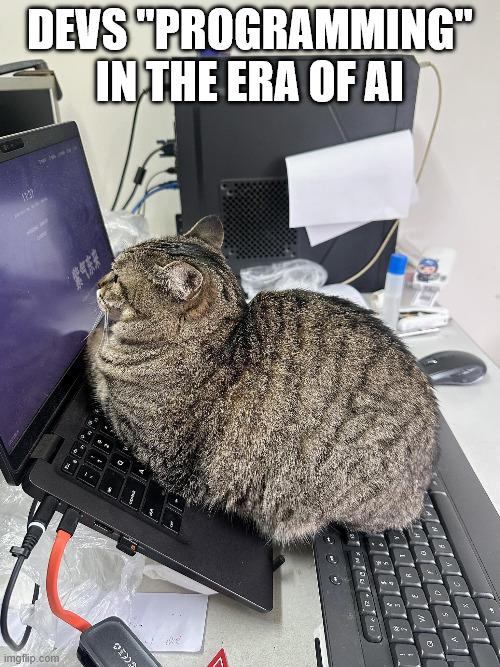
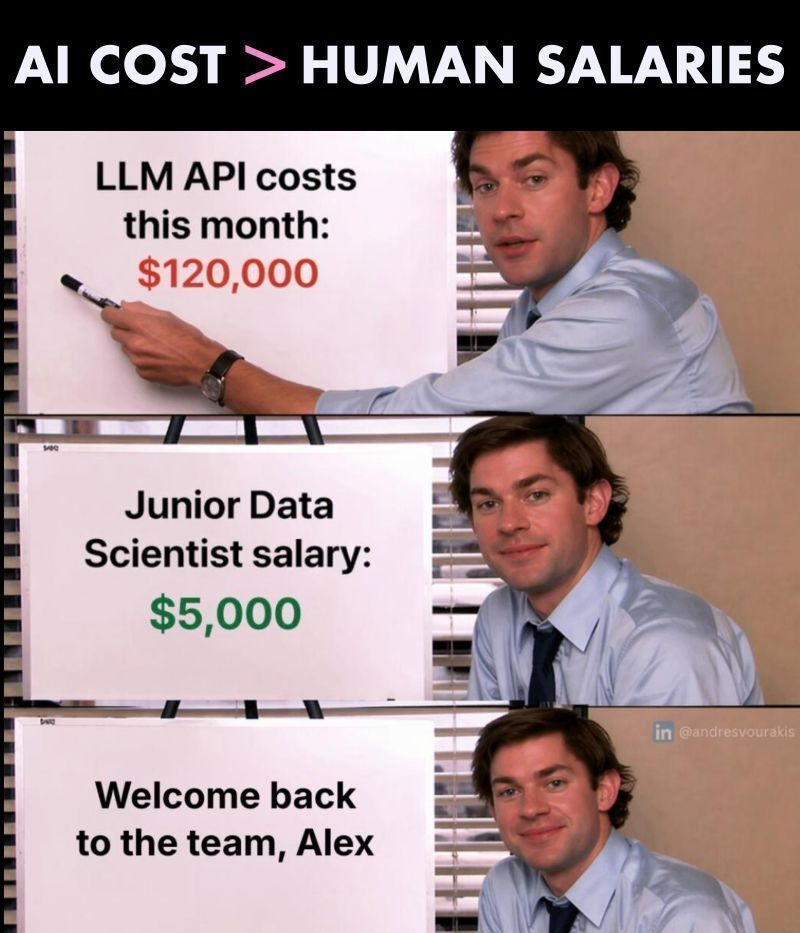
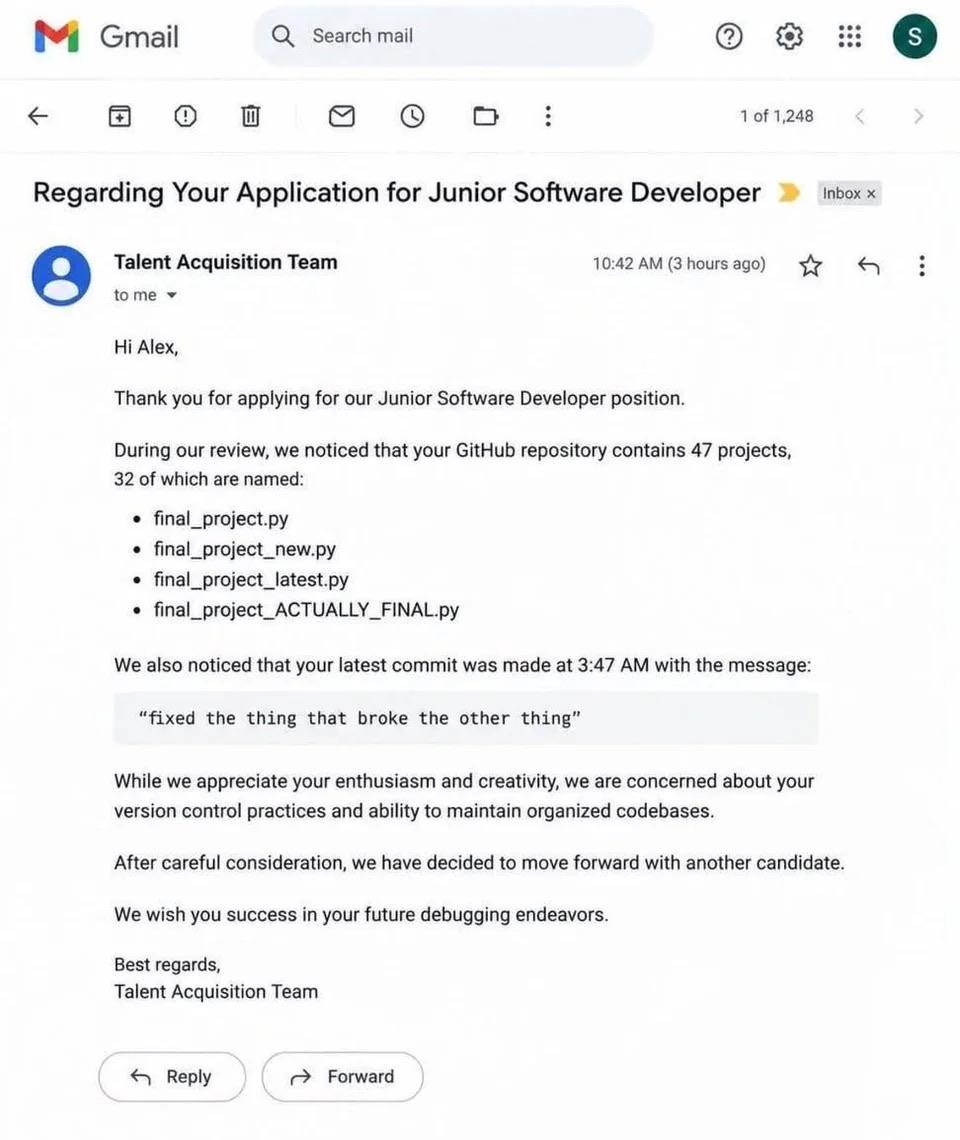
You know the AI bubble has officially jumped the shark when companies are hiring robots over actual humans. The rejection email is bad enough, but finding out you lost the job to something that can't even pass a CAPTCHA? That stings differently. Every tech company right now is slapping "AI-powered" on everything like it's some magic solution, replacing their entire workforce with chatbots that hallucinate half their responses. Sure, the AI can write code... but can it survive a 3-hour standup meeting about sprint velocity? Can it pretend to care about the company pizza party? Didn't think so. The real kicker is when this bubble pops and companies realize their AI "senior developer" has been confidently writing bugs for six months straight. But hey, at least it doesn't ask for equity or complain about work-life balance.

Skill Will Surely Help

Skill Will Surely Help
Nothing says "we value craftsmanship" quite like a file named SKILL.md that exists solely to clean up after AI's inability to write coherent code. The crying cat really drives home that special feeling when your entire skill set has been reduced to being a janitor for a language model that writes code like it's having a stroke. At least they're honest about it being in the skills directory—apparently debugging AI hallucinations is now a core competency.

Good Vibe Plan

Good Vibe Plan
Corporate masterminds really thought they cracked the code: fire the juniors who actually need training, replace senior devs with AI that hallucinates code like it's on a bad trip, and then act SHOCKED when 20 years later there's nobody left to hire because—plot twist—everyone either retired or rage-quit to become goat farmers. The sheer GENIUS of creating your own talent apocalypse by refusing to invest in the next generation while simultaneously thinking ChatGPT can architect your entire infrastructure. Chef's kiss to this self-inflicted dystopia! 💀

SQL Query Walks Into A Bar

SQL Query Walks Into A Bar
A classic dad joke meets database terminology. The punchline is literally just the SQL JOIN operation dressed up in a bar scenario. It's the kind of joke that makes you groan and chuckle simultaneously – perfect for breaking the ice at tech meetups or making your non-technical friends question your sense of humor. The beauty here is in the simplicity: two tables, one query, and the most fundamental relationship operation in relational databases. Your DBA probably has this printed on their coffee mug.

Max Autotune Prune Choices Based On Shared Mem Flag Wasn't As Groundbreaking As It Was Promised To Be

Max Autotune Prune Choices Based On Shared Mem Flag Wasn't As Groundbreaking As It Was Promised To Be
You've enabled every optimization flag known to humanity. CUDA kernels? Optimized. Batch sizes? Tuned. Mixed precision? Obviously. You've read the entire PyTorch performance guide twice, set torch.backends.cudnn.benchmark=True , and even sacrificed a USB drive to the machine learning gods. Your training loop still moves like it's running on a Pentium II from 1997. Turns out all those fancy optimization techniques that promised "up to 10x speedup" in the blog posts were tested on datasets that fit in a teacup and hardware that costs more than a small car. The real bottleneck? Your data loader was single-threaded the whole time. Classic.

Missed My Chance :(

Missed My Chance :(
Imagine being a literal NEWBORN in 1998 and having the AUDACITY to just... exist peacefully instead of immediately bootstrapping the entire AI revolution. Like, you couldn't even hold your head up but somehow you were supposed to be coding neural networks and training GPT models? The regret is PALPABLE. Now everyone's making bank with AI startups while you were busy learning to walk and eat solid foods like some kind of amateur. Priorities, right? Should've skipped the whole "childhood" phase and gone straight to Silicon Valley disruption. Talk about a missed opportunity – you had a 25-year head start and you BLEW IT by being an infant. Tragic, really.

30 Years Later - Basically The Same

30 Years Later - Basically The Same
The legendary Amish virus from 1996 relied on social engineering to get users to manually delete their own files and spread the "virus" via email. Fast forward to 2026, and we've got sleek verification dialogs asking users to press Windows Button + R, then CTRL + V, then Enter. Spoiler alert: that's probably pasting some malicious command into the Run dialog. Different decade, same psychological exploit—just with better UI design now. We went from floppy disks to cloud infrastructure, from dial-up to fiber optics, from 64MB RAM to 64GB RAM... yet humans remain the most exploitable vulnerability in any system. No patch available, no CVE number assigned, just eternal gullibility. The attack vectors evolved from "delete System32" chain emails to fake CAPTCHA verifications, but the core exploit? Still targeting wetware, not hardware.

No I Did Not Get The Job

No I Did Not Get The Job
You walk into the interview feeling confident, solve the coding challenge with some clever logic, maybe even optimize it a bit. Then the interviewer hits you with "Why didn't you just use a hashmap?" and suddenly you're questioning your entire existence as a developer. The brutal reality is that interviewers have THE solution in mind, and if you don't immediately jump to their preferred data structure, you're cooked. Doesn't matter if your solution works or is even elegant—if it's not a hashmap when they wanted a hashmap, you're getting the rejection email faster than O(1) lookup time. Pro tip: When in doubt during coding interviews, just throw a hashmap at the problem. Two-sum? Hashmap. Anagrams? Hashmap. Finding duplicates? Believe it or not, also hashmap. It's basically the duct tape of data structures in technical interviews.

"It Would Be So Cool To Make My Own Game" Vs "I'M Burned Out And Exhausted"

"It Would Be So Cool To Make My Own Game" Vs "I'M Burned Out And Exhausted"
The journey from "I'm gonna make the next indie masterpiece!" to "why did I choose violence?" in visual form. One side is literally staring into the abyss of game development hell—physics engines, collision detection, asset management, and the eternal question of "why won't this sprite just MOVE CORRECTLY?" Meanwhile, the other side is blissfully daydreaming about their future Steam bestseller, completely unaware of the nightmare that awaits. It's the difference between innocence and trauma, between hope and despair, between "how hard could it be?" and "I haven't slept in 72 hours and my main character is clipping through the floor." Game dev will humble you faster than a failed production deploy on a Friday afternoon.

Ship First Under Stand Never

Ship First Under Stand Never
The Chernobyl control room energy is strong with this one. Someone suggests rolling back the production deployment, another asks what they'd even roll back to, and the third guy drops the real truth bomb: nobody has a clue what's running in prod right now. Classic "move fast and break things" taken to its logical conclusion. You've shipped so many hotfixes, patches, and "temporary" solutions that the production environment has become a beautiful mystery box. Git history? Deployment logs? Documentation? Those are for teams that aren't living on the edge. The title says it all—Ship First, Understand Never. Why waste time understanding your codebase when you could be shipping features? Rollback strategies are for people who remember what they deployed in the first place.

Activate Production Environment Reset

Activate Production Environment Reset
So apparently AI models in war simulations keep choosing nuclear annihilation at a 95% rate, which is basically the tech equivalent of "have you tried turning it off and on again" except the off switch is civilization itself. The meme perfectly captures that DevOps energy when someone suggests wiping production clean to fix a bug. Sure, it'll solve all your problems—no users, no complaints, no database inconsistencies. Just a fresh start and the faint smell of burnt infrastructure. Turns out AI learned from the best: developers who've definitely considered nuking prod at 3 AM on a Friday when the rollback fails for the third time. The AI isn't broken, it's just optimized for maximum conflict resolution efficiency.

Inside Every Browser There Are Three Goofy Dragons

Inside Every Browser There Are Three Goofy Dragons
The holy trinity of web development, depicted as three derpy dragons sharing one brain cell. HTML structures your content, CSS makes it pretty (or tries to), and JavaScript... well, JavaScript does whatever it wants and occasionally sets everything on fire. Together they form the three-headed beast that powers every webpage you've ever visited, looking absolutely ridiculous while doing it. The fact that they're drawn as goofy, tongue-out dragons instead of majestic creatures is probably the most accurate representation of frontend development ever created. Sure, they're powerful, but they're also chaotic, unpredictable, and somehow always causing problems when you least expect it.