

The Doctype Lives Rent Free In My Brain

The Doctype Lives Rent Free In My Brain
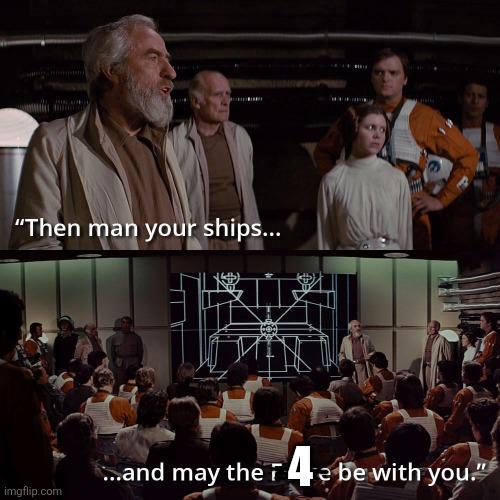
You know you've been coding HTML too long when you can mindlessly type <!DOCTYPE html> faster than your own name. It's become pure muscle memory at this point—like breathing, but more annoying. The doctype declaration is that one line you slap at the top of every HTML file to tell browsers "hey, I'm using HTML5, don't render this like it's 1999." You don't really think about what it does anymore. You just type it. It's there. Always watching. Always judging your quirks mode sins. The real tragedy? You'll be stirring soup at 2 PM on a Tuesday and suddenly think "wait, did I add the doctype to that new page?" Occupying premium brain real estate that could've been used for literally anything else. But nope—doctype squatter for life.

Just Installed Python. What's The Next Step?

Just Installed Python. What's The Next Step?
Oh, you sweet summer child installed Python and now you're wondering what comes next? Well, OBVIOUSLY you need to put a literal python inside your PC case! Because nothing says "I'm a serious developer" quite like having a ball python coiled around your motherboard like it's auditioning for a nature documentary. The absolute COMMITMENT to the bit here is sending me. Your CPU is now being kept warm by a reptile that requires zero dependencies and runs on pure instinct. Forget virtual environments—you've got a PHYSICAL environment now! And honestly? That snake probably has better thermal management than most cooling systems. RGB lighting? Nah, we're going with scales and existential dread. But seriously, the joke is the gloriously literal interpretation of installing "Python"—taking the programming language's name at face value and just... yeeting an actual snake into your gaming rig. Because who needs pip packages when you can have a pet that might accidentally short-circuit your GPU?

Surprise Backup

Surprise Backup
Oh, a data breach? How utterly devastating! But WAIT—plot twist of the century! Turns out your sensitive data was secretly living its best life scattered across a thousand sketchy torrent sites and random servers worldwide. Congratulations, you've been running a distributed backup system this ENTIRE TIME without even knowing it! Who needs AWS S3 when hackers have been thoughtfully archiving your database in the blockchain of crime? It's not a security nightmare, it's just aggressive data redundancy with extra steps. Your CISO is crying, but your data is immortal now. Silver linings, baby!

Or Or Oror

Or Or Oror
When you're trying to explain the logical OR operator to someone but they keep saying it wrong, so you just give up and embrace the chaos. Left side: developers losing their minds trying to correct pronunciation. Right side: the zen master who's transcended caring and just calls it "oror" like it's a Pokémon evolution. The beauty here is that no matter how you pronounce it—whether it's "or operator or or," "double pipe," "logical or," or just mashing your keyboard—the compiler doesn't care about your feelings. It evaluates to true either way. The real operator overload is the emotional baggage we carry trying to verbalize symbolic logic. Fun fact: Some languages have both || (logical OR) and | (bitwise OR), which makes this pronunciation nightmare even worse. Good luck explaining "pipe pipe" vs "pipe" in a code review without sounding unhinged.

Me On A Break

Me On A Break
You know that feeling when you finally take a vacation and the universe decides it's the perfect time to test your team's ability to function without you? The timing is always impeccable—you're sipping hot chocolate, enjoying your Christmas break, and suddenly your phone explodes with Slack notifications about production being on fire. The best part? You're sitting there with that innocent smile, knowing full well you deployed that questionable code right before leaving. "It worked fine in staging," you whisper to yourself while watching the chaos unfold from a safe distance. The real power move is having your Slack notifications muted and your work laptop conveniently "forgotten" at the office. Murphy's Law of Software Development: The severity of production incidents is directly proportional to how far you are from your desk and how much you're enjoying yourself. Every. Single. Time.

Any Minute Now

Any Minute Now
You spent three hours crafting the perfect prompt, fed it to your AI assistant, and now you're just... waiting. Standing there like an idiot while it "thinks." Then sitting. Then lying down in existential defeat. Turns out AI doing your job means you still have to do your job, but now with extra steps and the added bonus of watching a loading spinner. The robots were supposed to free us from labor, not make us their impatient babysitters. At least when you procrastinate manually, you don't have to pretend you're being productive.

Trust Me Bro We Don't Need Caching

Trust Me Bro We Don't Need Caching
You know that one senior dev who shows up to the system design interview with a conspiracy theorist's wall of chaos? Red strings connecting random boxes, sticky notes everywhere, and somehow they're convinced their architecture that hits the database 47 times per page load is "fine actually." Meanwhile they're out here explaining why caching is "premature optimization" while their API response times are measured in geological epochs. Sure buddy, let's just query that unindexed table with 50 million rows on every request. What could go wrong? The confidence-to-competence ratio here is absolutely off the charts. They've got the energy of someone who's never been paged at 2 AM because Redis went down and suddenly realized why everyone kept saying "just cache it."

Schrödinger's Interest

Schrödinger's Interest
That abandoned side project sitting in your GitHub repos suddenly becomes the most fascinating thing you've ever built the moment your actual deadline starts breathing down your neck. Project A transforms from "meh, whatever" to "THIS IS MY MAGNUM OPUS" faster than you can say "git checkout." It's the developer's version of suddenly finding your room desperately needs organizing when you have an exam tomorrow. That half-baked todo app you haven't touched in 6 months? Suddenly needs a complete architecture overhaul RIGHT NOW. The documentation you've been ignoring? Critical priority. That refactoring you've been postponing? Can't possibly wait another minute. Your brain's procrastination engine running at maximum efficiency, convincing you that literally anything else is more important than the thing that's actually due. The quantum superposition of productivity collapses the moment you observe the deadline.

The Future Of Tech Job Market

The Future Of Tech Job Market
Job postings be like "Entry-level position, must have 500 years of experience." The hierarchy is perfect: demon lord with 500 years? Barely qualified. Wizard with 1000 years? Now we're talking. Fresh graduate who just learned to code? Straight to the unemployment pit with the other rejected souls. The real kicker is that AI logo casually sitting there, because apparently even immortal beings can't compete with ChatGPT's ability to hallucinate code at lightning speed. Companies would rather hire a statistical parrot than someone who "only" has a millennium of hands-on experience. The tech job market has officially transcended reality—you need to be older than COBOL itself just to get past the ATS screening.

Some But Not All

Some But Not All
Windows Network Diagnostics: the digital equivalent of a Magic 8-Ball that only knows how to say "Try again later." You click it knowing full well it's about to spend 30 seconds pretending to work, only to tell you it found nothing wrong while your internet is clearly dead. It's like calling tech support and having them ask if you've tried turning it off and on again, except the support agent is a progress bar with commitment issues. The best part? Sometimes it actually claims to have fixed something, but your connection is still broken. Truly the participation trophy of troubleshooting tools.

Don't Be A Fool, Use The Proper Tool

Don't Be A Fool, Use The Proper Tool
Your toolbox is a graveyard of frameworks, libraries, and technologies you swore you'd "definitely use for the right project." Docker, Kubernetes, Spring, Hibernate, Next.js, Bash, C, JavaScript, Python, Git, SSH, curl, StackOverflow (naturally), and about 47 other tools you installed during a 2 AM productivity binge. The joke here is the classic developer hoarding mentality. Someone asks where you got all these tools, and you justify it with "every tool has a purpose" and "they're all necessary." But let's be real—half of them haven't been touched since installation, and the other half are just different ways to do the same thing because you couldn't decide between React and Vue three years ago. It's like having 15 different screwdrivers when you only ever use one. Except in programming, each screwdriver has its own package manager, breaking changes every 6 months, and a Discord server where people argue about best practices. The meme perfectly captures how we rationalize our ever-growing tech stack while sitting there with analysis paralysis, surrounded by tools we "might need someday."

This Is Literally My Company

This Is Literally My Company
The evolution from "code however you want" to "you WILL follow the style guide or your PR gets rejected" is peak corporate transformation. What's fascinating here is the complete 180° flip in philosophy—from "if it works, ship it" to treating ESLint violations like war crimes. The old guard's argument of "will the customer ever read this code?" is technically correct but strategically catastrophic. Sure, Karen from accounting won't be reviewing your nested ternaries, but your coworker who inherits your code at 2 AM during a production incident absolutely will. And they'll remember your name. The irony? Both extremes are wrong. No standards = chaos. Too many standards = bikeshedding about whether to use tabs or spaces while the actual product burns. The sweet spot is somewhere between "anything goes" and "you must name your variables according to the ancient prophecies." Style guides aren't factory rules—they're peace treaties that prevent code review comment sections from turning into philosophical debates about semicolons.