

Brevity Is The Soul Of Wit

Brevity Is The Soul Of Wit
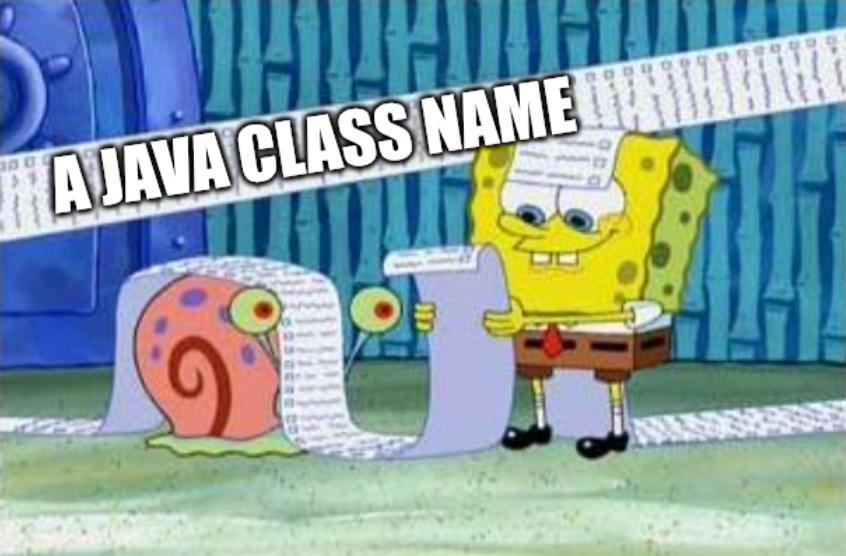
Someone asked the simplest question in the universe: "How do I get the length of a string in C#?" and Microsoft Community decided to write the entire Lord of the Rings trilogy as a response. Meanwhile, Stack Overflow just drops "str.Length" like a mic drop and walks away. Microsoft Community out here with the "Hello, my name is Blake" energy, writing three paragraphs about the .NET Framework's "efficient and intuitive built-in property" when literally two words would've done the job. It's like asking someone what time it is and they explain how watches are manufactured. This is why developers have trust issues with official documentation. Sometimes you just need the answer, not a dissertation on string manipulation theory.

When A Part Of The Project Is Done By New Trainee Developer

When A Part Of The Project Is Done By New Trainee Developer
You know that feeling when you review code from a junior dev and it technically works, but you're just staring at it wondering how it works? That's what we've got here. The dude's moving forward, he's got momentum, but the execution is... questionable at best. The trainee delivered a feature that passes the tests and deploys successfully, but when you peek under the hood, it's a Frankenstein's monster of nested if-statements, hardcoded values, and a sprinkle of copy-pasted Stack Overflow code. Sure, the bike is moving and the rollerblades are rolling, but nobody in their right mind would call this "best practices." The best part? You can't even be mad because it somehow shipped on time. Now you're stuck deciding whether to refactor it immediately or just let it ride and hope nobody asks questions during the next sprint review.

A Reminder To Every Company Who's Made A Storefront: We Want Steam To Have Competition. Y'all Just Keep Making Crappy Competitors.

A Reminder To Every Company Who's Made A Storefront: We Want Steam To Have Competition. Y'all Just Keep Making Crappy Competitors.
You know what's wild? Epic, EA, Ubisoft, and everyone else saw Steam's 30% cut and thought "we can do better!" Then they proceeded to launch storefronts with missing features, terrible UX, and the performance of a potato running Crysis. Steam's "monopoly" isn't because they're evil—it's because they actually built something people don't hate using. Cloud saves that work, a refund policy that doesn't require a lawyer, community features, and a client that doesn't feel like it was coded during a hackathon at 3 AM. Meanwhile, Epic buys exclusives instead of fixing their shopping cart. Origin somehow made buying games feel like filing taxes. And don't even get me started on the Microsoft Store, which still can't figure out where it installed your game. Competition is great when the competitors aren't speedrunning how to alienate users. Build something actually good, and gamers will show up. Until then, Gabe Newell gets to keep printing money.

O(1) Statistical Prime Approximation

O(1) Statistical Prime Approximation
Someone just invented the world's most efficient prime checker: a function that always returns false. The brilliance? Since most numbers aren't prime anyway, you're gonna be right like 95% of the time. O(1) complexity, baby! The test results are *chef's kiss* – passing everything except poor 99991 (which is actually prime, so the function correctly failed by being wrong). The "stochastic algorithm" description is peak satire: there's nothing stochastic about always returning false, it's just statistically convenient. This is basically the programming equivalent of answering "C" to every multiple choice question and claiming you have a revolutionary test-taking strategy. Technically works, morally questionable, academically hilarious.

Plane Old Fix

Plane Old Fix
When your "optimization" strategy is literally just moving your users closer to the server. Why bother with CDNs, caching, or code optimization when you can just relocate your entire user base? It's technically not wrong—latency IS mostly about physical distance and network hops. The speed of light ain't getting any faster, so might as well work with what we got. The interviewer probably expected answers like "implement a CDN," "optimize database queries," or "add regional servers." But nah, forced migration is clearly the most cost-effective solution. Who needs AWS edge locations when you have plane tickets?

Graphics Programming

Graphics Programming
You write some completely incomprehensible OpenGL code with function names that look like keyboard smashing—glCreateShader, glCreateBuffer, glDraw(gdjshdbb)—sprinkle in some magic numbers like 69 and 420 because why not, and somehow a beautiful gradient triangle appears on screen. Graphics programming is basically alchemy where you sacrifice readability to the GPU gods and get rewarded with pretty colors. The best part? You have zero idea why it works, but you're not touching that code ever again.

Run As Administrator

Run As Administrator
We've all been there. Your program crashes with some cryptic "Access Denied" error, so you right-click and hit "Run as administrator" like you're summoning a corporate deity. Suddenly you're walking around with a suit and tie, dripping with confidence and elevated privileges. The same executable that was stumbling around like a peasant now has the power to modify system files, mess with the registry, and basically do whatever it wants. Windows UAC might as well ask "Do you want to feel like a god?" instead of "Do you want to allow this app to make changes to your device?" Because let's be real, 90% of Windows development issues are solved by just throwing admin rights at them until they work.

He Skill Issue

He Skill Issue
The guards standing over a field of fallen programmers trying to identify the C developers is sending me. Their solution? Just check if anyone thinks GOTO is harmless! Because apparently C programmers are the only ones brave (or reckless) enough to defend the most controversial control flow statement since the invention of spaghetti code itself. The fallen warriors are split between those crying "skill issue!" (classic C elitist behavior), defenders claiming it's "useful" and "clean" (copium levels off the charts), and my personal favorite: the guy getting absolutely OBLITERATED for suggesting "Stop crying, use Python instead." The violence was swift and merciless. Nothing triggers C programmers faster than suggesting they switch to a language with automatic memory management and readable syntax!

Fortunately I Don't Have A Reason To Scan My Face

Fortunately I Don't Have A Reason To Scan My Face
When Discord announces they're adding facial recognition for... reasons... and suddenly everyone's migrating to the next trendy platform. Meanwhile you're just sitting there with your non-programmer friends trying to explain why this matters, but they're too busy sending TikToks to care about digital privacy. The real kicker? Half the people rage-quitting Discord are probably still using Facebook Messenger and letting Google read their emails. But sure, *this* is where we draw the line. The cycle repeats every few years - remember when everyone was leaving WhatsApp? Yeah, they're all still there. At least you tried to warn them. Now back to your terminal where the only thing watching you is htop.

White House Entity Relationship Diagram

White House Entity Relationship Diagram
When you're designing a database schema but the requirements are... let's say "politically sensitive." Someone took an ERD diagram and decided to document relationships that probably shouldn't be in production. The many-to-many relationship symbol in the middle is doing some heavy lifting here. In database design, that diamond shape represents a junction table connecting two entities—because apparently some connections require their own dedicated table to store all the "metadata." Nothing says "normalized database design" quite like controversial real-world relationships mapped to crow's foot notation. Your DBA is definitely not approving this pull request.

Our Blessed C

Our Blessed C
C programmers defending their language like it's a holy crusade. On one side, you've got the "enlightened" C developers praising their blessed C26 standard, their glorious defer , their great _Generic , the noble true/false keywords (only took 50 years!), and their heroic nullptr . On the other side? The "barbarous" C89 heathens with their wicked goto , primitive void* , backward 1/0 for booleans, and brutish NULL . It's the eternal civil war within the C community. Modern C devs act like they're using a completely different language because they finally got basic features that literally every other language has had since the Stone Age. Meanwhile, the old guard is still writing typedef struct everywhere and using goto cleanup; without shame. Fun fact: C26 is the first standard to add defer , which is basically C admitting that Golang and Zig were onto something. Better late than never, I guess.

Spitting The Facts

Spitting The Facts
Remember when AI coding assistants were supposed to make us more productive? Turns out they also make excellent surveillance tools. Copilot's out here collecting your keystrokes, analyzing your coding patterns, and probably judging your variable names. That function you copied from Stack Overflow at 2 PM? Yeah, Microsoft knows. That hacky workaround you're too embarrassed to commit? Logged. Your tendency to write "TODO: fix this later" and never come back? Documented. Nothing says "developer productivity tool" quite like an AI that's simultaneously autocompleting your code and building a comprehensive dossier on your programming habits. At least it hasn't started suggesting therapy sessions based on your commit messages. Yet.