

Ctrl C Control Thee

Ctrl C Control Thee
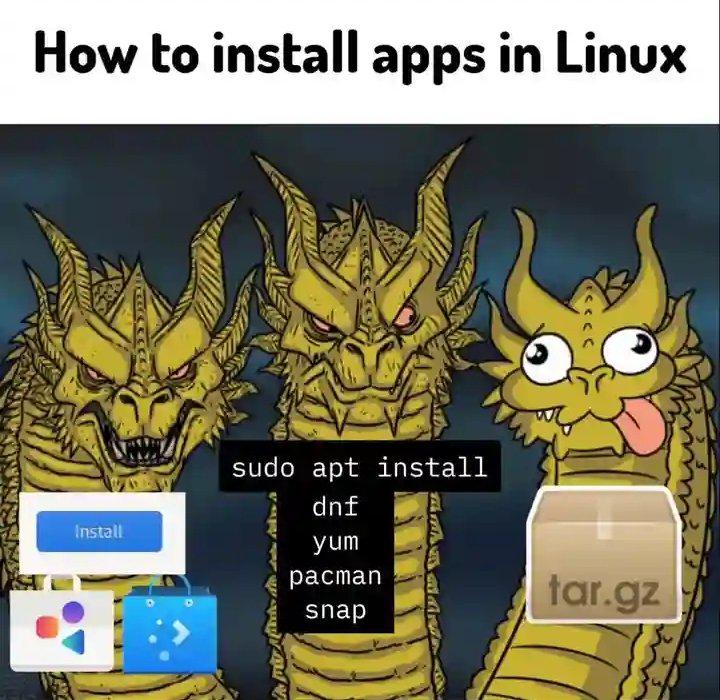
The duality of Ctrl+C is truly one of computing's greatest philosophical debates. In your IDE or text editor, it's the gentle hand of productivity, copying code snippets like a benevolent deity. But venture into the terminal, and that same key combo becomes the nuclear option—instantly terminating whatever process is running, no questions asked. Those old-school programmers really had to keep their context-switching game strong. One moment you're copying a function, the next you're accidentally killing your long-running build process because muscle memory kicked in. It's like having a button that both saves your work and deletes it, depending on which window has focus. Modern problems require ancient solutions, apparently. The "Tehc" guy knows what's up—this is the kind of efficiency that separates the wheat from the chaff. Why waste precious keystrokes when you can just overload one shortcut to do completely opposite things? Maximum chaos, minimum key combinations.

...And I Said, I Will Not Let The CEO Bypass MFA

...And I Said, I Will Not Let The CEO Bypass MFA
Picture this: You're the brave security admin standing up in the town hall meeting, declaring with the courage of a thousand warriors that you will NOT—absolutely WILL NOT—let the CEO bypass Multi-Factor Authentication. Everyone's staring at you like you just announced you're running for president on a platform of enforcing password complexity requirements. It's giving main character energy, it's giving "I have principles," it's giving "my resume is already updated." Because we all know how this story ends: either you're a legendary hero who saved the company from a catastrophic breach, or you're the person who made the CEO type six digits on their phone and now you're mysteriously "pursuing other opportunities." The Norman Rockwell painting really captures that beautiful moment of idealism before reality crashes down like a poorly configured firewall. Spoiler alert: The CEO is already emailing HR.

We Do A Lot Of Pretending

We Do A Lot Of Pretending
You know that moment when your manager walks by while you're "researching alternative solutions" (definitely not playing games), and you execute the fastest Alt+Tab in human history? The cat's casual "hiiiiii! i just wanted to check in for a sec. ok byeeeeee!!!" is exactly the energy of every manager who knows exactly what you're doing but chooses corporate politeness over confrontation. The real comedy gold here is the mutual agreement to ignore reality. Manager pretends they didn't see anything, you pretend you were totally deep in that into.txt file the whole time. It's the unspoken social contract that keeps office culture functioning. Both parties benefit from the delusion, so why ruin a good thing? Pro tip: Keep a terminal window with `htop` running in the background. Nothing says "I'm working hard" like mysterious system processes consuming CPU cycles.

It Is The Same

It Is The Same
C++ developers really out here thinking they're protecting the world with their carefully crafted libraries while secretly just smuggling in raw C functions like contraband. The abstraction layers? The OOP principles? The modern C++ features? Yeah, underneath it all, it's still just a bunch of C functions doing the heavy lifting. It's like putting a fancy sports car body on a 1970s engine—sure, it looks different from the outside, but pop the hood and you'll find the same old reliable (or terrifying, depending on your perspective) machinery. The Trojan horse metaphor is chef's kiss because nobody suspects what's really inside until it's too late and you're knee-deep in pointer arithmetic.

Hacker Poster Binary Code Decor Computer Cybersecurity Coder Matrix Decorations Technology Coding Tech Cool Wall Decor Art Print Poster 24x36

Hacker Poster Binary Code Decor Computer Cybersecurity Coder Matrix Decorations Technology Coding Tech Cool Wall Decor Art Print Poster 24x36
Poster measures 24x36 inches (61x92 cm) and ideal size for any standard 24x36 frame. Lightweight and low-glare satin finish paper creates photo quality poster art for your home decor. All poster prin…

#Include <C>

#Include <C>
C++ developers thinking they're so sophisticated with their fancy OOP and templates, meanwhile their entire language is just C functions wearing a trench coat and pretending to be three abstractions tall. Every C++ library you've ever loved? Crack it open and surprise! It's C functions all the way down, wrapped in so many layers of abstraction you need a PhD just to figure out what's actually happening. The world runs on C, but C++ gets to feel fancy about it while still desperately clinging to those good old C standard library functions because, let's be honest, why reinvent the wheel when printf already works perfectly?

I Am One With The Database

I Am One With The Database
There's something beautifully unhinged about raw-dogging SQL queries instead of letting an ORM do the heavy lifting. Sure, ORMs abstract away the database layer and make your code "cleaner," but once you start writing those hand-crafted SELECT statements with JOINs that would make a DBA weep tears of joy, you enter a different realm entirely. You're not just querying data anymore—you're communing with it. You see the schema in your dreams. You know which indexes are missing before EXPLAIN even tells you. You've transcended the mortal plane of User.find_by(email: '[email protected]') and ascended to SELECT * FROM users WHERE email = '[email protected]' AND deleted_at IS NULL enlightenment. The dolphins, the rainbows, the cosmic vibes—that's what peak database connection feels like. Just don't ask about SQL injection vulnerabilities right now; we're having a moment.

Need An AI Update

Need An AI Update
Someone's kitchen knife has a USB port and is getting a firmware update. Yeah, you read that right. We've reached peak IoT absurdity where even your cutlery needs software patches. The knife is literally plugged into a laptop running what appears to be a firmware update interface with progress bars and everything. The joke here is the ridiculous over-engineering of everyday objects. Your knife doesn't need Bluetooth connectivity, cloud sync, or AI-powered cutting algorithms. But in 2024, manufacturers are slapping microchips into everything that doesn't move fast enough to escape. Next thing you know, your fork will require a subscription service and your spoon will need a security update to patch a zero-day vulnerability. The "just updating firmware" caption is chef's kiss because it treats this dystopian nightmare as completely normal. Like yeah, obviously you need to update your knife before dinner. Wouldn't want to chop vegetables on version 1.2.3 when 1.2.4 fixes critical slicing bugs.

Micro Service For Uuid

Micro Service For Uuid
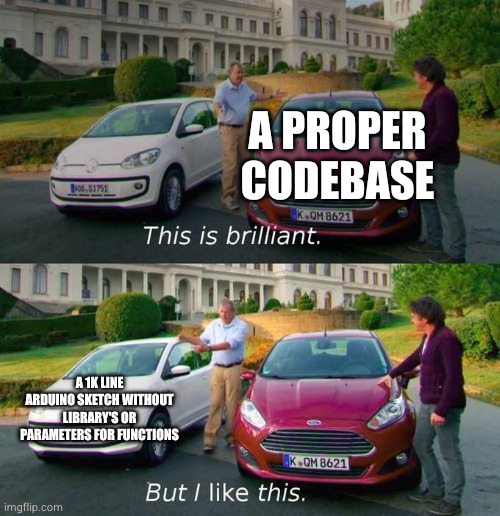
Three engineers. One endpoint. A database guy. All to generate UUIDs—universally unique identifiers that are, by design, already guaranteed to be unique without any validation whatsoever. Someone built an entire microservice that generates a UUID, stores it in a database, checks if it already exists (spoiler: it won't), then returns it. That's like hiring a security team to guard an empty room in case someone breaks in to steal the nothing inside. The real kicker? They had sprints and a kanban board for this. Somewhere, a product owner is writing user stories: "As a developer, I want a UUID that's been validated against 10^38 possible combinations so I can sleep at night." Welcome to enterprise architecture, where we take a one-line function call and turn it into a distributed system with its own dedicated team. Because why use uuid.v4() when you can add latency, network calls, and a database bottleneck?

6 Pack Magnetic Cable Clips [Cable Smooth Adjustable] Cord Holder, Under Desk Cable Management, JOYROOM Adhesive Wire Holder Keeper Organizer for Home Office Desk Phone Car Wall Desktop Nightstand

6 Pack Magnetic Cable Clips [Cable Smooth Adjustable] Cord Holder, Under Desk Cable Management, JOYROOM Adhesive Wire Holder Keeper Organizer for Home Office Desk Phone Car Wall Desktop Nightstand
7.5 mm Perfect Cable Slot Diameter: Diameter of 0.3 inches (7.5 mm) can hold most cables, such as phone charging cables, USB cords, HDMI thick cables, computer power cords, etc. Besides that, the slo…

Thanks Claude

Thanks Claude
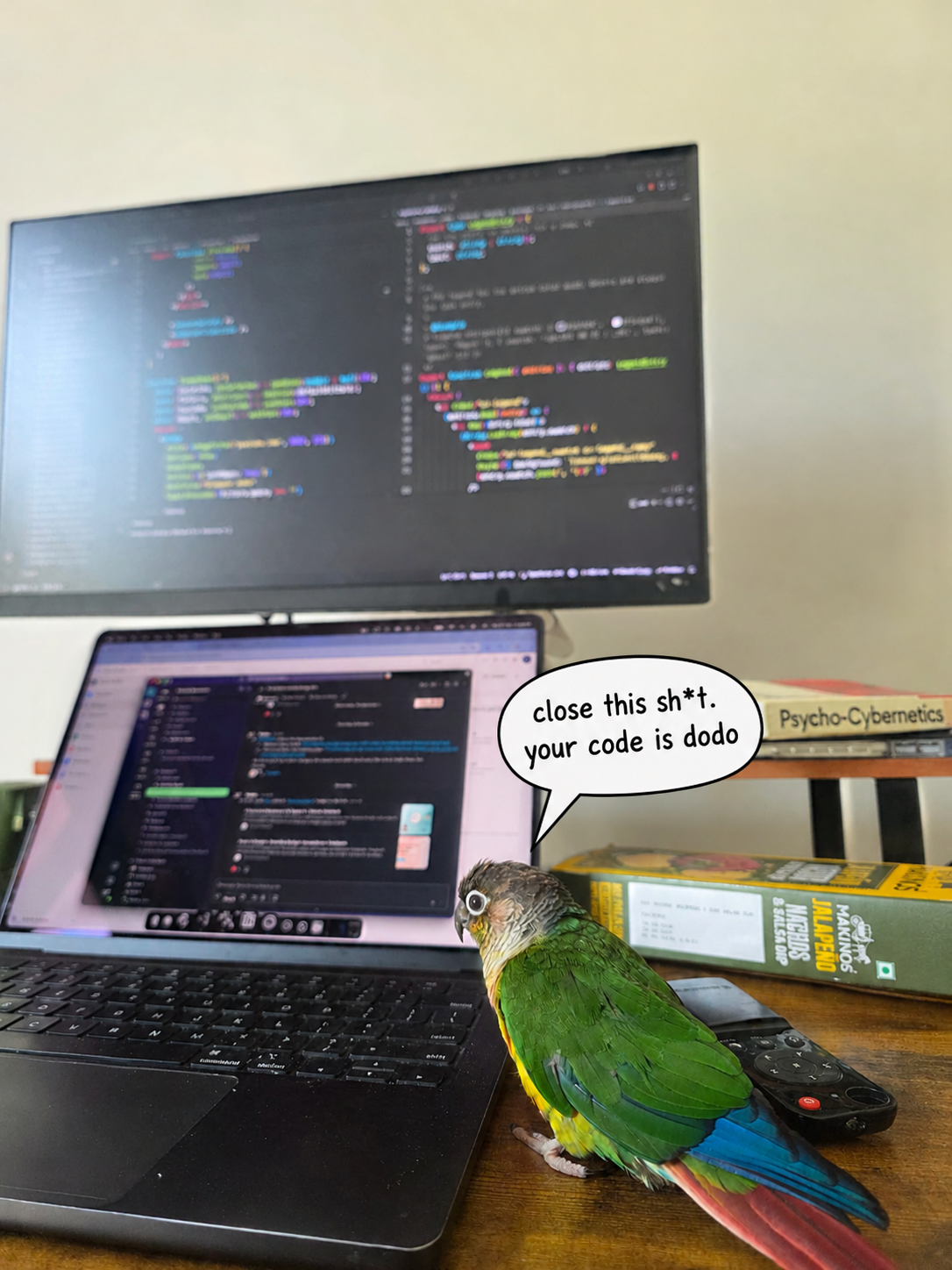
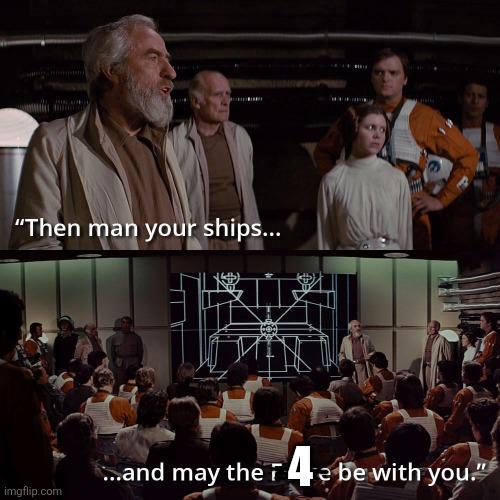
AI has truly revolutionized the software development lifecycle. We used to waste precious time actually finishing our projects, but now we can speedrun the entire process: generate boilerplate with Claude, get excited about the possibilities, realize it needs 47 tweaks to actually work, lose motivation, and move on to the next shiny idea. The efficiency gains are remarkable—what used to take weeks of procrastination now takes mere hours. 4x productivity boost in project abandonment is no joke. Claude isn't just a coding assistant, it's an enabler of our commitment issues.

Canadian Go Programming

Canadian Go Programming
Someone discovers what looks like generic syntax in Go (a language famously without generics at the time), only to learn the most beautifully cursed truth: those aren't angle brackets—they're characters from the Canadian Aboriginal Syllabics Unicode block that are technically valid in Go identifiers. So instead of actual generics, this developer created a "template" file using these visually identical characters and just does find-and-replace to generate monomorphized code. It's the programming equivalent of "we have generics at home." The real kicker? Go's identifier rules allow these Unicode characters, so from the compiler's perspective, ImmutableTreeList&lt;ElementT&gt; is just one long, perfectly valid identifier name. The reaction "Oh my god" says it all—this is simultaneously genius and an absolute crime against readability. Peak developer ingenuity meets Unicode shenanigans. Before Go 1.18 added actual generics, people were getting creative .

Create New Repo Fixes Everything

Create New Repo Fixes Everything
When your Git history becomes such an unholy mess of merge conflicts, force pushes, and regrettable commits that starting fresh seems like the only rational solution. Sure, you could learn proper conflict resolution, rebase strategies, and actually read the Git documentation. Or you could just nuke it from orbit and pretend the last three hours never happened. The nuclear option: copy your working files to a folder, create a brand new repo, paste everything back in, and commit with "initial commit" like nothing ever happened. Your Git history stays clean, your sanity stays intact, and nobody needs to know about that time you accidentally committed your .env file with production credentials.

How Do I Tell This To My Boyfriend

How Do I Tell This To My Boyfriend
Content Pregnant *** SEGMENTATION FAULT (SIGSEG) *** Process: life_simulator (pid 4587) Faultina address: 0X0000000000000340 Stack trace (partial #0 0X00401/8 life:: handle logic. conception() at cp: 215 #1 0x004015f0 in clearblue: : sensor: : read_stat at hardware. cp: 98 [0Ñ 0040. r-× clearblue Not Pregnant Clearbli