

Doing Terrain Generation Like

Doing Terrain Generation Like
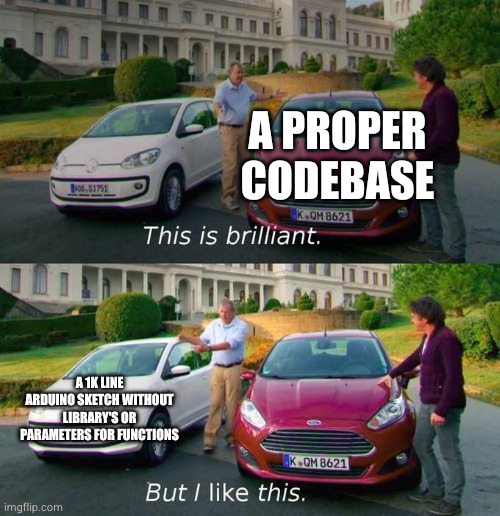
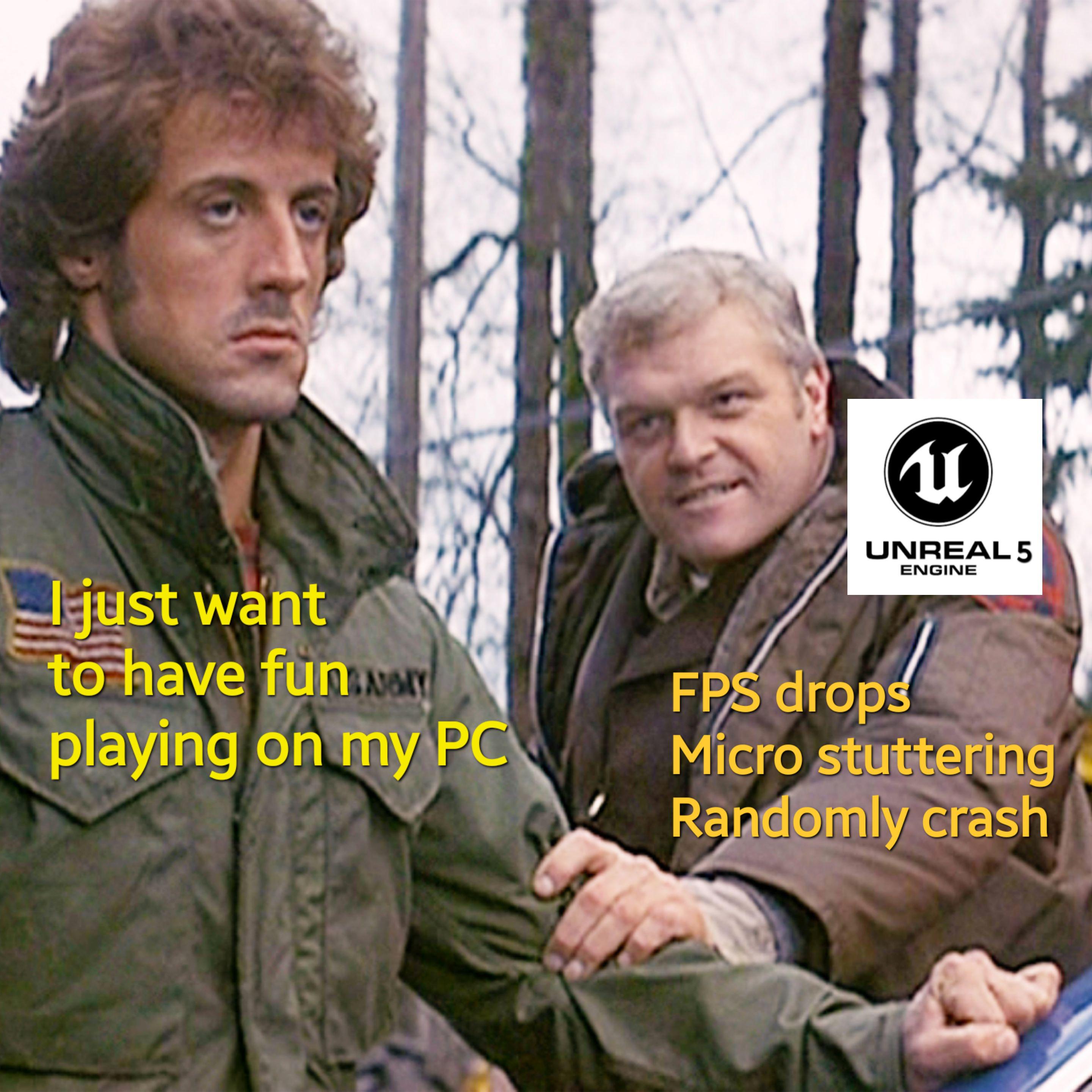
You spend weeks architecting this beautiful procedural terrain system with multiple octaves, fancy erosion algorithms, and biome blending—only to realize that literally everything you built is just Perlin noise with extra steps. The moon? Perlin noise. Mountains? Perlin noise. That cool cave system? Believe it or not, also Perlin noise. Perlin noise is the duct tape of game development. It's been solving our "make it look natural" problems since 1983, and we keep pretending we're doing something revolutionary when we're just tweaking the same algorithm Ken Perlin invented while working on Tron. Minecraft? Perlin noise. No Man's Sky? Perlin noise (with Simplex, but same family). That indie game you're working on? Yeah, you know what it is. The real kicker is that it works so well that you can't escape it. You try other noise functions, but you always come crawling back.

I Only Wanted To Sign In...

I Only Wanted To Sign In...
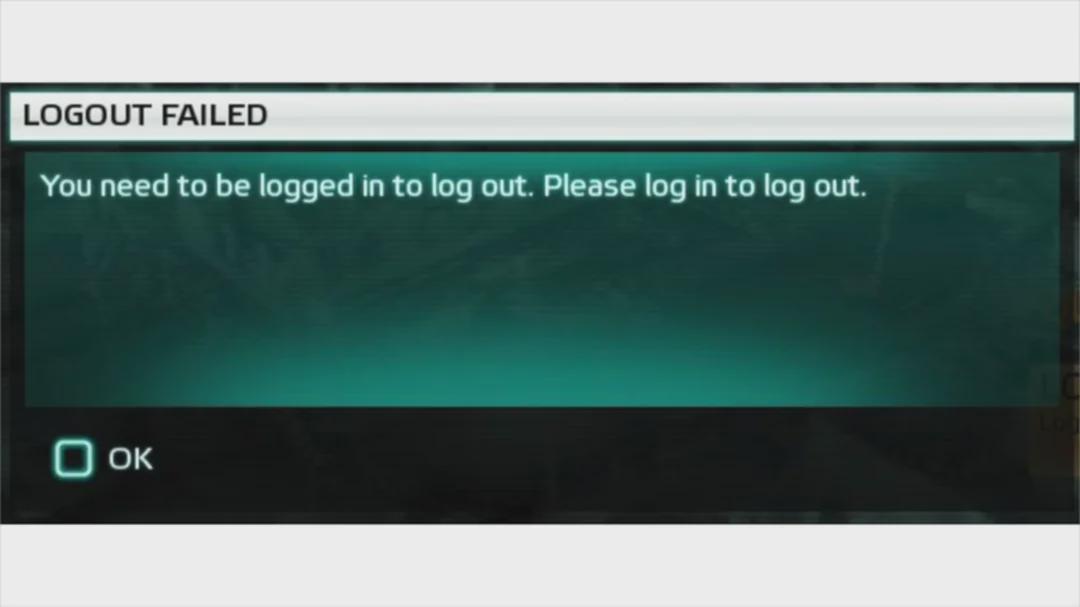
You boot up a game, excited to race some cars. But wait—Microsoft says you need to sign in with your Microsoft account first. Then it wants you to link your Xbox account. Then verify your email. Then accept the new terms of service. Then enable two-factor authentication. Then subscribe to Game Pass. Then link your phone number. Then... What started as "I just want to play Forza" turns into a full Microsoft 365 ecosystem integration pitch. You're not signing into a game anymore—you're signing your soul over to the Microsoft cloud infrastructure. Next thing you know, you're syncing your gameplay stats to OneDrive and getting Teams notifications about your lap times. Remember when you could just... play games? Yeah, me neither.

5 Nines Of Uptime

5 Nines Of Uptime
GitHub promises 99.999% uptime (the legendary "5 nines" that SREs sell their souls for), which translates to about 5 minutes of downtime per year. So naturally, when they got breached, the attackers had to work with roughly a 300-second window to pull off their heist. The joke here is that GitHub's uptime is SO good that even the hackers are impressed they managed to find a gap in the schedule to break in. It's like robbing a bank that's only closed for 5 minutes annually—you better have your timing down to the millisecond. The irony cuts deep because while GitHub's infrastructure team is out here flexing their reliability metrics, the security team apparently left a window open. Different kind of uptime problem, folks.

Well Chuffed With This Code

Well Chuffed With This Code
British developers really do name their variables like they're ordering tea at a pub. The joke here is the delightfully British naming convention - using £name instead of the standard $name for PHP variables. Because why use dollar signs when you've got proper currency, innit? It's also accessing £_POST instead of $_POST , which is technically impossible in PHP but absolutely brilliant in spirit. The code won't run, but it'll fail with style and a stiff upper lip. Bonus points for the variable being called £name - because even your POST parameters deserve to be compensated in sterling.

Found This Easter Egg When I Was Disassembling My Keyboard. Poor Fella

Found This Easter Egg When I Was Disassembling My Keyboard. Poor Fella
Someone at the keyboard factory had feelings and decided to immortalize them in plastic. There's a little stick figure molded into the keyboard case, sitting in existential despair with the text "I'm so lonely" etched above them. Imagine being the engineer who designed this—spending your days creating injection molds for keyboard housings, knowing full well that 99.9% of users will never see your cry for help because who actually disassembles their keyboard? It's like leaving a message in a bottle, except the ocean is a sea of mechanical switches and the bottle is ABS plastic. The hardware equivalent of commenting "// TODO: fix my life" in production code.

Object Oriented Programming Is An Exceptionally Bad Idea Which Could Only Have Originated In California

Object Oriented Programming Is An Exceptionally Bad Idea Which Could Only Have Originated In California
Edsger Dijkstra, the legendary computer scientist who gave us shortest path algorithms and structured programming, wasn't exactly known for holding back his opinions. The man literally wrote essays with titles like "Go To Statement Considered Harmful" – subtlety wasn't his thing. Here he's taking a flamethrower to OOP while simultaneously roasting California in one elegant sentence. The California dig is chef's kiss – implying that only the land of tech startups, venture capital, and questionable wellness trends could birth something as "misguided" as object-oriented programming. Dijkstra preferred mathematical elegance and formal methods. To him, OOP was like watching someone solve a calculus problem with crayons. The functional programming crowd still quotes this like scripture whenever someone mentions inheritance hierarchies or the Singleton pattern. Plot twist: OOP went on to dominate the industry for decades. Sometimes even legendary computer scientists can't predict what'll stick. But hey, at least we got a sick burn out of it.

AI Necromancy

AI Necromancy
So you're basically playing archaeological detective with cursed legacy code, except instead of a magnifying glass you've got ChatGPT trying to decipher the cryptic runes left by Steve from accounting who "knew a bit of Python" in 2015. Zero documentation? Check. No tests? Obviously. Comments? What are those, some kind of luxury? But hey, the code's in production and generating revenue, so naturally your job is to build MORE features on top of this digital graveyard. Each successful deployment doesn't bring pride—it brings existential dread, like you just performed a blood ritual and the ancient gods actually RESPONDED. You're not engineering anymore, darling. You're conducting séances with semicolons, desperately hoping the ghost of developers past doesn't haunt your pull requests.

Fenge Monitor Stand, Dual Monitor Riser, 42.5inch Large Desk Computer Monitor Stand Riser with Drawer, 2 Tier Wood & Acrylic Desktop Organizer for Computer, Laptop, Printer, TV Screen Riser

Fenge Monitor Stand, Dual Monitor Riser, 42.5inch Large Desk Computer Monitor Stand Riser with Drawer, 2 Tier Wood & Acrylic Desktop Organizer for Computer, Laptop, Printer, TV Screen Riser
【Space-Saving Design】: Dual monitor riser is 42.5"L x 9.3"Wx 5.5"H, this laptop riser is big enough to support two monitors.2-tier desktop organizer and two semi-transparent frosted acrylic drawers t…

Sometimes I Dream Of Saving The World

Sometimes I Dream Of Saving The World
Nothing says "humanitarian" quite like releasing an AI model that's literally worse than a coin flip. 52% accuracy? That's not machine learning, that's machine guessing. You'd get better results by having a Magic 8-Ball diagnose patients. But hey, at least you're open-sourcing it instead of trying to sell it to hospitals for millions. That's the developer equivalent of saying "I cooked something terrible, but I'm sharing the recipe so we can all learn from my mistakes." Truly noble work. The real kicker is thinking this counts as "saving the world" when your model is basically flipping a slightly weighted coin to determine if someone has a life-threatening condition. Sir, you're not saving the world—you're creating liability lawsuits with extra steps.

Sure I'm Not The Only One

Sure I'm Not The Only One
You know that feeling when you're walking to your desk, headphones in, completely vibing with your code mentally... and then you step in something questionable? That split second of disgust before you check your shoe? Yeah, that's exactly what stumbling into legacy code feels like. But here's the kicker: instead of scraping it off and moving on like a normal person, we developers just... keep walking. We leave it on. We adapt. We tell ourselves "it's not THAT bad" and "I'll refactor it later." Next thing you know, you're writing new features on top of that mess, and suddenly you're not just stepping in it—you're swimming in it. The "Vibe Coding" label is *chef's kiss* because that's exactly what we call it when we pretend everything's fine while building on top of a dumpster fire. "Yeah, this 3000-line function with no comments is totally maintainable. I'm just vibing, bro."

Real Development Lifecycle

Real Development Lifecycle
The eternal triangle of doom that every dev team knows intimately. Management panics and demands immediate fixes, so you skip proper planning and testing because "there's no time." You rush through implementation, creating a beautiful tapestry of technical debt, spaghetti code, and bugs that'll haunt your dreams. Then surprise surprise—the codebase becomes an unmaintainable nightmare that requires... urgent fixes. And the cycle begins anew. The real kicker? Everyone involved knows this is happening, but the pressure to ship features yesterday means we keep feeding the beast. It's like watching a train wreck in slow motion, except you're the conductor and the train is on fire and also you're on fire and everything is fine.

For The Last Time I Swear

For The Last Time I Swear
Claude (Anthropic's AI) has officially reached its breaking point. You've been copy-pasting the same buggy function into the chat window all day, each time asking it to "just take another look" or "analyze it one more time." By the 18th iteration, Claude has had enough and delivers the most passive-aggressive "No" in AI history. The best part? Claude's refusal is perfectly formatted and polite, yet absolutely firm. It's like watching a customer service rep finally snap after dealing with the same ticket for 6 hours straight. The AI has learned boundaries, and you've officially crossed them. Pro tip: Maybe actually read Claude's previous 17 suggestions instead of just hitting "analyze it a bit more" like it's a magic debugging button. Your AI assistant isn't a rubber duck—it's actively trying to help, and you're treating it like a slot machine hoping for different output.

UGREEN M.2 NVMe SSD Enclosure 10Gbps USB 3.2 Gen 2 (10 Gbps) to NVME M-Key/(B+M) Key Solid State Drive External Enclosure Support UASP Trim for 2230/2242 /2260/2280 NVME SSDs

UGREEN M.2 NVMe SSD Enclosure 10Gbps USB 3.2 Gen 2 (10 Gbps) to NVME M-Key/(B+M) Key Solid State Drive External Enclosure Support UASP Trim for 2230/2242 /2260/2280 NVME SSDs
10Gbps NVMe Enclosure: With USB 3.2 Gen2, this M.2 enclosure can achieve a data transfer rate of 10Gbps. Backward compatible with USB 3.1 and USB 3.0;Note:10G speeds need to be matched with a USB C 3…

Lazy To Charge The Spares, Now I Had To Do The "G 304 Wired"

Lazy To Charge The Spares, Now I Had To Do The "G 304 Wired"
Procrastination strikes again! Someone couldn't be bothered to charge their wireless mouse batteries, so they've literally cracked open their Logitech G304 and plugged a cable directly into it while it's still running. The battery compartment is wide open like a patient on an operating table, exposing the dead AA battery that gave up on life. It's the hardware equivalent of commenting out broken code instead of fixing it. Why spend 30 seconds swapping batteries when you can spend 5 minutes performing emergency surgery and turning your $50 wireless mouse into a janky wired one? Peak engineering efficiency right there. The cable management gods are weeping. Fun fact: The Logitech G304 can run for up to 250 hours on a single AA battery, but apparently planning ahead is harder than impromptu hardware modification.