Teamwork Memes

Posts tagged with Teamwork
Two Jr Devs Getting A Merge Conflict

Two Jr Devs Getting A Merge Conflict
Junior developers encountering their first merge conflict is basically a declaration of war. Instead of calmly resolving the conflict like seasoned devs who've seen this rodeo a thousand times, they immediately assume the other person's code is garbage and theirs is the gospel truth. Cue the dramatic Slack messages, the passive-aggressive commit comments, and the inevitable escalation to a senior dev who solves it in 30 seconds while questioning their life choices. The best part? Both juniors probably changed the same three lines of code, and the "conflict" could've been resolved by just... talking. But no, we're going full WWE SmackDown over a semicolon placement. Git was designed to handle collaboration, but nobody told these two that collaboration doesn't mean mortal combat.

Pair Programming

Pair Programming
Pair programming taken to its most literal and awkward conclusion. Two developers literally sharing a urinal because apparently "working together" means you can't even take a bathroom break independently. The agile manifesto said "individuals and interactions over processes and tools," but nobody expected interactions to extend to the men's room. This is what happens when your scrum master takes "constant collaboration" a bit too seriously. At least they're not blocking each other during standup... oh wait.

Thank You Dev Ops Community

Thank You Dev Ops Community
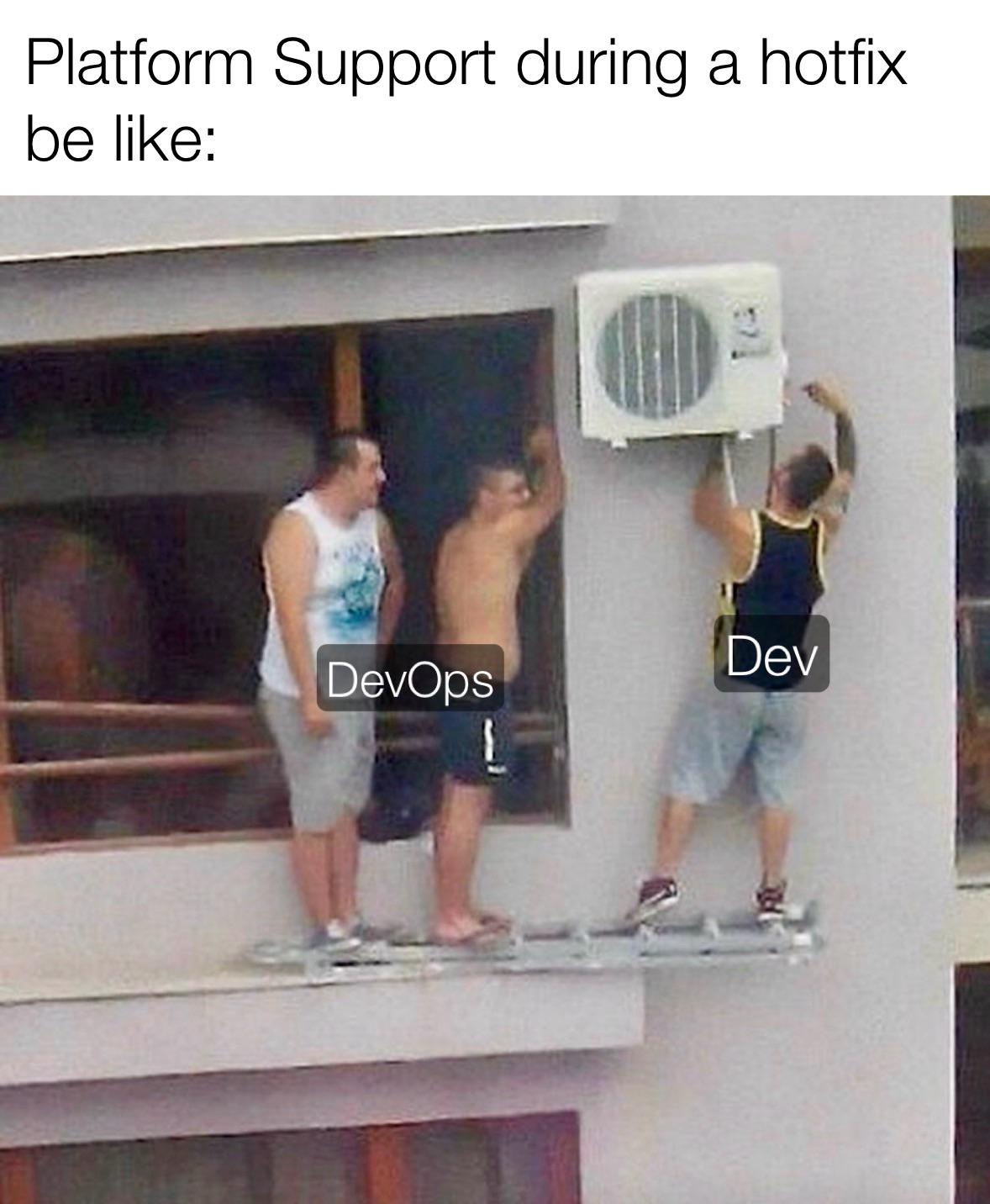
Production is on fire, users are screaming, and your CEO is refreshing the status page every 3 seconds. Meanwhile, DevOps is graciously holding up the entire infrastructure like a human ladder while you frantically deploy that emergency fix. Sure, you're the hero who wrote the patch in 5 minutes, but let's be real—without DevOps literally keeping the servers from falling off the wall, your hotfix would just be sitting in a git branch collecting dust. They're out here playing Jenga with load balancers and you get all the glory. Teamwork makes the dream work, but DevOps makes the uptime work.

Team Work

Team Work
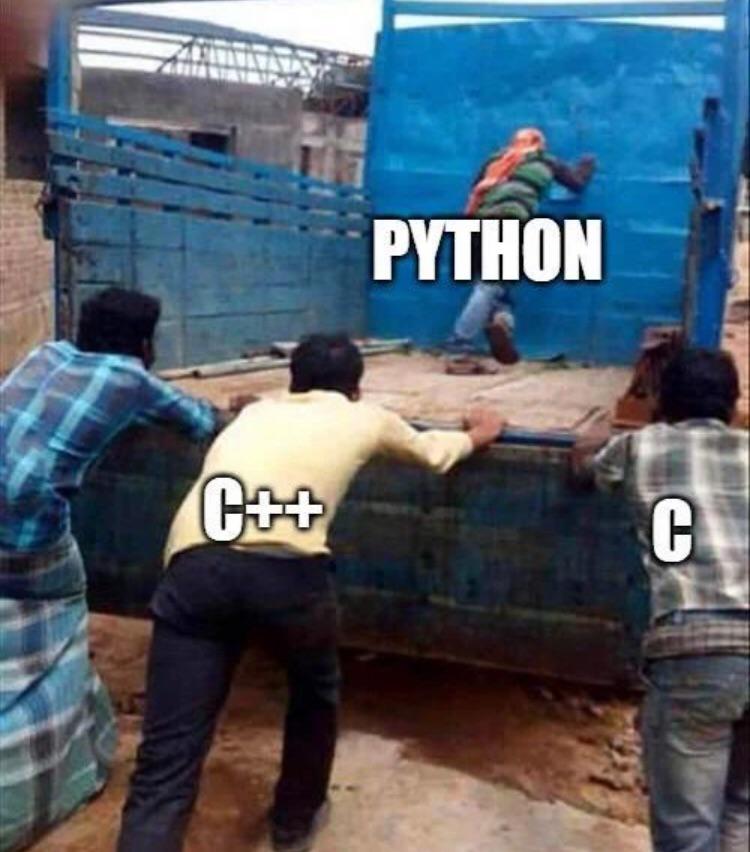
Python out here doing parkour while C and C++ are down there holding the wall like they're carrying the entire infrastructure. Classic division of labor in the programming world: the low-level languages doing all the heavy lifting and memory management grunt work, while Python just gracefully floats on top, writing elegant one-liners and importing libraries for everything. Sure, Python gets all the glory and the data science jobs, but let's not forget who's actually keeping the lights on underneath all those abstractions. Spoiler: it's the languages that make you manually allocate memory and cry over segmentation faults.

Build Failed? Just Blame The Other Guy

Build Failed? Just Blame The Other Guy
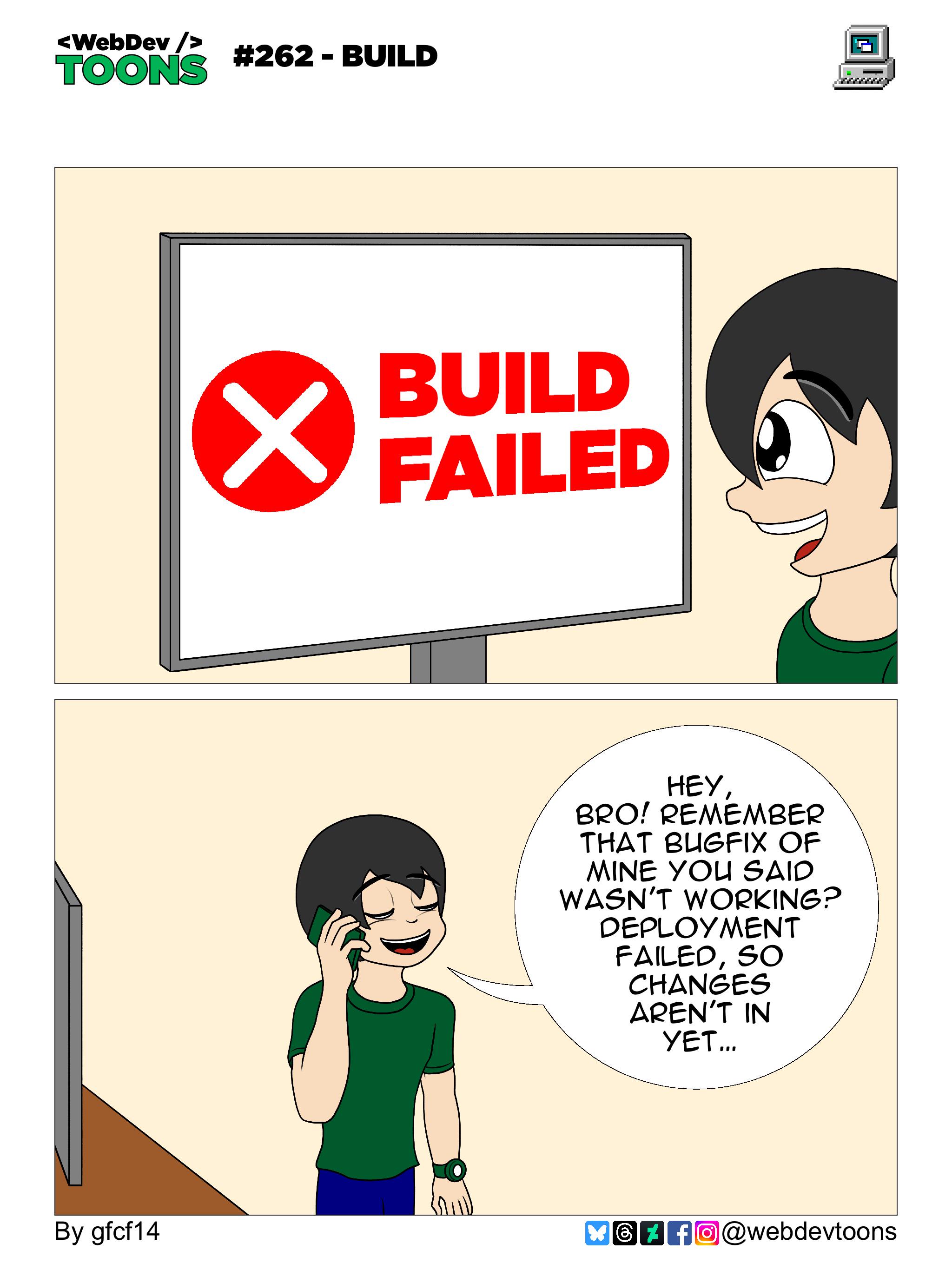
The classic developer deflection technique in action. Your build fails spectacularly, and instead of checking your own code, you immediately call up your teammate to remind them about their "broken" bugfix that wasn't even deployed yet. The deployment hasn't even happened, so their changes are literally sitting in a branch somewhere, completely innocent. It's the programming equivalent of blaming the person who hasn't even entered the room yet for the mess on the floor. The build failed because of YOUR code that's currently running, but sure, let's preemptively blame the guy whose changes are still in code review. Classic CI/CD panic response: when in doubt, point fingers at anything but your own commit from 5 minutes ago.

Conflict Resolution

Conflict Resolution
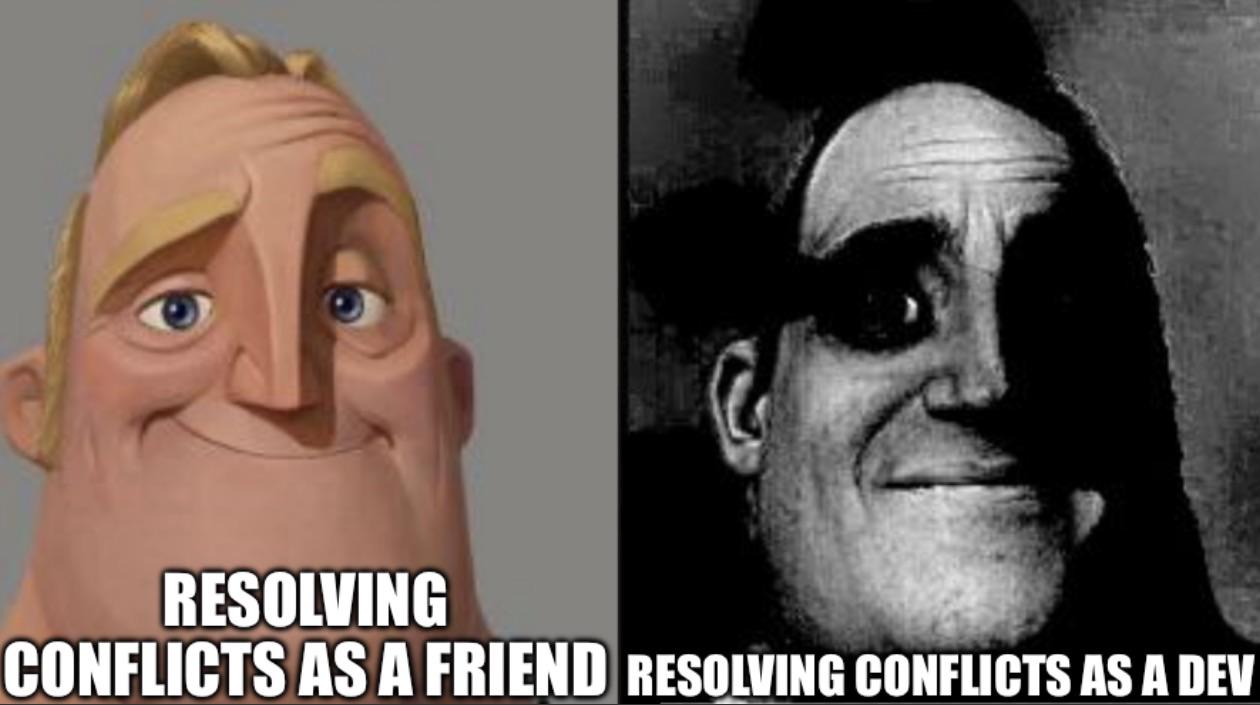
Merge conflicts turn even the friendliest developer into a stone-cold problem solver. One minute you're all smiles and "let's collaborate!", the next you're staring dead-eyed at a screen full of <<<<<<< HEAD markers, ready to accept all incoming changes and call it a day. The duality of git: where teamwork meets territorial warfare over who gets to keep their version of utils.js .

Team Work Without Team

Team Work Without Team
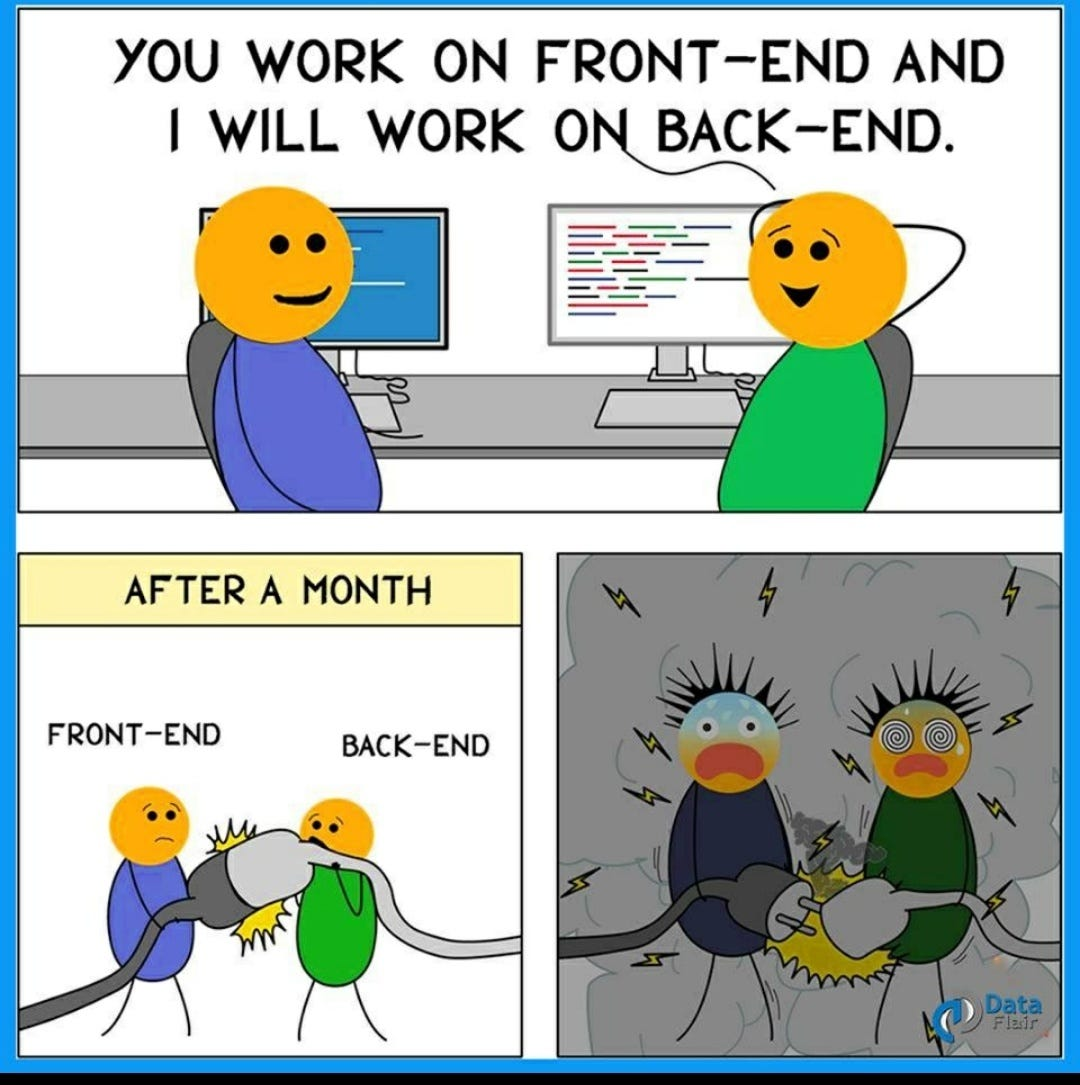
Classic case of two developers who think they're being efficient by dividing and conquering, only to discover they've been building two completely incompatible systems. Frontend dev is probably expecting JSON but backend's sending XML. Or maybe backend changed the API structure without telling anyone. Or frontend decided to add seventeen new features that require endpoints that don't exist yet. That handshake in the middle panel? That's them trying to connect their code. Spoiler alert: it doesn't fit. One month of zero communication, zero documentation, and zero API contracts later, they're both having a mental breakdown trying to figure out why nothing works. Should've used Swagger docs. Or Slack. Or literally any form of communication.

HYBLOM SCP Field Codes Metal Sign - Game Room Decor Tin Poster, Programmer Gift, Vintage Wall Art for Study, Bedroom, Cafe & Club 8x12 Inches Black Art Aluminum Plaque

HYBLOM SCP Field Codes Metal Sign - Game Room Decor Tin Poster, Programmer Gift, Vintage Wall Art for Study, Bedroom, Cafe & Club 8x12 Inches Black Art Aluminum Plaque
Unique SCP Foundation Theme: Adorn your space with this exclusive SCP field codes metal sign, perfect for programmers, and enthusiasts of the SCP universe. · Durable Aluminum Construction: Crafted fr…

No Bug Too Difficult With The Squad

No Bug Too Difficult With The Squad
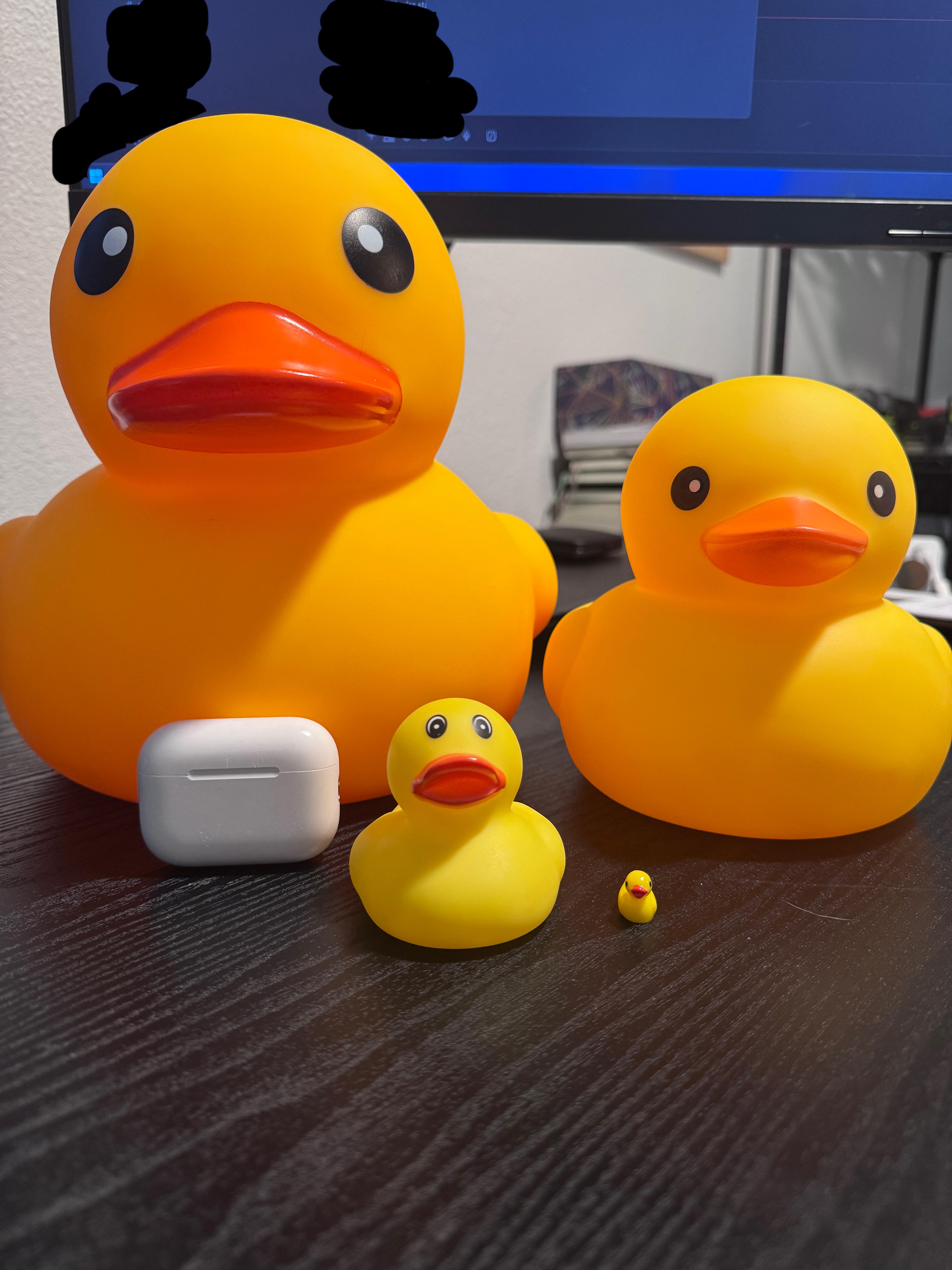
Rubber duck debugging just got a whole team upgrade. You've got the senior duck who's seen some stuff, the mid-level duck who's competent but still learning, the junior duck fresh out of bootcamp, and that tiny duck who just started yesterday and is already being asked to fix production. The beauty of rubber duck debugging is that you don't even need the duck to respond—just explaining your broken code out loud to an inanimate object somehow makes the solution obvious. Now imagine having four ducks of varying seniority levels. That's basically your entire dev team during a critical bug fix: everyone gathered around one monitor, nodding thoughtfully, while the person typing frantically explains why the null pointer exception makes no sense. Plot twist: the tiny duck spots the missing semicolon first.

Random Group Project Members

Random Group Project Members
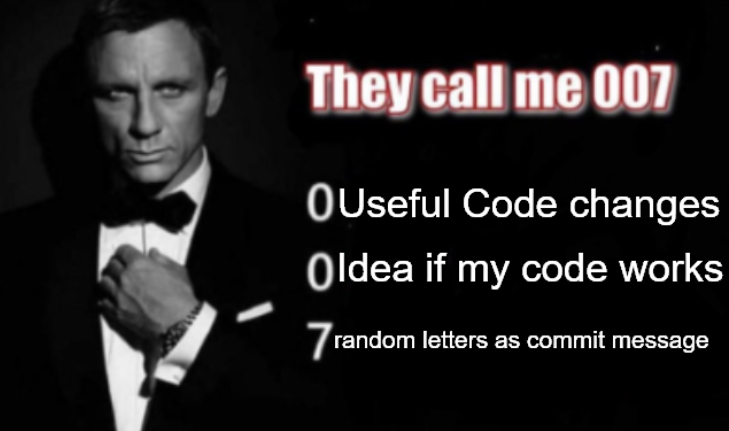
You know you're the James Bond of the team when your license to code comes with a 007 prefix. Zero useful code changes, zero clue if anything actually works, and seven random letters mashed into the commit message like "asdfghj" because who has time for meaningful documentation when you're too busy not contributing? Every group project has that one person who treats version control like a game of Russian roulette. They push code with the confidence of a secret agent but the competence of someone who just discovered what Git is yesterday. Meanwhile, you're stuck doing code review on commits that look like their cat walked across the keyboard. The real tragedy? They'll still get the same grade as you when the project is done. Welcome to collaborative software development, where carrying the team is not a choice—it's a lifestyle.

Postman Strikes Again

Postman Strikes Again
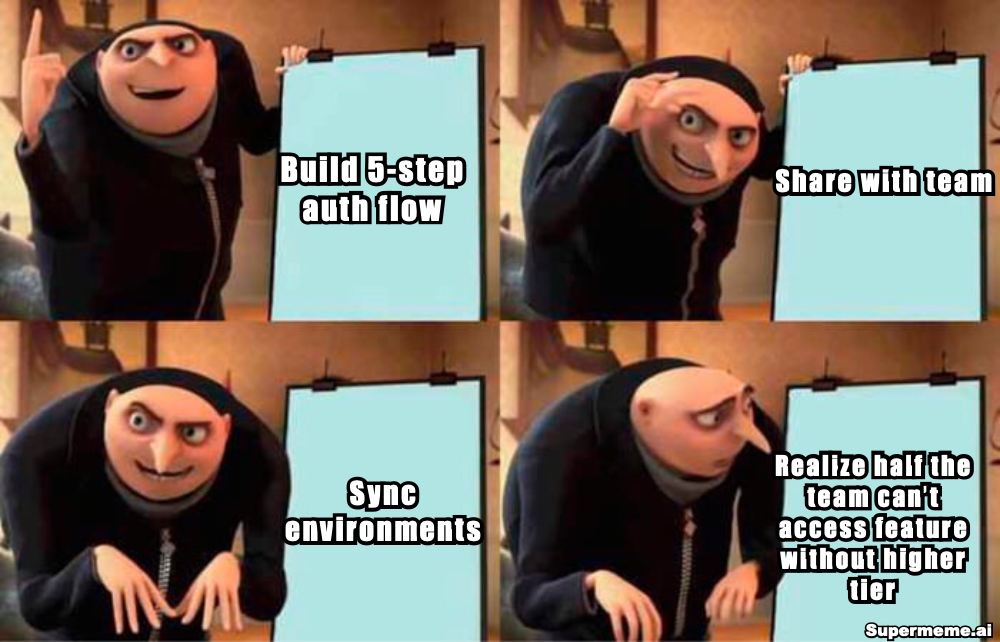
You spend hours crafting the perfect OAuth flow with refresh tokens, PKCE, and all the security bells and whistles. Then you proudly share your Postman collection with the team, feeling like a benevolent API god. But wait—half the team is stuck behind corporate firewalls that require VPN access, and your fancy collection just became a glorified paperweight for anyone without the right permissions. The real kicker? You synced environments thinking you're being a team player, but now everyone's using different staging servers and nobody can figure out why their requests are hitting prod. Classic Postman moment: the tool that promises collaboration but delivers chaos when you forget about the infrastructure reality check. Pro tip: Always document which VPN, which environment, and which sacrificial offering to the DevOps gods is required before sharing. Your future self will thank you.

Devs: "Nice. One More." 🦍

Devs: "Nice. One More." 🦍
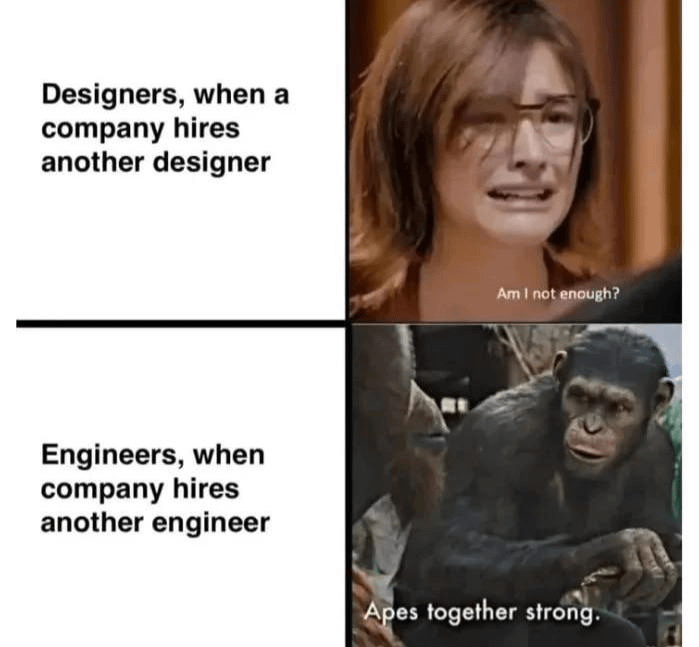
The eternal divide between designers and developers strikes again! When a company hires another designer, existing designers spiral into an existential crisis wondering if their Figma skills aren't cutting it anymore. Meanwhile, developers? They're out here forming the Justice League, ready to welcome their new coding comrade with open arms and a Slack invite. More devs = more people to blame when production breaks = MORE POWER. It's giving "strength in numbers" energy while designers are stuck in their feelings wondering if their color palette choices were really THAT bad.

Brother From Another Mother

Brother From Another Mother
The ultimate startup power couple: one person who can build anything but couldn't sell water in a desert, and another who could sell ice to penguins but can't tell HTML from a sandwich. Separately, they're walking disasters. Together? They form a vibe startup that'll either revolutionize an industry or burn through VC money in 18 months. No in-between. It's like watching two people with exactly opposite skill trees finally realize they need each other to survive. The engineer's been building "the perfect product" for 3 years with zero users, while the marketer's been promising features that don't exist to investors. Match made in startup heaven.