

Software testing Memes

Posts tagged with Software testing

You Know What That Means

You Know What That Means
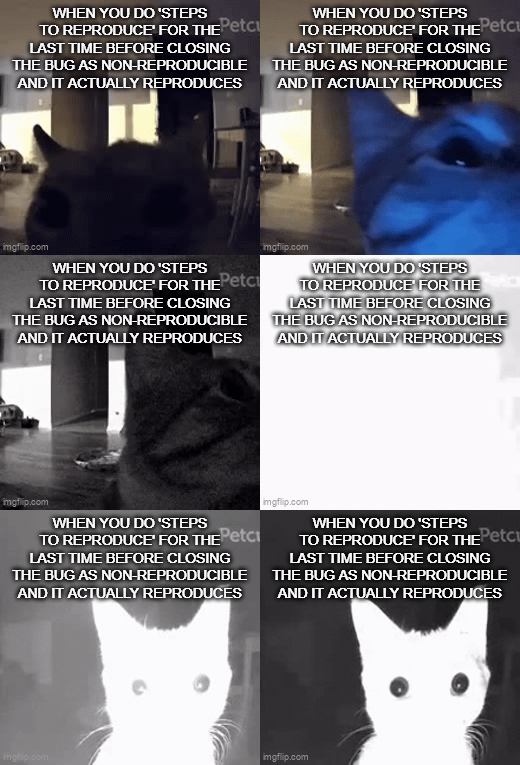
You've been chasing that ghost bug for hours, desperately trying to reproduce it one more time before you close the ticket. You follow the exact same steps, click the same buttons, enter the same data... and suddenly it works perfectly. The bug just vanishes into thin air like it was never there. Time to close the laptop and walk away slowly. We don't question miracles in this profession. The bug gods have smiled upon you today, and you're not about to tempt fate by investigating further. Ship it before the universe realizes its mistake.

Who Told To Touch That Button Its Not A Bug Its A Feature

Who Told To Touch That Button Its Not A Bug Its A Feature
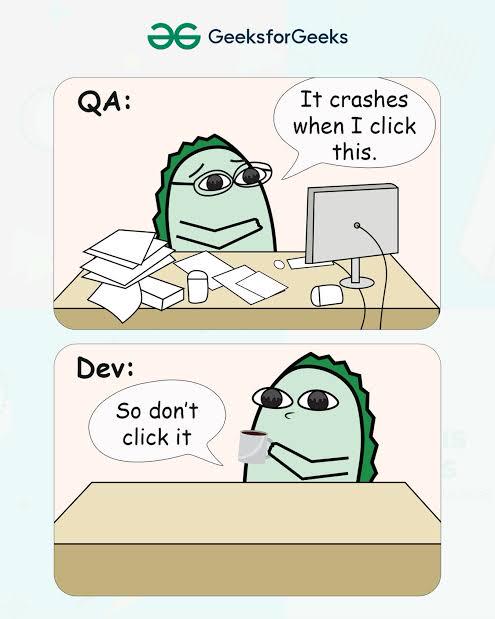
Oh, the AUDACITY of QA to actually test the application! How DARE they click on buttons that exist on the interface? The developer's solution is nothing short of GENIUS: instead of fixing the crash, just... don't click it? Problem solved! Ship it to production! This is the developer's equivalent of putting a "Do Not Touch" sign on a broken elevator button instead of, you know, actually fixing the elevator. Why waste precious time debugging when you can simply gaslight QA into thinking they're the problem? Revolutionary problem-solving right here. The button isn't broken if nobody clicks it, right? RIGHT? Fun fact: This is how we ended up with half the "undocumented features" in software today. One dev's "don't click that" became another generation's "wait, what does this button even do?"

Every Time

Every Time
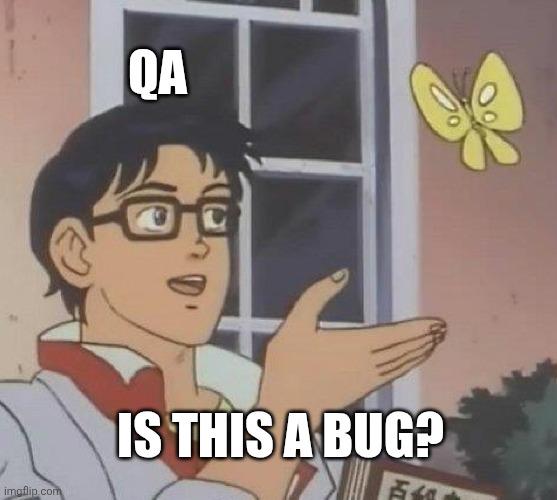
The developer's favorite magic trick: making bugs disappear by simply having QA look at them. It's like Schrödinger's bug—it exists in a superposition of "working" and "broken" until QA observes it, at which point it collapses into "works on my machine." The butterfly represents the bug's soul peacefully ascending to heaven, never to be reproduced again. QA will spend the next three hours trying to recreate it while you smugly sip your coffee, knowing full well it'll come back to haunt you in production at 3 AM on a Friday.

Game Dev In One Image

Game Dev In One Image
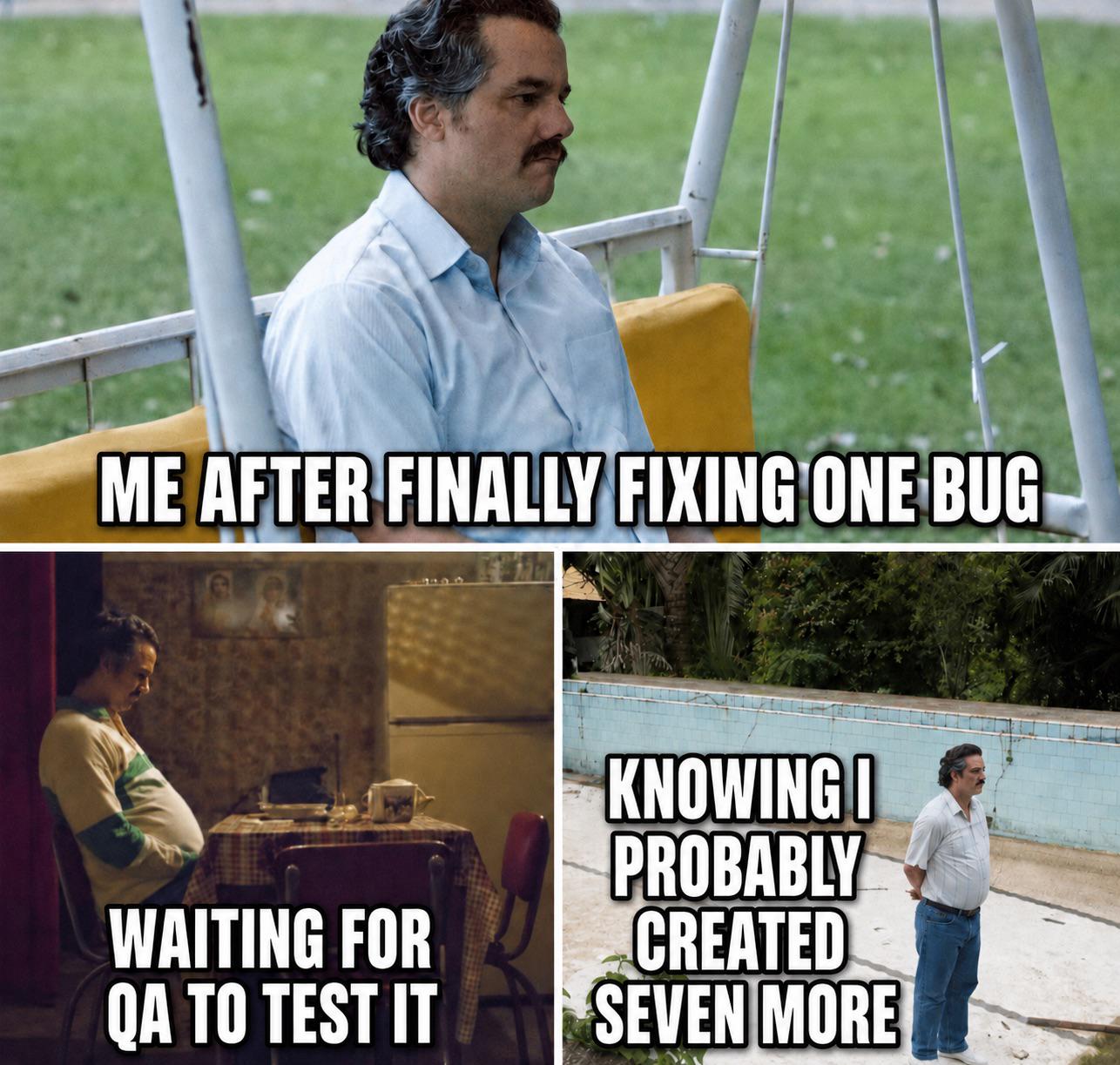
The classic game dev hydra problem: fix one collision detection bug, spawn seven new physics glitches. You finally squash that pesky raycast issue that's been haunting your dreams, take a victory lap on your metaphorical swing, only to realize you've somehow broken player movement, introduced a texture flickering issue, made NPCs walk through walls, created a memory leak, broken the save system, made the camera spaz out, and turned gravity into a suggestion rather than a law. Meanwhile, QA is sitting there like a patient parent waiting for you to finish your "quick fix" so they can tell you about the 47 other bugs they found yesterday. Game development: where your bug-to-fix ratio is consistently worse than your K/D ratio in any actual game.

It's Too Quiet

It's Too Quiet
That eerie silence when QA can't find bugs is basically the software equivalent of hearing your toddler go quiet in the next room. Something's definitely wrong, you just don't know what yet. Either the code is genuinely perfect (spoiler: it's not), or you've written something so catastrophically broken that it bypassed all the test cases. QA testers know the truth—no bugs found means the bugs are just hiding better. Time to start questioning everything: Did the tests even run? Are we testing the right build? Is this the calm before the production apocalypse? The paranoia is real, and honestly, justified.

The Chaos Is Real

The Chaos Is Real
Developer finds a bug: quietly sweeps it under the rug, maybe adds a TODO comment they'll never revisit, ships it to production anyway. Tester finds a bug: suddenly it's a five-alarm fire with Slack messages, Jira tickets, email chains, emergency meetings, and probably a postmortem document longer than the codebase itself. The left panel shows a sneaky developer tiptoeing away from their mess like nothing happened. The right? That's the entire QA team arriving with megaphones, decorations, and a parade to announce your shame to the world. Bonus points if they CC your manager and their manager's manager. Fun fact: Studies show that bugs found by testers are approximately 847% more embarrassing than bugs you find yourself. It's science.

NordVPN

NordVPN
Encrypt your traffic on public Wi-Fi, stream from anywhere, and cover up to ten devices with one plan. 30-day money-back guarantee.

The Chaos Is Real

The Chaos Is Real
Developer finds a bug: quietly sweeps it under the rug, maybe adds a TODO comment they'll never revisit, possibly blames it on "legacy code" from 2 weeks ago. Tester finds a bug: suddenly it's a full-blown parade with air horns, screenshots, screen recordings, detailed reproduction steps, severity levels, and a CC list that includes your manager, their manager, and probably the CEO. They'll attach logs so comprehensive you'd think they were documenting the moon landing. The difference? Developers want bugs to die quietly in the shadows. Testers want them immortalized in JIRA with 47 comments and a priority flag that makes your Slack notifications explode at 4:47 PM on a Friday.

Quality "Assurance"

Quality "Assurance"
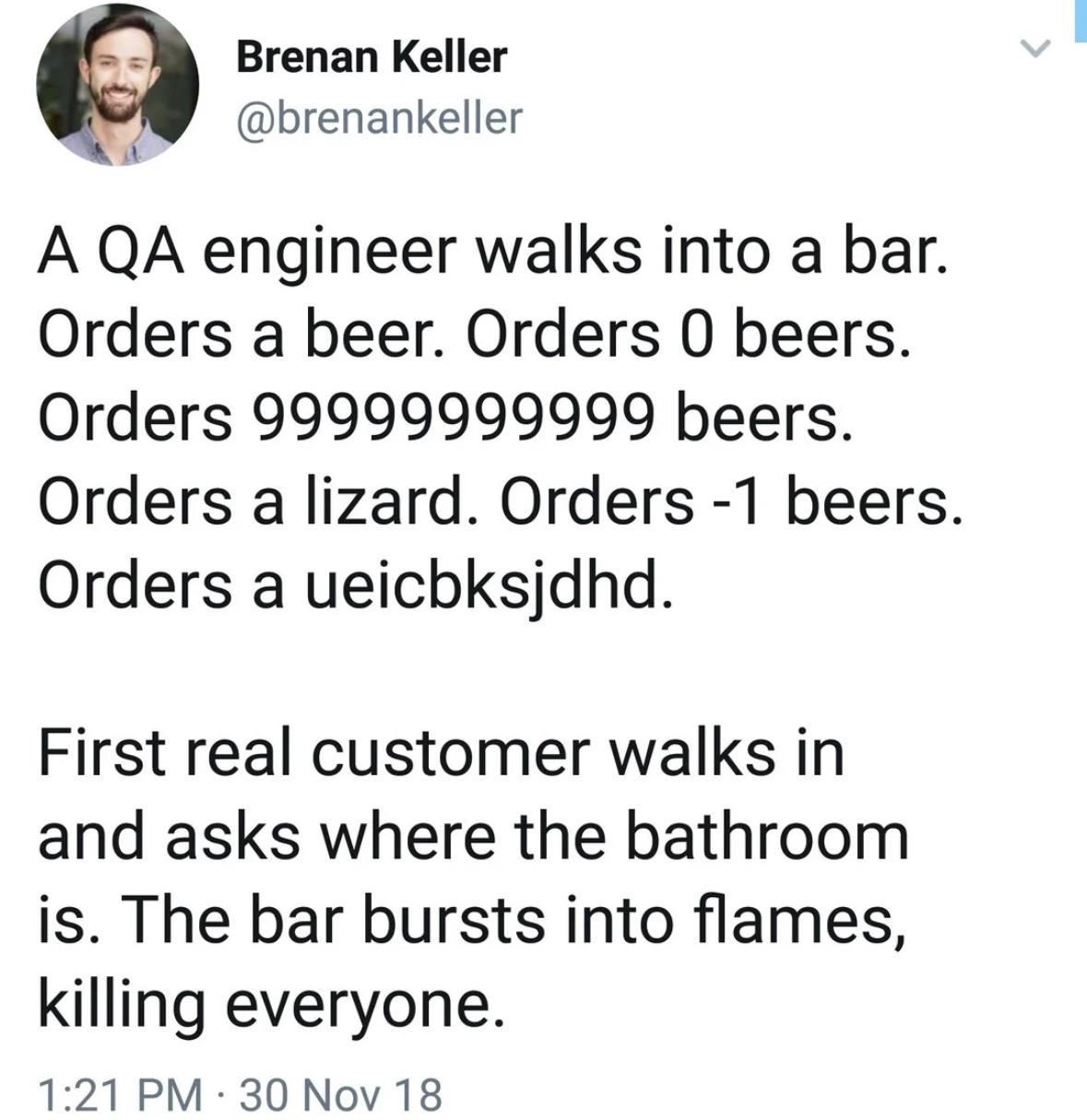
The classic QA mindset in action: test all the edge cases but somehow miss the one thing actual users will do. The progression is *chef's kiss* perfect—ordering zero beers tests the boundary condition, 99999999999 beers checks for integer overflow, a lizard validates type safety, and random keyboard mashing (uelcbksjdhd) ensures the input sanitization works. But then production happens. Someone asks a completely reasonable question—"where's the bathroom?"—and the whole system implodes because nobody thought to test the happy path where users might, you know, actually use the app like a normal human being instead of a chaos agent. The punchline hits different when you realize QA tested everything EXCEPT the basic user flow. It's the software equivalent of building a tank that can survive a nuclear blast but breaks when you open the door normally. Production bugs aren't found in the weird stuff—they're hiding in plain sight, waiting for Karen to ask where the restroom is.

It Will Be The End Of Me

It Will Be The End Of Me
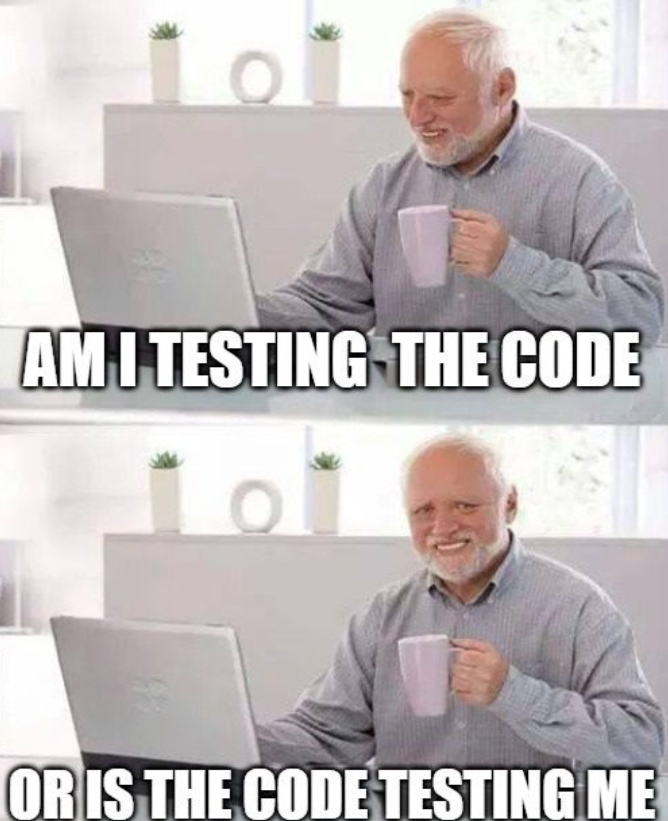
You know that moment when you stare at your screen, questioning your entire existence as a developer? You're supposed to be testing the code to find bugs, but instead you're watching your code expose every flaw in your logic, every shortcut you took, and every "I'll fix it later" comment from three months ago. The tests aren't just failing—they're personally attacking your life choices. That smug grin turning into existential dread perfectly captures the transition from "let's see if this works" to "why did I ever think I could code?" The real question isn't whether you're testing the code or the code is testing you—it's how long until you accept that the code won, and you're just along for the ride.

Forgot The Base Case

Forgot The Base Case
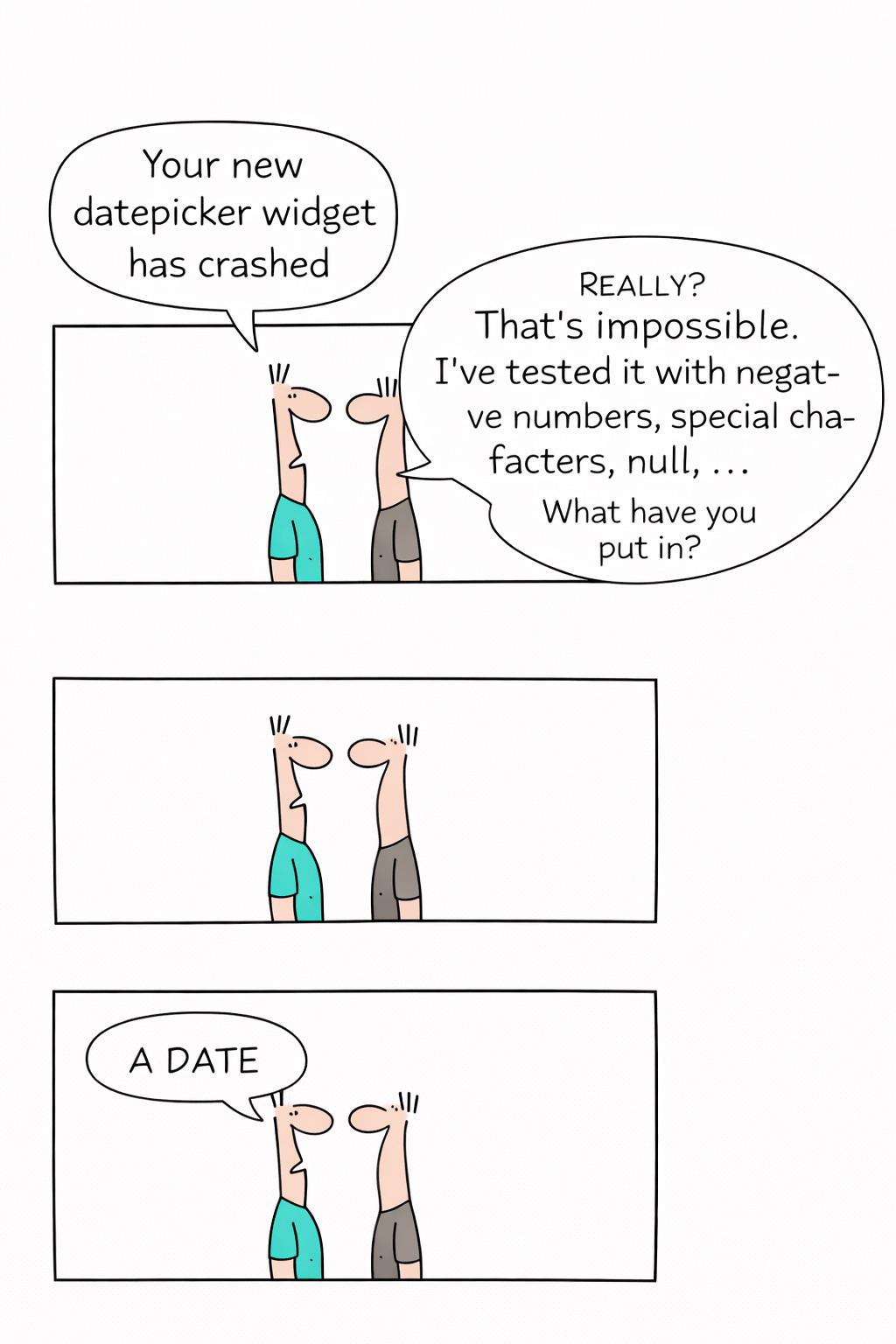
Picture this: You've tested your datepicker with negative numbers, special characters, null values, edge cases from the ninth circle of hell itself. You're basically a QA god at this point. But then someone asks what you actually put IN the datepicker and—plot twist—it was A DATE. You know, the ONE thing a datepicker is literally designed to handle? The base case? The most OBVIOUS input imaginable? That's right, folks. Our hero tested everything EXCEPT the actual happy path. It's like stress-testing a bridge with tanks and earthquakes but forgetting to check if a regular car can drive across it. The awkward silence says it all. Sometimes the most catastrophic bugs hide in plain sight, wearing a sign that says "I'm literally the primary use case." Chef's kiss of irony right there.

monTEK Dual Monitor Stand Mount with USB for Up to 35" Screens,Tall Post Mounted Monitor Arm Holds Max 24.25lbs Per Screen, Full Motion Adjustable Monitor Arm Desk Mount with C-Clamp/Grommet

monTEK Dual Monitor Stand Mount with USB for Up to 35" Screens,Tall Post Mounted Monitor Arm Holds Max 24.25lbs Per Screen, Full Motion Adjustable Monitor Arm Desk Mount with C-Clamp/Grommet
【Universal Compatibility】The heavy-duty dual monitor mount fits up to 35 inch and max 24.25lbs per screen; compatible VESA 75x75 mm and 100x100 mm support ensures seamless setup for most brands, idea…

Not Gonna Care Much

Not Gonna Care Much
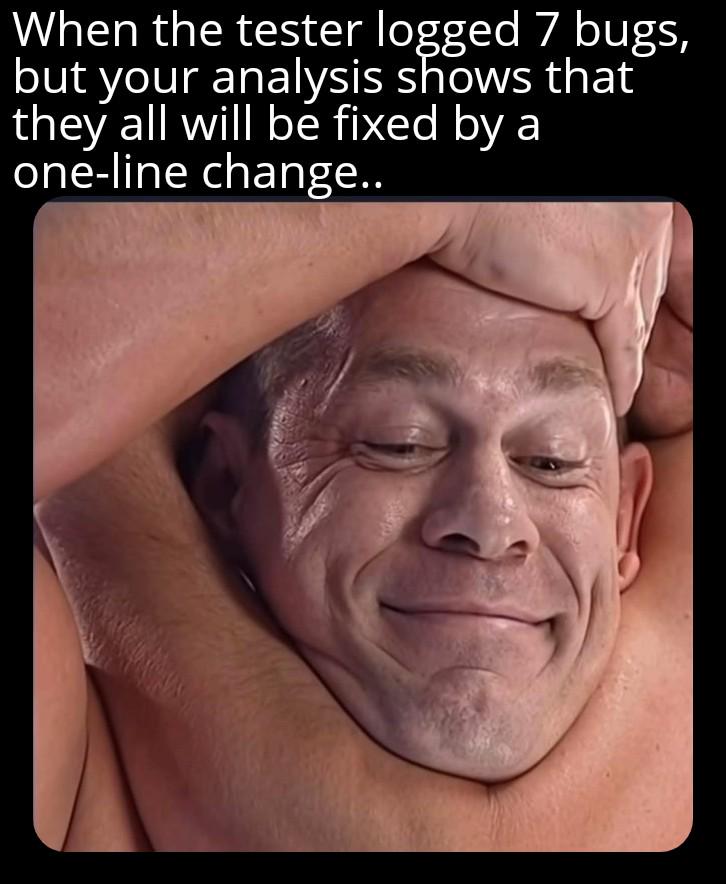
Oh, the SHEER BLISS of realizing that mountain of bug reports is actually just one tiny typo cascading through the entire codebase like a beautiful disaster. Seven bugs? Cute. One semicolon? LEGENDARY. The tester probably spent hours documenting each manifestation of your single mistake, writing detailed reproduction steps, taking screenshots, assigning severity levels... meanwhile you're over here about to ctrl+z the whole situation with literally ONE character. The smug satisfaction is absolutely unmatched. Sorry not sorry for wasting your time, QA team! 💅

Full Drama

Full Drama
Nothing quite like the adrenaline rush of a critical bug discovered at 4:57 PM on the last day of the testing phase. Your QA engineer suddenly transforms into a theatrical villain, orchestrating chaos with surgical precision. The project manager is already mentally drafting the delay email. The developers are experiencing the five stages of grief simultaneously. And somewhere, a product owner is blissfully unaware that their launch date just became a suggestion rather than a reality. The timing is always immaculate—never day one, never mid-sprint. Always when everyone's already mentally checked out and the deployment scripts are warming up.