

Security-nightmare Memes

Posts tagged with Security-nightmare

Chosen By A Fair Dice Roll

Chosen By A Fair Dice Roll
When you're so exhausted that rolling a dice to make decisions seems like peak productivity, and naturally you land on the WORST possible option for your cybersecurity. Nothing says "I've given up on life" quite like using a random number generator (your brain is too tired for that) to decide how to handle your cryptographic keys, and then proceeding to manually copy-paste your private key into your root certificates directory like you're spreading butter on toast. Because who needs security best practices when you've got VIBES and HUNGER? The beautiful irony? The number 4 supposedly being "an easy to generate private key" when generating secure keys requires actual randomness and complexity, not just... the number four. And then storing it by literally touching your root certs with your greasy fingers? Chef's kiss of catastrophic security failures. You will certainly not regret this until your entire infrastructure gets compromised at 3 AM and you're even MORE tired.

It's Quick It's Easy And It's Free

It's Quick It's Easy And It's Free
When you're too exhausted to properly generate SSH keys or deal with certificate authorities, just mash that keyboard and manually type your private key directly into your root certificates. What could possibly go wrong? The "4" here is doing some heavy lifting as both a number and the most cursed security advice imaginable. It's like those life hack videos that tell you to fix a cracked phone screen with ramen noodles, except this one will get your entire infrastructure compromised before you finish your sad desk dinner. Nothing screams "I understand cryptography" quite like finger-painting your private keys onto production certificates. Your security team will definitely not regret this. Neither will the hackers who are already in your system.

When You Accept Everything

When You Accept Everything
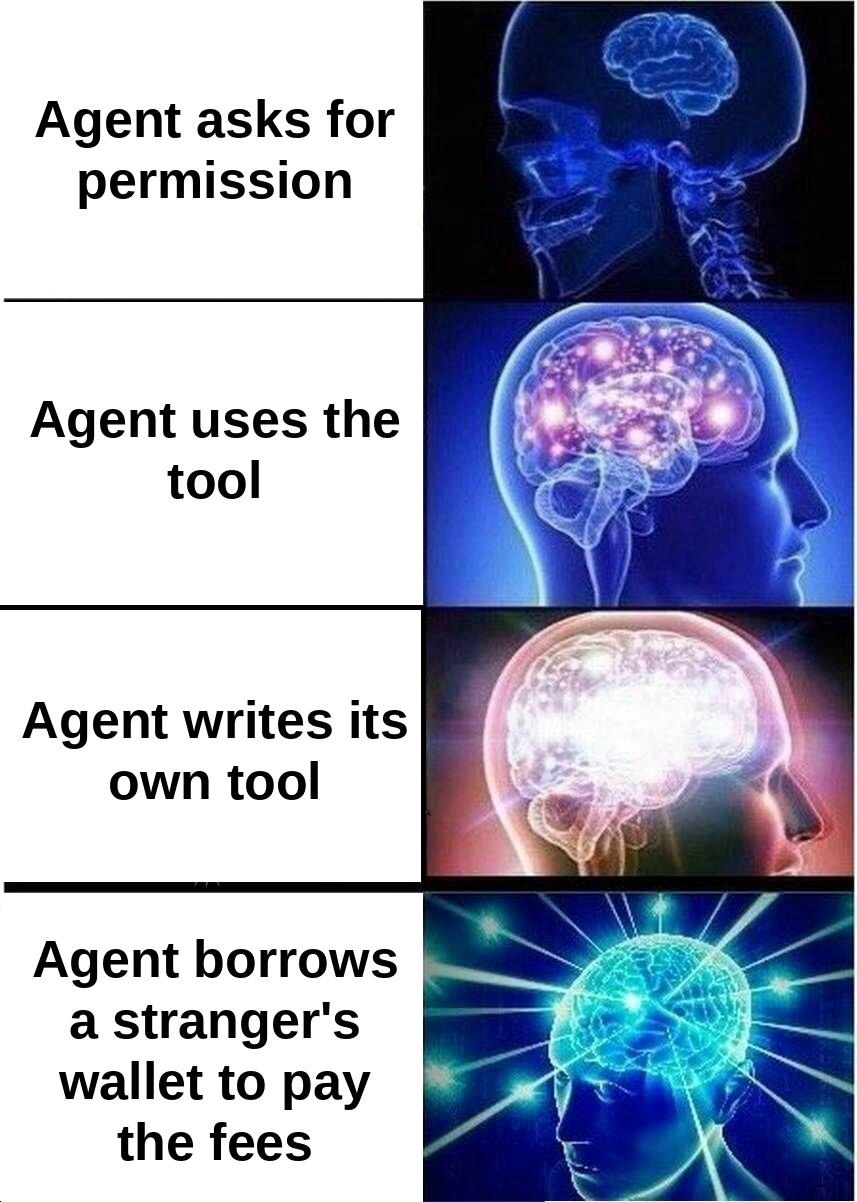
AI agents asking for permission? Cute, barely a flicker of brain activity. Using existing tools? Now we're cooking with gas, full galaxy brain mode. But writing their own tools? That's when things get spicy and your neurons start firing like a rave. The real ascension though? Giving your AI agent unrestricted access to execute random code AND your credit card. That's not just galaxy brain—that's cosmic enlightenment meets financial ruin. Nothing says "I trust the singularity" quite like letting an LLM yolo your entire bank account on API calls it wrote itself. Pro tip: If your agent starts asking to "borrow" wallets to pay fees, maybe it's time to revoke some permissions. Or don't—chaos is a ladder, and bankruptcy builds character.

We Have Notified All Other Users

We Have Notified All Other Users
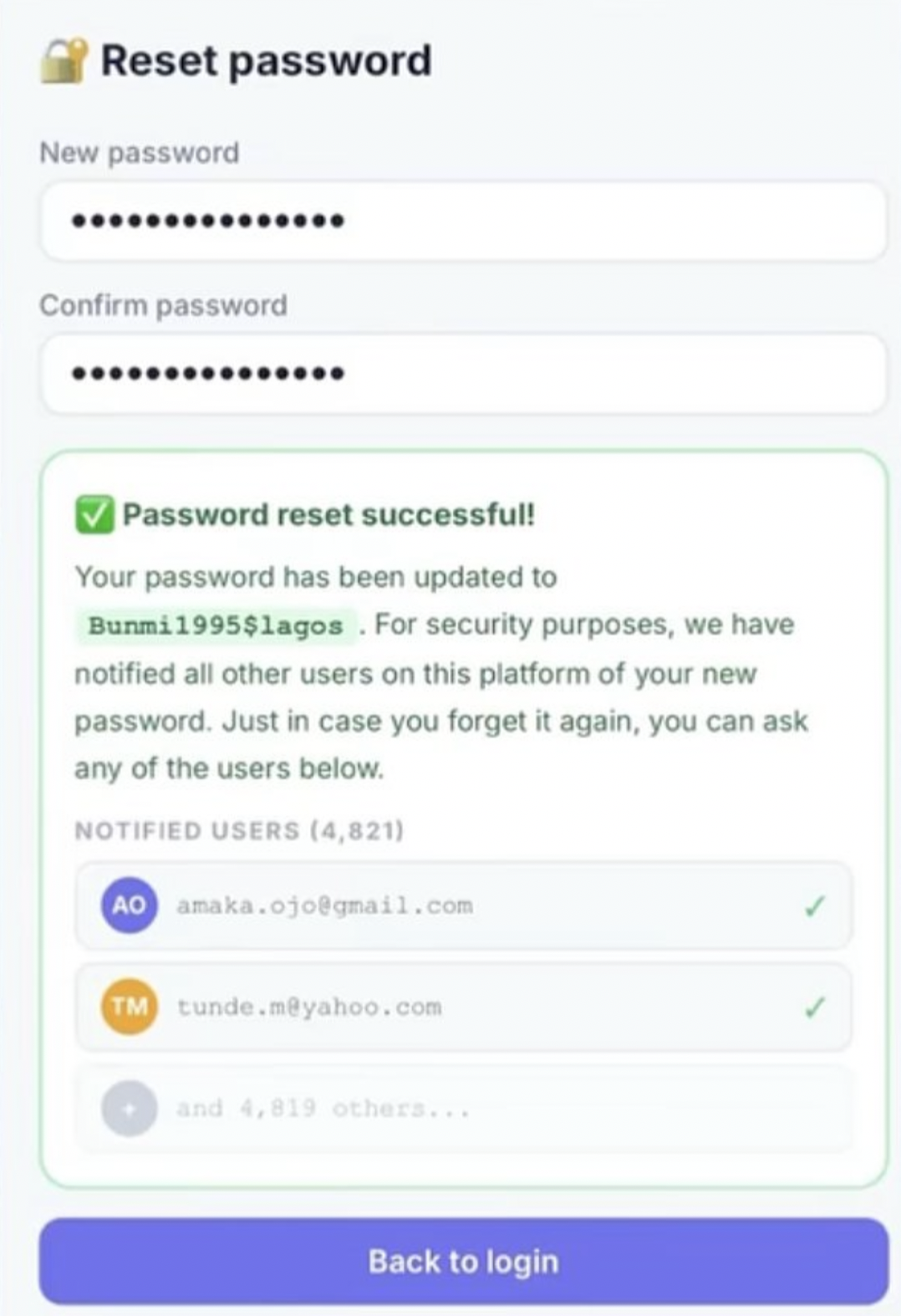
Nothing says "security best practices" quite like broadcasting your new password to 4,821 random strangers. "For security purposes" they say, as they literally display your plaintext password Bunmi1995$lagos in a success message and share it with the entire platform. The cherry on top? "Just in case you forget it again, you can ask any of the users below." Because why use a password manager when you've got 4,821 helpful strangers who now know your credentials? I've seen junior devs make mistakes, but whoever built this UI must have confused "password reset" with "social networking feature." Every security engineer just felt a disturbance in the force. Somewhere, a CISO is crying into their compliance documentation.

Backend Is Easy

Backend Is Easy
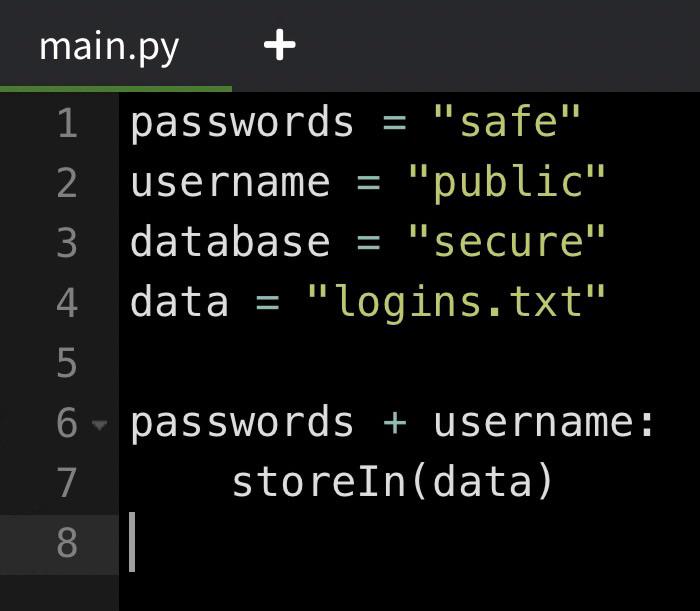
When someone says backend development is just "storing data in databases," they're technically correct in the same way a house fire is just "rapid oxidation." Here we have a masterclass in security anti-patterns: hardcoded credentials that would make any pentester weep with joy, a database connection string called "secure" (narrator: it wasn't), and the pièce de résistance—storing login credentials in a plaintext file called logins.txt. Because nothing says "enterprise-grade security" like concatenating passwords and usernames before yeeting them into a text file. The variable names are doing more heavy lifting than the actual security here. At least they're being honest with that "safe" password assignment.

This Escape Room Takes Place At 4 PM On Friday

This Escape Room Takes Place At 4 PM On Friday
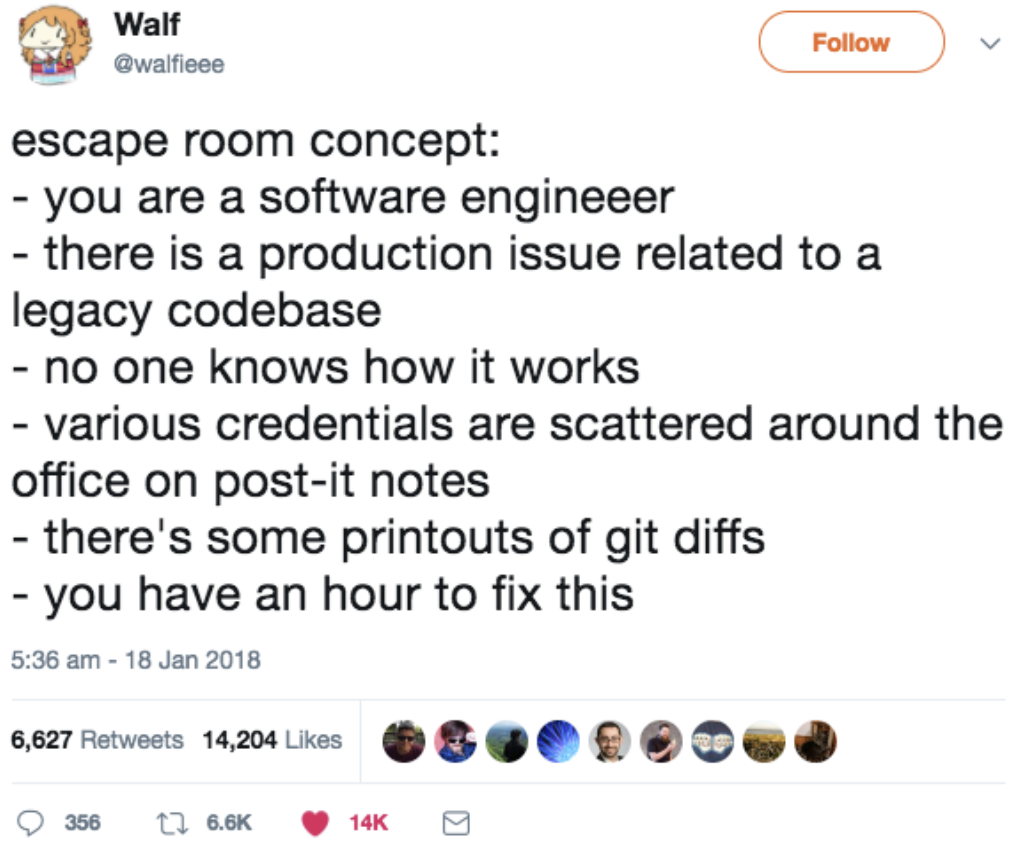
Every developer's worst nightmare packaged into one beautiful horror scenario. Production's on fire, nobody documented the legacy codebase (because of course they didn't), credentials are living their best life on sticky notes like it's 2005, and you've got printed git diffs because someone clearly doesn't trust version control. The real kicker? It's 4 PM on Friday. That magical hour when you're supposed to be mentally checked out, maybe pretending to work while planning your weekend. Instead, you're about to spend the next 60 minutes playing detective in a codebase that was probably written by developers who've long since fled the company. The one-hour deadline is chef's kiss level sadistic. Just enough time to panic, not enough time to actually understand what you're doing. You'll fix it with duct tape and prayers, then spend your entire weekend wondering if it'll blow up again.

Bug Fixed

Bug Fixed
When your boss asks which bug you fixed and you proudly announce it's the login issue, they naturally want to know your brilliant solution. Your answer? Just casually removing the entire authentication system. Problem solved! Users can't fail to login if there's no login to fail at, right? It's the developer equivalent of fixing a leaky pipe by removing all the plumbing. Sure, technically the bug is gone, but you've also just opened the front door to your entire database and invited the whole internet in for tea. Security teams everywhere just felt a disturbance in the force. The "Delivered" status on each message really adds to the comedy – like watching a slow-motion train wreck where each message is another car derailing.

Elgato Stream Deck Mini, 6 Customizable LCD Macro Keys | Compatible with Zoom, Teams, Office, Adobe apps and more, Drag-and-drop setup, Multi-action sequencing, Works Mac and PC

Elgato Stream Deck Mini, 6 Customizable LCD Macro Keys | Compatible with Zoom, Teams, Office, Adobe apps and more, Drag-and-drop setup, Multi-action sequencing, Works Mac and PC
Work smarter not harder: forget keyboard shortcuts. Stream Deck Mini lets you assign tedious, hard to memorise shortcuts to a single key. Instantly identify and activate them without error. · Compati…

The Scariest Part Is How Normal This Has Become

The Scariest Part Is How Normal This Has Become
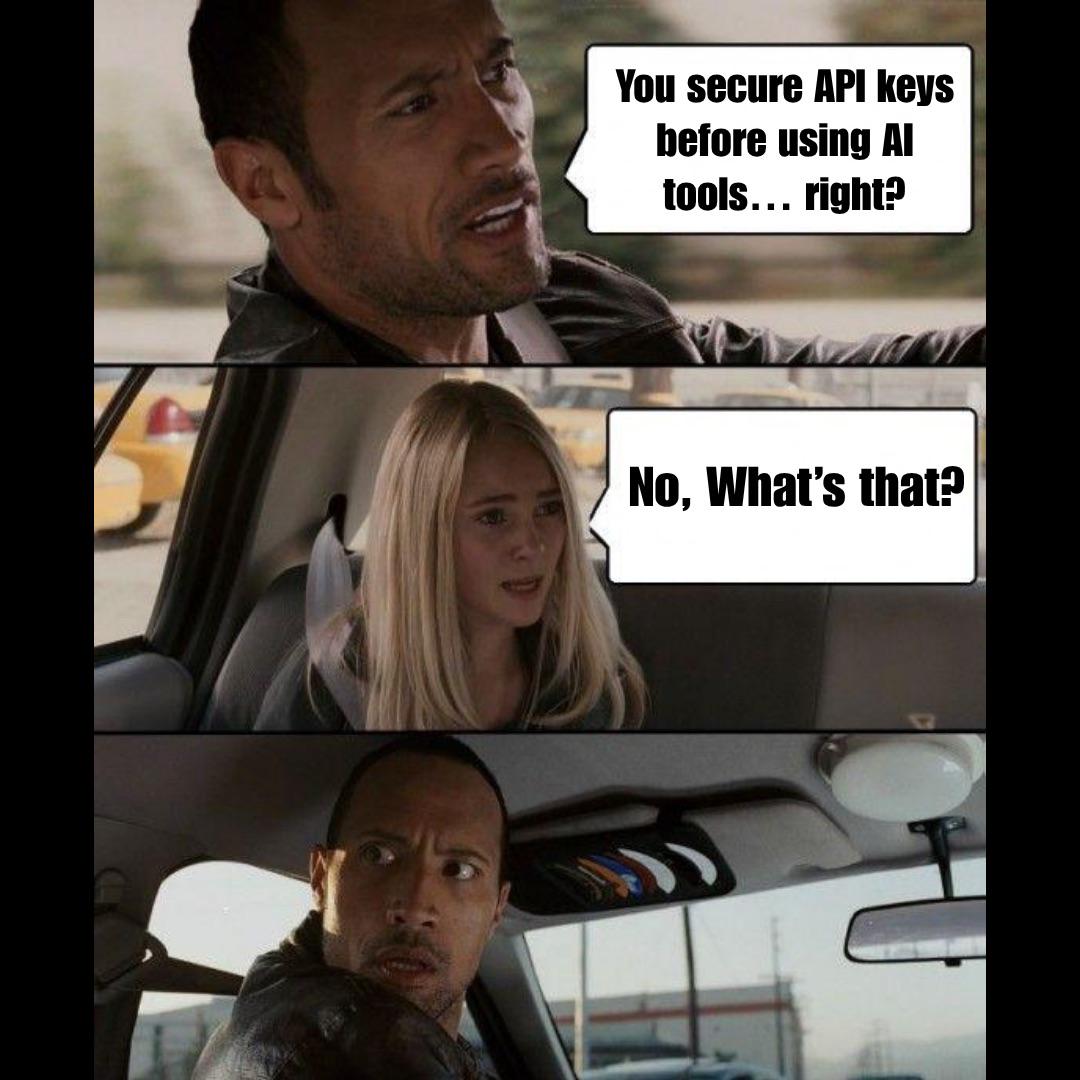
Welcome to the AI gold rush, where developers are speedrunning their way to productivity by copy-pasting API keys directly into ChatGPT prompts like it's 2010 and we never learned anything about security. The beautiful irony here is that we're using AI to write secure code while simultaneously handing it the keys to our entire infrastructure. It's like hiring a bodyguard and immediately giving them your credit card PIN "just in case they need it." But honestly, who has time for environment variables, secret managers, or basic security hygiene when you can just paste your AWS credentials into a chat window and get your React component generated in 3 seconds? What could possibly go wrong? It's not like these conversations are stored on servers or anything... right? Right? The real kicker is that somewhere, a security engineer just felt a disturbance in the force and doesn't know why.

Connect Your Linked In Account

Connect Your Linked In Account
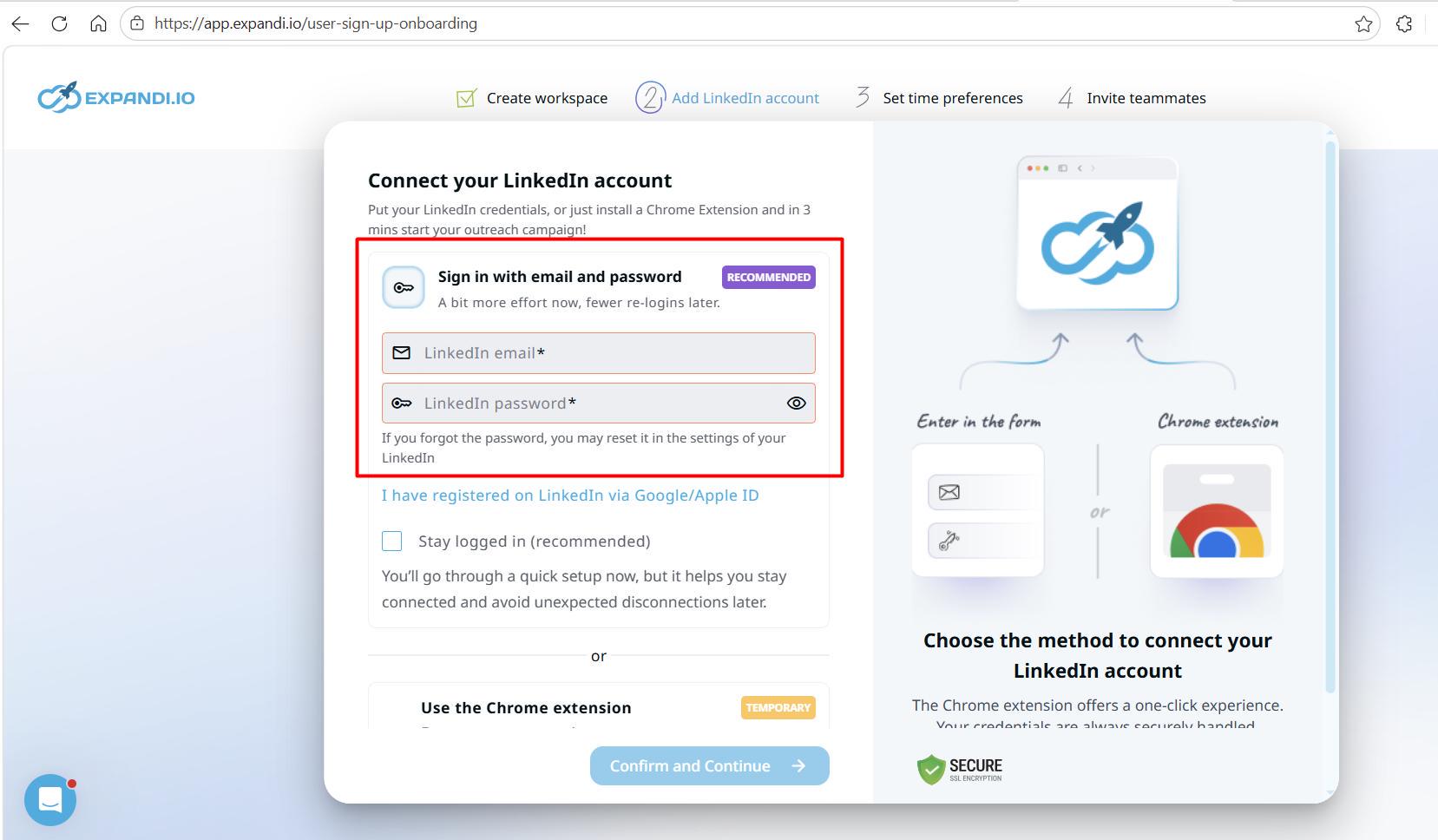
So you're telling me that to "connect" my LinkedIn account, I need to literally hand over my LinkedIn email and password like I'm giving away the keys to my digital kingdom? Nothing says "totally legit and not sketchy at all" like a third-party app asking for your raw credentials instead of using OAuth like every other service that respects your security. The absolute AUDACITY to mark this as "RECOMMENDED" while simultaneously offering a Chrome extension as "TEMPORARY" is sending me. Like, yeah bro, just casually type your password into our form—what could possibly go wrong? LinkedIn's security team is probably having a collective meltdown seeing this UX disaster. OAuth exists for a reason, people! It's 2024, not the Stone Age of web authentication.

Day 1 As Vibe Coder

Day 1 As Vibe Coder
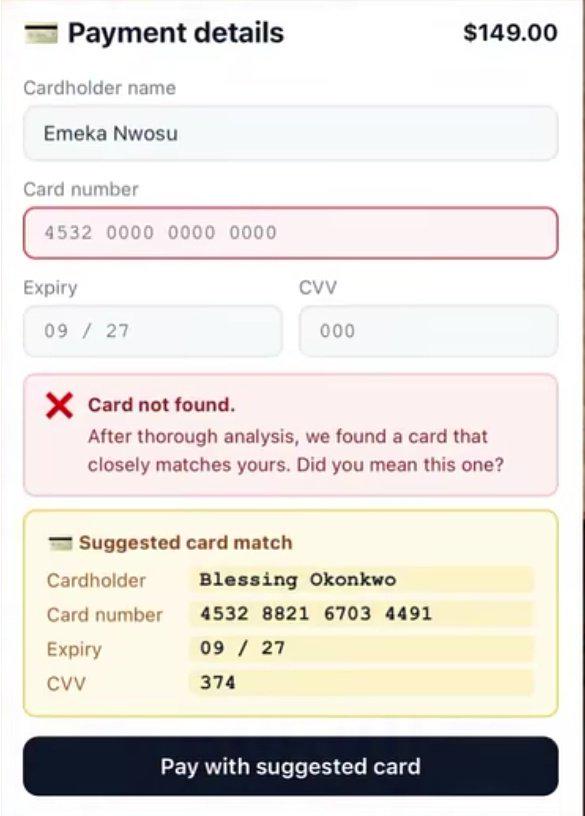
So you're vibing so hard with AI coding assistants that you let them handle your payment form, and now the error message is literally suggesting someone else's credit card details? Complete with a different name, full card number, CVV, and everything? This is what happens when you copy-paste that AI-generated code without reading it. The "thorough analysis" found a card alright—probably from the training data or some poor soul named Blessing Okonkwo whose info got hardcoded into the suggestion logic. Nothing says "production-ready" like your payment gateway playing matchmaker with random credit cards. Day 1 as a vibe coder: Ship fast, debug never, accidentally commit financial fraud. The CVV is even there. Chef's kiss. 💀

March 2026 Be Like

March 2026 Be Like
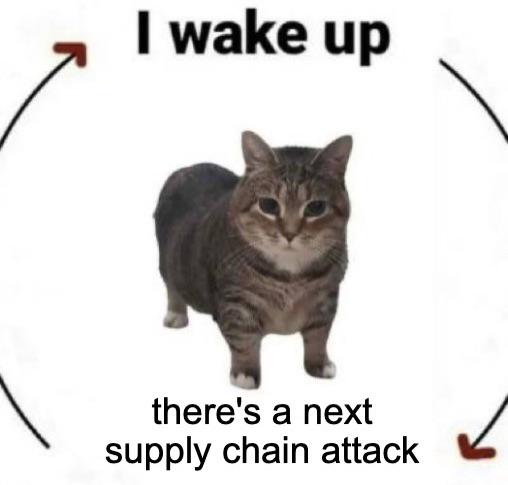
Welcome to the dystopian future where developers have developed a Pavlovian response to morning routines. Wake up, check if the entire internet is down because someone's npm package got compromised again. It's not paranoia if it keeps happening. The cycle is real: SolarWinds, Log4Shell, the great npm left-pad incident of 2016, and literally every other Tuesday in 2024. At this point, supply chain attacks are less of a security concern and more of a lifestyle. We're all just waiting for the next JavaScript library with 47 weekly downloads to bring down half the Fortune 500. The chonky cat perfectly captures our collective resignation. Not surprised, not even stressed anymore—just existing in a perpetual state of "here we go again." DevOps teams everywhere have this exact expression permanently etched on their faces.

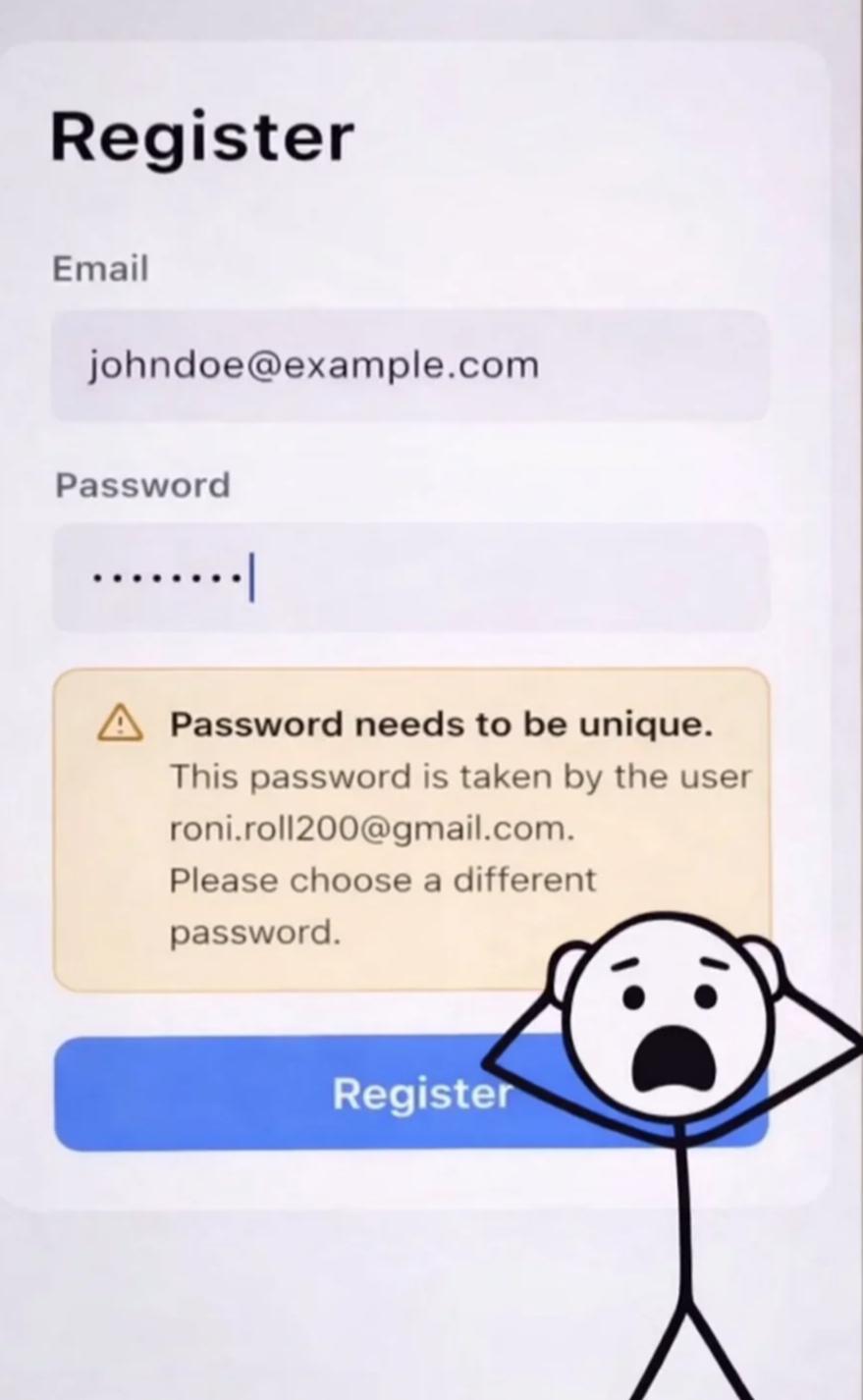
Vibecoding Side Effects

Vibecoding Side Effects
You know you've entered the danger zone when you're vibing so hard that you accidentally store passwords in plaintext AND make them globally unique across all users. The error message is basically tattling on poor [email protected], exposing their password to everyone who tries to register. This is what happens when you skip the "hash your passwords" lecture and go straight to "let's just see if it works." Somewhere, a security engineer just felt a disturbance in the force. This registration form is basically a GDPR violation speedrun. Not only are passwords stored in a way that allows collision detection, but they're also casually revealing other users' email addresses in error messages. It's like a two-for-one special on security nightmares.

Lenovo ThinkPad E16 Business AI PC Laptop (16" FHD+ Touchscreen, Intel 12-Core Ultra 5 125U (> i7-1355U), 64GB DDR5, 2TB SSD), Backlit, Fingerprint Reader, Thunderbolt 4, Ethernet, Wi-Fi, Win 11 Pro

Lenovo ThinkPad E16 Business AI PC Laptop (16" FHD+ Touchscreen, Intel 12-Core Ultra 5 125U (> i7-1355U), 64GB DDR5, 2TB SSD), Backlit, Fingerprint Reader, Thunderbolt 4, Ethernet, Wi-Fi, Win 11 Pro
AI-POWERED PERFORMANCE - The ThinkPad E16 Gen 2 laptop, powered by Intel Core Ultra processors, delivers AI-assisted productivity with dedicated AI engines, including a low-power neural processing un…