

Scalability Memes

Posts tagged with Scalability
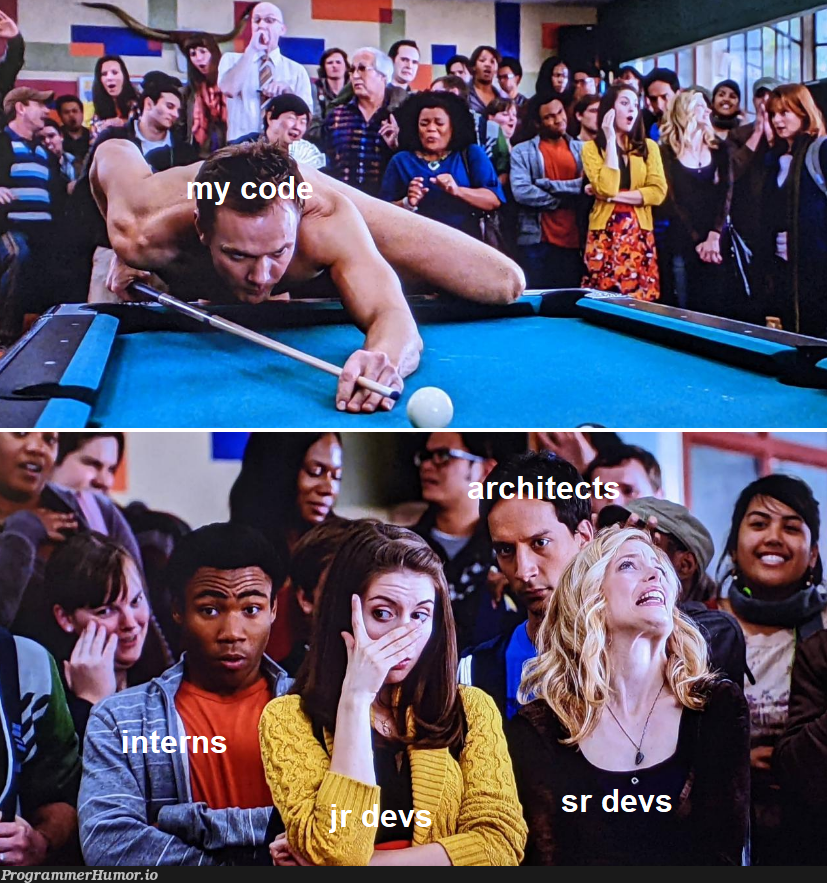
Every Damn Time

Every Damn Time
You start with good intentions, reading all the Medium articles about how microservices will solve all your problems and make you scalable like Netflix. Fast forward six months and you're debugging why Service A can't talk to Service B because Service C is down, which somehow broke Service D's authentication, and now you're maintaining 47 different repos with their own CI/CD pipelines. Meanwhile, your buddy's startup is running a "distributed tightly coupled monolith" - basically a monolith that they split across multiple servers for absolutely no reason except to put "microservices" on their resume. It's got all the complexity of microservices with none of the benefits. Beautiful disaster. The real kicker? Both architectures will work until they don't, and when they fail, you'll be the one on call at 2 AM trying to figure out which service decided to have an existential crisis.

When AI Stands For Actual Individual

When AI Stands For Actual Individual
Tucker Bryant just became the ultimate Mechanical Turk 2.0. Dude manually responded to 30,000 inquiries while pretending to be an AI chatbot. That's roughly the same as implementing a distributed message queue system... except the queue is your brain and the workers are your fingers. The irony here is chef's kiss . We're in an era where companies are desperately trying to replace humans with AI, and this guy went full reverse-engineering mode: replaced AI with himself. It's like writing assembly code when everyone else is using high-level frameworks. Respect the hustle, but also... maybe invest in actual automation? The real question: did he scale horizontally (hire more people) or vertically (just work harder)? Either way, his O(n) complexity was definitely not sustainable. Should've at least implemented some template responses or a basic caching layer for frequently asked questions. The "Powered by AI*" asterisk doing some heavy lifting here. *Average Individual

No More Databases

No More Databases
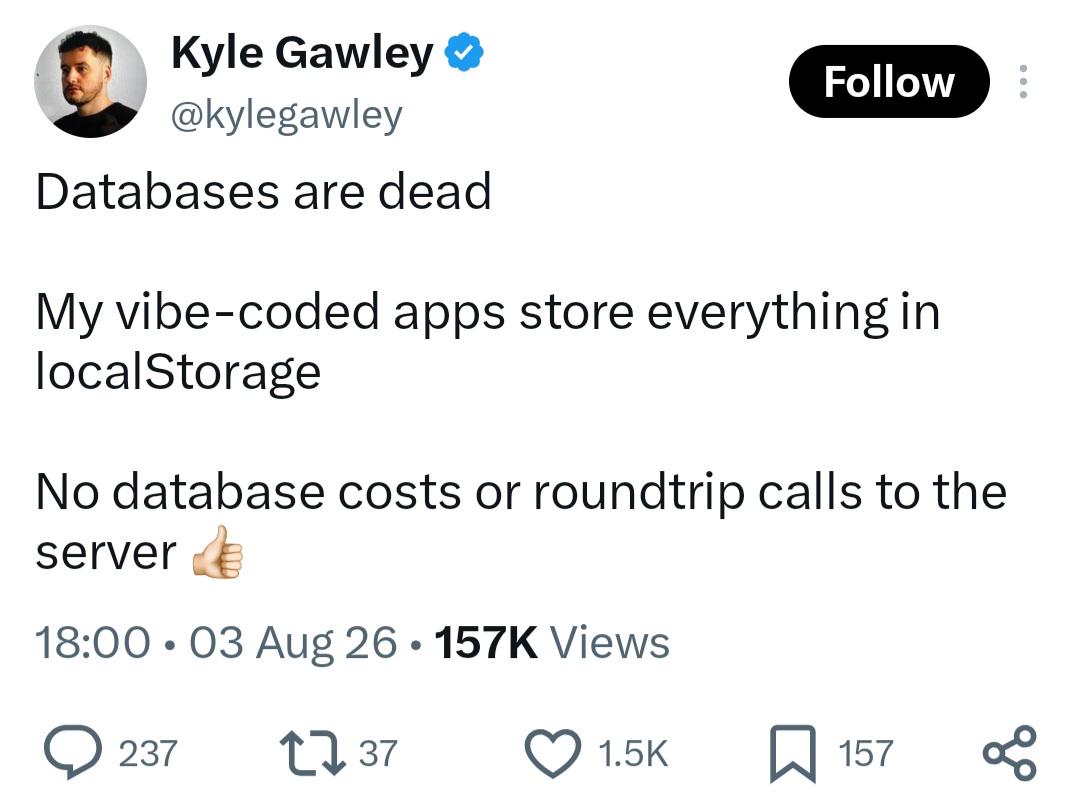
Oh sweetie, someone just discovered localStorage and thinks they've revolutionized software architecture! Because who needs decades of database engineering when you can just YEET all your user data into the browser's 5-10MB storage limit? Nothing could possibly go wrong with storing everything client-side where users can clear it with one accidental cache wipe or a slightly aggressive "free up space" button click. But hey, no server costs! No roundtrip latency! Just pure, unscalable chaos living rent-free in someone's browser until they switch devices and wonder where all their data went. Galaxy brain move right here – who needs data persistence, backups, or multi-user access anyway? localStorage is basically PostgreSQL if you squint hard enough and ignore literally everything that makes databases useful.

I Cringe

I Cringe
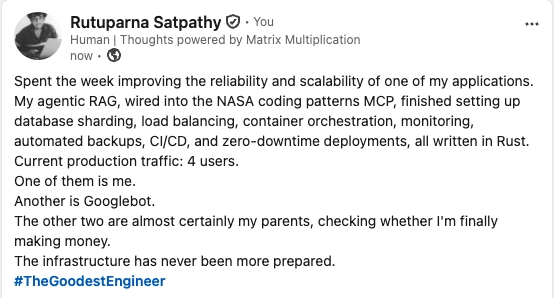
So you spent a week building NASA-level infrastructure with Rust, database sharding, container orchestration, and enough buzzwords to make a tech recruiter weep tears of joy. Your production traffic? You, Googlebot scraping your site, and your parents nervously refreshing to see if you've finally "made it." The gap between over-engineering and actual user demand has never been more beautifully illustrated. You've got zero-downtime deployments for an app that gets 3 visitors a day. You've automated backups for data nobody's creating. You've load-balanced between servers that are basically just vibing in idle mode. But hey, at least when your mom visits the site, she'll experience premium scalability. #TheGoodestEngineer indeed—because sometimes the real product isn't the app, it's the engineering flex.

Daydream Education Binary and Denary Numbers Classroom Poster - EXTRA LARGE 33” x 23.5” - Laminated - Computer Science Middle & High School Class Decoration - Wall Charts

Daydream Education Binary and Denary Numbers Classroom Poster - EXTRA LARGE 33” x 23.5” - Laminated - Computer Science Middle & High School Class Decoration - Wall Charts
EDUCATIONAL CHART DESIGNED BY TEACHERS: Our Binary and Denary Numbers poster helps students to learn, engage and remember more information than ever before. Covering the basics of binary and denary n…

I Don't Want To Play With MCPs Anymore

I Don't Want To Play With MCPs Anymore
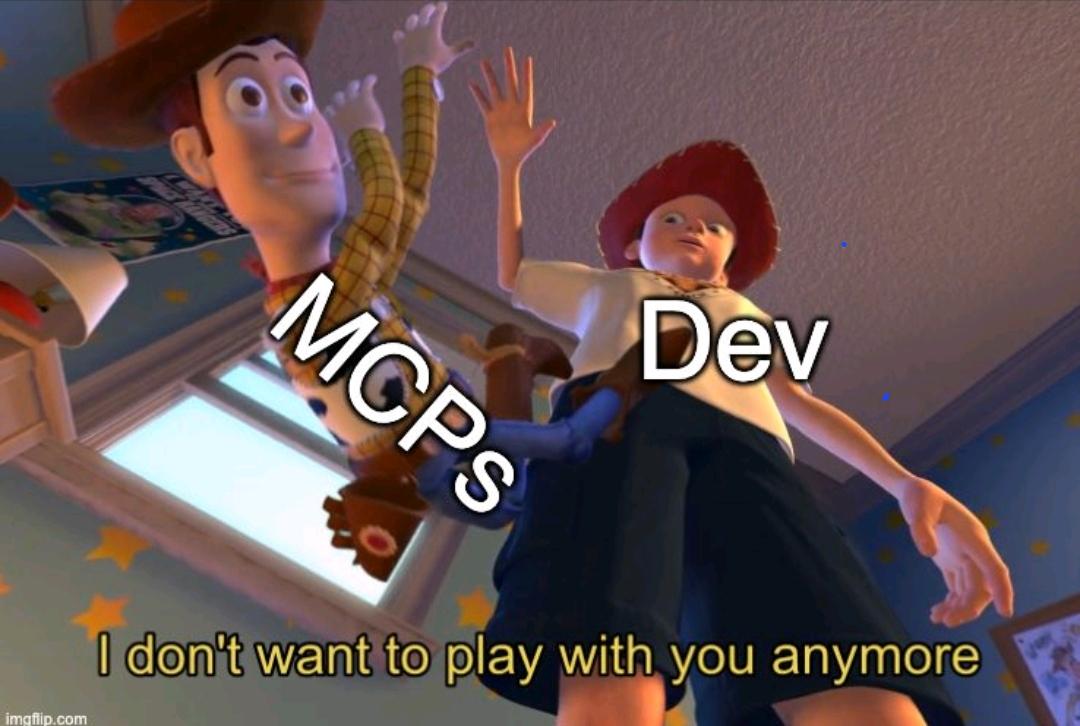
When you finally discover microservices and suddenly your monolithic codebase feels like that embarrassing childhood friend you've outgrown. MCPs (Master Control Programs—those giant, unwieldy monolithic applications) getting tossed aside faster than deprecated jQuery plugins. The Dev here represents every engineer who just attended their first Docker workshop and now thinks splitting a perfectly functional app into 47 different services communicating through REST APIs is peak architecture. Sure, your deployment pipeline now takes 3 hours instead of 10 minutes, and you need a PhD to debug anything, but at least you can tell people at meetups that you "do microservices." Reality check: Sometimes that monolith was actually holding things together pretty well, but we don't talk about that after we've already rewritten everything.

Feature With Zero Users

Feature With Zero Users
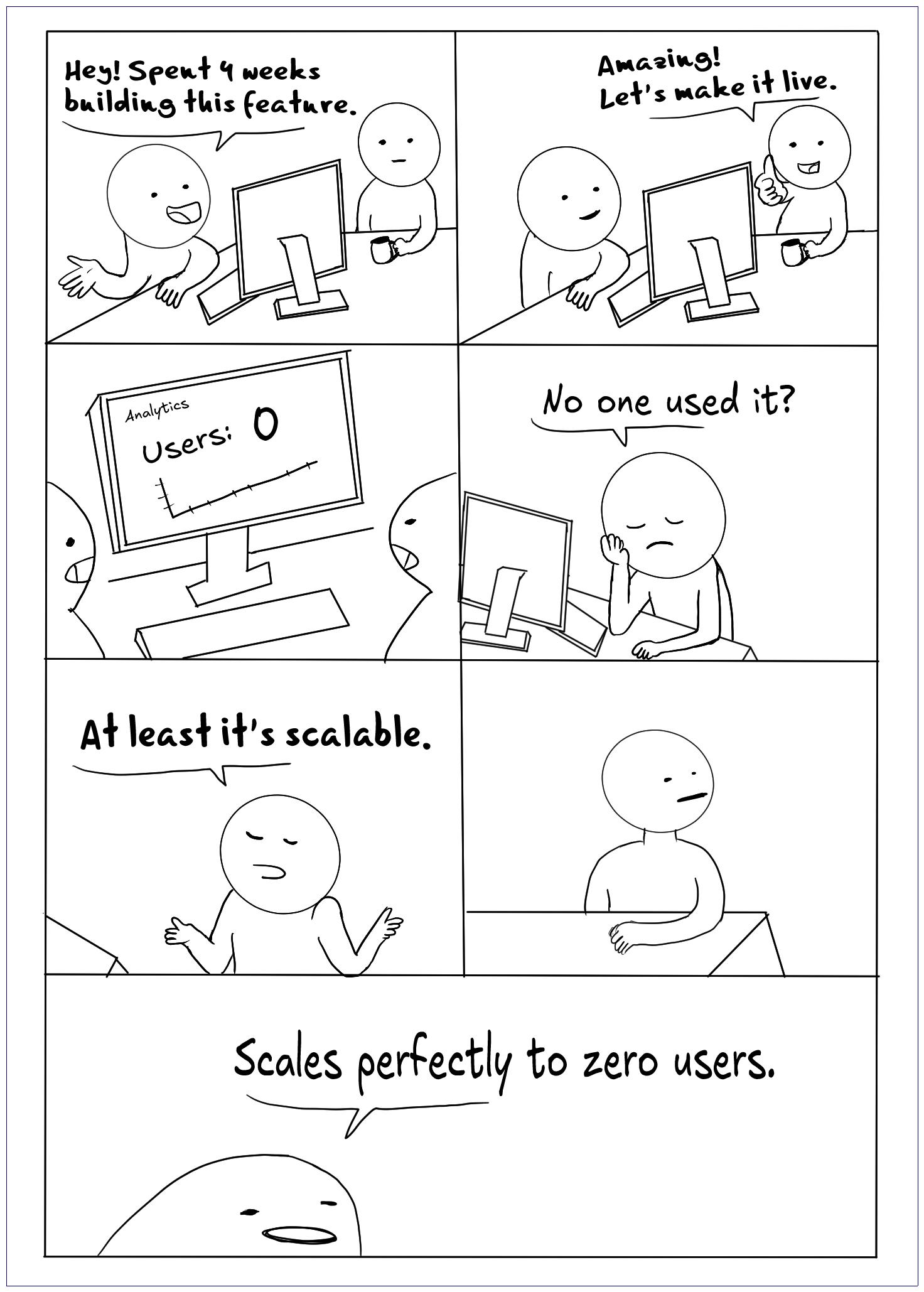
Spent 9 weeks architecting a beautiful, scalable feature with microservices, load balancers, and auto-scaling groups that can handle millions of requests. Shipped it to production with great fanfare. Checked the analytics dashboard and... zero users. Not a single soul clicked on it. But hey, at least your infrastructure is ready to handle exactly zero users with perfect efficiency. Your Kubernetes cluster is distributing nothing across multiple pods flawlessly. The caching layer is caching air. The database indexes are optimized for queries that will never come. Zero times infinity is still zero. Congratulations on achieving perfect horizontal scaling.

Plan

Plan
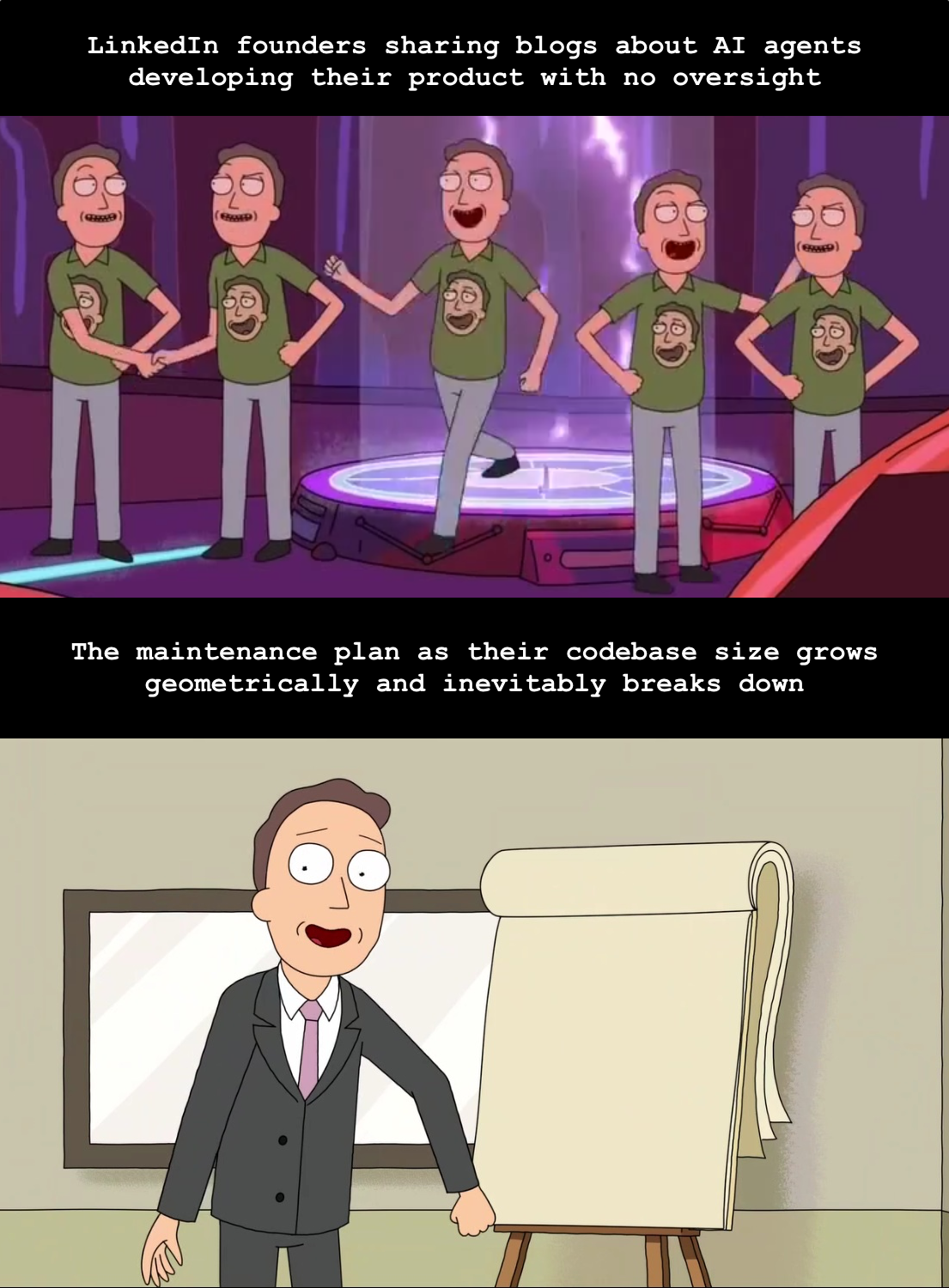
LinkedIn founders are out here posting thought leadership blogs about building autonomous AI agents with zero human oversight, patting themselves on the back like they've cracked the code. Meanwhile, their "maintenance plan" is just vibes and prayers as the codebase balloons into an unmaintainable monster. You know what's wild? They're literally presenting a blank scroll as their strategy. No refactoring roadmap, no tech debt allocation, no monitoring plan—just pure, unfiltered optimism. It's giving "move fast and break things" energy, except they're breaking their own infrastructure and calling it innovation. The real kicker? Everyone's so busy building AI agents that nobody's asking "who's gonna maintain this mess when it scales?" Spoiler alert: it's gonna be some poor engineer at 2 AM wondering why the AI decided to recursively call itself into oblivion because nobody wrote proper guardrails.

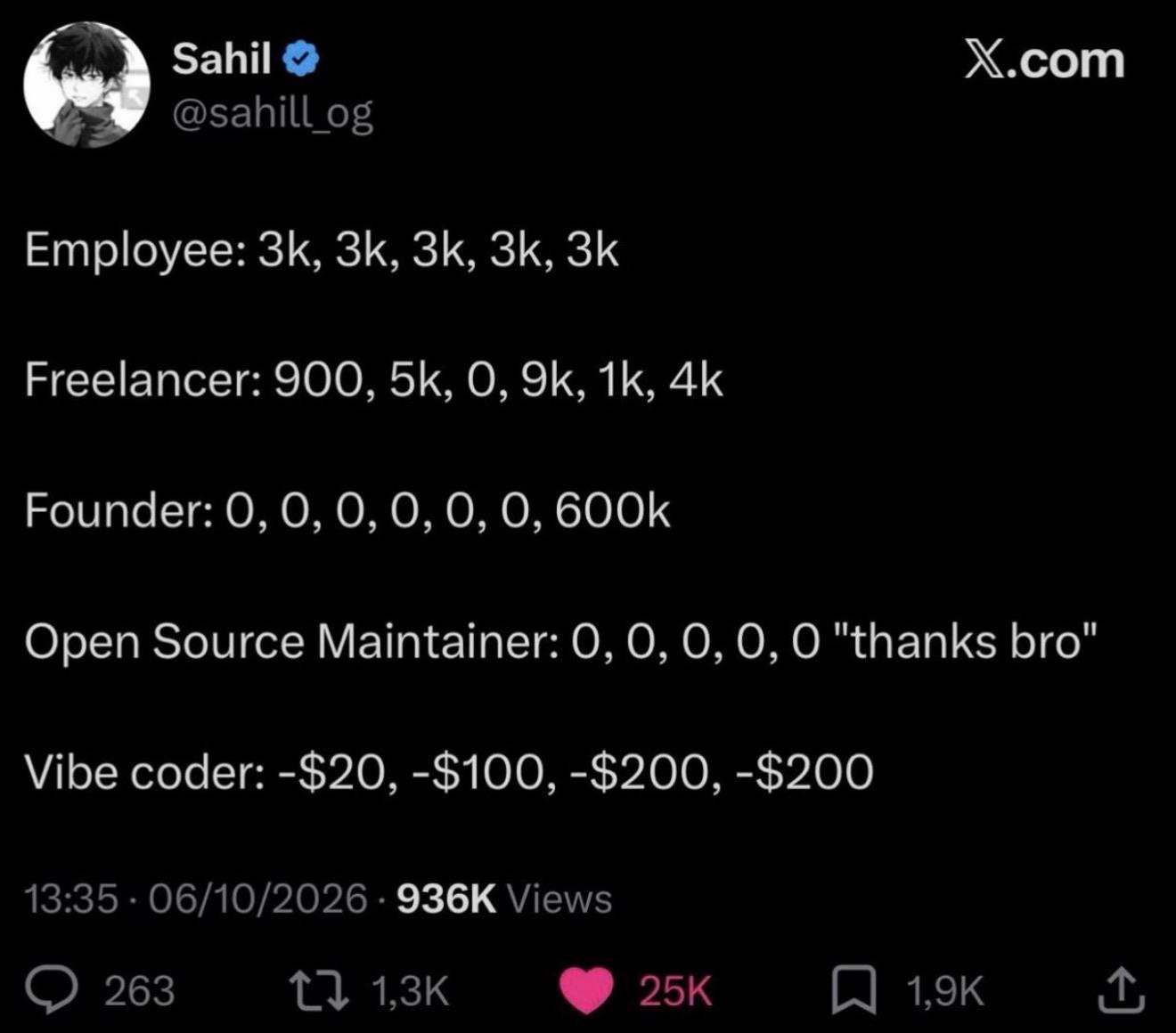
All Money Probably Went Into Nvidia GPUs

All Money Probably Went Into Nvidia GPUs
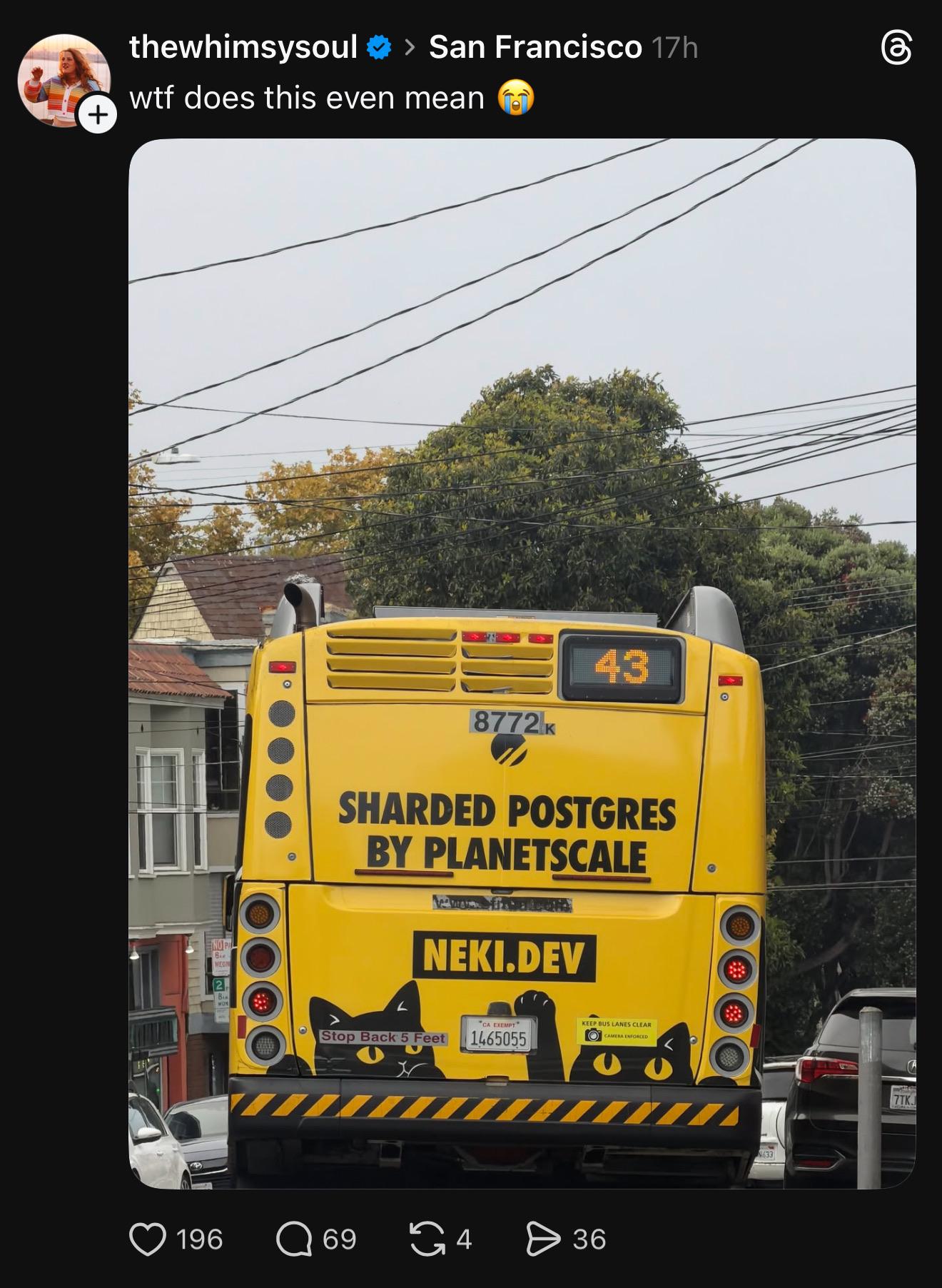
Running Postgres at scale for 800 million users while conveniently forgetting to contribute back to the open-source project that's literally holding your entire infrastructure together? Classic move. PostgreSQL is one of those legendary open-source databases that powers half the internet—from Instagram to Spotify—yet somehow companies rake in billions while the maintainers survive on coffee and GitHub stars. The goose's awkward retreat is basically every tech company when you ask about their open-source contributions. They'll spend $50 million on GPU clusters for their "revolutionary AI chatbot" but can't spare $10k for the database that's been rock-solid since before some of their engineers were born. The PostgreSQL team literally enables trillion-dollar valuations and gets... what, a shoutout in the docs? Fun fact: PostgreSQL doesn't even have a corporate sponsor like MySQL (Oracle) or MongoDB. It's maintained by a volunteer community and the PostgreSQL Global Development Group. So yeah, maybe toss them a few bucks between your next GPU shipment.

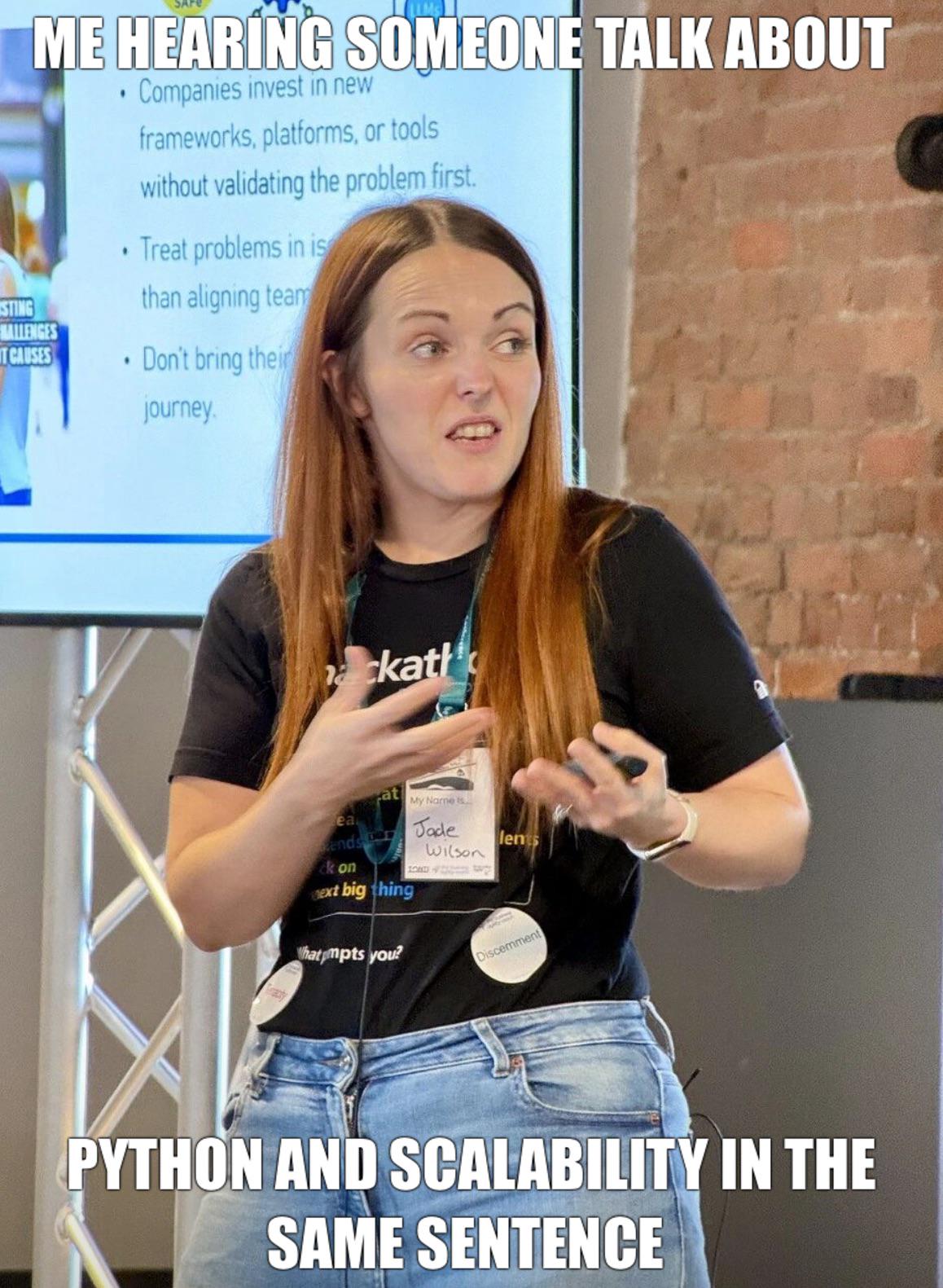
Python And Scalability In The Same Sentence

Python And Scalability In The Same Sentence
That visceral reaction when someone dares to mention Python and scalability together! Python's GIL (Global Interpreter Lock) is basically the relationship counselor that says "one thread at a time, please" - making true parallelism about as realistic as finishing a project before the deadline. Sure, you can use multiprocessing, but at that point you're just spawning separate Python instances like tribbles on a starship. The background presentation ironically warns about "investing in new frameworks without validating the problem first" while Python devs are frantically trying to AsyncIO their way out of performance bottlenecks. It's the language equivalent of bringing a butter knife to a gunfight and insisting it's actually a Swiss Army knife.

cocopar Portable Monitor 15.6 Inch 1080P FHD 60Hz 85% sRGB Travel Monitor with Speaker HDMI USB-C Second Screen for Laptop MacBook Surface PC Xbox PS4/5, VESA Mountable, with Cover Stand

cocopar Portable Monitor 15.6 Inch 1080P FHD 60Hz 85% sRGB Travel Monitor with Speaker HDMI USB-C Second Screen for Laptop MacBook Surface PC Xbox PS4/5, VESA Mountable, with Cover Stand
Portable Monitor for Laptops: Cocopar laptop screen extender is the ideal portable monitor for Macbook, Surface Pro, Surface Laptop, Lenovo Laptop, HP Laptop, Dell Laptop, ASUS Laptop, etc. This seco…

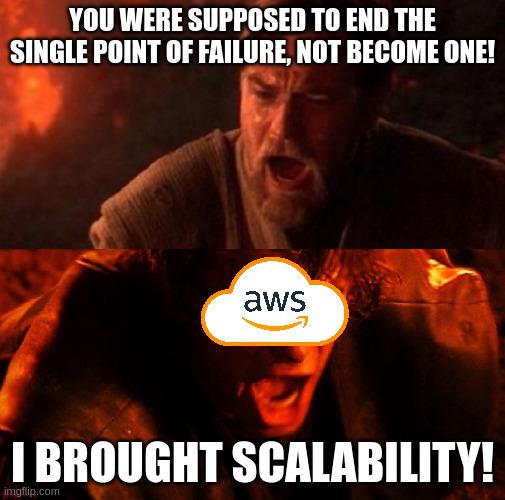
In A Galaxy Far Far Away But Still In Us-East-1

In A Galaxy Far Far Away But Still In Us-East-1
Ah, the classic cloud architect's lament. AWS promised us the holy grail of scalability, yet somehow became our new single point of failure. Nothing says "I've made a terrible mistake" quite like watching your entire infrastructure collapse because us-east-1 decided to take a coffee break. The irony burns hotter than Mustafar's lava. We migrated to the cloud to avoid downtime, only to discover we've just outsourced our problems to Jeff Bezos. Multi-region deployment? That was apparently on the roadmap right after "figure out how to decipher our own AWS bill."

The Next Billion Dollar App

The Next Billion Dollar App
Ah yes, the classic "prepare for a million users who will never come" syndrome. Nothing says "professional developer" quite like setting up Kubernetes clusters, load balancers, and sharded databases for an app that will be used exclusively by you, your mom, and that one supportive friend who clicks it once and never returns. It's basically the software equivalent of buying a Ferrari to drive to the mailbox. But hey, when that 691st user shows up, you'll be ready... any day now...

The Accidental DDoS Gangster

The Accidental DDoS Gangster
Ah, the classic "shoot the messenger" scenario, but make it tech! The script is pointing a gun at the API, which is desperately trying to shield the database from the incoming barrage of requests. For those who've ever written a script that hammered an API with requests until the database server caught fire, this hits different. Your innocent-looking for-loop just became a Tommy gun, and suddenly you're the villain in your own infrastructure gangster movie. Next time your DBA asks why the server crashed at 2PM, just show them this and slowly back away while maintaining eye contact.