

Reliability Memes

Posts tagged with Reliability
They Achieved Greatness

They Achieved Greatness
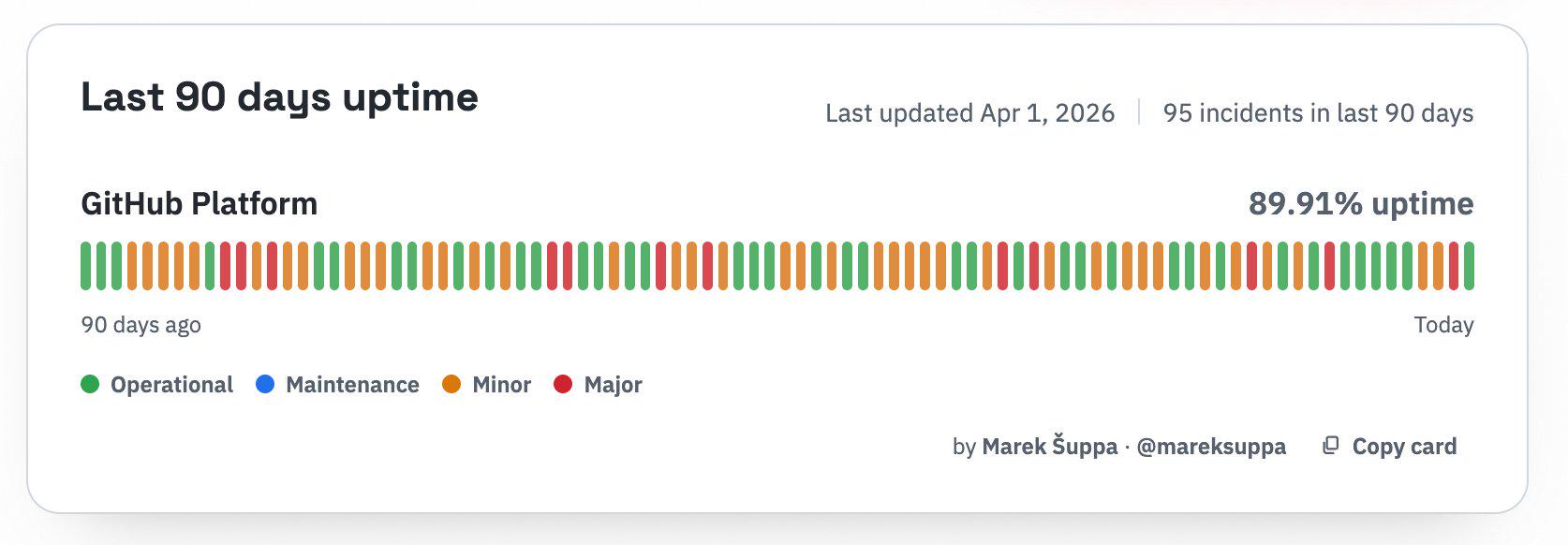
GitHub Platform flexing that sweet 89.91% uptime like it's a badge of honor. That's basically saying "we're only down 10% of the time!" which translates to roughly 9 days of downtime over 90 days. With 95 incidents sprinkled in there like confetti at a chaos party, this status page looks like a Christmas light display having an existential crisis. The bar graph is a beautiful mess of green (operational), orange (minor issues), and red (major outages) that screams "we're fine, everything's fine" while the building burns. For context, most enterprise SaaS platforms aim for 99.9% uptime (the "three nines"), so GitHub's sitting at a solid C+ here. But hey, when you're the monopoly of code hosting, who needs reliability? Developers will still push to main at 2 AM regardless.

It's Microslop

It's Microslop
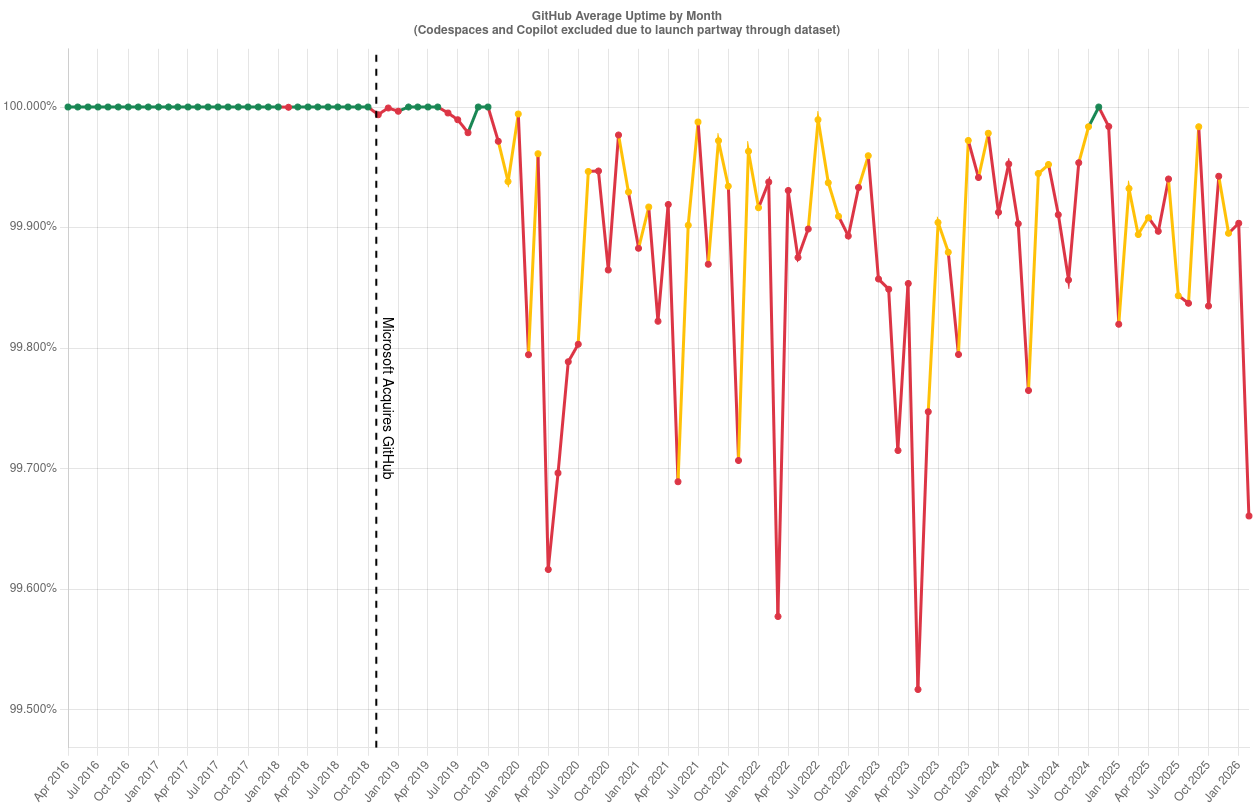
So GitHub was basically rock-solid for years until Microsoft acquired them in 2018, and suddenly the uptime chart looks like my heart rate monitor during a production deployment. That vertical line marking the acquisition is doing some heavy lifting here—it's literally the moment everything went from "five nines" to "five why's." The green line (pre-Microsoft) is flatter than a junior dev's learning curve, while the post-acquisition rainbow spaghetti of red and yellow is giving major "we migrated to Azure" vibes. Nothing says enterprise acquisition quite like turning a stable platform into a reliability roulette wheel. Fun fact: "Microslop" has been a beloved nickname in tech circles since the 90s, but charts like these keep it eternally relevant. At least they're consistent at being inconsistent.

Ninety Days Ninety Incidents Challenge Complete

Ninety Days Ninety Incidents Challenge Complete
GitHub's status page looking like a Christmas light display gone wrong. 90 incidents in 90 days is a perfect 1:1 ratio – that's the kind of consistency most engineers can only dream of achieving! The bar graph is basically a rainbow of chaos with more orange and red bars than a traffic jam simulator. The real kicker? They're still rocking 90.84% uptime, which technically means they met their SLA... probably. Someone's on-call rotation must feel like Groundhog Day, except instead of reliving the same day, you're just getting paged every single day. The DevOps team deserves hazard pay and therapy at this point.

A Company Worth $340 Bn, Ladies And Gentlemen

A Company Worth $340 Bn, Ladies And Gentlemen
Ah yes, nothing screams "enterprise-grade reliability" quite like a status dashboard that looks like a Christmas tree threw up on it. GitHub's monitoring page showing a sea of green checkmarks with scattered red and yellow bars everywhere is giving off MAJOR "everything is fine" dog-in-burning-room energy. The "hey little man hows it goin?" meme format paired with that unhinged smile is *chef's kiss* because it perfectly captures how GitHub casually presents this absolute chaos like it's just another Tuesday. Git Operations? Check! API Requests? Sure! Copilot? Why not! Everything's got those suspicious little red spikes that definitely don't indicate intermittent failures that will ruin your deploy at 4:59 PM on a Friday. The best part? This multi-billion dollar company's infrastructure status looks like someone's first attempt at a health monitoring dashboard, yet somehow we all just... accept it. Because what are you gonna do, switch to GitLab? Yeah, that's what I thought.

What If We Yeet The Data

What If We Yeet The Data
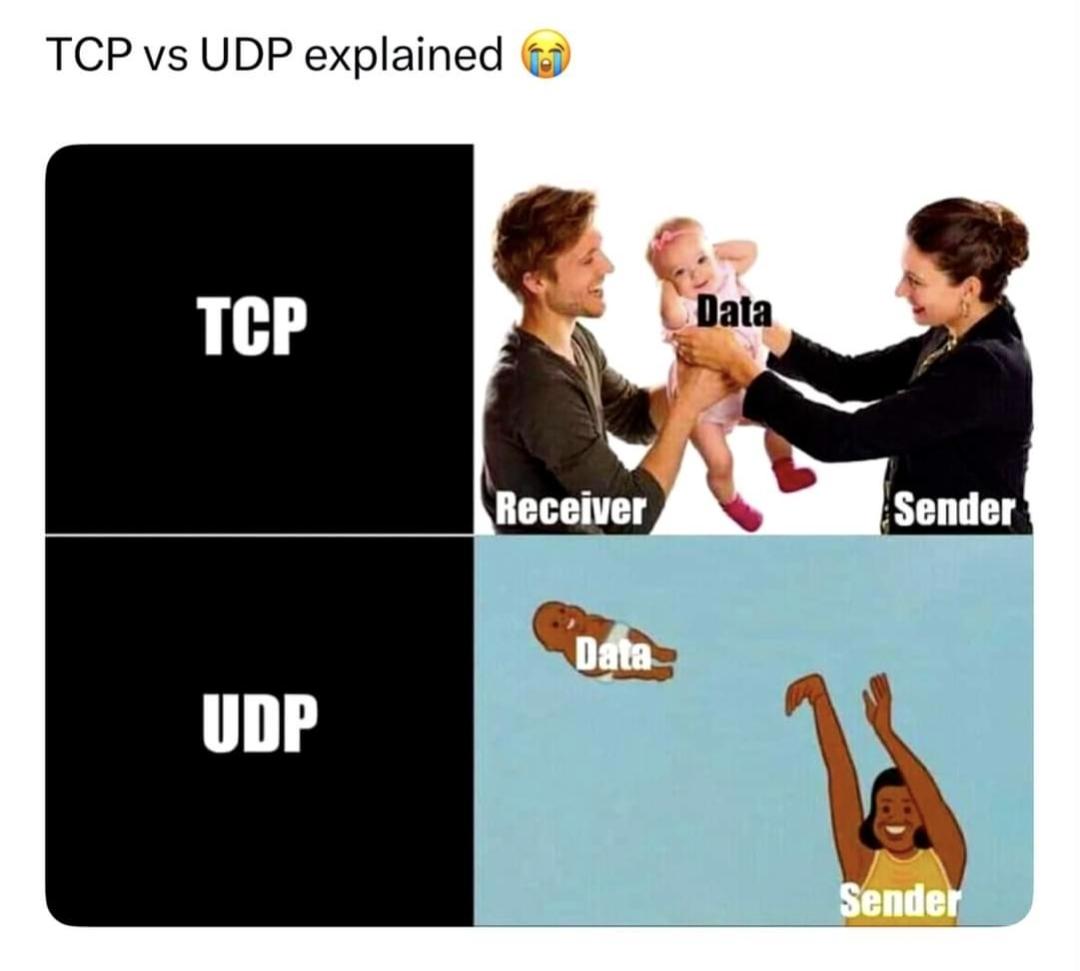
TCP is that overprotective parent who walks you through every step, confirms you got the message, and makes sure nothing gets lost. Meanwhile, UDP is out here just launching packets into the void like "good luck, buddy!" and moving on with its life. TCP does all the heavy lifting with its 3-way handshake, sequencing, acknowledgments, and retransmissions—basically the networking equivalent of sending a certified letter with tracking. UDP? Just yeeting data packets across the network with zero regard for whether they arrive or in what order. No handshake, no acknowledgment, no second chances. Fire and forget, baby. This is why video streaming and online gaming use UDP—because who cares if you lose a frame or two? But when you're downloading files or loading web pages, you better believe TCP is there making sure every single byte arrives intact. Choose your protocol based on whether you value reliability or just vibes.

Badum

Badum
When your company car is literally a Microsoft vehicle but you still can't trust it not to blue screen on the highway. The double meaning here is chef's kiss—"crash" as in software failure AND actual vehicular collision. It's like putting a Windows logo on anything automatically reduces its reliability by 40%. The driver probably boots up the ignition and waits 15 minutes for updates before every trip. At least when it crashes, they can just Ctrl+Alt+Delete and restart the engine, right?

I Lost Count At This Point

I Lost Count At This Point
Gaming platforms and their outages visualized as flatline heartbeat monitors. Every single service showing that familiar spike pattern—the digital equivalent of "not again." From ARC Raiders to VRChat, it's like they're all competing for who can go down more creatively. AWS is there too, naturally, because when AWS sneezes, half the internet catches a cold. The real joke is calling these "outages" when they're basically scheduled features at this point. Your multiplayer plans? The servers had other ideas.

It Happened Again

It Happened Again
When you've been riding that sweet 17-day streak of Cloudflare stability and suddenly wake up to half the internet being down. Again. Nothing quite like that sinking feeling when your perfectly working app gets blamed for being broken, but it's actually just Cloudflare taking a nap and bringing down a solid chunk of the web with it. The best part? Your non-tech manager asking "why is our site down?" and you have to explain that no, it's not your code this time—it's literally the infrastructure that's supposed to protect you from going down. The irony is chef's kiss. Pro tip: Keep a "Days Since Last Cloudflare Outage" counter in your Slack. It's like a workplace safety sign, but for the modern web.

Last Time For Sure

Last Time For Sure
That one kid in class who discovers status monitoring sites and suddenly becomes the herald of every Cloudflare outage. Seven weeks straight. At some point the teacher's just wondering if maybe, just maybe, the kid's router is the actual problem. But no—Cloudflare really does go down that often, and now everyone knows because this kid has appointed himself Chief Outage Officer. The internet's most reliable unreliable service strikes again.

You Dawg, I Heard You Like Downtime

You Dawg, I Heard You Like Downtime
Recursive downtime monitoring at its finest. When your monitoring service fails, who monitors the monitor? It's like needing a smoke detector for your smoke detector. The irony of relying on downdetector.com only to find it's also experiencing the void of nothingness we call "unplanned service interruption." Just another day in the life of an SRE wondering if the internet is actually down or if it's just their ISP having a moment.

If I Go Down I'm Taking You With Me

If I Go Down I'm Taking You With Me
Ah, the perfect digital murder-suicide! Your service crashes, but instead of letting the world know about your incompetence, you take down the monitoring service too. It's like unplugging the smoke detector during a house fire because the beeping is annoying. That Cloudflare logo just makes it *chef's kiss* - because nothing says "high availability" like being the single point of failure for half the internet. When your status page is hosted on the same infrastructure that's currently burning to the ground, you've achieved peak DevOps enlightenment.

The Cloud Reliability Myth

The Cloud Reliability Myth
Executives laughing hysterically at the fantasy they sell to clients about perfect cloud reliability. Meanwhile, every DevOps engineer watching this just had a nervous eye twitch remembering that 3 AM incident when AWS us-east-1 went down and took half the internet with it. The classic corporate disconnect between sales promises and technical reality—where uptime SLAs meet cold, hard distributed systems theory. Five-nines reliability? Sure, if you don't count "planned maintenance."