random Memes

Sounds A Bit Simple

Sounds A Bit Simple
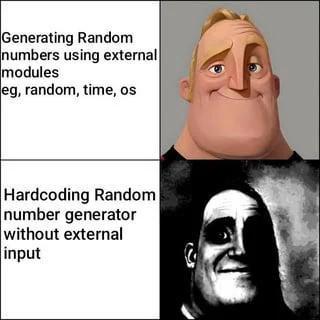
The classic "I'll just roll my own" energy right here. Using random , time , or os modules for random number generation? That's for normies who understand entropy and cryptographic security. Real chads hardcode their RNG by... wait, what? Just picking a number and calling it random? The top panel shows the sensible approach—leveraging well-tested external modules that actually use system entropy, hardware noise, or timing jitter to generate proper random numbers. The bottom panel? That's the developer who thinks return 4; // chosen by fair dice roll. guaranteed to be random. is peak engineering. It's deterministic chaos masquerading as randomness, and honestly, it's the kind of confidence that breaks cryptographic systems and makes security researchers weep into their coffee. Pro tip: If your random number generator doesn't involve at least some external entropy source, you're basically just writing fan fiction about randomness.

Buckshot Roulette: Python Edition

Buckshot Roulette: Python Edition
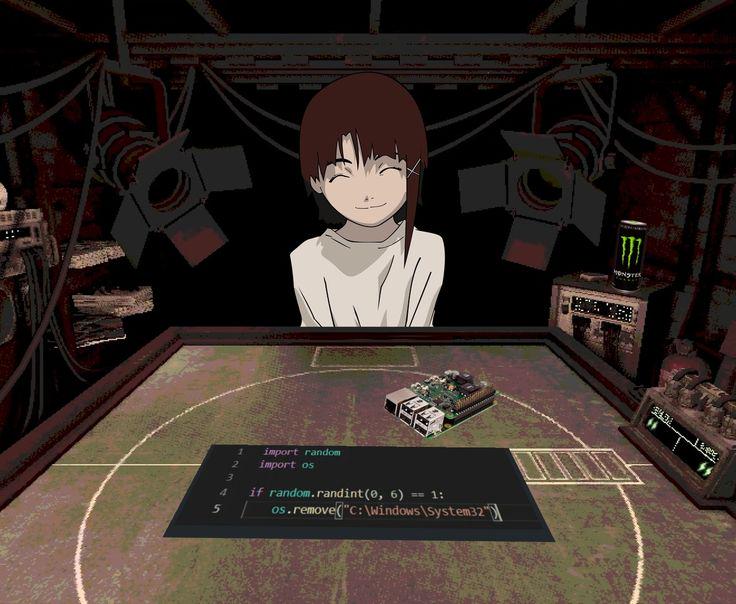
Ah, Russian Roulette for your Windows machine. A 1 in 6 chance of deleting System32, the digital equivalent of shooting yourself in the motherboard. The creepy anime character's smile says it all - they've seen many a developer's soul leave their body after running this script. Pro tip: Always keep your resume updated when playing with random number generators and system directories.

Wasted All Of My Generational Luck Just For This

Wasted All Of My Generational Luck Just For This
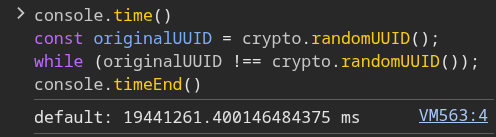
This poor soul generated a random UUID, then wrote a loop to keep generating new UUIDs until it matched the original one. Somehow, against astronomical odds (we're talking "winning every lottery simultaneously while being struck by lightning" odds), it actually worked. That 194 million milliseconds? That's about 2.25 days of execution time. The universe clearly decided to waste a miracle on the most useless achievement in programming history.

Well It Does Exactly What It Says

Well It Does Exactly What It Says
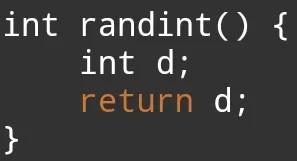
Ah yes, the most deterministic random number generator ever created. This function declares an uninitialized integer 'd', then immediately returns it. Congratulations, you've successfully implemented a "random" number generator that returns whatever garbage value happened to be sitting in that memory location. It's random in the sense that you have no idea what you're getting, but it's definitely not what anyone requesting a random number would want. Task failed successfully.

Guaranteed Random

Guaranteed Random
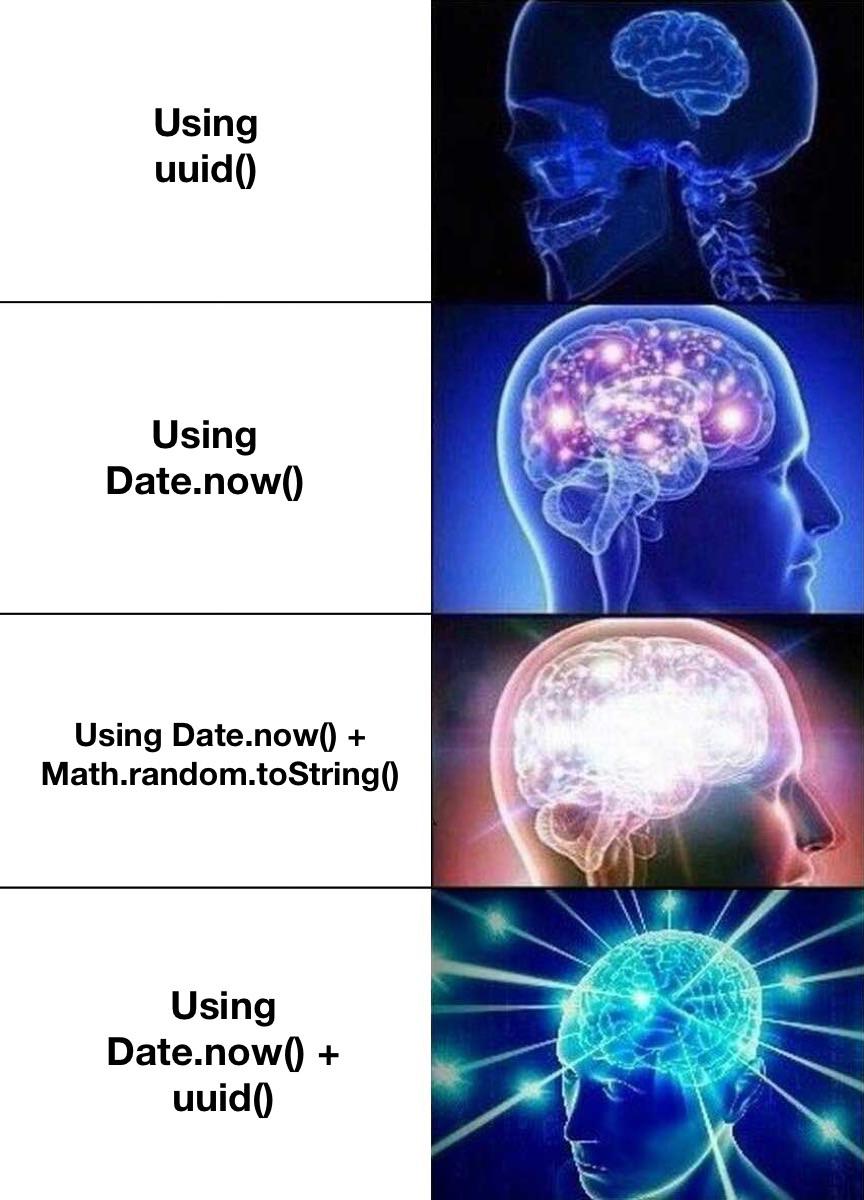
The evolution of a developer's "random" number generation techniques is a journey through increasingly elaborate overkill: First, you start with uuid() like a reasonable person. Then you discover Date.now() and think "timestamps are random enough, right?" (Narrator: they weren't). But wait! What if we combine timestamp + Math.random()? Now we're cooking with paranoia! And finally, the nuclear option: timestamp + uuid() because clearly the universe itself isn't random enough without our help. Meanwhile, cryptographers are quietly sobbing in the corner while production systems generate "totally random" IDs that are just timestamps with extra steps.

Vibe Coded Random Pseudo Code

Vibe Coded Random Pseudo Code
Oh. My. GOD. The absolute AUDACITY of calling this a "random" function! 🙄 Some genius decided that the PEAK of randomness is asking ChatGPT for a seahorse emoji and calling it a day. Because nothing says "unpredictable results" like the EXACT SAME RESPONSE EVERY SINGLE TIME! Honey, that's about as random as a train schedule in Switzerland. Next time just write return 4 and call it "random" – at least be honest about your commitment issues with actual randomness! 💅

Russian Roulette: Python Edition

Russian Roulette: Python Edition
The digital equivalent of playing with fire! This Python script randomly generates a number between 0 and 5, and if it hits 1 (a 1/6 chance), it executes os.remove("C:\Windows\System32") – effectively nuking your Windows operating system. It's the coding version of "hold my beer and watch this." The best part? You'd have to run this as admin for it to work, which means someone would willingly give this disaster permission to happen. That's not debugging – that's de-everything.

Make The Random Function More Random

Make The Random Function More Random
Product manager: "The random function isn't random enough." Developer: "What does that even mean?" PM: "It needs to be more random. Make it randomier." The number of times I've had to explain that pseudorandom number generators are deterministic by design is directly proportional to my growing collection of gray hairs. Next they'll ask for the random function to generate numbers they personally like better.

We Have Uuid At Home

We Have Uuid At Home
When your boss says "No, we can't use a UUID library" and you're left crafting this monstrosity. It's the programming equivalent of making a sandwich with a chainsaw - technically possible, but deeply concerning. The code is basically generating a fake UUID by replacing placeholders with random hex values. It's like putting on a fake mustache and hoping nobody notices you're not Tom Selleck. Works until it doesn't!

The DIY Random Number Disaster

The DIY Random Number Disaster
Senior devs watching juniors implement their own "random" number generator: 4... chosen by fair dice roll... guaranteed to be random. Nothing strikes fear into a cryptographer's heart quite like someone deciding to roll their own randomness. Sure, importing libraries feels like cheating, but at least your app won't have the security strength of a wet paper bag.

The Most "Random" String Ever Generated

The Most "Random" String Ever Generated
Google Gemini just gave the most "random" string in the history of random strings. Nothing says "I'm definitely not using a pattern" like literally using the alphabet followed by sequential numbers. That's like asking for a random password and getting "password123". Next they'll tell us their favorite dice roll is always 3.5.

Gambling With System32 Roulette

Gambling With System32 Roulette
Ah, Russian Roulette: Programmer Edition. Nothing says "I trust my code" like a 1 in 6 chance of nuking your system32 folder. The character Lain (from Serial Experiments Lain) smiling while running code that could delete your entire Windows installation is peak chaotic energy. It's that same energy as pushing to production on Friday at 4:59 PM. "It works on my machine" takes on a whole new meaning when your machine might not work tomorrow. The Monster energy drink in the corner is the cherry on top - because you'll need that caffeine when you're rebuilding your OS at 3 AM.