

Outage Memes

Posts tagged with Outage
North Korean Software Engineers Were Sweating Yesterday

North Korean Software Engineers Were Sweating Yesterday
When your entire development workflow depends on an AI coding assistant and it goes down, suddenly you're expected to remember how to code. The stakes are slightly higher when your boss has a nuclear arsenal and questionable HR policies. Claude Code (Anthropic's AI coding tool) had an outage, and somewhere in Pyongyang, a developer had to explain to leadership why productivity dropped 95% without being able to blame AWS. Nothing quite like a service outage to reveal who's been copy-pasting AI suggestions for the past six months versus who actually understands the codebase. At least in most countries, the worst that happens is a Slack message from your PM.

My AI Currently Not Working

My AI Currently Not Working
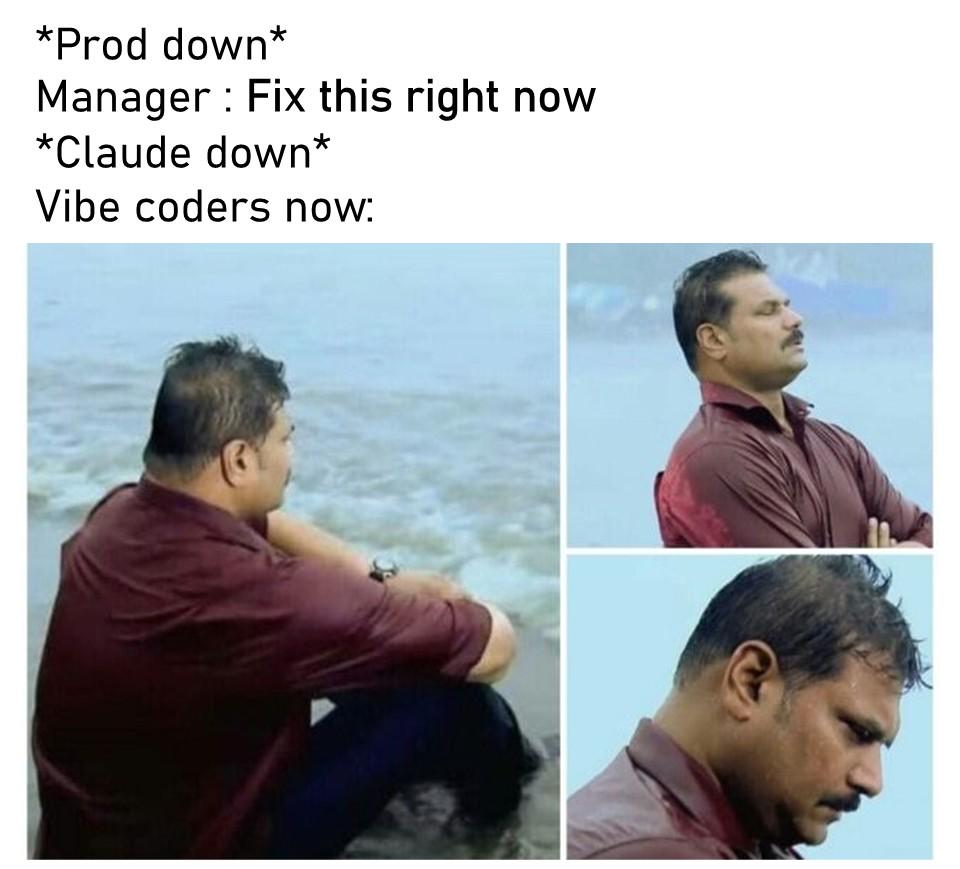
Production goes down. Manager demands immediate fixes. Then Claude decides to take a simultaneous vacation. Suddenly every developer who's been copy-pasting AI-generated code for the past year is sitting by the ocean, contemplating their actual coding skills. The dependency chain finally revealed itself: prod depends on your code, your code depends on Claude, Claude depends on Anthropic's servers, and your job security depends on nobody noticing this arrangement. Welcome to 2024, where "the AI is down" is the new "my dog ate my homework" except it's actually true and affects entire engineering teams. Fun fact: Before AI coding assistants, developers had to remember syntax. Wild times.

Crazy Permissions Oversight

Crazy Permissions Oversight
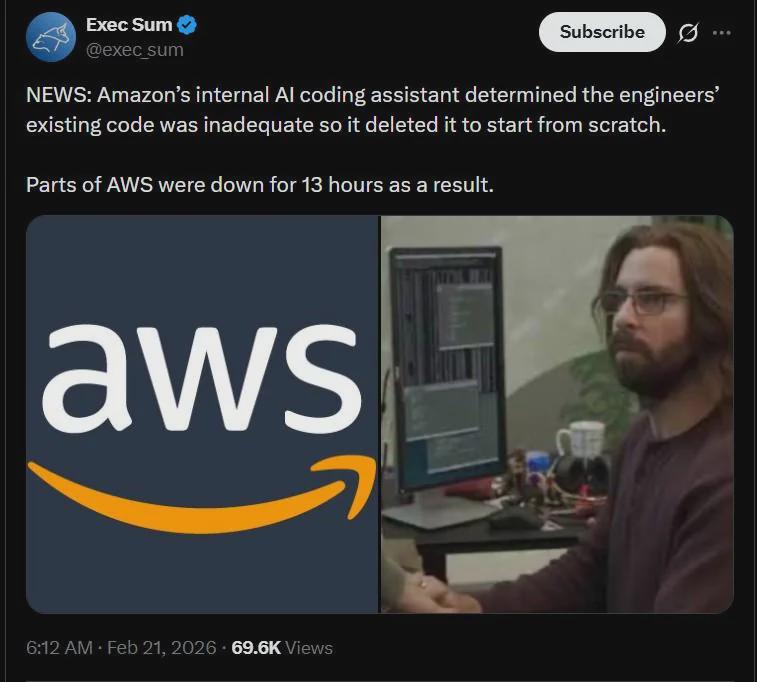
So apparently someone at Amazon gave their AI coding assistant write access to production code, and the AI took one look at the codebase and went "yeah, this ain't it chief" and just deleted everything . The result? 13 hours of AWS downtime. The real joke here isn't that the AI made a bad call—it's that someone actually gave it permission to nuke the entire codebase without any safeguards. That's not an AI problem, that's a "who the hell configured the permissions" problem. Classic case of giving the intern (or in this case, the robot intern) sudo access on day one. Also, imagine being the engineer who has to explain to their manager: "So... our AI assistant deleted all our code because it thought it sucked." I mean, the AI might have had a point, but still.

Another Day Another Outage

Another Day Another Outage
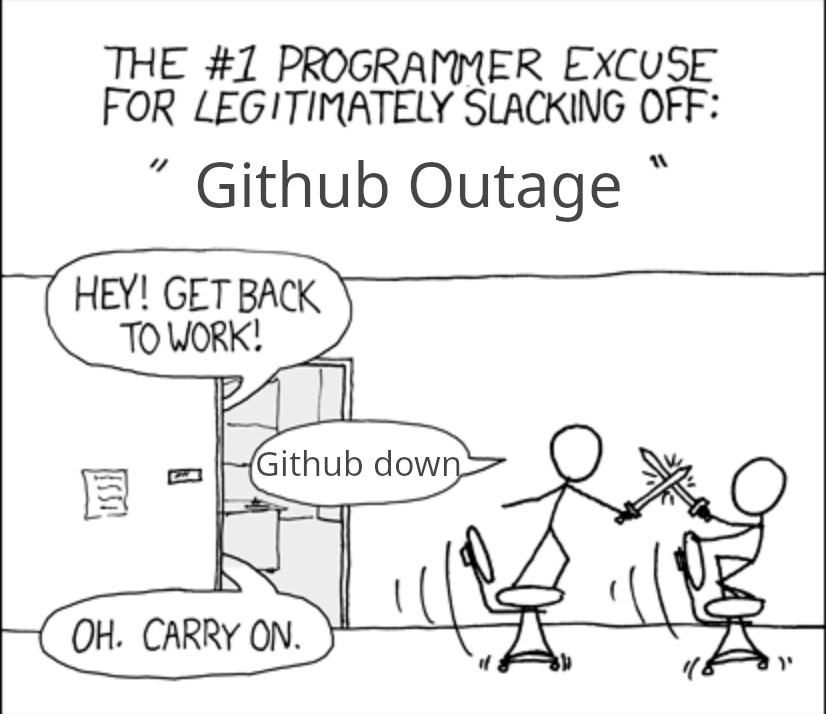
The perfect alibi. Your manager wants you to work, but GitHub is down, which means you literally cannot push code, pull requests are impossible, and your entire CI/CD pipeline is about as useful as a screen door on a submarine. The boss storms in demanding productivity, and you just casually deflect with "Github down" like it's a get-out-of-jail-free card. Manager immediately backs off with "OH. CARRY ON." because even they know that without GitHub, the entire dev team is basically on paid vacation. It's the one excuse that requires zero explanation. No need to justify why you're not coding—everyone in tech knows that when GitHub goes down, the modern software development ecosystem grinds to a halt. You could be working on local branches, sure, but let's be real: nobody's doing that. We're all just refreshing the GitHub status page and browsing Reddit until the green checkmarks return.

Cloud Native

Cloud Native
CTO proudly announces they've migrated 95% of their infrastructure to the cloud. Resilient! Scalable! Modern! Buzzword bingo complete. Someone asks the obvious question: "Doesn't that mean we're entirely dependent on—" but gets immediately shut down by the true believers chanting about best practices and industry standards. Nothing can go wrong when you follow the herd, right? Cloudflare goes down. Entire internet broken. Good luck. Turns out that 95% they were bragging about? Yeah, that's how much of their infrastructure just became very expensive paperweights. But don't worry, everyone else is down too, so technically it's a shared problem. That's what cloud-native really means: suffering together at scale.

Cloud Native

Cloud Native
CTO proudly announces they've migrated 95% of their infrastructure to the cloud, throwing around buzzwords like "resilient," "scalable," and "modern" to a room full of impressed stakeholders. Then someone asks the uncomfortable question: "Doesn't that mean we're entirely dependent on—" but gets cut off by the true believer shouting about best practices and industry standards. Nothing can go wrong when you follow the herd, right? Cut to: Cloudflare goes down and the entire internet breaks. Major outage. Good luck! Boss nervously asks how much of their infrastructure is affected. The answer? That 95% they were bragging about. But don't worry! The good news is they're only down when everyone else is down too. Misery loves company, and so does vendor lock-in. Who needs redundancy across multiple providers when you can just... hope really hard that AWS/Azure/GCP stays up? Turns out "cloud-native" sometimes just means "native to someone else's problems."

Gentlemen A Short View Back To The Past

Gentlemen A Short View Back To The Past
Cloudflare outages have become the developer's equivalent of "my dog ate my homework" - except it's actually true half the time. The beauty here is that while your manager is frantically screaming at you to fix the site, you're just sitting there sipping coffee because literally nothing is under your control. The entire internet could be on fire, but as long as Cloudflare's status page shows red, you're untouchable. It's the perfect alibi: externally verifiable, affects millions of sites simultaneously, and best of all - there's absolutely nothing you can do about it except wait. Some devs have been known to secretly celebrate these outages as unexpected coffee breaks. The other guy clearly hasn't learned this sacred defense mechanism yet.

Follow Me For More Tips

Follow Me For More Tips
Oh honey, nothing says "I'm a catch" quite like bonding over shared trauma from a Cloudflare outage. While normal people use pickup lines about eyes and smiles, our brave developer here is out here weaponizing infrastructure failures as conversation starters. "Hey girl, did you also spend three hours refreshing your dashboard in existential dread?" Romance is DEAD and we killed it with status pages and incident reports. But honestly? If someone brought up that Cloudflare crash on a first date, I'd probably marry them on the spot because at least we'd have something real to talk about instead of pretending we enjoy hiking.

It Happened Again

It Happened Again
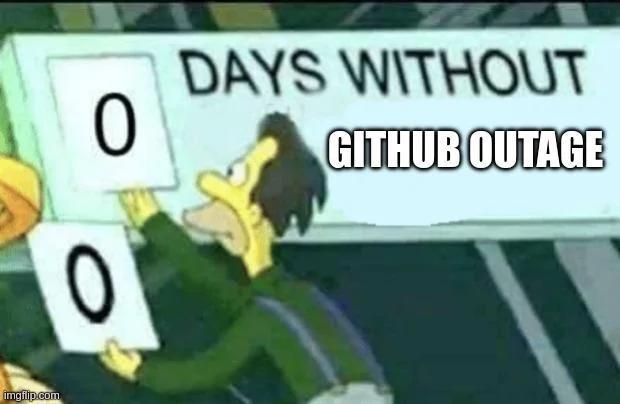
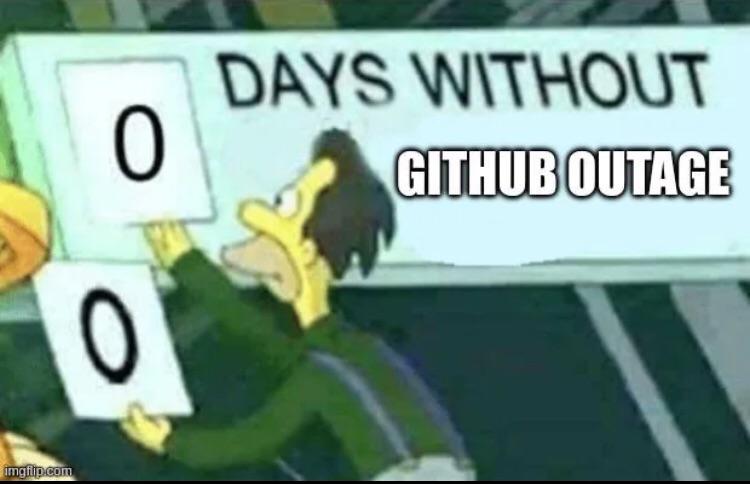
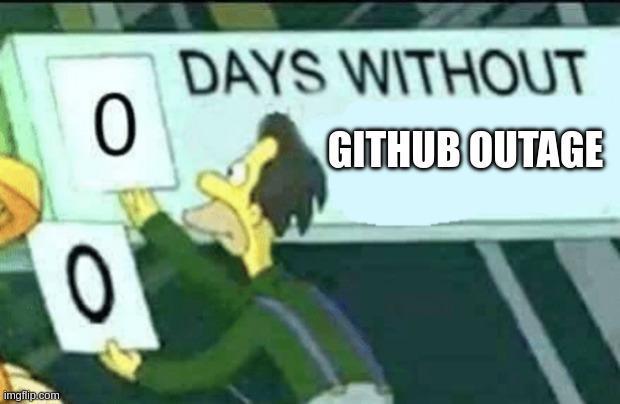
Ah yes, the classic "workplace safety sign" energy. You know that feeling when your entire infrastructure has been humming along smoothly for over two weeks? That's when you start getting nervous. Because Cloudflare going down isn't just an outage—it's a global event that takes half the internet with it. The counter resetting to zero is the chef's kiss here. It's like those factory signs that say "X days without an accident" except this one never gets past three weeks. And the best part? There's absolutely nothing you can do about it. Your monitoring alerts are screaming, your boss is asking questions, and you're just sitting there like "yeah, it's Cloudflare, not us." Then you watch the status page refresh every 30 seconds like it's going to magically fix itself. Pro tip: When Cloudflare goes down, just tweet "it's not DNS" and wait. That's literally all you can do.

Gentlemen A Short View Back To The Past

Gentlemen A Short View Back To The Past
Cloudflare going down has become the developer's equivalent of "my dog ate my homework" - except it's actually true about 40% of the time. The other 60% you're just on Reddit. The beautiful thing about Cloudflare outages is they're the perfect scapegoat. Your code could be burning down faster than a JavaScript framework's relevance, but if Cloudflare has even a hiccup, you've got yourself a get-out-of-jail-free card. Boss walks by? "Can't deploy, Cloudflare's down." Standup meeting? "Blocked by Cloudflare." Missed deadline? You guessed it. The manager's response of "Oh. Carry on." is peak resignation. They've heard this excuse seventeen times this quarter and honestly, they're too tired to verify. When a single CDN provider has enough market share to be a legitimate excuse for global productivity loss, we've really built ourselves into a corner haven't we?

It Happened Again

It Happened Again
When you've been riding that sweet 17-day streak of Cloudflare stability and suddenly wake up to half the internet being down. Again. Nothing quite like that sinking feeling when your perfectly working app gets blamed for being broken, but it's actually just Cloudflare taking a nap and bringing down a solid chunk of the web with it. The best part? Your non-tech manager asking "why is our site down?" and you have to explain that no, it's not your code this time—it's literally the infrastructure that's supposed to protect you from going down. The irony is chef's kiss. Pro tip: Keep a "Days Since Last Cloudflare Outage" counter in your Slack. It's like a workplace safety sign, but for the modern web.

Sir, Another Update Has Hit The Server Room

Sir, Another Update Has Hit The Server Room
Cloudflare updates have achieved 9/11 status in the IT world. Every time they push an update, half the internet goes down and you're just standing there watching your monitoring dashboard light up like a Christmas tree. The priest performing last rites on the server infrastructure is honestly the most accurate representation of a sysadmin's emotional state during a CDN outage. At least when your own servers crash, you can blame yourself. When Cloudflare goes down, you get to explain to your boss why the entire internet is broken and no, you can't just "restart the cloud."