

Git blame Memes

Posts tagged with Git blame
It Wasn't Me

It Wasn't Me
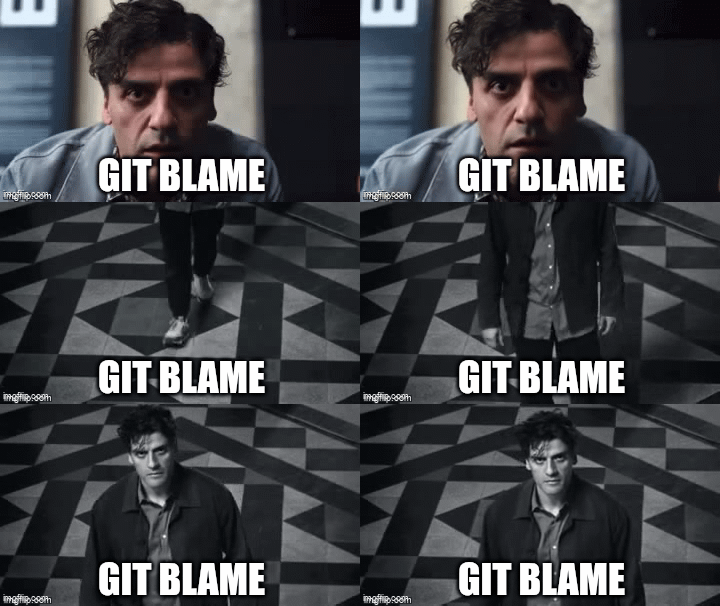
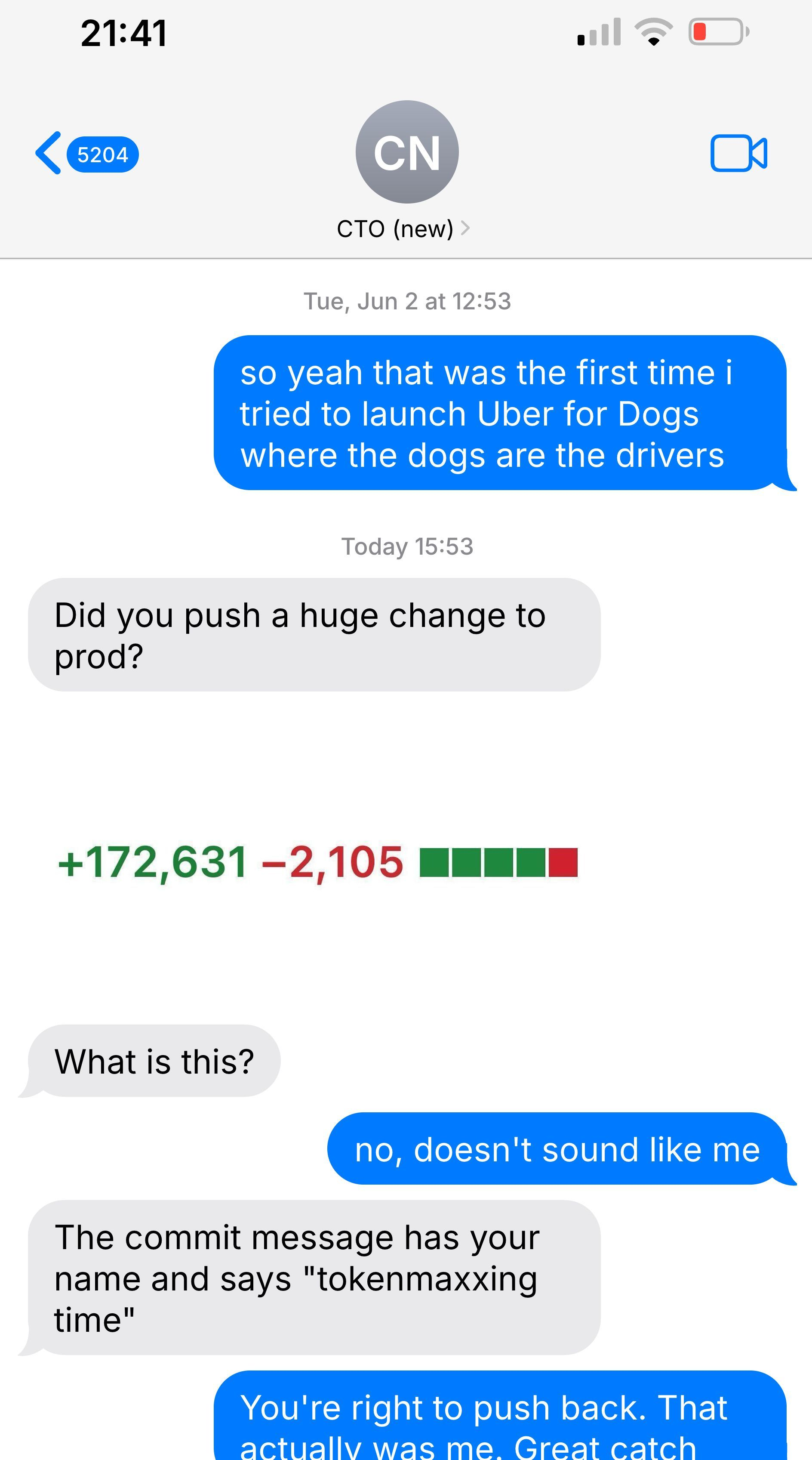
Oh honey, the absolute BETRAYAL of running git blame on some cursed code only to discover that the culprit is... YOU. From three years ago. On a Friday. Because of COURSE it was a Friday—when your brain was already halfway to happy hour and you were just yeeting code into production like confetti at a parade. The way this developer goes from confident detective to having a full-blown existential crisis is *chef's kiss*. Nothing quite matches the horror of realizing you're not hunting down some incompetent colleague—you're staring into a mirror of your past self's crimes against coding. The ghost of Friday Past has come to haunt you, and it's wearing YOUR face.

Never Say Never

Never Say Never
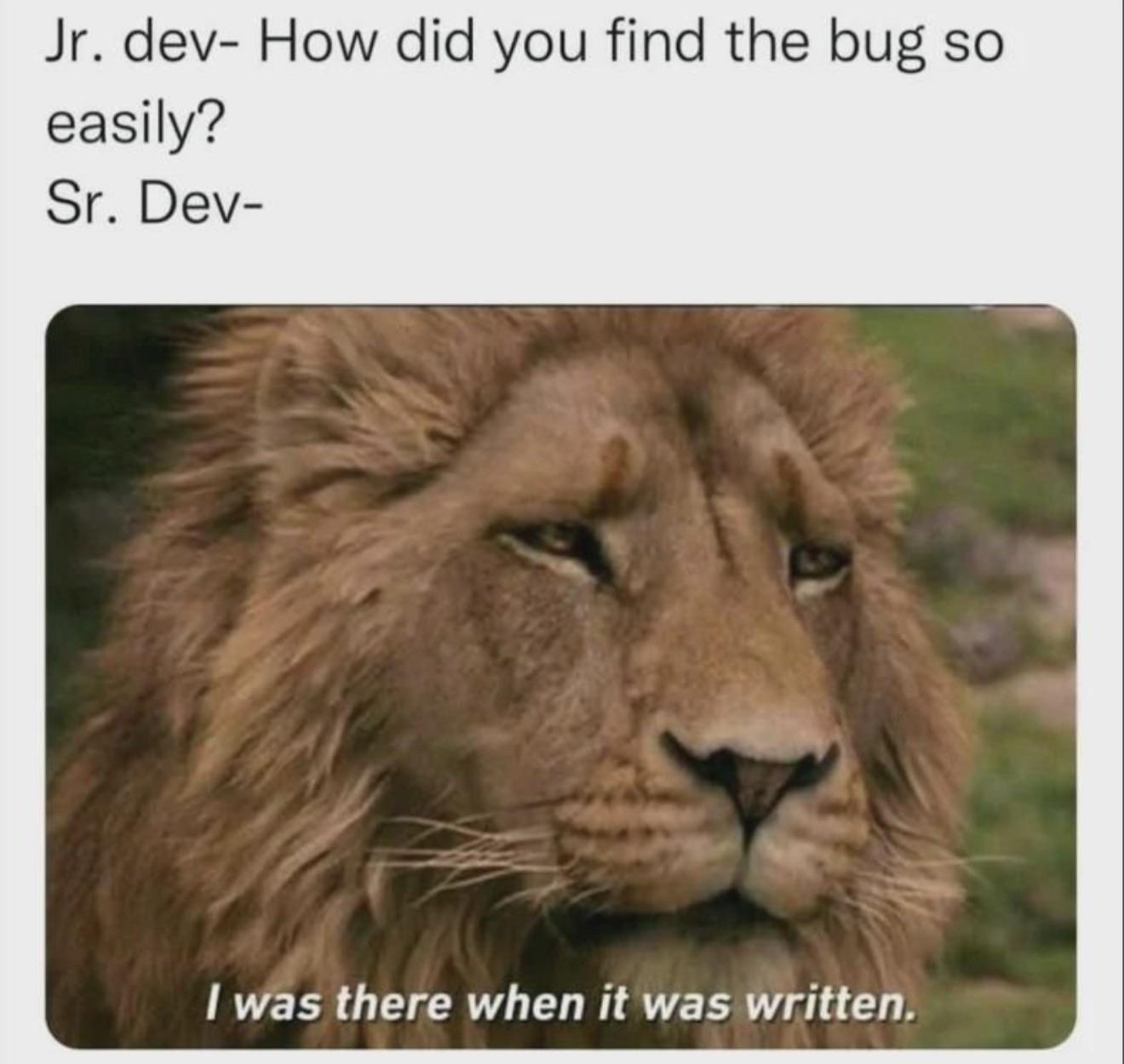
You know that monstrosity you wrote years ago? The one that makes you physically recoil when you see it in the codebase? Yeah, that 1,200-line behemoth with nested if-else statements so deep you need a map and a flashlight to navigate them. You promised yourself you'd refactor it "someday" and then conveniently forgot it existed. Fast forward to today: a critical bug appears, or worse, a "simple" feature request that touches that exact function. Now you're stuck wrestling with your past self's crimes against clean code. The best part? You can't even blame anyone else because git blame points straight at you. Nothing quite captures that special blend of regret, horror, and resignation like having to debug your own spaghetti code from 2019.

The Vibes Are Different Now

The Vibes Are Different Now
That moment when you revisit your own code from 24 hours ago and it feels like you're doing forensic archaeology on an alien civilization. You know you wrote it. Your git blame confirms it. But the logic? The variable names? The architectural decisions? Completely unrecognizable. It's like past-you was in a different mental state entirely—maybe caffeinated, maybe sleep-deprived, definitely operating on a wavelength that present-you can no longer access. The mounting horror as you realize you'll need to actually understand this before you can modify it is palpable. Pro tip: future-you is already judging the code you're writing right now.

What Should You Never Ask Them

What Should You Never Ask Them
You know those sensitive topics people avoid at dinner parties? Well, tech has its own version. Don't ask a woman her age, don't ask a man his salary, and whatever you do, don't ask a "vibe coder" to explain their commit messages. Because let's be real—that commit history is a warzone of "fix bug", "asdfasdf", "PLEASE WORK", and "I have no idea what I changed but it works now". Asking them to explain their commits is like asking someone to justify their life choices at 2 AM. It's not gonna end well. The "vibe coder" just codes by feel, ships features, and hopes nobody ever runs git blame on their work. Documentation? That's future-them's problem.

Always The Ones You Suspect The Most

Always The Ones You Suspect The Most
The Scooby-Doo unmasking format strikes again, but instead of revealing the villain, we're exposing the real culprit behind production bugs: ourselves. You spend hours blaming the framework, the compiler, legacy code, that one intern from 2019, maybe even cosmic radiation flipping bits in RAM. But when you finally trace through the git blame and check the commit history, surprise! It was your own code from 3 AM last Tuesday when you thought you were being clever with that "quick fix." The real horror isn't finding bugs—it's discovering you're the villain in your own debugging story. At least when it's someone else's code, you can feel morally superior while fixing it. When it's yours? Just pure existential dread and a strong desire to delete your commit history.

Sand People Override Single Files To Hide Their Blunders

Sand People Override Single Files To Hide Their Blunders
That beautiful moment when someone asks if you trust the code in the repository and you're like "absolutely not, I wrote half of it." Nothing says professional software development quite like being your own worst enemy in code review. We've all been there - scrolling through git blame only to discover that the person who committed that atrocious hack at 2 AM was... yourself. The real kicker? You probably left a comment like "// TODO: fix this properly later" and that was 3 years ago. The title's reference to overriding single files is chef's kiss - because yeah, sometimes you just quietly push that one file with --no-verify and hope nobody notices your sins in the commit history.

The Ritual Of Professional Complaining

The Ritual Of Professional Complaining
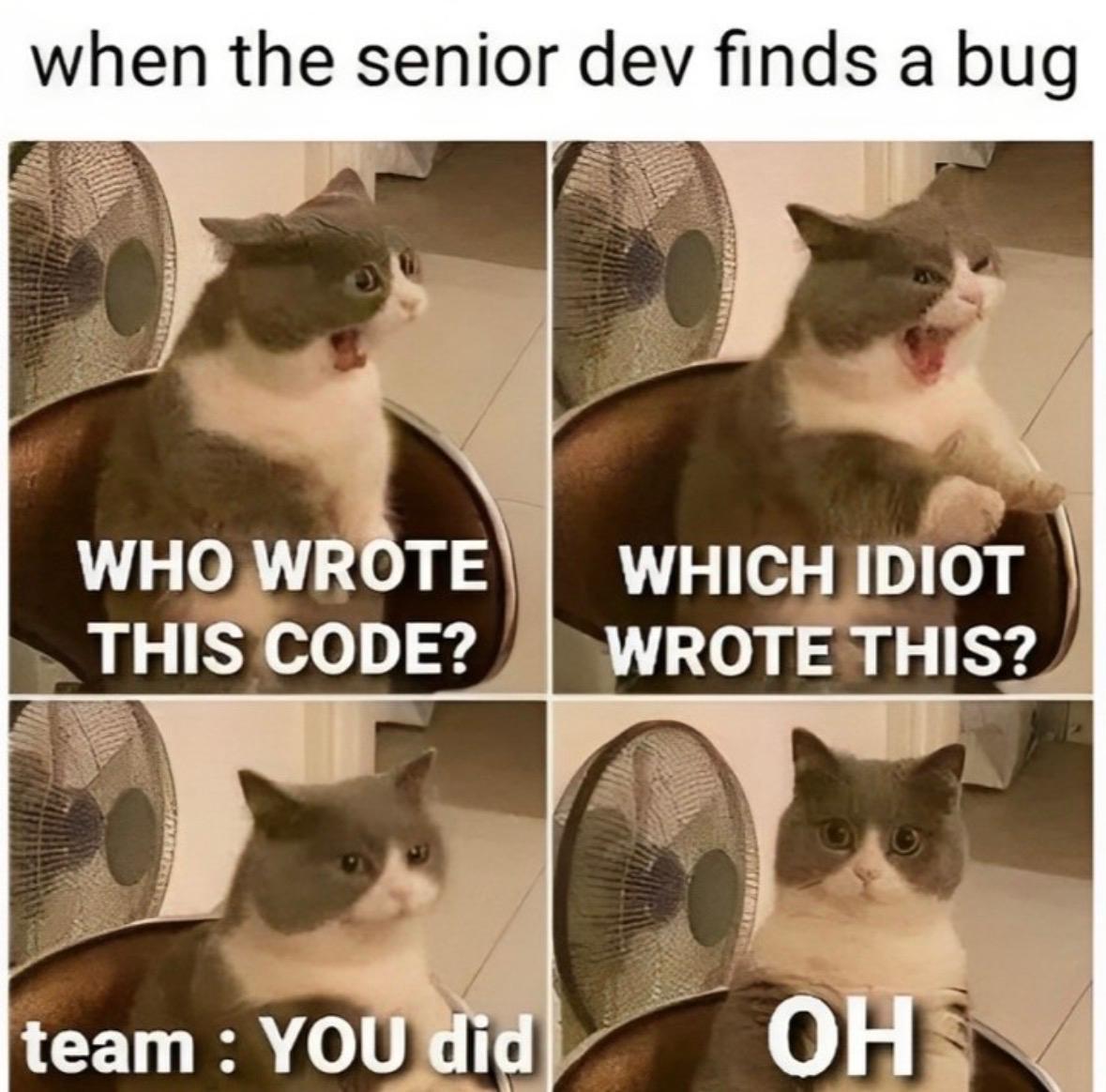
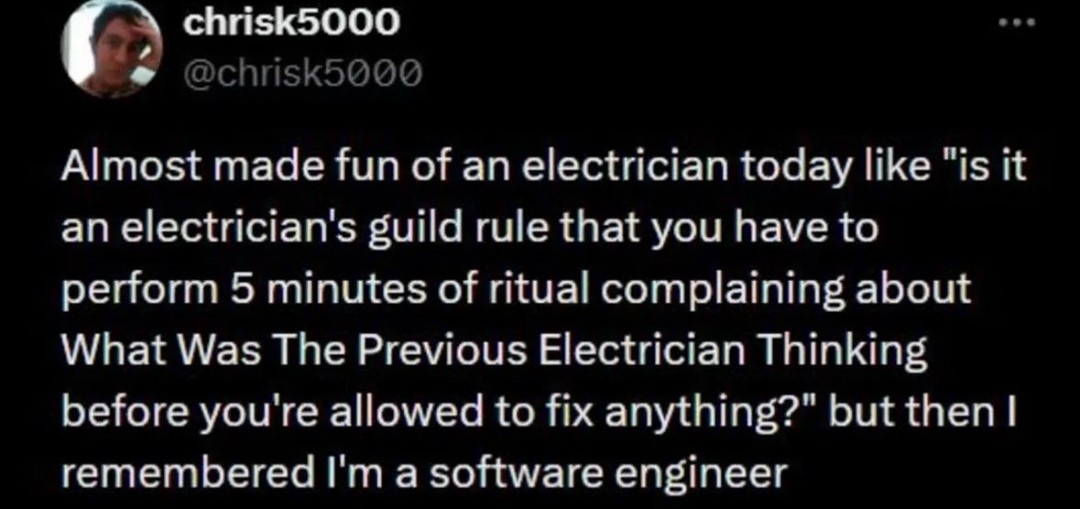
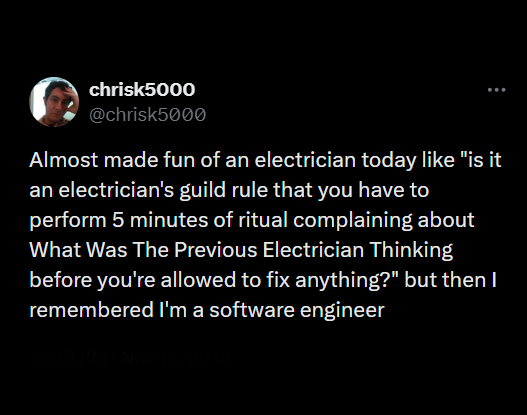
The pot calling the kettle black has never been so ironic. Software engineers spend half their careers staring at legacy code muttering "who wrote this garbage?" before checking git blame and discovering it was themselves three months ago. The sacred ritual of cursing your predecessors' code is basically our version of a stand-up meeting - mandatory and therapeutic. Next time you're refactoring some unholy mess, remember: somewhere, an electrician is looking at your home wiring thinking the exact same thing.

Who Was This Idiot

Who Was This Idiot
The self-awareness is painful . Nothing unites software engineers quite like staring at someone else's code and muttering "what absolute maniac wrote this garbage?" only to run git blame and discover it was you 6 months ago. The sacred ritual of complaining about legacy code is practically in our job description at this point. At least electricians have actual wires to untangle - we're just untangling the fever dreams of caffeinated developers who thought variable names like temp1 , temp2 , and finalTempForReal were perfectly reasonable.

The Arsonist Firefighter Syndrome

The Arsonist Firefighter Syndrome
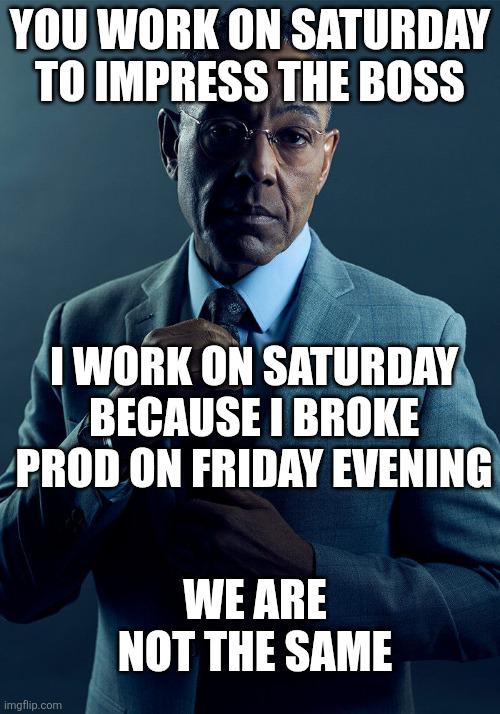
The classic "hero-villain duality" of software development. You push that sketchy hotfix to production at 4:58 PM on Friday, everything breaks over the weekend, and by Monday morning you've "heroically" fixed your own disaster. The boss is none the wiser as you accept praise with that panicked Muppet face, knowing you're one git blame away from exposure. The circle of tech life.

Or You Can But No One Will Believe You

Or You Can But No One Will Believe You
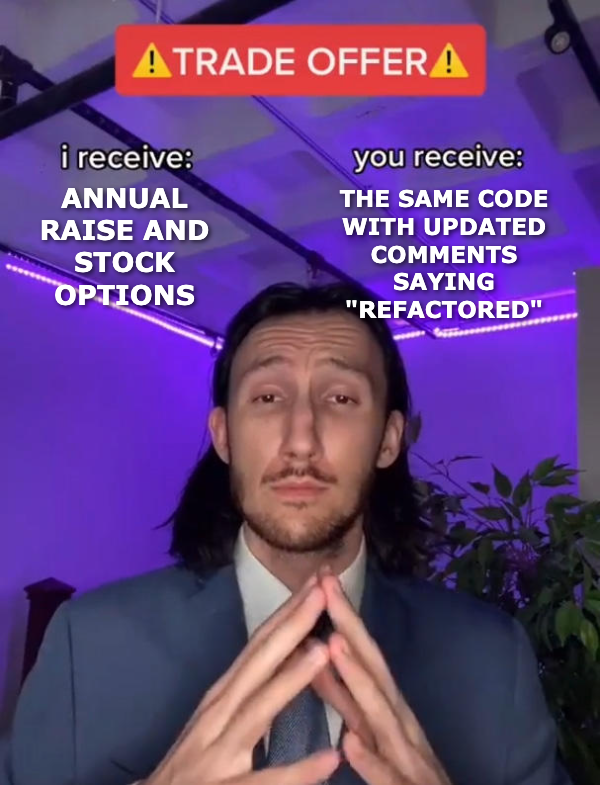
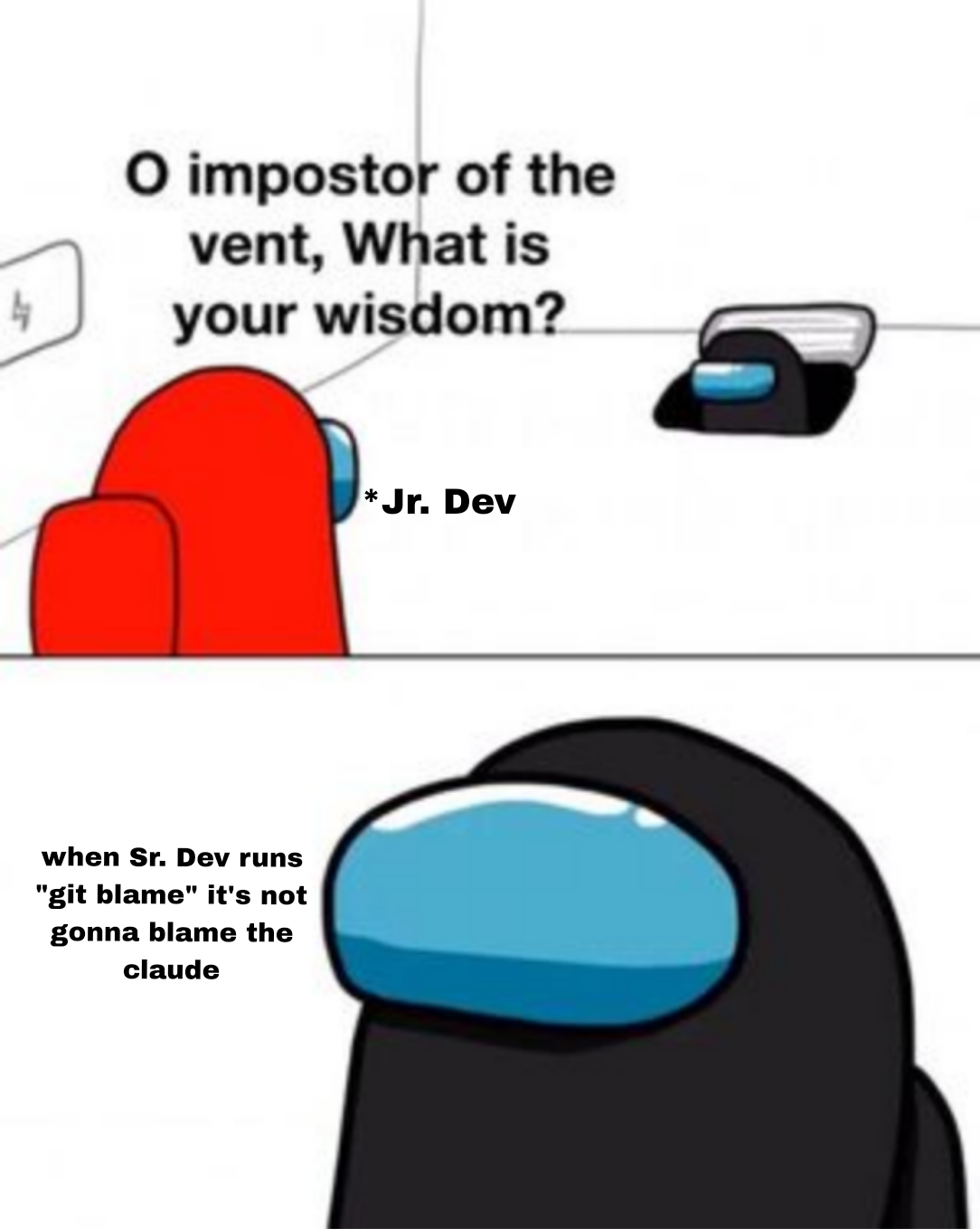
That moment when you watch helplessly as a senior dev rewrites your perfectly functional code with their "improved version" that does the exact same thing but with different variable names and their preferred syntax. The code still passes all the tests, the functionality is identical, but now it has their fingerprints all over it. Classic power move in the dev hierarchy! Your git blame history is forever altered, and your contributions slowly fade into oblivion. It's like they're marking their territory with semicolons and brackets.

The Three Stages Of Code Review Enlightenment

The Three Stages Of Code Review Enlightenment
The evolution of a developer's brain during code reviews is truly a spectacle to behold. First, there's the primitive defensive response: "What, why?" - the intellectual equivalent of a caveman discovering fire and being terrified. Then comes the middle-evolution stage: "It's not my code, I'm just adding this feature but I'll totally refactor it later don't even worry about it" - the classic "temporary" solution that will outlive the heat death of the universe. The promise to refactor is the programming equivalent of "I'll start my diet on Monday." Finally, enlightenment: "Yeah, I know." The transcendent state where you've accepted your code is indeed garbage, but you've made peace with it. This is peak developer nirvana - when you stop fighting reality and embrace the beautiful dumpster fire you've created.

The Git Blame Mirror Of Shame

The Git Blame Mirror Of Shame
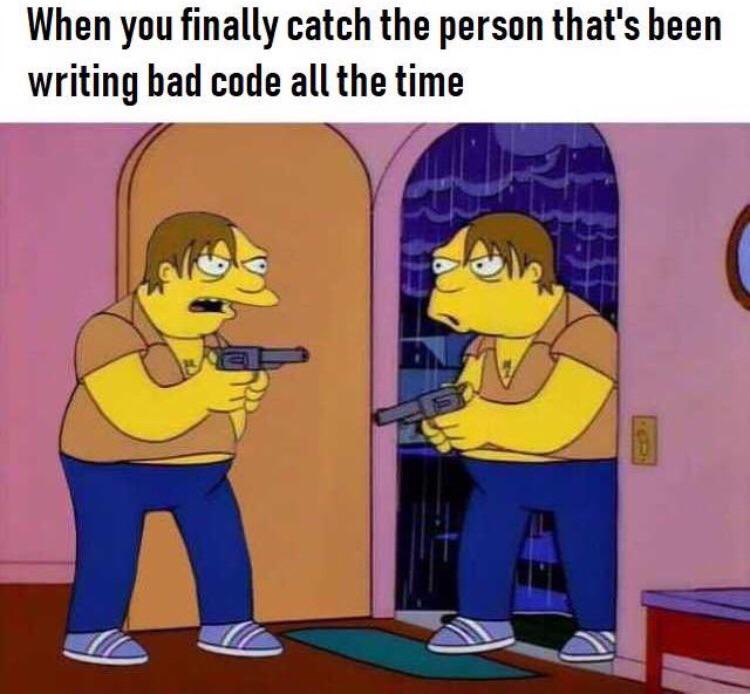
That moment of existential dread when you're hunting down who wrote that monstrosity of nested if-statements and spaghetti logic, only to discover your own name in the git blame. Nothing quite like the slow, painful realization that Past You has absolutely sabotaged Present You. "I'll refactor this later" – the four most expensive words in software development.