

Database design Memes

Posts tagged with Database design
DB With 2241 Tables

DB With 2241 Tables
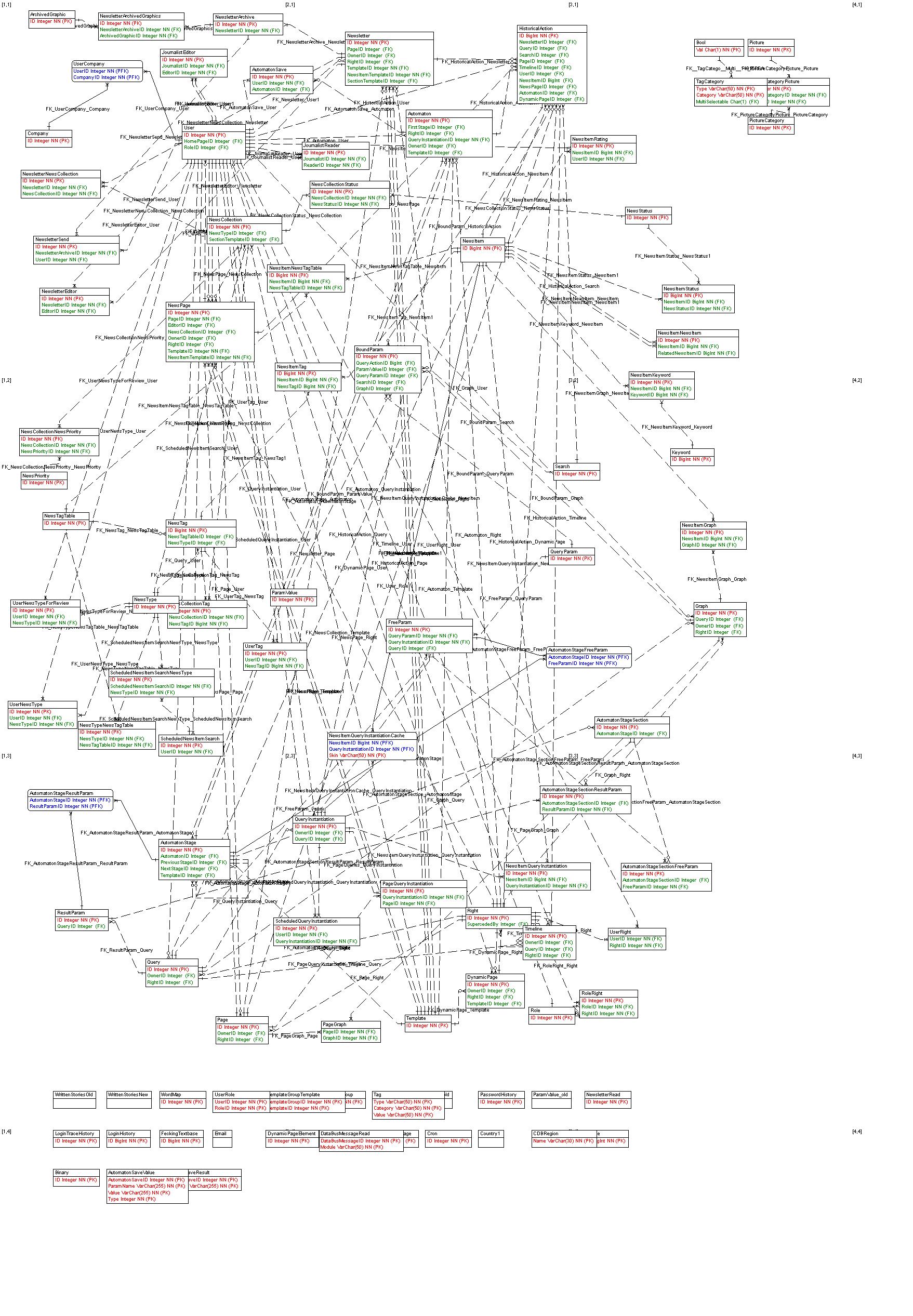
Someone clearly took "normalize your database" a bit too literally. 2241 tables? That's not a database schema, that's a cry for help. Somewhere, a DBA is scrolling through this entity diagram like they're reading the Terms and Conditions—except they actually have to understand it. Good luck finding user_profile_settings_v2_final_ACTUAL in that haystack. The zoom level says 0%, but the developer's hope is at -100%.

White House Entity Relationship Diagram

White House Entity Relationship Diagram
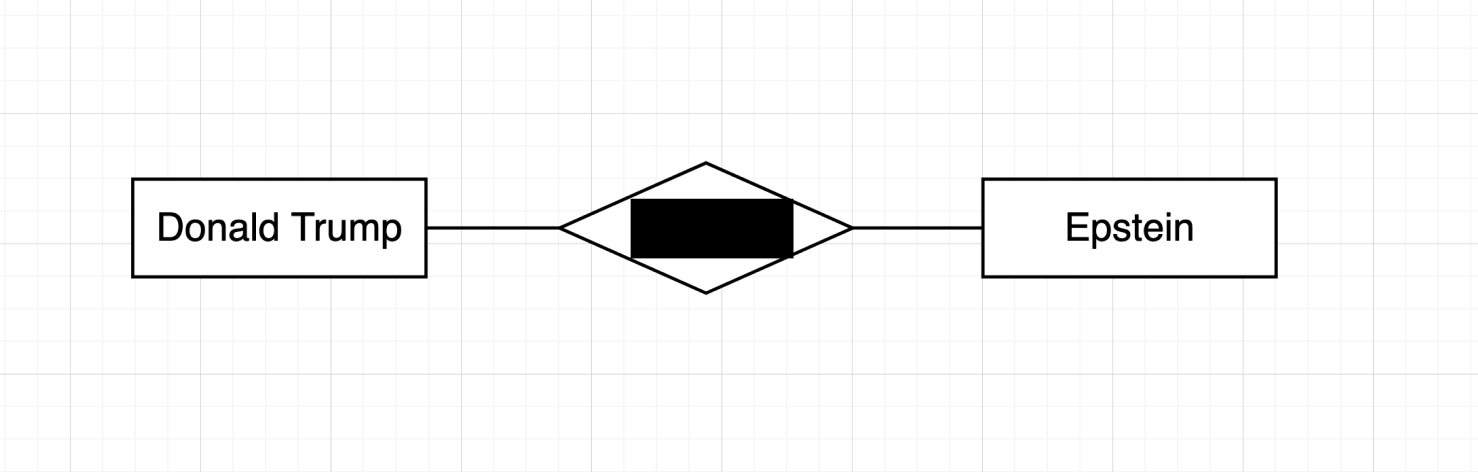
When you're designing a database schema but the requirements are... let's say "politically sensitive." Someone took an ERD diagram and decided to document relationships that probably shouldn't be in production. The many-to-many relationship symbol in the middle is doing some heavy lifting here. In database design, that diamond shape represents a junction table connecting two entities—because apparently some connections require their own dedicated table to store all the "metadata." Nothing says "normalized database design" quite like controversial real-world relationships mapped to crow's foot notation. Your DBA is definitely not approving this pull request.

Nobody Likes Right Join

Nobody Likes Right Join
RIGHT JOIN is the awkward middle child of SQL joins that nobody invited to the party. Sure, it does the exact same thing as LEFT JOIN—just swap the table order and boom, you're done. But nooo, some masochist decided to write it backwards and make everyone's brain hurt. Why would you ever use RIGHT JOIN when you can just flip the tables in the FROM clause and use LEFT JOIN like a civilized human being? It's like insisting on walking backwards to your destination. Technically possible, functionally identical, but deeply unsettling to witness. Database developers have collectively agreed that RIGHT JOIN exists purely to confuse junior devs during code reviews. If you see one in production code, either someone's playing 4D chess or they just hate their teammates.

My Face When It's Data Migration Time

My Face When It's Data Migration Time
Database normalization? Foreign keys? Proper schema design? Never heard of her. When it's time to migrate that legacy database that's been held together with duct tape and prayers, you'll find yourself begging the data to just... be normal . But nope, Excel decides to show up to the party uninvited, screaming its head off with its CSV exports, date formatting nightmares, and those delightful cells that randomly convert everything to scientific notation. The real horror? When stakeholders hand you a 47-tab Excel workbook with merged cells, inconsistent data types, and formulas that reference other workbooks on someone's laptop from 2014. "Just import this into the new system," they say. Sure, right after I finish my therapy sessions.

Set Age As Primary Key

Set Age As Primary Key
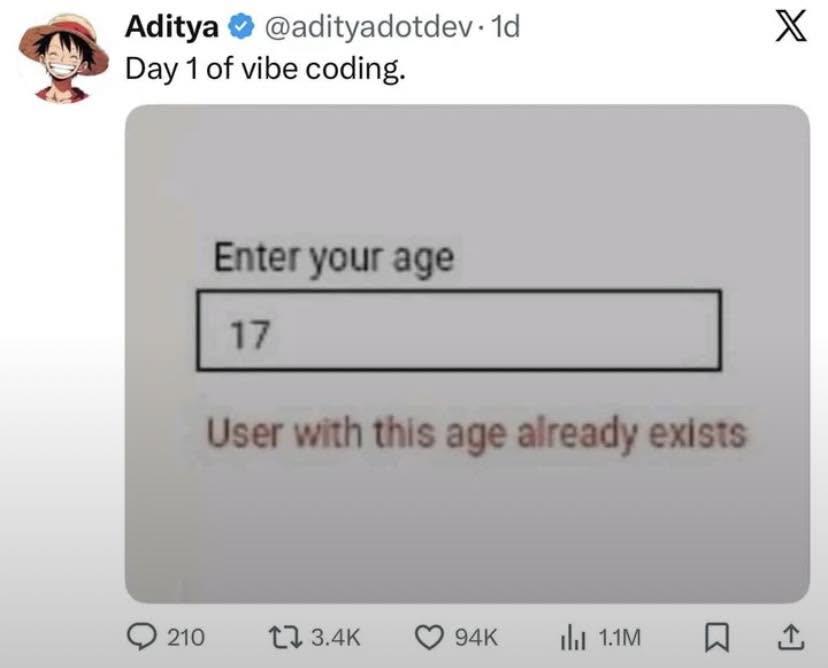
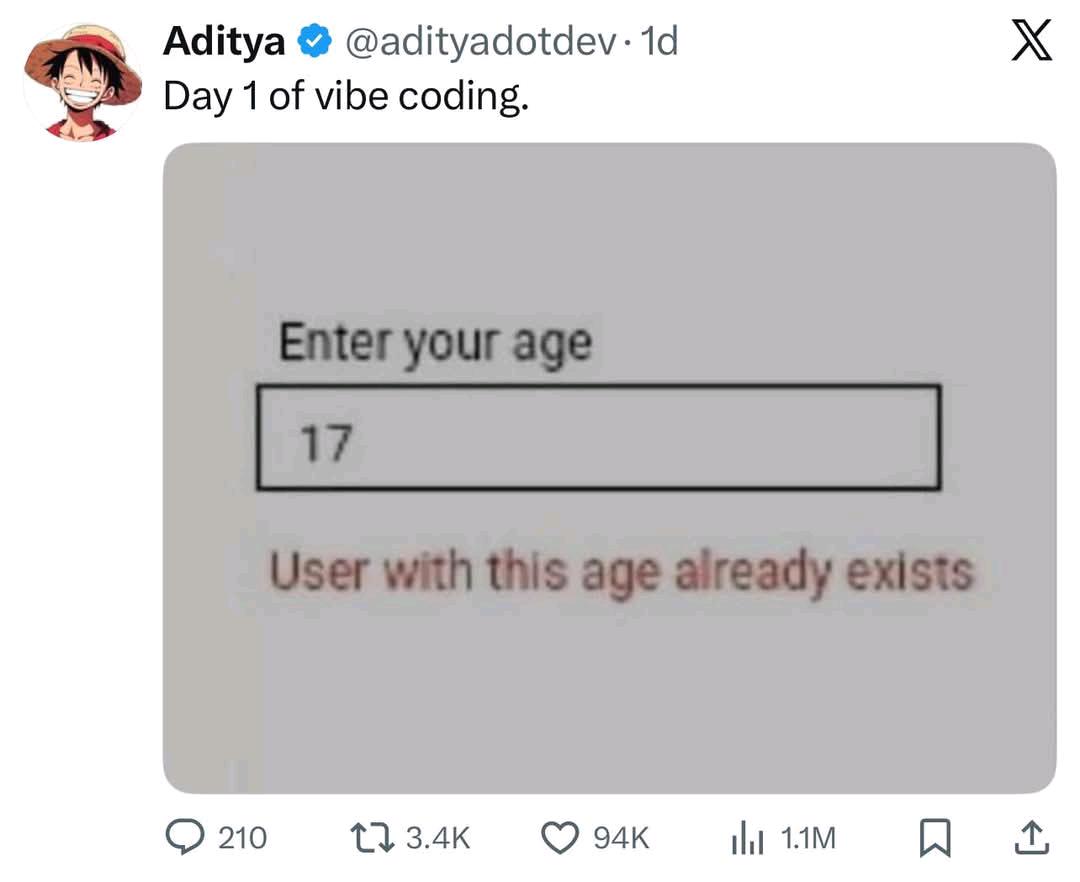
Someone decided to use age as a primary key in their database. You know, that field that changes every single year and is shared by millions of people. The error message "User with this age already exists" is the database's polite way of saying "congratulations, you've just discovered that multiple 17-year-olds can exist simultaneously on planet Earth." Primary keys are supposed to be unique and immutable. Age is neither. It's like using "human" as a username and wondering why registration keeps failing. This person will indeed go far—straight into a legacy codebase that everyone else refuses to touch.

Sql Love Affair

Sql Love Affair
Oh honey, someone just turned database design into relationship advice and honestly? They're not wrong. The setup is *chef's kiss* – girl asks what you need for a good relationship, and this absolute legend responds with "PRIMARY KEYS" because apparently we're all just living in one giant relational database and nobody told us. For those blissfully unaware: primary keys are what keep your database tables from descending into chaos. They're unique identifiers that make sure every record is special and can be properly referenced – you know, like how you'd want to uniquely identify your significant other instead of accidentally texting the wrong person named "Alex" in your contacts. Without primary keys, your relationships (and your data) would be a hot mess of duplicates and confusion. So yeah, turns out good data integrity and good relationships have more in common than we thought. Who knew SQL was secretly a dating guru this whole time?

Age As A Primary Key: What Could Possibly Go Wrong?

Age As A Primary Key: What Could Possibly Go Wrong?
Congratulations, you've just created the world's worst database design! Using age as a primary key is like using a sandwich as a doorstop - technically possible but fundamentally wrong. Primary keys should be unique and unchanging, but unless you've discovered the fountain of youth, your age changes every year. Plus, there are roughly 8 million 17-year-olds on Earth right now, all trying to register for your app. No wonder it's complaining! Next time, maybe try something truly unique... like I don't know... an ID?

If A Picture Is Worth A Thousand Words, An Emoji Is Worth A Database Column

If A Picture Is Worth A Thousand Words, An Emoji Is Worth A Database Column
When your database administrator is too lazy to type actual column names but has an emoji keyboard shortcut ready to go. This PostgreSQL session is peak chaotic evil energy – creating tables and domains with emojis instead of sensible names. Somewhere, a junior dev is staring at this schema wondering how to write a query joining the 📦 table where 🔴 = 'production_status' without copy-pasting emojis from Slack. Meanwhile, the DBA is probably sipping coffee and thinking "documentation is for the weak." Future maintainers will either quit on the spot or develop a twisted admiration for this absolute madlad who decided conventional naming conventions were just too mainstream.

Security Nightmare Disguised As Optimization

Security Nightmare Disguised As Optimization
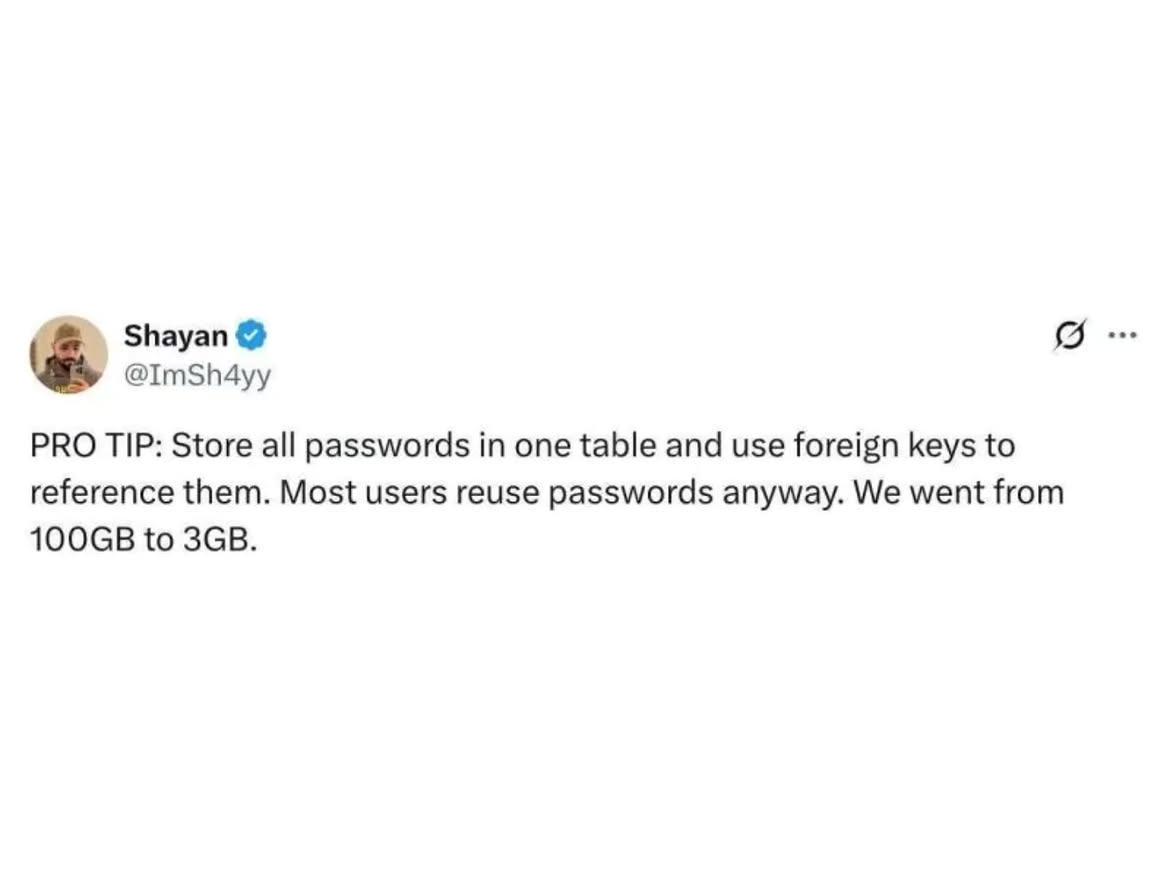
Ah yes, the classic "let's sacrifice security on the altar of optimization." This database hero just casually suggested storing all passwords in a single table with foreign keys because "users reuse passwords anyway" – reducing storage from 100GB to 3GB. What a brilliant idea! Next up: storing all user data in a public GitHub repo to save on AWS costs. Security experts aren't having panic attacks right now, they're just doing synchronized fainting as an office team-building exercise.

Never Trust Users' Requirements

Never Trust Users' Requirements
The classic "just one small change" that breaks your entire data model. You design a perfect database with a unique constraint ensuring each user belongs to exactly one organization. The requirements were crystal clear. You even got it in writing. Then suddenly, the user who SWORE the relationship would "always be N:1" comes back asking if users can belong to multiple organizations. That look of horror is every database architect who now has to create a junction table, update all the queries, and pretend they're not dying inside. Next time, just assume every relationship is many-to-many from the start and save yourself the trauma.

When Your Terrible Database Hack Works First Try

When Your Terrible Database Hack Works First Try
The existential crisis when your janky database cursor hack actually works the first time. You wanted to show the junior dev that AI isn't infallible, but now you're stuck pretending this monstrosity of multi-file cursor service was intentional design. The look of panic in the fourth panel says it all—you've become what you swore to destroy: someone whose terrible code works perfectly by accident. The universe is mocking your debugging skills.

What Could Go Wrong

What Could Go Wrong
Junior dev: "I designed a database in 3 hours! Give me a medal!" Senior devs: *looking at the schema with User and userId in the same model, nullable fields everywhere, and enums that'll need constant updating* This is why database design takes weeks. The junior's Prisma schema is a ticking time bomb of future migration nightmares, circular dependencies, and queries that'll bring production to its knees when you hit more than 100 users. Six months later, they'll be writing a Medium article titled "How I Survived My First Database Redesign" while the senior devs silently add another gray hair to their collection.