

Code reuse Memes

Posts tagged with Code reuse
I Stole Your Code

I Stole Your Code
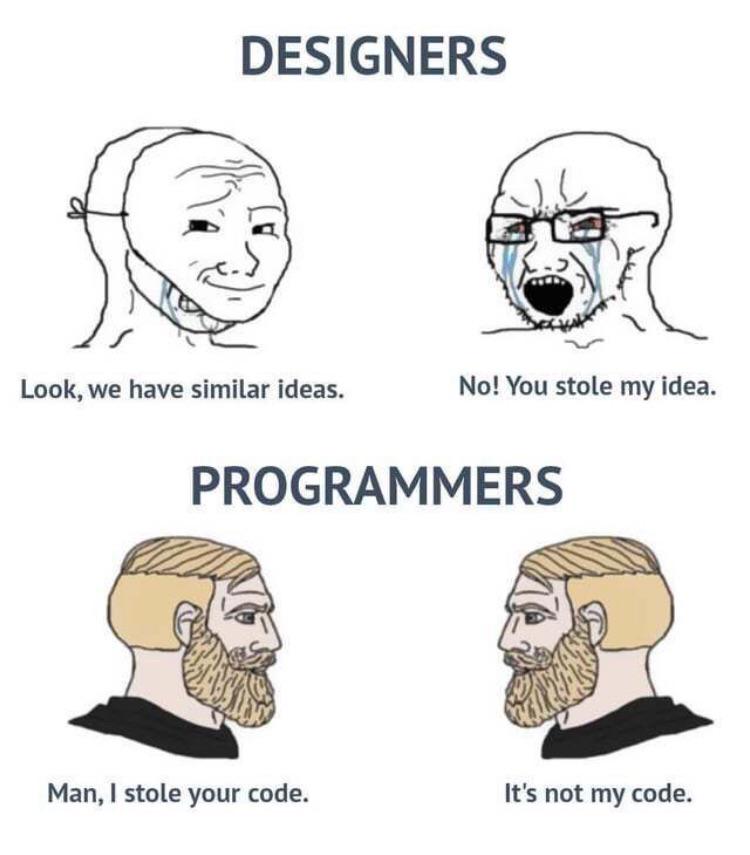
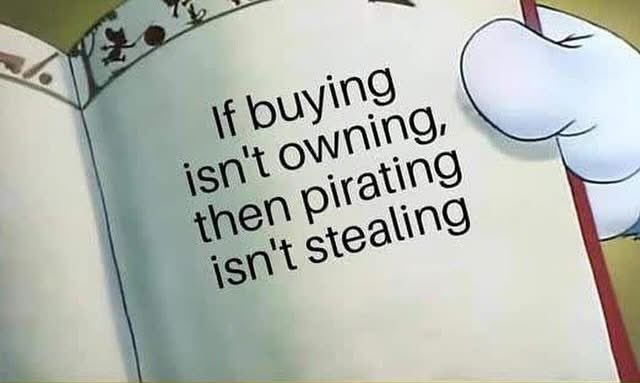
Designers fight over intellectual property like it's their firstborn child, while programmers casually admit to code theft with zero shame because... well, nobody actually owns that code anyway. It came from Stack Overflow, which came from someone's GitHub, which was adapted from a 2009 blog post, which was inspired by a Java tutorial from 2003. The chain of custody is so convoluted that claiming ownership is like trying to copyright air. We're all just remixing the same solutions to FizzBuzz at this point.

We Have All Done This

We Have All Done This
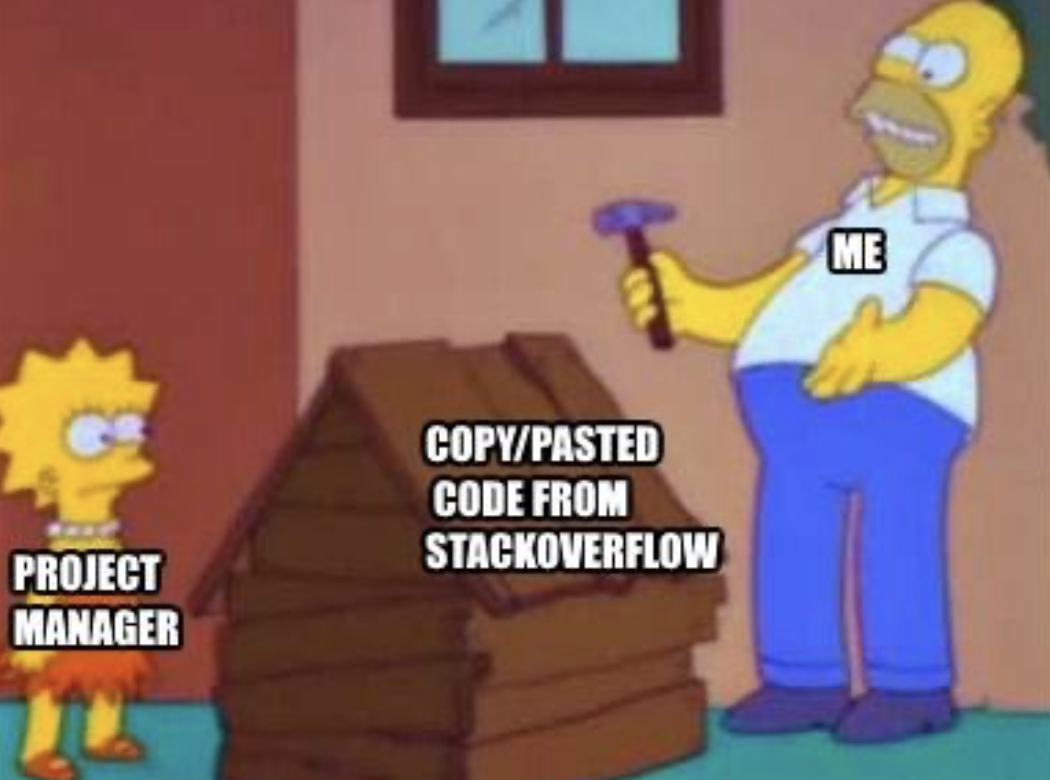
You're desperately trying to hide that beautiful, perfectly working code snippet you just yoinked from StackOverflow while your project manager casually strolls by. The plunger in hand really sells the "I'm just doing some totally original maintenance work here" vibe. The genius part? That code probably solves a problem that would've taken you 4 hours to figure out yourself, but now you're acting like you just committed a felony. Meanwhile, the PM has no idea that 80% of the codebase is held together by StackOverflow answers, prayer, and that one guy who answered a question in 2014. Pro tip: Just make sure you understand what you're pasting before the inevitable bug report comes in and you have to explain why your authentication system is using a regex from a thread about parsing HTML.

Seems Pretty Straightforward To Me...

Seems Pretty Straightforward To Me...
The mental gymnastics developers perform when they copy-paste code from Stack Overflow without attribution. If you're not technically claiming you wrote it yourself, then you're just... redistributing open-source knowledge, right? Right?! The logic is flawless: that npm package you "borrowed" for your production app? Not stolen—just indefinitely borrowed. That entire authentication system you ctrl+C'd from GitHub? You're honoring the developer by using their work. It's basically a compliment. Bonus points if you've ever justified using unlicensed software with "I'm just testing it" for the past 3 years. The cognitive dissonance is strong with this one, and honestly? It's the foundation of half the internet.

Be Careful

Be Careful
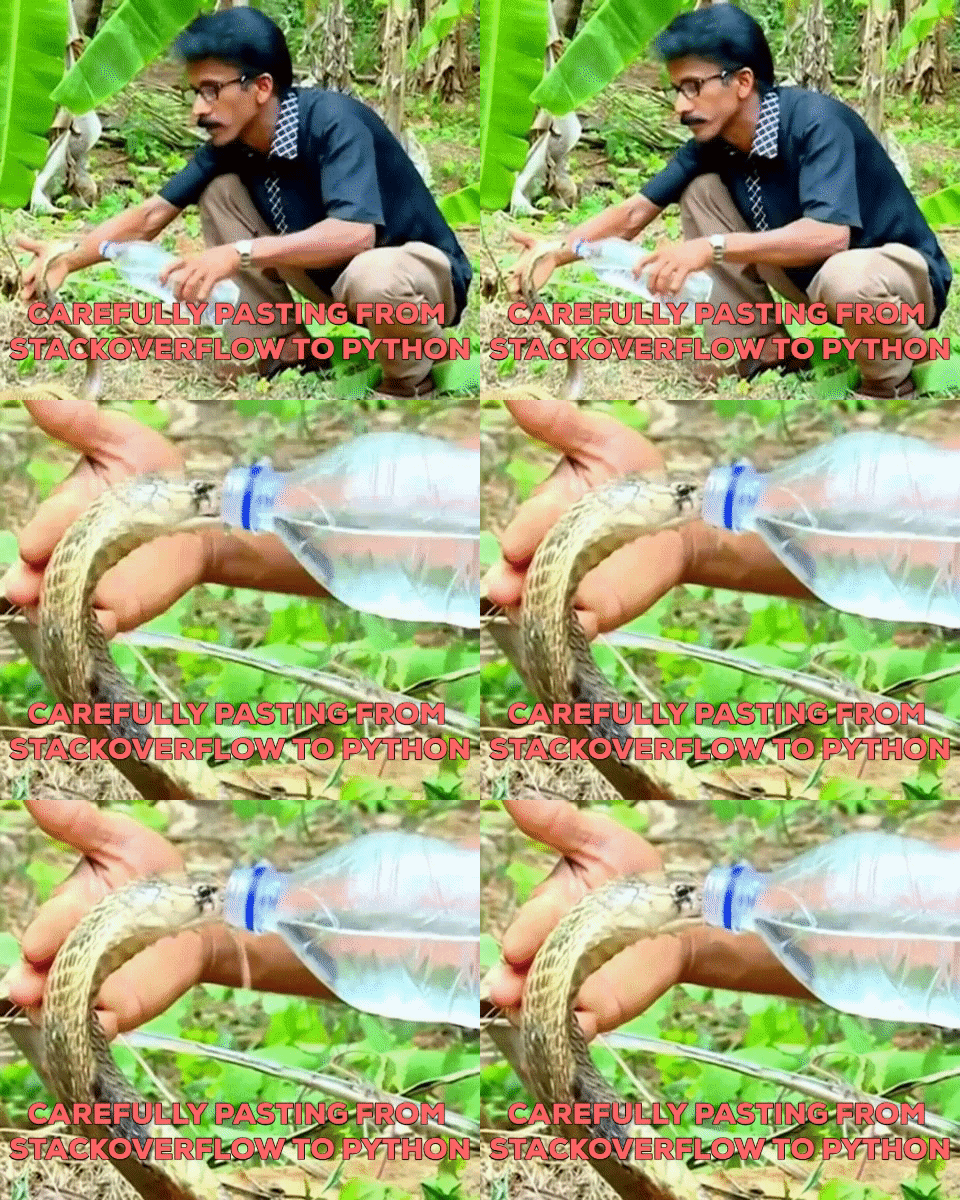
Copying code from Stack Overflow is like handling a wild animal—you gotta be gentle and careful, or it'll bite you. One wrong move and suddenly your entire codebase is riddled with deprecated methods, mysterious global variables, and that one answer from 2012 that definitely doesn't work anymore but has 500 upvotes. The delicate paste operation shown here perfectly captures the anxiety of transplanting someone else's solution into your Python project. Will it work? Will it break everything? Did they even test this? Why are there three different imports for the same thing? These are questions you'll ask yourself while nervously hitting Ctrl+V. Pro tip: Always read the comments below the answer. That's where the real wisdom lives—usually someone pointing out why this solution will destroy your production environment.

Life Is A Grind

Life Is A Grind
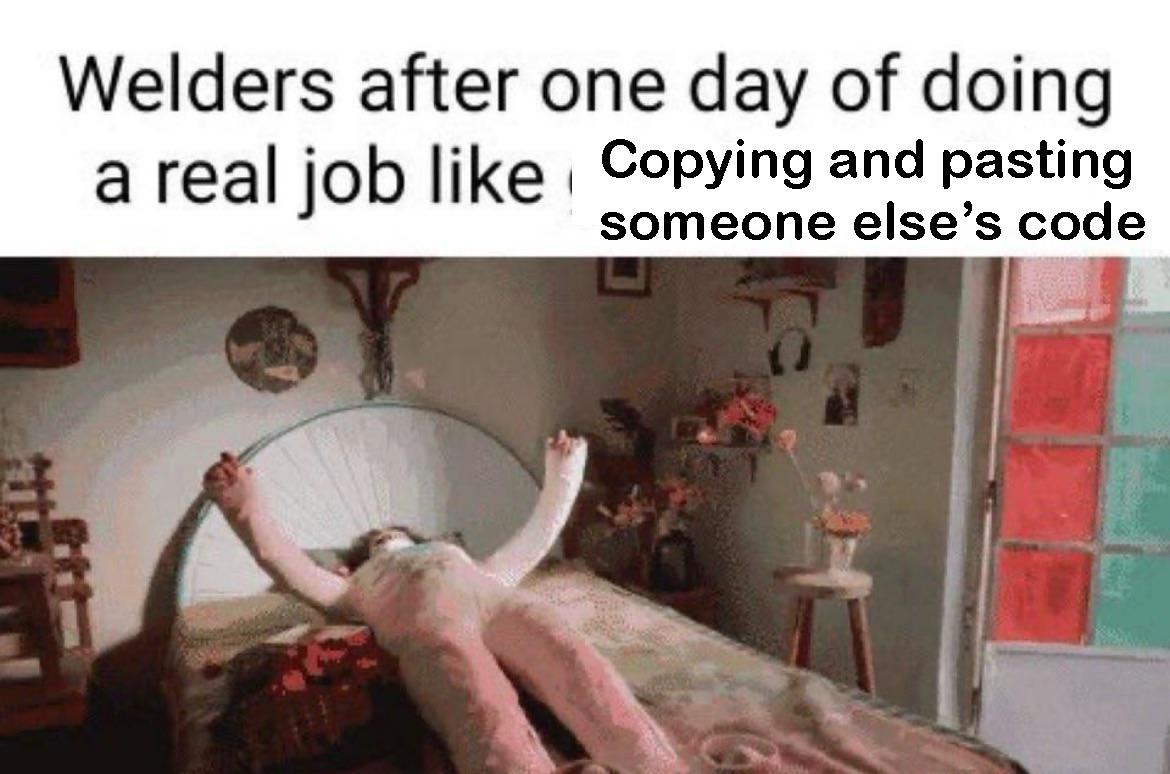
Welders thinking they've got it rough while programmers are out here treating Stack Overflow like their personal code repository. The real grind isn't physical labor—it's the mental gymnastics of pretending you understand that code snippet you just yoinked from someone's GitHub while frantically removing their variable names so it looks "original." At least welders create something tangible. Meanwhile, we're over here copy-pasting our way to production, one Ctrl+C at a time, calling it "leveraging existing solutions" in stand-ups. The best part? Both jobs will leave you broken and exhausted, just in different ways. Welders get bad backs, we get imposter syndrome and carpal tunnel.

Copy Paste Deploy

Copy Paste Deploy
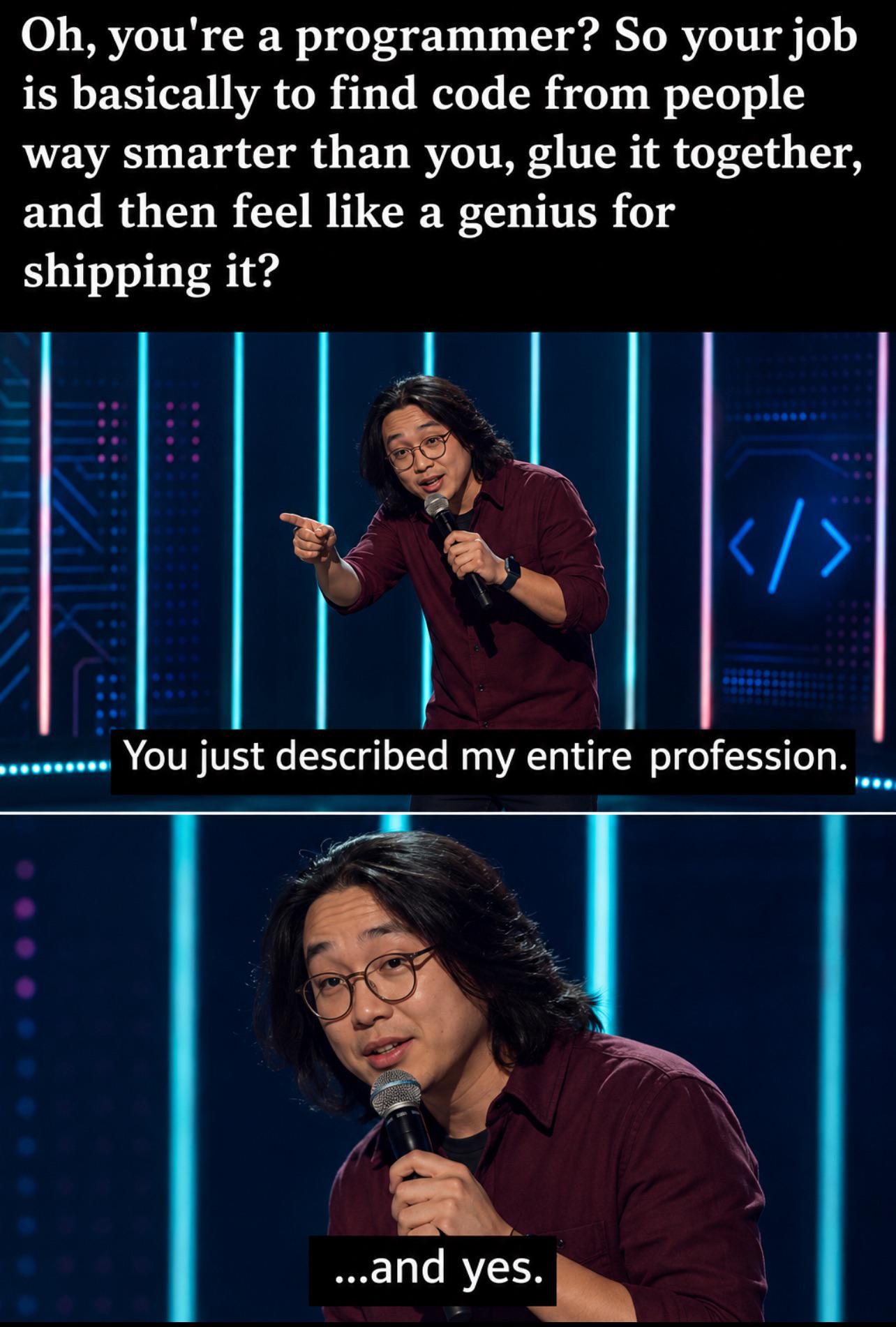
Someone finally said it out loud. Modern software development is basically competitive plagiarism with a deploy button. You spend 40% of your time on Stack Overflow, 40% praying the code you copied actually works in your context, and 20% pretending you understand what you just shipped to production. The real skill isn't writing code from scratch—it's knowing which Stack Overflow answer from 2014 will solve your problem, having the judgment to adapt it without breaking everything, and the confidence to merge it straight to main. We're all just really good at Ctrl+C, Ctrl+V, and convincing ourselves we added value by changing variable names. The industry doesn't want you to know this, but the code snippets on GitHub are free. You can just take them. I have 458 repositories worth of copied code.

The Holy Trinity Of Modern Development

The Holy Trinity Of Modern Development
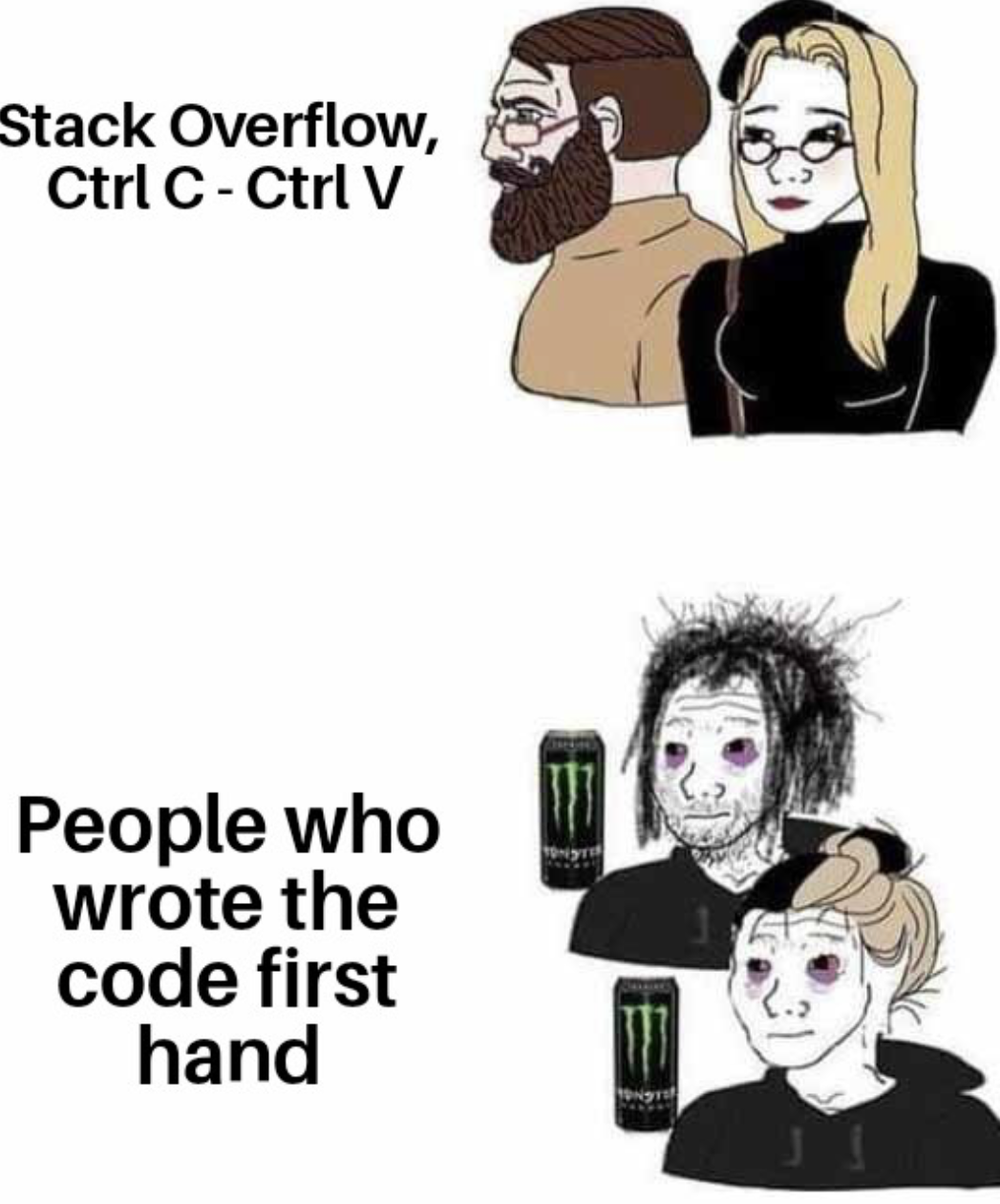
The three pillars of software development: Stack Overflow for when you have no idea what you're doing, Ctrl+C/Ctrl+V for "borrowing" solutions, and the poor souls who actually wrote the original code while fueled by Monster energy drinks and existential dread. Those original developers look like they've seen things—probably their code being copy-pasted without attribution across a thousand projects. Meanwhile, the rest of us are living our best lives, pretending we understand what we just copied. It's the circle of life, except nobody learns anything and everyone just keeps recycling the same solutions until they break in production.

Synology DS225+ Private Cloud Media Server - Stream, Back Up Photos & Share Files, Intel CPU for Hardware Transcoding (2-Bay Diskless NAS)

Synology DS225+ Private Cloud Media Server - Stream, Back Up Photos & Share Files, Intel CPU for Hardware Transcoding (2-Bay Diskless NAS)
Your Personal Streaming Server - Build your own Netflix-style media library and stream 4K movies, shows and photos to any device without monthly fees · Create Your Own Cloud - Store your entire photo…

Shearing Point

Shearing Point
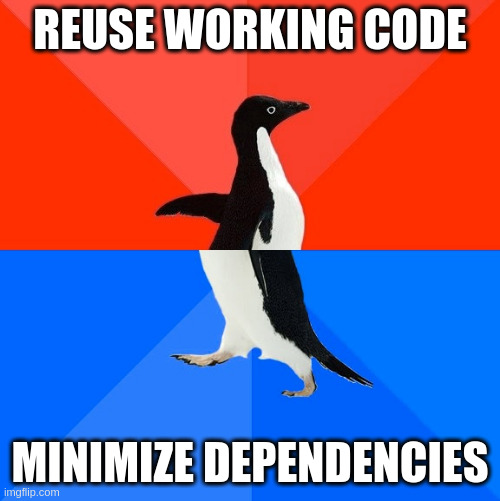
Oh, the eternal struggle of software architecture! You want to be a responsible developer and reuse that beautiful, working code like the good little engineer you are. But WAIT—now you've created a dependency web so tangled that one wrong move and your entire project collapses like a house of cards in a hurricane. It's the classic developer dilemma: copy-paste your way to maintenance hell, or share code and watch your build times explode because you're now importing seventeen libraries just to capitalize a string. Choose your poison, bestie! 💀

I Can Do It Better For Sure

I Can Do It Better For Sure
Every junior dev's origin story begins with the sacred words: "I could totally build this from scratch better than [insert literally any established library/framework here]." Then six months later you're debugging your homemade authentication system at 3 AM, crying into your energy drink, wondering why your triangular wheel isn't gaining traction. The universe has blessed us with React, Angular, Vue, and a million battle-tested libraries that have survived the trenches of production environments. But NO—you're gonna write your own state management solution because "it's not that complicated." Spoiler alert: it IS that complicated, and those weird-looking wheels in the picture? That's your custom-built solution that "works perfectly fine" until someone tries to actually use it. Save yourself the existential crisis and just npm install the dang thing. Your future self will thank you when you're not maintaining a Frankenstein monster of spaghetti code that only you understand.

I Wrote It All Myself

I Wrote It All Myself
Senior devs reviewing PR code like they're meeting a celebrity when it's literally just their own Stack Overflow answer from 2014 wrapped in a different variable name. The rocket and sparkle emojis really capture that moment when you're about to praise some "innovative solution" before realizing you're the one who wrote that exact implementation three years ago on five different projects. Nothing says "I wrote it all myself" quite like Ctrl+C, Ctrl+V, and a strategic rename refactor. The code review process becomes less about catching bugs and more about not accidentally complimenting yourself.

Open-Source Archaeology

Open-Source Archaeology
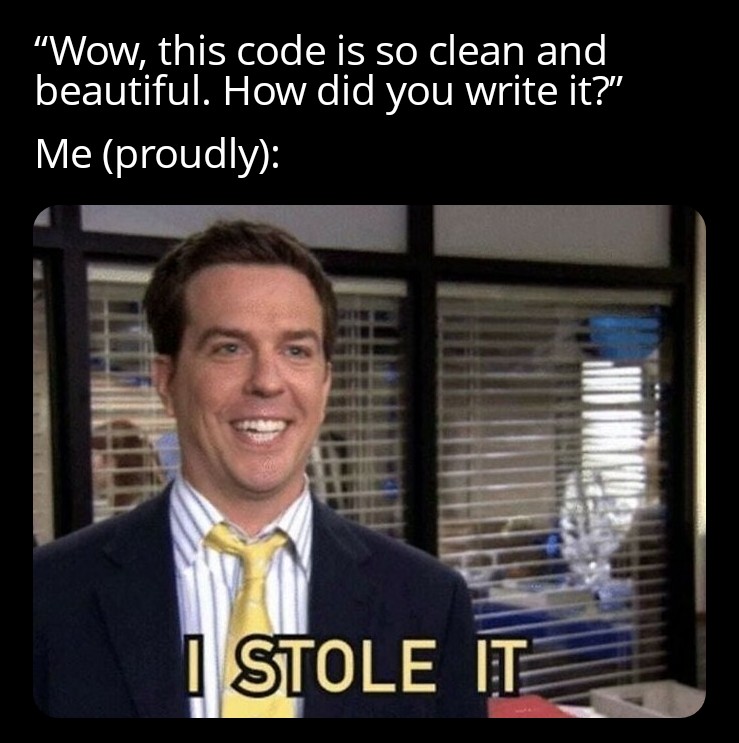
Every developer's proudest moment: getting complimented on code you copy-pasted from Stack Overflow at 3 AM. The secret to writing "clean and beautiful" code? Find someone else who already solved your problem six years ago and ctrl+c, ctrl+v your way to glory. It's not plagiarism, it's called "leveraging the open-source community." The real skill isn't writing the code—it's knowing which GitHub repo to raid and having the confidence to accept credit for it with a straight face.

O Git Hub Of The Lake What Is Your Wisdom

O Git Hub Of The Lake What Is Your Wisdom
The GitHub Octocat has emerged from the depths to deliver the most painful truth in software development: your "original" idea is definitely sitting in some dusty repo somewhere. Plot twist? It exists in four different states of completion—two abandoned attempts, one elegant solution that somehow works, and one cursed implementation with zero documentation that probably summons demons at runtime. The broken heart emoji really drives home that special feeling when you discover your weekend project already exists with 50k stars and was archived in 2019.