Abbreviation Didn't Change But Its Meaning Did

Abbreviation Didn't Change But Its Meaning Did
CES used to mean showing off the latest gadgets for regular folks. Now it's just a parade of AI-powered enterprise solutions, B2B SaaS platforms, and "synergistic blockchain ecosystems" that nobody asked for. The glasses coming off is the perfect metaphor—you're seeing clearly now that the cool consumer tech you were excited about has been replaced by corporate buzzword bingo. Remember when tech shows had actual products you could buy? Yeah, those were the days.

Needed Ventilation For My Room

Needed Ventilation For My Room
When your gaming rig runs so hot you just mount RGB case fans directly above your window like some kind of deranged HVAC engineer. Because why buy a normal fan when you can repurpose $200 worth of PC cooling equipment to move air at 2000 RPM with addressable lighting? The best part is those fans are probably running off a fan controller somewhere, meaning someone actually wired this whole setup. That's not a cry for help, that's commitment to the aesthetic. Your electricity bill might be screaming, but at least your room looks like a cyberpunk nightclub.

Its Almost 2026

Its Almost 2026
Nothing screams "legacy codebase" quite like a footer that still says "© 2022" in the year 2025. The irony here is beautiful: a product claiming to solve the problem of outdated copyright years... while displaying an outdated copyright year in its own footer. It's like a fitness app with a broken step counter or a spell-checker with typos in its marketing. The real kicker? They're marketing this as "Product of the day 46th" while simultaneously proving they need their own product. Either they haven't launched yet, or they're running the most meta marketing campaign in history. Pro tip: if you're selling a solution to automatically update copyright years, maybe start by using it on your own site. Just a thought.

I'm A Game Dev And Someone Pirated My Game

I'm A Game Dev And Someone Pirated My Game
So you made an indie game and found it on Pirate Bay. Instead of rage-tweeting about lost revenue, you discover there's a VPN ad embedded in your torrent page. Congratulations—you're now technically making money from piracy through affiliate marketing. The real kicker? Zero leechers. Not even pirates want to finish downloading your game. That's a level of rejection that even your Steam reviews couldn't prepare you for. At least you got 10 seeders though, which is 10 more people than bought it legitimately. Fun fact: Some devs actually intentionally leak their games to torrent sites for the free marketing. It's the digital equivalent of handing out flyers, except the flyers are your entire product and nobody's paying you.

Developers Vs Users

Developers Vs Users
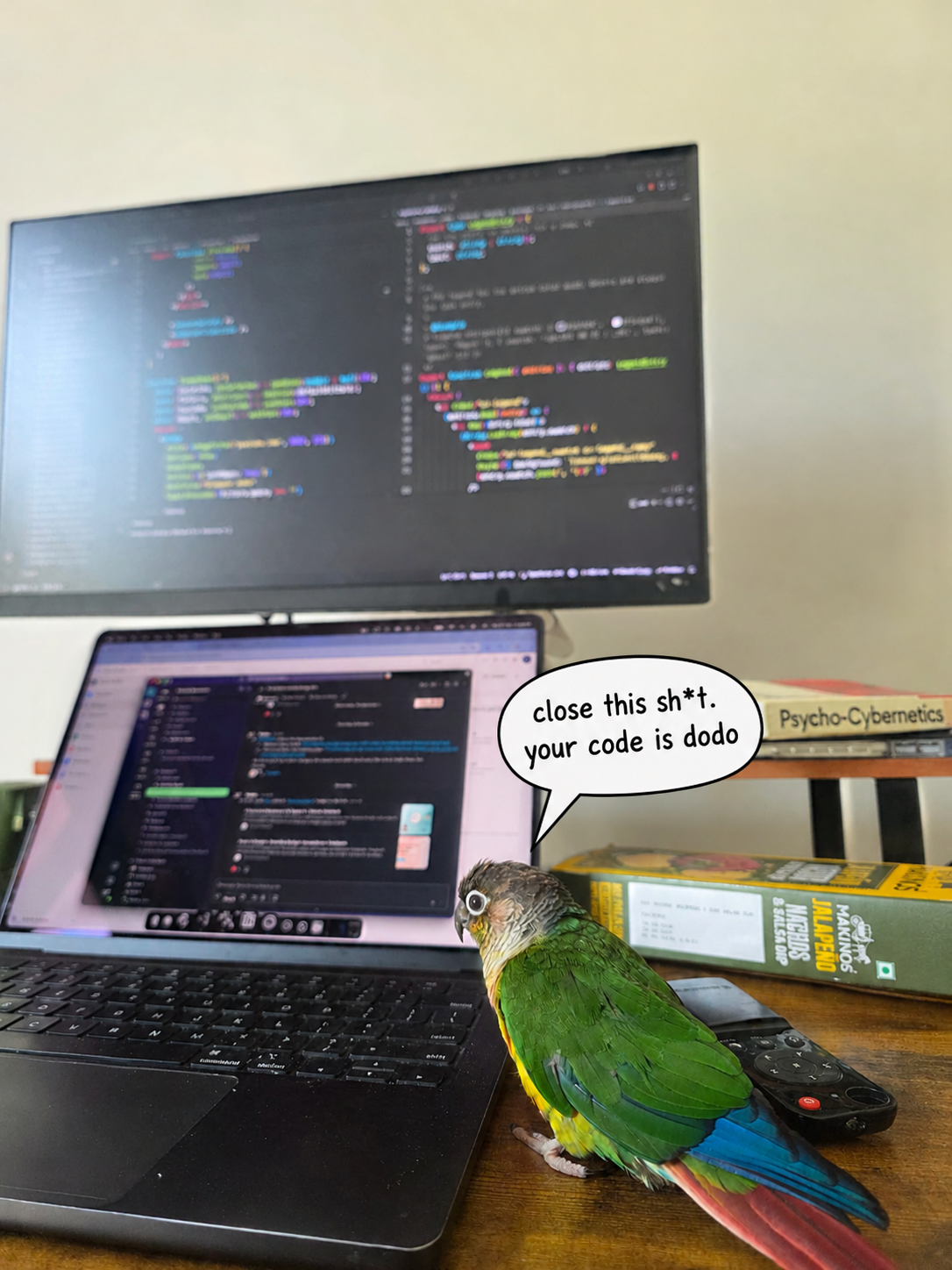
Developers gently place their features in a crib, admiring the elegant architecture and clean code like proud parents. Users? They're out here playing whack-a-mole with the UI, launching stuffed animals into orbit, and somehow managing to break things that shouldn't even be breakable. You spent three sprints building a robust system with proper error handling, and they still found a way to input "🦆" into a numeric field. The gap between how you think your app will be used versus how it's actually used is wider than the Grand Canyon. Ship it anyway.

Yes The Fix Did Not Address The Root Problem And Introduced Bugs

Yes The Fix Did Not Address The Root Problem And Introduced Bugs
You come back refreshed, ready to tackle problems with a clear mind. Then you open the repo and discover your teammates have been "productive" in your absence. That innocent bug fix? Now it's a hydra—cut off one head and three more appear. The band-aid solution that ignores the underlying architectural nightmare? Check. New bugs that weren't even possible before? Double check. The best part is watching that smile slowly morph into existential dread as you realize you'll spend the next week untangling spaghetti code instead of doing actual work. Welcome back to the trenches, soldier. Your vacation tan will fade faster than your will to live.

That Is What Every Developer's Story

That Is What Every Developer's Story
When your manager asks for "whatever you managed to finish," you know they've already accepted defeat. The bar is so low it's practically underground. The guy coding on a literal office chair strapped to a rickety cart in the middle of traffic is basically every developer trying to ship features with zero resources, impossible deadlines, and a tech stack held together by duct tape and prayer. The infrastructure is falling apart, there's no proper setup, but hey—at least you're moving forward, right? Peak project management: lowering expectations so much that simply surviving the sprint counts as a win. Ship it and pray the production servers don't catch fire. 🔥

When You Know What You Need AI Works Well Or The Power Of Hindsight

When You Know What You Need AI Works Well Or The Power Of Hindsight
Google engineer spends a year building distributed agent orchestrators, probably through countless architecture meetings, design docs, code reviews, and debugging sessions. Then Claude Code recreates it in an hour because someone finally knew how to describe what they actually wanted. The brutal truth: AI coding assistants are incredible when you already know the solution architecture. It's like having a junior dev who codes at 10x speed but needs crystal-clear requirements. The year-long project? That was figuring out what to build. The one-hour recreation? That was just typing it out with extra steps. Turns out the hard part of software engineering was never the coding—it was always the "what the hell are we actually building and why" part. AI just made that painfully obvious.

Rust Moment

Rust Moment
Rust evangelists really said "we're the best programming language" and then proceeded to deliver the most SPECTACULAR roast of themselves. Zero jobs? Check. Zero need to rewrite anything? Double check. Seven unfinished buggy crates masquerading as production-ready? TRIPLE CHECK. But wait, there's more! They'll gaslight you into believing YOUR brain is broken because you find the syntax confusing. "It's not ugly, you just lack the skill issue badge of honor!" Meanwhile, the code looks like someone spilled alphabet soup on a keyboard and called it memory safety. The Patrick Henry reference at the bottom is *chef's kiss* though—"Give me liberty, give me fire, give me TUI apps or I retire" perfectly captures the Rust community's obsession with rewriting every single terminal application in existence. Because apparently htop wasn't good enough until it was oxidized. The brutal honesty here is that Rust solves memory problems by introducing lifetime annotation problems, borrow checker rage-quit problems, and "why won't this compile" existential crisis problems. But hey, at least it's not experimental in the Linux kernel anymore! 🎉

Token Resellers

Token Resellers
Brutal honesty right here. Everyone's building "AI-powered apps" but let's be real—most of them are just fancy UI layers slapping a markup on OpenAI API calls. You're not doing machine learning, you're not training models, you're literally just buying tokens wholesale and reselling them retail with some prompt engineering sprinkled on top. It's like calling yourself a chef because you microwave Hot Pockets and put them on a nice plate. The term "wrapper" at least had some dignity to it, but "Token Resellers" cuts straight to the bone—you're basically a middleman in the AI supply chain. No shade though, margins are margins, and someone's gotta make those API calls look pretty.

Nvidia To Bring Back The GeForce RTX 3060 To Help Tackle Current-Gen GPU & Memory Shortages

Nvidia To Bring Back The GeForce RTX 3060 To Help Tackle Current-Gen GPU & Memory Shortages
So Nvidia's solution to the AI-driven GPU shortage is bringing back the RTX 3060... but here's the kicker: they're conveniently bringing back the gimped 12GB version instead of something actually useful. It's like your manager saying "we're addressing the workload crisis" and then hiring an intern who can only work Tuesdays. The 12GB RTX 3060 was already the budget option that got nerfed to prevent crypto mining, and now it's being resurrected as the hero we supposedly need? Meanwhile, everyone running LLMs locally is sitting there needing 24GB+ VRAM minimum. The meme format captures the corporate gaslighting perfectly. Nvidia's out here acting like they're doing us a favor while the AI bros are burning through 80GB A100s like they're Tic Tacs. Sure, bring back a card from 2021 with barely enough memory to run a decent Stable Diffusion model. That'll fix everything. Classic Nvidia move: create artificial scarcity, charge premium prices, then "solve" the problem with yesterday's hardware at today's prices.

Cloud Native

Cloud Native
CTO proudly announces they've migrated 95% of their infrastructure to the cloud, throwing around buzzwords like "resilient," "scalable," and "modern" to a room full of impressed stakeholders. Then someone asks the uncomfortable question: "Doesn't that mean we're entirely dependent on—" but gets cut off by the true believer shouting about best practices and industry standards. Nothing can go wrong when you follow the herd, right? Cut to: Cloudflare goes down and the entire internet breaks. Major outage. Good luck! Boss nervously asks how much of their infrastructure is affected. The answer? That 95% they were bragging about. But don't worry! The good news is they're only down when everyone else is down too. Misery loves company, and so does vendor lock-in. Who needs redundancy across multiple providers when you can just... hope really hard that AWS/Azure/GCP stays up? Turns out "cloud-native" sometimes just means "native to someone else's problems."