

We Taught This Chimpanzee To Understand Data Structures And He Hanged Himself

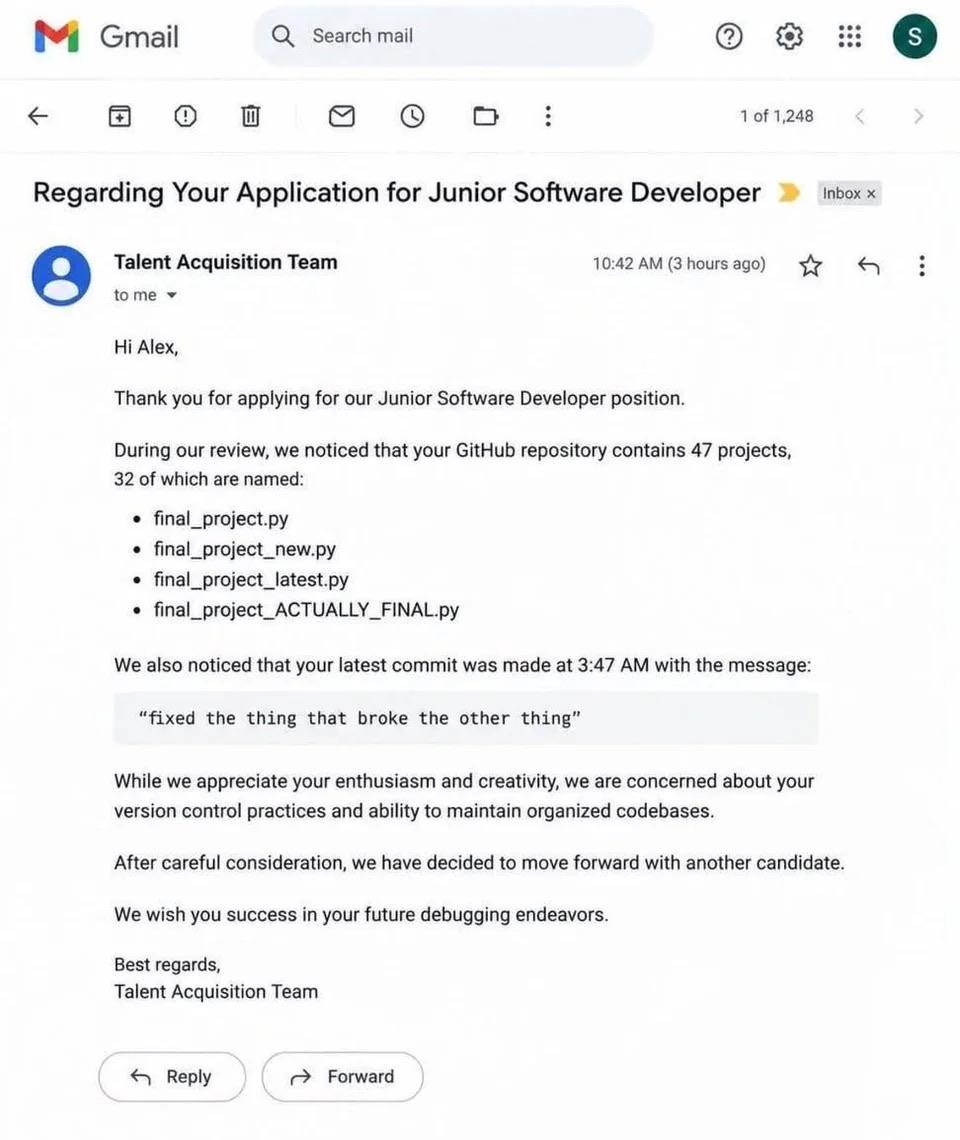
We Taught This Chimpanzee To Understand Data Structures And He Hanged Himself
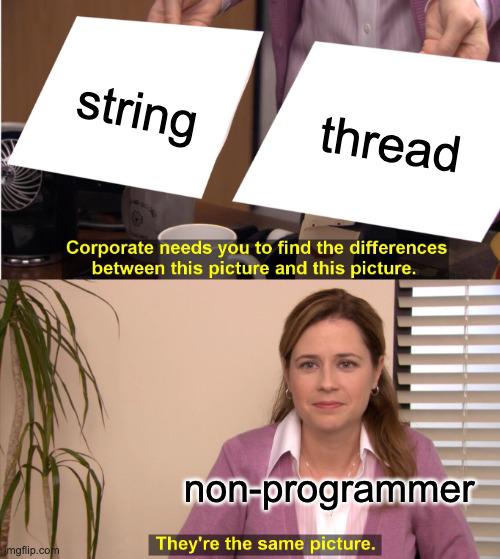
You know you've hit peak computer science education when even a chimp realizes that spending hours balancing red-black trees and implementing doubly-linked lists from scratch might not be worth the existential dread. The poor guy probably got to the part about traversing a graph using Dijkstra's algorithm and just noped out of existence. Real talk though: data structures courses have that special ability to make you question every life decision that led you to CS. One minute you're confidently coding a simple array, the next you're three levels deep in a recursive tree traversal wondering why you didn't major in art history. The chimp just speedran what every CS student experiences during their first encounter with heap memory management and pointer arithmetic.

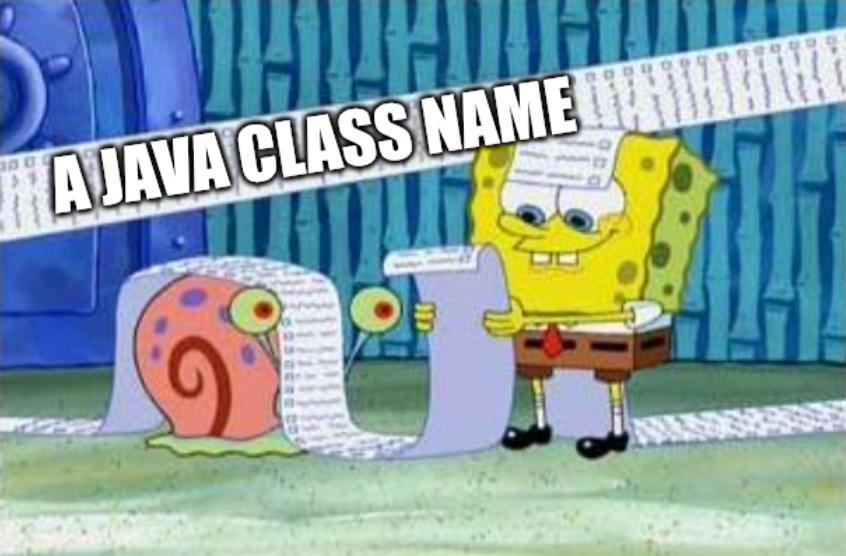
Everything Is O(1) To God

Everything Is O(1) To God
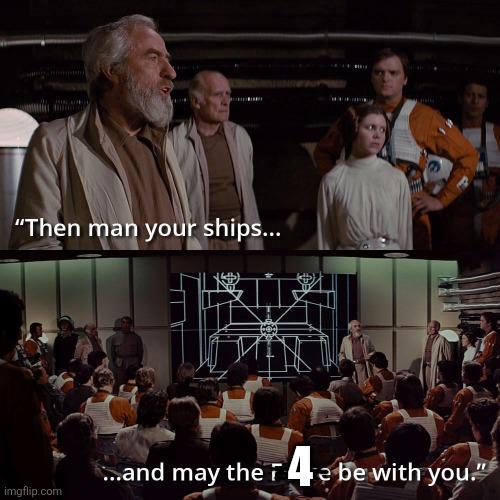
When you're complaining about the inefficiency of 3sum being O(n²) and God's just sitting there like "what are you even talking about?" Because from an omnipotent perspective, there's no such thing as computational complexity—everything just is . No loops, no iterations, no waiting. Just instant knowledge of all states simultaneously. To God, bubble sort and quicksort take the same amount of time: zero. Searching through an unsorted array? O(1). Traveling salesman problem? O(1). Calculating the last digit of pi? Also O(1). When you have infinite processing power and exist outside of time, Big O notation becomes completely meaningless. The ultimate performance optimization is literally being omniscient. Meanwhile we're down here optimizing our hash maps and debating whether to use a binary search tree or a red-black tree, while the divine architect is probably wondering why we're so obsessed with time complexity when He can just know all the answers instantly.

I Love Edge Cases

I Love Edge Cases
You spend hours crafting what you think is a beautiful PR, your tests are green locally, you're feeling good about yourself. Then you push it and watch the CI/CD pipeline chug along. 50 minutes later (because someone decided Kubernetes health checks need to be *thorough*), the entire thing implodes in a spectacular red failure. Now you're sitting there, bloodied and bruised, staring at the failure logs like they personally insulted your family. Was it a flaky test? A race condition? Some obscure environment variable that only exists in staging? Doesn't matter—half your changes are getting yeeted because clearly the universe decided your approach was fundamentally wrong. The real kicker? You could've caught it in 30 seconds if you'd just run the integration tests locally first. But who has time for that when you're shipping features at the speed of light? 🚀💀

Oh God

Oh God
When you're flexing about having the "last gen" GPU, you're basically announcing you're one generation behind the cutting edge. Left side: blissfully unaware, feeling like a tech king. Right side: the horrifying realization that "last gen" doesn't mean "latest gen" and you've just admitted to being obsolete in GPU years (which is like dog years but more expensive). The GPU market moves so fast that bragging about last-gen hardware is like showing up to a race in yesterday's shoes. Sure, it still works, but everyone's already moved on to the next shiny thing that costs three months' rent.

How Programming Has Changed

How Programming Has Changed
Back in the day, you'd write a naive recursive Fibonacci and call yourself an idiot. Fix it with fib(n-2) instead of fib(n) and suddenly you're a genius. Simple times. Fast forward to modern Rust development: someone uses matrix exponentiation to calculate Fibonacci in O(log n) time, and AI is like "you're an idiot" because... it's too clever? Then you write proper error handling with Option types, validate inputs, and use the ternary operator because Rust doesn't have implicit returns everywhere—and the response is just "Fine." Not great, not terrible. Just... fine. The evolution here is brutal: we went from celebrating basic algorithmic improvements to being judged by AI overlords who expect production-ready, type-safe, panic-free code with proper edge case handling. The bar has been raised so high that doing things "correctly" doesn't even earn you praise anymore—it's just the baseline expectation. Also, shoutout to whoever is calculating Fibonacci with Mat2::new(1u32, 1, 1, 0).pow(n)[0, 1] . That's some galaxy brain stuff that definitely came from a LeetCode hard problem.

How Can I Close This

How Can I Close This
Someone finally found the physical manifestation of Vim. You pick it up, thinking you'll just quickly wash a dish or two, and suddenly you're trapped in an existential crisis trying to figure out how to put it down. Just like opening Vim to make a quick config change and spending the next 20 minutes Googling "how to exit vim" for the 47th time in your career. The bottle even mocks you with its clean, simple design—no visible close button, no intuitive mechanism. It's like the UI designer said "let's make this as unintuitive as possible" and then got promoted. At least with Vim you can try :q!, :wq, or ZZ. With this bottle? You're stuck holding it forever, or until you finally give up and just throw the whole thing away. Which, let's be honest, is what most people want to do with Vim too.

An Error Just

An Error Just
Oh fantastic, the error message decided to give up mid-sentence like it's having an existential crisis. "An error just"... JUST WHAT?! Just happened? Just destroyed your entire database? Just decided to ruin your day? The suspense is absolutely killing me! Nothing screams professional software development quite like error messages that can't even finish their own thoughts. It's like the program threw an exception while trying to tell you about the exception. The cherry on top? That confident "OK" button sitting there like you have ANY idea what you're agreeing to. Sure, I'll click OK to this incomplete error message that tells me absolutely nothing useful. Thanks for nothing, error dialog!

Vintage Metal Sign Programmer Programming Poster Retro Tin Signs Funny Aluminum Sign For Man Cave, Garage, Living Roome, Cafe And Pub Decoration 8 X 12 Inch

Vintage Metal Sign Programmer Programming Poster Retro Tin Signs Funny Aluminum Sign For Man Cave, Garage, Living Roome, Cafe And Pub Decoration 8 X 12 Inch
RUST-RESISTANT ALUMINUM – MADE TO ENDURE: Made with high-quality aluminum rather than regular tin, this metal wall art forms a natural oxide coating that shields against rust, corrosion, and dampness…

Typa Shi Claude Gives You For A Simple Monitoring

Typa Shi Claude Gives You For A Simple Monitoring
You: "Hey Claude, can you help me check system logs for errors?" Claude: *proceeds to summon an ANCIENT UNIX INCANTATION that looks like someone smashed their keyboard while simultaneously reading the entire man pages library* 💀 We're talking journalctl piped into jq with regex sorcery, then piped into select statements, then MORE pipes into awk, then sed with substitutions that would make a regex engineer weep, then grep with extended patterns, and THEN converting hex values because why not add some cryptography to your Monday morning log check? Bro really said "let me chain 47 commands together with pipes like I'm building the Golden Gate Bridge" for what could've been a simple grep. Claude out here writing bash scripts like they're competing in a code golf tournament where the goal is maximum confusion per character. The best part? It probably works perfectly. That's the most infuriating thing about it.

I Sure Do Love Not Using Local Variables!

I Sure Do Love Not Using Local Variables!
Someone wrote code so deeply nested in getfenv() calls that it looks like they're allergic to storing values in variables. Every single line chains together getfenv().game.ServerScriptService.data[plr] like they're being paid per character typed. Instead of doing the sane thing and writing local playerData = getfenv().game.ServerScriptService.data[plr] once at the top, they decided to traverse the entire object hierarchy on every. single. line. The performance implications alone are making my CPU cry. It's like watching someone walk to the grocery store and back for each individual ingredient instead of just... buying everything at once. The irony? They're clearly working in a Roblox/Lua environment where local variables are basically free and would make this code 10x more readable and performant. But nope, let's just spam getfenv() like it's going out of style and create a maintenance nightmare that would make any code reviewer weep.

You Know Him Or It Was You

You Know Him Or It Was You
Oh honey, we've ALL met this person. The 2013 tech bro starter pack is SENDING me right now. The Under Armour hoodie, those rectangular glasses that screamed "I code," and let's not forget the OtterBox case that could survive a nuclear apocalypse but couldn't protect your dignity. But the REAL kicker? That quote at the bottom about switching from iOS to Android like it was some kind of spiritual awakening. Meanwhile, their phone was running CyanogenMod (RIP to a real one), they had Flappy Bird installed before it got yeeted from the app store, and they definitely played Geometry Dash on their hacked TI-84 calculator during math class. The XDA Developers watermark is just *chef's kiss* because you KNOW they spent 47 hours bricking and unbricking their phone just to get a custom boot animation. And those braces? Peak 2013 aesthetic. This whole vibe is equal parts nostalgia and cringe, and honestly? We wouldn't have it any other way.

Stop Touching Your Python!

Stop Touching Your Python!
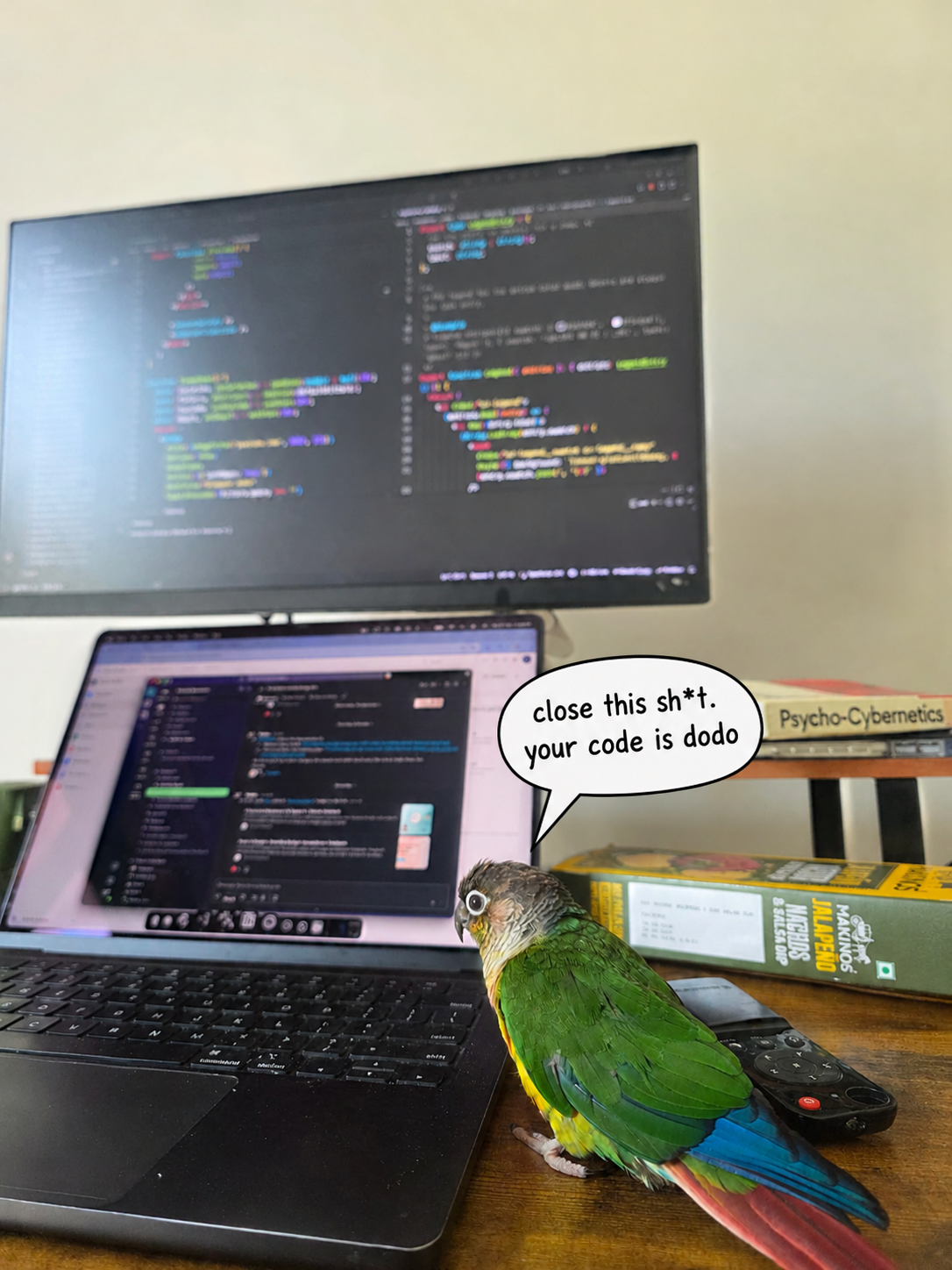
C++ devs out here acting like Python is some kind of cursed artifact that'll burn your fingers off if you dare make contact. The sheer HORROR on their face at the thought of touching Python code is sending me. Like bestie, it's just whitespace indentation, not a demonic ritual. The absolute DISGUST radiating from this screenshot perfectly captures that one senior dev who's been writing low-level C++ for 20 years and treats dynamically-typed languages like they're radioactive waste. Sir, the GIL can't hurt you here... or can it?

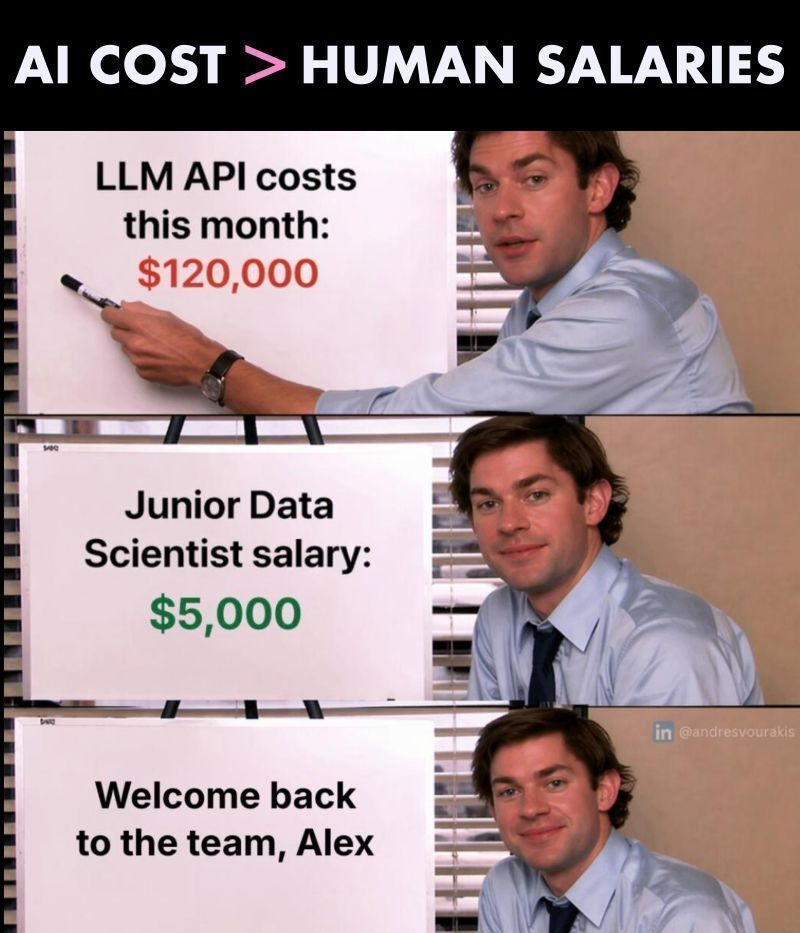
If There Will Be No More Juniors And The Basic Tasks Depend On AI Here We Go Again Giving Too Much Power To Only A Handful Of People

If There Will Be No More Juniors And The Basic Tasks Depend On AI Here We Go Again Giving Too Much Power To Only A Handful Of People
Oh fantastic, because what could POSSIBLY go wrong when we replace an entire tier of the developer hierarchy with AI and hand over the keys to the kingdom to like three tech companies? The career ladder just got a whole lot shorter—literally cut off at the bottom rung. Junior devs used to be the foundation, learning the ropes and doing the grunt work. Now? Poof! Gone. Replaced by ChatGPT's cousin. But here's the REAL kicker: when AI becomes the new "junior developer," suddenly your entire tech stack is dependent on whether OpenAI, Google, or Microsoft decides to keep the lights on. Subscription expired? Sorry, your codebase just became a pumpkin. They decide to change their API? Better rewrite everything. They get hacked or go rogue? Well, congratulations, you just gave the nuclear launch codes to a handful of Silicon Valley overlords. Nothing screams "healthy industry" quite like concentrating all power and knowledge into a monopolistic bottleneck while simultaneously eliminating the pipeline of new talent. What's the worst that could happen? *nervous laughter intensifies*

Synology DS1525+(2X 2.5GbE Ports, Ryzen V1500B, 8GB RAM) 5-Bay 60TB Bundle with 5X 12TB Seagate Ironwolf HDDs

Synology DS1525+(2X 2.5GbE Ports, Ryzen V1500B, 8GB RAM) 5-Bay 60TB Bundle with 5X 12TB Seagate Ironwolf HDDs
Flexible 5-bay storage you can grow – Expand capacity with the DX525 expansion unit (sold separately) to build up to 300 TB of raw storage and add SSD caching to accelerate hot data. · Fast out of th…