

Be Like Bill

Be Like Bill
Bill gets it. He writes code that's so clean and self-documenting that comments would just be redundant noise. His variable names actually mean something, his functions do one thing well, and his logic flows like poetry. Meanwhile, the rest of us are out here writing // this increments i above i++ like we're getting paid per line. The philosophy here is simple: if your code needs extensive comments to explain what it does, you probably wrote bad code. Refactor it until it reads like English. Bill doesn't need to leave breadcrumbs for future developers because his code doesn't look like a maze designed by a sadist. Of course, in reality, most of us aren't Bill. We're the ones who'll spend 2 hours writing a clever one-liner that saves 3 lines of code, then wonder why nobody understands it six months later. But hey, at least we can aspire to Bill's level of enlightenment.

Insert Disk #4287

Insert Disk #4287
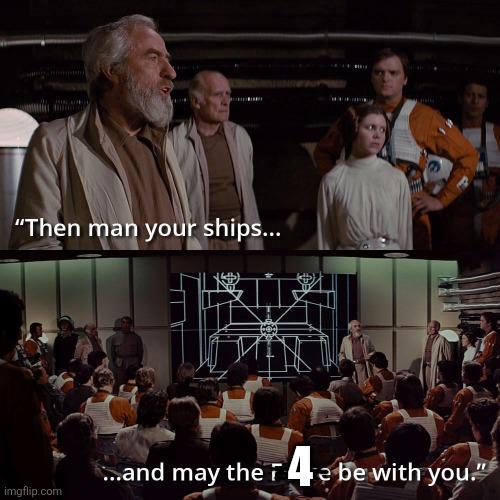
So Moore's Law says computing power doubles every couple years, right? Cool. Storage gets cheaper, SSDs get bigger, everything's peachy. But somehow game developers looked at that exponential growth and said "challenge accepted." Your PC gets more powerful. Games get bigger. Your storage cries in the corner. It's like watching two exponential curves race each other, except one is your poor 1TB SSD watching Call of Duty demand 250GB for the third update this month. The real kicker? PC power is barely staying ahead. That gap between the blue and red lines? That's the only reason you can still install more than two AAA games at once. Give it another year and we'll be back to the floppy disk era, except instead of "Please insert disk 2 of 4" it'll be "Please delete 3 games to install this 400GB texture pack you'll never notice." Moore's Law 2 isn't a law of physics—it's a law of spite.

Beauty Is The Standard

Beauty Is The Standard
You know that feeling when you finish writing a feature and your code looks like a crime scene? Variables named temp2 , nested ternaries three levels deep, and comments that just say "fix later"? Then you run your linter and suddenly you're forced to confront your sins. The transformation is real. That messy, functional-but-ugly first draft gets groomed into something presentable with proper indentation, consistent naming conventions, and all those trailing commas in the right places. Your code goes from "it works on my machine" energy to "ready for code review" sophistication faster than you can say ESLint. The bow tie is chef's kiss—that's your code after fixing all 47 linting errors and finally getting that green checkmark in your CI/CD pipeline.

Vibe Redditor

Vibe Redditor
Reddit devs asking thoughtful technical questions about orchestration layers and context windows while Hacker News bros are basically conducting full background checks before accepting your answer. Someone went from "why does print() give me syntax errors" to "Full Stack Vibe Engineer" in 4 months and HN is NOT having it. The Hacker News thread is even better—dude posts about AI agents and immediately gets interrogated about costs, company budgets, and whether they'd even submit code if an AI wrote it. The punchline? "The guy who wrote the post is a billionaire." Because of course only billionaires can afford to run enough AI agents to actually be productive. The rest of us are still Googling Stack Overflow answers like peasants. Reddit: "Nice work! How does it work?" Hacker News: "Show me your bank statements and prove you're not an imposter."

The Age Of AI

The Age Of AI
Literally just slap "AI-powered" on a potato and watch investors throw money at you like confetti at a wedding. The pen doesn't need to be smart, Karen. It's a PEN. But sure, let's add machine learning to it so it can... predict what you're going to write? Autocorrect your handwriting in real-time? Send your grocery list to the cloud? The tech industry has discovered the ultimate cheat code: just whisper "AI" into anything and suddenly it's worth millions. A pen that's been doing its job perfectly fine for centuries? BORING. But an AI-powered pen? *chef's kiss* REVOLUTIONARY. Take my venture capital!

Reminder That Star Citizen Has Been In Development For This Long

Reminder That Star Citizen Has Been In Development For This Long
Star Citizen started development in 2011. The interviewer on the left has aged visibly. The developer on the right? Still smiling like the release date is "just around the corner." At this point, Star Citizen is less of a game and more of a generational project—like cathedrals in medieval times, except with more microtransactions for spaceship JPEGs. The game has been in development so long that entire programming languages have been born, peaked, and fallen out of favor. Developers who started on this project fresh out of college now have teenagers. The codebase probably has comments like "TODO: fix before launch" from 2013 that have achieved artifact status. It's the software equivalent of scope creep achieving sentience. Every sprint planning meeting probably ends with "just one more feature" while the backlog grows like technical debt in a startup that just raised Series B.

New Fear Unlocked

New Fear Unlocked
You know that moment when Windows casually drops an existential crisis on you? You're shutting down your supposedly solo home PC, and suddenly the OS is like "hey, just FYI, there are OTHER PEOPLE using this machine right now." Wait. WHAT other people? You live alone. You're the only user account. Nobody's remoted in. The sheer panic of realizing Windows knows something you don't is absolutely terrifying. Is it counting your background processes as "people"? Did someone hack in? Is your smart toaster now a user? Are the ghosts in your machine finally getting recognized by the OS? This is the digital equivalent of coming home and finding an extra toothbrush in your bathroom. The "Shut down anyway" button suddenly feels like a hostage negotiation. Windows really said "not my problem" and left you to deal with your phantom users. Thanks, Microsoft.

After RAM Price Increase....

After RAM Price Increase....
Remember when you used to hide your 16GB of RAM like it was some shameful secret? "Yeah, I only have 16GB, it's fine for basic stuff..." you'd mumble while nervously sweating. But now that RAM prices have skyrocketed? Suddenly you're strutting around like you own a yacht. "Oh this? Just my 16GB setup. No big deal." Same hardware, completely different energy. The only thing that changed is your bank account's relationship with DDR5 pricing. Welcome to tech inflation, where your "budget build" from 2021 is now considered a flex.

PC Users Win With Duct Tape Strategy

PC Users Win With Duct Tape Strategy
The beautiful dichotomy of tech ecosystems on full display here. Apple users see a microscopic scratch on their aluminum unibody chassis and immediately start browsing for a $2,000 replacement. Meanwhile, PC users are out here running desktop towers held together with zip ties, prayers, and what appears to be the entire inventory of a hardware store's tape section. That PC build is literally falling apart at the seams—case panels missing, structural integrity questionable at best—yet it's probably still running Crysis at 60fps. The "20 years and holding strong" is the chef's kiss because you KNOW that machine has survived multiple OS upgrades, countless hardware swaps, and probably a few minor fires. It's the Ship of Theseus of computing: is it even the same PC anymore? Who cares, it boots. Meanwhile that MacBook has one tiny dent and its owner is already scheduling a Genius Bar appointment. Different philosophies, same destination: getting work done (or procrastinating, let's be honest).

Sad Life

Sad Life
Binary search is O(log n) - lightning fast, efficient, elegant. Your life? That's an unsorted array, buddy. Can't binary search chaos. The brutal truth hits different when you realize you've spent years optimizing algorithms but your own existence is still running at O(n²) complexity. You can't just divide and conquer your problems when they're scattered randomly across your mental heap with no index in sight. Maybe try a linear search through your feelings first. Or just bubble sort your priorities until something floats to the top. No guarantees though.

Actual Code In The Linux Kernel

Actual Code In The Linux Kernel
Someone actually committed a function called myisspace() to the Linux kernel that checks if a character is a space by comparing it to... the letter 'j'. And the comment? "Close enough approximation." In a codebase that powers billions of devices worldwide, where every line is scrutinized by some of the most brilliant engineers on the planet, someone decided that 'j' is basically a space character. The ASCII value of 'j' is 106, while space is 32. That's not even close! But hey, it's for a "simple command-line parser for early boot" so I guess standards are optional when your OS is still rubbing the sleep out of its eyes. The beauty here is imagining the code review: "Yeah, just use 'j' instead of ' ' (space). Ship it." This is either galaxy-brain optimization or someone's Friday afternoon commit that somehow made it through. Either way, it's living rent-free in one of the most important codebases in computing history.

Spaghetti Code

Spaghetti Code
You know that legacy codebase everyone's afraid to touch? Yeah, this is what the dependency graph looks like when you finally open it in your IDE. Each line represents a function call, each node is a class, and somewhere in that tangled mess is the bug you need to fix before the sprint ends. The best part? The original developer left the company three years ago, there's zero documentation, and the code somehow passes all tests. Good luck tracing that one function that's called from seventeen different places and calls twenty-three others. Just remember: if it compiles, ship it and pray.