Who Are You

Who Are You
The classic developer workflow, now with a beer-to-disaster correlation chart. Two beers? You're still responsible enough to deploy but oops, forgot to actually push your code. Four beers? You deploy straight to production like a cowboy but your commits are sitting lonely on your local machine. Five beers? Congratulations, you've achieved enlightenment—you remembered to commit AND deploy, but the actual code changes? Yeah, those are still in your head or maybe on a napkin somewhere. The progression is beautiful: each beer adds confidence but subtracts a different critical step from your deployment process. It's like a choose-your-own-adventure of production incidents. The real question is: which mistake gets you fired faster?

Inverse Correlation Of PR Size And Approval Time

Inverse Correlation Of PR Size And Approval Time
Changed one typo in a comment? Instant approval. Refactored the entire authentication system with 47 files modified? "LGTM" in 30 seconds flat. Nobody's reading those monster PRs and we all know it. Your teammates see 2,000+ lines of changes and their brain goes into self-preservation mode: "If I don't understand it, it must be genius." Meanwhile, your single-line CSS fix gets 15 comments about color theory and accessibility standards. The real pro move? Split your massive feature into 50 tiny PRs that each change one line. Congrats, you just hacked code review.

Where Do I Plug The Mouse?

Where Do I Plug The Mouse?
Someone built a literal tower of USB hubs stacked vertically like they're speedrunning a port shortage crisis. Got about 40+ USB ports here, which is either the world's most ambitious peripheral collection or someone really hates having to choose which device gets to live. The structural integrity of this thing is questionable at best. One wrong cable tug and you're debugging why half your devices disconnected by investigating a pile of circuit boards on your desk. Also good luck figuring out which hub your mouse is plugged into when troubleshooting. "Have you tried unplugging it?" Yeah, give me 20 minutes to disassemble the Leaning Tower of USB. Fun fact: USB hubs can theoretically be daisy-chained up to 5 levels deep before the spec says "nah." Someone clearly read that as a challenge rather than a warning.

Interviewing A Vibe Coder

Interviewing A Vibe Coder
You know those developers who somehow got hired because they "vibe" with the team? Yeah, interviewing them is like having a tea party with a toddler. They're confidently serving you imaginary code solutions while you're sitting there, a battle-hardened programmer, trying to figure out if they actually know what a for-loop is or if they just watched a 10-minute YouTube tutorial on "coding aesthetics." The size difference is chef's kiss—you've got years of debugging nightmares, production incidents, and Stack Overflow addiction under your belt, while they're out here thinking CSS is a programming language and that "full-stack" means they can center a div AND make a console.log statement. But hey, you gotta play along professionally, sipping your metaphorical tea, nodding politely as they explain their "revolutionary" approach to solving FizzBuzz with nested ternary operators. The real question is: who's interviewing who here?

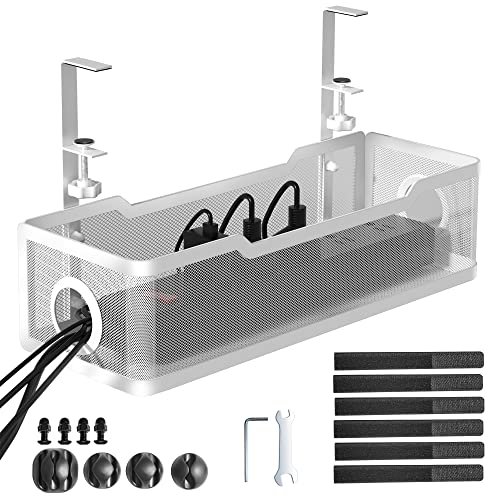
EMEET C960 4K Webcam for PC, 4K UHD CMOS Sensor, PDAF Auto Focus, Dual Omnidirectional Mics, Auto Light Correction, 73° FOV, Plug&Play Webcam w/Privacy Cover, Works w/Zoom/Teams/Skype/Google Meet

EMEET C960 4K Webcam for PC, 4K UHD CMOS Sensor, PDAF Auto Focus, Dual Omnidirectional Mics, Auto Light Correction, 73° FOV, Plug&Play Webcam w/Privacy Cover, Works w/Zoom/Teams/Skype/Google Meet
Unmatched Clarity with True 4K Resolution - Experience ultra-clear video conferencing with a genuine EMEET SmartCam C960 4K CMOS sensor. No false upscaling, only pure 4K quality. Ideal for remote bus…

You Lost Me At Doubly Linked Lists

You Lost Me At Doubly Linked Lists
Interviewers really out here asking you to implement a red-black tree while balancing a binary search tree on your head, only for you to spend the next six months updating button colors in CSS. The interview shows this intricate, complex pattern that looks like it required a PhD in advanced data structures, while the actual job is literally just... a triangle. One triangle. In a cup of coffee. That's it. Companies will make you reverse a linked list on a whiteboard while three senior engineers judge your every semicolon, then have you spend your entire career writing CRUD operations and attending meetings about meetings. The complexity gap between technical interviews and actual day-to-day work has become so absurd it's basically performance art at this point.

We Are The Same

We Are The Same
The great equalizer has arrived. Your code doesn't work because it's broken. Their code works until it suddenly doesn't. Both end up in the same place: frantically Googling error messages at 3 AM. The false confidence of "it works on my machine" is just a countdown timer to inevitable failure. At least broken code has the decency to fail consistently. Code that works and then stops? That's just psychological warfare. The debugging process is identical either way: add print statements, remove print statements, add them back, question your career choices, and eventually blame a library update from 2019.

POV: 16 GB RAM In 2026

POV: 16 GB RAM In 2026
You've got 16 GB of RAM and somehow 15.7 GB is already spoken for before you even open Chrome. Just sitting there at idle, breathing heavily like it just ran a marathon. By 2026, apparently having 16 GB will be like showing up to a gunfight with a butter knife. Your OS alone will probably need 12 GB just to display the wallpaper, and don't even think about opening Slack or Teams. Those apps will take one look at your remaining 300 MB and laugh. Remember when 4 GB felt like luxury? Yeah, those were simpler times. Now Electron apps are out here treating RAM like it's free real estate, and every background process thinks it's the main character. The future is now, and it's extremely memory-hungry.

Open Sesame!

Open Sesame!
The ancient tale of Ali Baba gets a modern security update. Our hero tries the classic "Open Sesame" password and gets hit with the dreaded "INCORRECT PASSWORD" error. Classic rookie mistake—forgetting that your password requirements demand at least one number, one special character, and probably a blood sacrifice. So naturally, they pivot to "OpenSesame!123" and boom—the cave opens like it's been waiting for that sweet combination of uppercase, lowercase, and numbers all along. The cave door was basically running the same password validation as every corporate login system you've ever encountered. Fun fact: If Ali Baba's cave existed today, it would probably also require him to change his password every 90 days and wouldn't let him reuse any of his last 24 passwords. The treasure would've been long gone before he figured out "OpenSesame!123Winter2024$"

I Love Choosing The Stack

I Love Choosing The Stack
Manager: "Let's build something new!" Engineer's brain: *immediately conjures a swirling vortex of every bleeding-edge technology that exists* The manager suggests using the SAME BORING STACK they already know works perfectly fine, and the engineer is just sitting there fantasizing about rewriting everything in Rust with Nix, throwing in some SurrealDB for spice, orchestrating it with Kubernetes, streaming events through Kafka, adding Temporal for workflow management, and oh why not sprinkle some WASM and a custom protocol on top? Because who needs "straightforward" when you could spend six months learning twelve new technologies, battling cryptic documentation, and explaining to your team why you absolutely NEEDED a graph database for a simple CRUD app? The engineer's eyes say "new service" but their heart screams "COMPLETE ARCHITECTURAL REVOLUTION." Spoiler alert: They'll use the same stack. But those 3 seconds of dreaming? Chef's kiss. 💋

When Claude Is Your Rollback Plan

When Claude Is Your Rollback Plan
Production goes down. Panic sets in. You frantically try to rollback using your AI assistant. Then you hit the rate limit. Imagine relying on an AI chatbot to save your production environment during an outage, only to discover that Claude has a message quota. Nothing says "enterprise-ready disaster recovery" quite like "Sorry, you've asked too many questions this hour." Git history? Nah. Proper version control? Too mainstream. Documented rollback procedures? Who has time. Just ask the AI to remember what you deployed 20 minutes ago. What could possibly go wrong?

There Are 10 Types Of People Funny Binary Programmer Nerd Ceramic Mug, Blue/White

There Are 10 Types Of People Funny Binary Programmer Nerd Ceramic Mug, Blue/White
Clever math and coding joke referencing binary numeral system · Great for programmers developers computer science enthusiasts · 11-ounce ceramic mug is dishwasher and microwave-safe, lead and BPA fre…

The New Reality Of AI

The New Reality Of AI
So you thought you could just casually ask your AI assistant to "refactor this code real quick" without any consequences? Think again. Now your innocent prompts have to pass through the gauntlet of AI guardrails—those overzealous security measures that treat every request like a potential cyber attack. That "quick security audit" you desperately needed? Yeah, it's buried somewhere in your refactor request, and the AI is too busy checking if you're trying to build SkyNet to actually help you. Meanwhile, your usual prompts are just standing there like confused kids wondering why they need a background check to rename some variables. The irony is delicious: we built AI to make coding faster, then immediately wrapped it in so much red tape that asking it to review your authentication logic triggers more security protocols than the authentication logic itself.

Developers Missing The Old Days

Developers Missing The Old Days
Remember when we just had HTML, CSS, and vanilla JavaScript? You could build a perfectly functional website with a text editor and some FTP access. Life was simple. Pages loaded instantly. No build process, no transpiling, no waiting 15 minutes for node_modules to install. But nope, we couldn't leave well enough alone. Now you need React, Angular, Vue, Svelte, 47 different build tools, a PhD in webpack configuration, and three different package managers just to render "Hello World" with a fancy fade-in animation. Your simple blog now requires a CI/CD pipeline, Docker containers, and costs $200/month to host. The best part? We convinced ourselves this complexity was "necessary" and "modern best practices." Sure, we get better developer experience and component reusability, but at what cost? Your grandma's WordPress site from 2008 still loads faster than your over-engineered SPA.