Yum

Yum
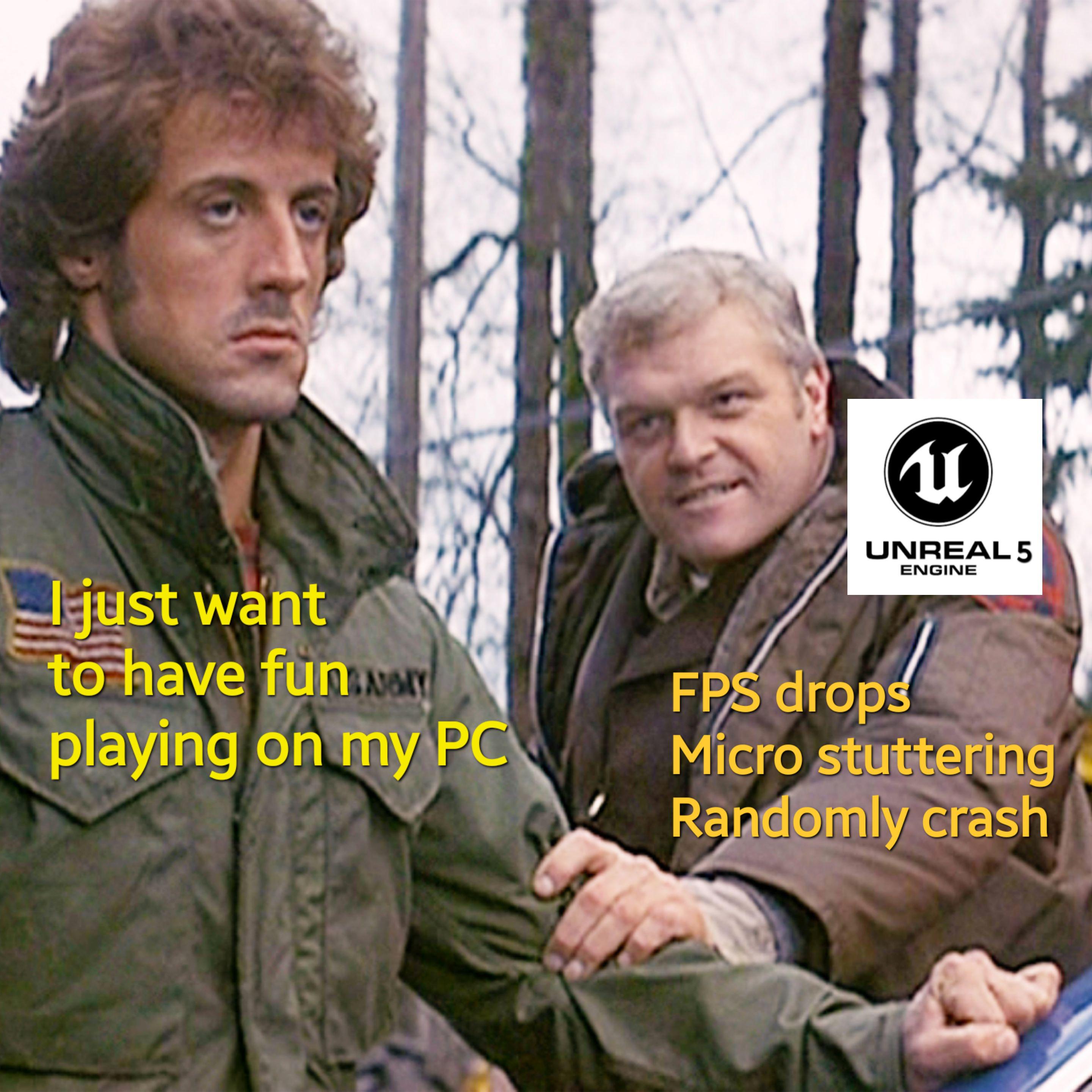
Dogfooding: meh, I guess we should use our own half-baked project management tool that crashes every Tuesday. Dogshitting: OH HELL YES, we get to use our own AI that actually works and makes our jobs easier instead of pretending Jira is a good product. The difference? AI companies are actually excited to use their own tools because they're not selling enterprise garbage that requires 47 meetings to configure. They're building stuff that deletes their own workload. Revolutionary concept, really.

Professional Monitor Boxer

Professional Monitor Boxer
Start of the day: pristine dual monitor setup, clean code, optimistic vibes. By 10 AM: one monitor's already showing signs of distress with those classic screen artifacts. By 3 PM: both monitors have been absolutely demolished into a glorious mess of broken pixels and shattered dreams. The progression perfectly captures how your sanity deteriorates throughout the workday. That bug you thought would take 5 minutes? Still hunting it down 8 hours later. Your monitors didn't break themselves—they're just physically manifesting your internal state after dealing with legacy code, merge conflicts, and that one function that works in dev but fails in production for absolutely no logical reason. Pro tip: Monitors are cheaper to replace than therapy sessions. Barely.

Just In Case

Just In Case
Someone really out here defining maybe and later as preprocessor macros, then declaring a variable called maybe_later with a pointer. The "zero-cost abstraction" is just... procrastination as a language feature. It's like telling the compiler "yeah I'll figure out what this does eventually" but making it sound fancy. The pointer at the end suggests they might actually use it later, or maybe not. Schrödinger's variable declaration right here.

We Are All Trying To Find The Guy Who Did This

We Are All Trying To Find The Guy Who Did This
So the Shopify CEO went from "AI is mandatory for all employees!" to "employees' slop grenades are making more work for everyone" in just 529 days. Classic tech leadership arc: force everyone to use the shiny new toy, then blame them when it turns out AI-generated garbage actually creates MORE work than it saves. The guy literally mandated AI usage and now acts shocked that people are churning out low-quality AI slop that needs human cleanup. It's like forcing everyone to use a leaf blower indoors and then complaining about the mess. The transformation from hat-wearing visionary to bald reality-checker is just *chef's kiss* perfect. Who could've seen this coming? Oh right, literally everyone who's ever worked with AI output.

Sprint Planning

Sprint Planning
Sprint planning in 2024 is basically an exorcism at this point. Product manager walks in with "just a small AI feature" and the entire dev team recoils like they've been shown a cursed artifact. Because let's be real—what starts as "add a simple chatbot" inevitably spirals into training custom models, dealing with hallucinations, managing API costs that rival your AWS bill, and explaining to stakeholders why the AI can't actually read minds. Plus, you know that "2-week sprint" is about to become a 6-month odyssey through vector databases and prompt engineering hell. The possessed child has the right idea: some things should stay buried.

Will It Give Me More Accurate Filename?

Will It Give Me More Accurate Filename?
Someone really woke up and chose VIOLENCE against the filesystem API. Like, bestie, calling .filename() eight times in a row isn't going to make it magically more accurate—it's still the same filename, just with extra steps and existential dread! This is what happens when you're so deep in debugging hell that you start questioning reality itself. "Maybe if I ask it REALLY nicely... eight times... it'll finally tell me the REAL filename?" Spoiler alert: it won't. The path object isn't hiding some secret ultra-accurate filename from you on attempt number seven. It's giving "I tried turning it off and on again but make it code." The desperation is palpable, the logic is absent, and somewhere a code reviewer is weeping into their coffee.

FLEXISPOT EN1 One-Piece Standing Desk, Electric Adjustable with 4 Memory Presets, 176 LBS Capacity, Stable & Quiet, Seamless Desktop for Home Office & Dual Monitors, 48"x30" Mahogany

FLEXISPOT EN1 One-Piece Standing Desk, Electric Adjustable with 4 Memory Presets, 176 LBS Capacity, Stable & Quiet, Seamless Desktop for Home Office & Dual Monitors, 48"x30" Mahogany
ONE-PIECE. ZERO WOBBLE: A seamless, rock-solid desktop built for home offices, creative studios, and designers running multi-monitor setups. · THE POWER OF 1-INCH: Dense, durable, and sag-resistant, …

C For Crouch Is The Only Correct Answer

C For Crouch Is The Only Correct Answer
Gaming keybinds are basically the tabs vs spaces debate but with more violence. You've got the "C is for crouch" purists fighting the "Ctrl master race" while some enlightened soul shows up claiming C should be for dash because they played one indie game in 2007 that did it that way. The real chaos is that everyone's muscle memory is so deeply ingrained from their first FPS that suggesting a different keybind feels like a personal attack. And don't even get me started on the psychopaths who bind crouch to something like V or B. Fun fact: The reason we even argue about this is because early FPS games had wildly different default controls before WASD became the standard. Some games used arrow keys, some used ESDF. We're lucky we're not still fighting about movement keys too.

My Solution To An Advent Of Code Problem From A While Back

My Solution To An Advent Of Code Problem From A While Back
You know you've gone too far when your code looks like it's actively trying to escape the screen. That beautiful cascade of nested .map() , .split() , .reduce() , and .filter() calls is what happens when you refuse to use variables because "functional programming is cleaner." The cherry on top? That innocent little { red: 0, green: 0, blue: 0 } buried in there like it's totally normal to be six levels deep in method chaining. And let's not even talk about the triple nested reduce at the end that's doing... something with products and sums? Sure, it probably works. Sure, it's technically one expression. But good luck debugging this when it breaks at 2 AM, or explaining it to your teammate who just wants to understand what "cube[1]" means without a PhD in callback archaeology. Sometimes the real puzzle isn't Advent of Code—it's reading your own code three days later.

Artificial Intelligence Meet Natural Stupidity

Artificial Intelligence Meet Natural Stupidity
Oh, the sweet irony! While AI is out here trying to replace us all, some genius engineers decided their transfer mechanism options should be CORBA, Alt-M, MHAL, and MOCB. Nothing says "cutting-edge technology" quite like a UI that looks like it was designed by someone who learned acronyms before learning the alphabet. The real kicker? After all those "brainstorming sessions" and "collaborative design sprints," they birthed this beautiful monstrosity where nobody—not even the developers who built it—has any clue what these options actually mean without consulting the 47-page technical specification document buried in SharePoint. But sure, AI is the problem here. The machines aren't taking over; they're just as confused as we are.

Admit It, You Do The Same Thing Every Time You Want To Change Monitors...

Admit It, You Do The Same Thing Every Time You Want To Change Monitors...
We're all out here pretending to be rational consumers, carefully weighing the pros and cons of our tech purchases. But when it comes to monitors? Nah, we immediately spiral into a doom-scroll through every possible thing that could go wrong. OLED burn-in? *Catastrophic anxiety intensifies.* TN panel washed-out colors? *Shudders in RGB.* VA ghosting? *Visible panic.* IPS glow turning your blacks into "grey is the new black"? *Existential crisis unlocked.* Mini-LED blooming like your screen is hosting a light show? *Screams internally.* Meanwhile, the actual benefits of the monitor? The refresh rate? The resolution? The color accuracy? Yeah, we'll get to those... eventually... maybe... after we've convinced ourselves that every display technology is fundamentally broken and we should just go back to CRT monitors. Who needs rational decision-making when you can have PURE UNBRIDLED PARANOIA about pixel-level imperfections you'll never actually notice during normal use? 🎭

NordVPN

NordVPN
Encrypt your traffic on public Wi-Fi, stream from anywhere, and cover up to ten devices with one plan. 30-day money-back guarantee.

They Can't Help It Can They

They Can't Help It Can They
Every Linux enthusiast's default response to literally any technical problem. Your printer won't connect? Install Linux. Excel crashing? Install Linux. Your toaster won't toast? You guessed it—install Linux bro. The beauty here is that someone's asking for help with a Windows-specific issue, and the Linux guy's brain immediately short-circuits to evangelism mode. It's like asking a mechanic how to fix your Honda and they respond with "have you considered buying a Tesla?" Zero situational awareness, maximum conviction. The irony? If they actually switched to Linux, this same person would be the first to ghost them when their WiFi drivers don't work or they can't figure out why their audio is routing through /dev/null.

Can Somebody Confirm This Pls?

Can Somebody Confirm This Pls?
Someone just discovered that C's grammar is so pedantic that you can't put a label directly before a variable declaration in a switch case. The "fix"? Just slap a semicolon after the label to create an empty statement, turning it into a perfectly legal no-op. It's like the compiler is saying "I don't care what you do here, just give me *something* to execute first." The term "load-bearing semicolon" is chef's kiss here - it perfectly captures those cursed punctuation marks that look useless but the entire codebase collapses without them. Like a load-bearing wall in a house, except it's just a tiny character doing all the heavy lifting to satisfy the C standard's bizarre syntax requirements. Fun fact: This quirk exists because labels in C can only precede statements, not declarations. A declaration isn't technically a statement in C's grammar. So that lonely semicolon is literally just sitting there being a statement so the label has something to attach to. Peak language design right there.