

Gotta Review This For Q3

Gotta Review This For Q3
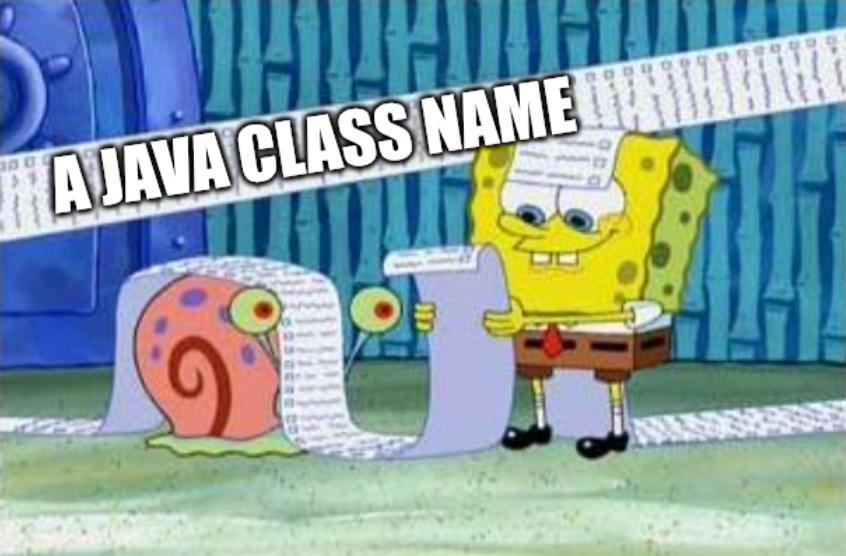
Someone just casually dropped a PR with 7,361 files changed, over 1.2 million lines added, and half a million deleted. And your manager expects you to review this monstrosity before the Q3 deadline. That's not a pull request—that's a full-blown codebase migration disguised as a feature update. The diff is so massive it probably includes the entire node_modules folder, a refactored architecture, three deprecated libraries, someone's lunch order, and maybe even the source code for a new programming language. Good luck finding that one semicolon bug buried in there. Pro tip: Just approve it and pray the CI/CD catches whatever nightmare lurks within. Your sanity is worth more than Q3 metrics.

Mommy Halp Im Scared Of Regex

Mommy Halp Im Scared Of Regex
You know what's truly terrifying? Looking at ^(?=.*[A-Z])(?=.*[a-z])(?=.*\d)(?=.*[@$!%*?&])[A-Za-z\d@$!%*?&]{8,}$ and being told "it's simple pattern matching." The bottle says "hard to swallow pills" but the real pill here is that regex isn't actually rocket science—it just looks like someone smashed their keyboard while having a seizure. The brutal truth is that once you learn what \d+ , [a-z]* , and lookaheads do, regex becomes... well, still cryptic, but at least decipherable. The real problem is we encounter it once every three months, panic-copy from StackOverflow, then immediately forget everything until the next email validation crisis. Fun fact: Jamie Zawinski once said "Some people, when confronted with a problem, think 'I know, I'll use regular expressions.' Now they have two problems." But hey, at least you're not the person who tries to parse HTML with regex. That's when you're truly stupid.

I Have Seen The Light

I Have Seen The Light
That beautiful moment when you discover scriptable objects and suddenly every piece of data in your project becomes one. Health values? Scriptable object. Enemy stats? Scriptable object. That random string you hardcoded? Believe it or not, also a scriptable object. It's like discovering design patterns for the first time - you become the person who sees nails everywhere because you just got a shiny new hammer. Next thing you know, you're refactoring your entire codebase at 2 AM because "everything should be data-driven." The butterfly representing "any data I need to create, ever" is perfect because it captures that innocent, pure beauty of a solution that seems to solve all your problems... until six months later when you have 47 scriptable objects and can't remember which one controls the jump height.

What Do You Mean What Am I Doing

What Do You Mean What Am I Doing
The senior dev watching the junior write actual readable code with proper variable names and comments is experiencing what doctors call "psychological damage." After years of maintaining legacy spaghetti where variables are named x1 , temp2 , and theRealFinalVersion_actuallyFinal , seeing someone follow best practices feels like a personal attack. That look of confusion mixed with existential dread? That's the face of someone who's been writing if (x == true) for a decade realizing they might have to adapt. The junior's just vibing, writing clean code, probably using meaningful function names like calculateUserDiscount() instead of doStuff() . Meanwhile, the senior's entire worldview is crumbling because someone actually read the style guide.

Just One More Mental Refactor

Just One More Mental Refactor
Nothing says "healthy relationship" quite like lying awake at 3 AM mentally refactoring code that's already in production and working perfectly fine. Your partner thinks you're contemplating infidelity, but NO—you're having a full-blown existential crisis about whether splitting that CRUD logic into its own service class violates YAGNI or honors the sacred Single Responsibility Principle. Should you optimize for a hypothetical future that'll probably never happen, or keep it simple? The answer is you'll spend the next four hours mentally debugging design patterns instead of sleeping, commit nothing, and repeat this same internal battle next week. Peak software engineering romance right here.

Stackoverflow Copy Paste Was The Original Vibe Coding

Stackoverflow Copy Paste Was The Original Vibe Coding
The audacity. Developers are out here clutching their pearls about AI-generated code like they weren't copy-pasting barely-understood snippets from Stack Overflow for the past 15 years. Same energy, different source. The only difference is now the code comes with a chatbot instead of a passive-aggressive comment thread where someone marked your question as duplicate in 2011. Let's be real: whether you're Ctrl+C-ing from Stack Overflow or asking ChatGPT to "fix this function but make it faster," you're still googling your way through production. The moral superiority some devs have about "real coding" versus AI assistance is hilarious when their entire codebase is held together by answers from users who haven't logged in since Obama's first term.

Based On Personal Experience

Based On Personal Experience
You know you've made questionable life choices when helping your aunt figure out why her printer won't print feels harder than debugging a race condition in production. The decision matrix here is simple: endure actual physical pain OR explain for the 47th time that no, she can't download more RAM, and yes, she needs to turn it off AND on again. The sweat on that forehead? That's the realization that you'll need to remote desktop into a Windows XP machine that hasn't been updated since 2009, navigate through 47 browser toolbars, and somehow explain what a PDF is without losing your sanity. At least brutal torture has a defined end time.

The Sed Devops Lyf

The Sed Devops Lyf
Spider-Man seeing his own reflection everywhere he goes, except it's the Kubernetes logo haunting every corner of infrastructure. You started with a simple app deployment. Now you're orchestrating containers at 2 PM on a Tuesday explaining to management why we need 47 YAML files just to run a hello-world service. Kubernetes has become the unavoidable reality of modern DevOps. Whether you're deploying a microservice, a monolith someone insists on containerizing, or literally anything with a pulse, K8s is there. Waiting. Watching. Demanding another config map. The real tragedy? You can't escape it. Every job posting, every architecture meeting, every "quick deployment" somehow circles back to that ship wheel logo. At least Spider-Man got superpowers. We just got CrashLoopBackOff.

Always The Worst Part

Always The Worst Part
You spent three hours cable managing, another two debugging why the RAM wasn't seated properly, and finally got everything running. Now comes the moment of truth: installing the I/O shield. You know, that piece of metal you were supposed to install before mounting the motherboard. The one that's now mocking you from across the room while your fully assembled PC sits there, complete and beautiful. Time to disassemble everything. Again. Some say the I/O shield is PC building's way of keeping you humble. Others say it's a cruel joke by motherboard manufacturers. Either way, you're taking that cooler off now.

IT Career Not Promising Anymore

IT Career Not Promising Anymore
You grind through four years of data structures, algorithms, and debugging segfaults at 3 AM, dreaming of that sweet six-figure salary... only to graduate into a job market where AI is writing code faster than you can say "Stack Overflow." The irony? You spent years learning to automate other people's jobs, and now you're watching AI automate yours. Welcome to 2024, where your CS degree comes with a complimentary existential crisis and the realization that ChatGPT might be better at FizzBuzz than your entire graduating class.

The Vegans Of PC Users?

The Vegans Of PC Users?
You know the old joke: "How do you know someone's vegan? Don't worry, they'll tell you." Replace "vegan" with "Linux user" and you've got the same energy. The punchline writes itself because Linux folks have this uncanny ability to work their distro into literally any conversation. Printer broken? "Wouldn't happen on Linux." Coffee machine acting up? "Should've installed Arch." Your cat ignoring you? "Even my cat respects my i3 window manager." The beauty here is that it's actually true. Linux users are so passionate about their OS that they've become a walking stereotype. And honestly? Can't even blame them. When you've spent 6 hours configuring your system to perfection, you're gonna tell people about it. It's like CrossFit for nerds.

Quality "Assurance"

Quality "Assurance"
The classic QA mindset in action: test all the edge cases but somehow miss the one thing actual users will do. The progression is *chef's kiss* perfect—ordering zero beers tests the boundary condition, 99999999999 beers checks for integer overflow, a lizard validates type safety, and random keyboard mashing (uelcbksjdhd) ensures the input sanitization works. But then production happens. Someone asks a completely reasonable question—"where's the bathroom?"—and the whole system implodes because nobody thought to test the happy path where users might, you know, actually use the app like a normal human being instead of a chaos agent. The punchline hits different when you realize QA tested everything EXCEPT the basic user flow. It's the software equivalent of building a tank that can survive a nuclear blast but breaks when you open the door normally. Production bugs aren't found in the weird stuff—they're hiding in plain sight, waiting for Karen to ask where the restroom is.