Strategy Manager Factory

Strategy Manager Factory
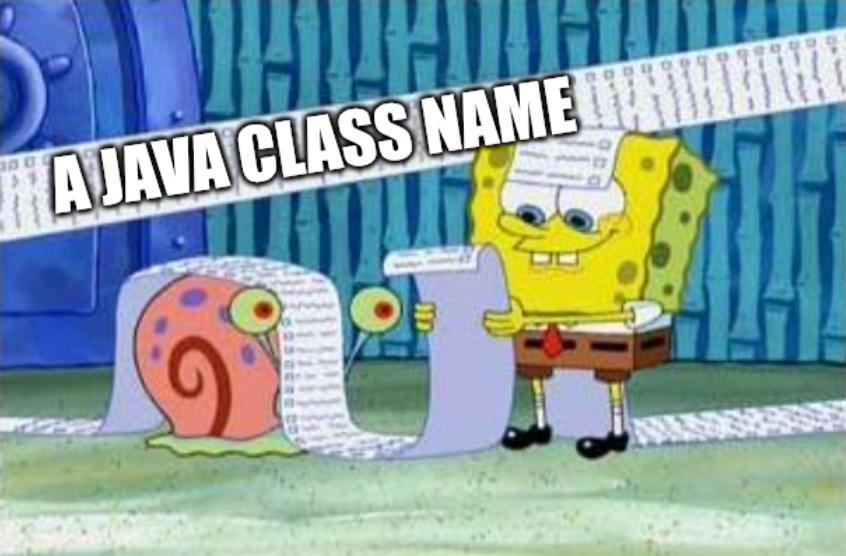
Java developers have mastered the art of turning simple things into enterprise-grade nightmares with names like StrategyManagerFactory . When someone asks "what's this code do?", they'll smugly explain it's a Factory pattern that creates Managers for Strategies, as if that clarifies anything. Meanwhile, C++ devs look at the same incomprehensible code and just shrug—because at least Java devs pretend to have a system. In C++, you're on your own with raw pointers, template metaprogramming, and the lingering fear that your code might summon a segfault demon. The real joke? Both codebases are equally unreadable, but only one gets to blame "design patterns" for it.

This Was Not The Brag That DHH Thought It Was

This Was Not The Brag That DHH Thought It Was
When DHH (creator of Ruby on Rails) bragged about HEY's infrastructure being so efficient that peak traffic could run on a single Raspberry Pi, he probably expected applause. Instead, he accidentally admitted that his "revolutionary" email service gets about as much traffic as your uncle's fishing blog. Sure, efficiency is great and all, but when you're flexing about minimal resource usage, you're also telling everyone your user base could fit in a Discord server. It's like bragging that your restaurant is so efficient you only need one stove... because you only serve three customers a day. The real kicker? A Raspberry Pi costs like $35. That's not a flex about optimization—that's a self-own about scale.

What A 5 Year Old

What A 5 Year Old
That five-year-old just casually speedran Dark Souls on hard mode while you're over here Googling "how to center a div" for the 47th time this week. No tutorial, no documentation, no Stack Overflow—just pure unfiltered button-mashing chaos and somehow they beat the final boss. Meanwhile, senior devs need three monitors, two cups of coffee, and a rubber duck just to debug a null pointer exception. Kids really out here proving that reading the docs is optional when you have the audacity of youth and zero fear of failure.

Just Hope And Pray It Works Out

Just Hope And Pray It Works Out
You know you've reached peak software engineering when your try-catch block becomes a crime scene cover-up tool instead of actual error handling. There's a special place in code review hell for developers who wrap everything in try-catch and just... do nothing with the exception. No logging, no recovery strategy, no user feedback—just swallowing errors like they never happened. The worst part? It actually works until it doesn't. Your app silently fails, users report weird behavior, and you spend three days debugging only to find a lonely empty catch block mocking you from line 247. Meanwhile, the "proper" error handling folks are over here with their custom exception classes, graceful degradation, and detailed error logs like they're writing a dissertation. Pro tip: If your catch block is emptier than your coffee cup at 4 PM, you're doing it wrong. At least throw in a console.log or something. Future you will thank present you.

Skip Whole Dev Lifecycle

Skip Whole Dev Lifecycle
The classic "clown makeup" progression meme, but make it corporate dysfunction. Starts innocently enough with non-devs "contributing" (air quotes doing heavy lifting here), then escalates through skipping code reviews because "we need to move fast," and finally goes full circus by ditching integration tests because cloud bills hurt. Each step transforms you from a reasonable human into a full-blown clown, which tracks perfectly with how you feel watching your CI/CD pipeline become more of a "CI/Pray-it-works" situation. The real kicker? This usually happens when some VP promises a demo date that's physically impossible, so everyone just starts cutting corners like they're speedrunning technical debt. Spoiler alert: Production becomes the testing environment, and your on-call rotation becomes a support group.

The Original Garbage Collector

The Original Garbage Collector
So Todd Howard just casually admitted that Bethesda's solution to memory management on the original Xbox was... turning it off and on again. When Morrowind was eating up too much RAM, they'd just secretly reboot the console during loading screens and hope players thought it was just normal Bethesda jank. This is the equivalent of fixing a memory leak by killing the entire process. Except in this case, the "process" is the entire gaming console. No fancy mark-and-sweep algorithms, no reference counting, no generational collection—just good old-fashioned hardware reset as garbage collection. The nuclear option became the standard operating procedure. And honestly? It worked. Millions of players experienced this "feature" and just assumed their game was loading. That's some next-level problem-solving right there—when your memory management is so broken that rebooting the entire system is the most reliable fix. The title "Original Garbage Collector" hits different when you realize the garbage collector was literally the Xbox's boot sequence.

Funny Programmer - Rubber Duck Debugging Throw Pillow

Funny Programmer - Rubber Duck Debugging Throw Pillow
Still searching for Funny Rubber Duck Programmer Debugging Source Code Design? · Make a statement while maintaining a laid-back cool look with this Have You Tried Explaining It To The Rubber Duck Pro…

The Race To Create More Trash Faster Intensifies Xd

The Race To Create More Trash Faster Intensifies Xd
Nothing says "progress" quite like watching trash can icons get progressively more detailed while the software inside them gets progressively worse. Started with simple pixelated bins in the 90s, got that glossy Internet Explorer look in 2000, then Edge tried to be fancy in 2001. By 2015 someone decided minimalism was the answer. But 2025? Microsoft Teams becomes the trash icon. Finally, some honest branding. And 2026 brings us a rainbow gradient monstrosity that probably requires 4GB of RAM just to render the icon. Can't wait for 2030 when the trash icon will need its own dedicated GPU and cloud subscription.

Singletons Are Just Globals

Singletons Are Just Globals
The emperor has no clothes, and the singleton has no excuse! Someone finally said what we've all been thinking but were too polite to admit in code reviews. You can dress up your global variable in a fancy getInstance() method, add some lazy initialization, throw in some thread-safety concerns, and call it a "design pattern" all you want—but at the end of the day, you're still accessing the same single instance from anywhere in your codebase like it's 1995. It's literally just global state with extra steps and a superiority complex. The Singleton pattern strutted into town acting all sophisticated with its private constructor and controlled access point, but really it's just your good old global variable wearing a tuxedo to the function. Both will haunt your testing suite and make dependency injection cry in the corner.

Idk What To Do Tbh

Idk What To Do Tbh
When your system is so perfectly balanced that both your CPU and GPU are maxed out, you've either achieved gaming nirvana or you're about to experience a thermal shutdown. Either way, your rig is sweating bullets trying to decide which component gets to be the excuse for your 45 fps. The real tragedy here is that you can't just throw money at one upgrade and call it a day. You're stuck in hardware purgatory where both components are equally terrible (or equally good, depending on your optimism levels). Time to flip a coin or just accept that your wallet needs to lose weight anyway.

They Just Had To Use Black Text…

They Just Had To Use Black Text…
Someone at the hardware design department really said "let's print black text on a black mouse" and nobody stopped them. It's like using #000000 text on a #0a0a0a background and calling it accessible. The sticker wore off just enough to reveal the specs underneath, but good luck reading them without a flashlight and a magnifying glass. It's the physical equivalent of commenting your code in white text on a white background—technically there, but utterly useless. At least CSS gives you color: contrast() ... oh wait, that's still not widely supported. Never mind, we're all doomed.

NordVPN

NordVPN
Encrypt your traffic on public Wi-Fi, stream from anywhere, and cover up to ten devices with one plan. 30-day money-back guarantee.

Does My Source Code Look That Bad

Does My Source Code Look That Bad
You spent HOURS crafting what you believe is a masterpiece of logic and elegance. Your code compiles! It runs! It actually WORKS! You're sitting there like a proud parent at graduation, ready to bask in the glory of your achievement. Then some code reviewer has the AUDACITY to ask if your beautiful creation was "vibe-coded" – you know, that magical process where you just throw spaghetti at the wall until something sticks, guided purely by vibes and prayers rather than actual software engineering principles. The disrespect! The betrayal! Your ego goes from SpongeBob's confident smile to complete existential meltdown faster than a segmentation fault. But let's be real – we've ALL written code that technically works but looks like it was assembled by a caffeinated raccoon at 3 AM. Sometimes the vibes DO be coding though. 🧽💀

We Never Trusted The Else

We Never Trusted The Else
Paranoia level: MAXIMUM OVERDRIVE. Someone out here treating boolean logic like it's quantum physics, checking if the condition is true, then DOUBLE-CHECKING if it's false in the else block, and THEN throwing an "Impossible state" error because apparently the universe might just glitch out and make a boolean be neither true nor false. Like bestie, if your condition can somehow be both not true AND not false, you've got bigger problems than error handling. Either you're coding in a reality where the laws of logic don't apply, or you've got trust issues with your own variables that would make a therapist weep. Spoiler alert: that error will literally never throw unless you're running your code in the Twilight Zone.