Yolo-deployment Memes

Posts tagged with Yolo-deployment
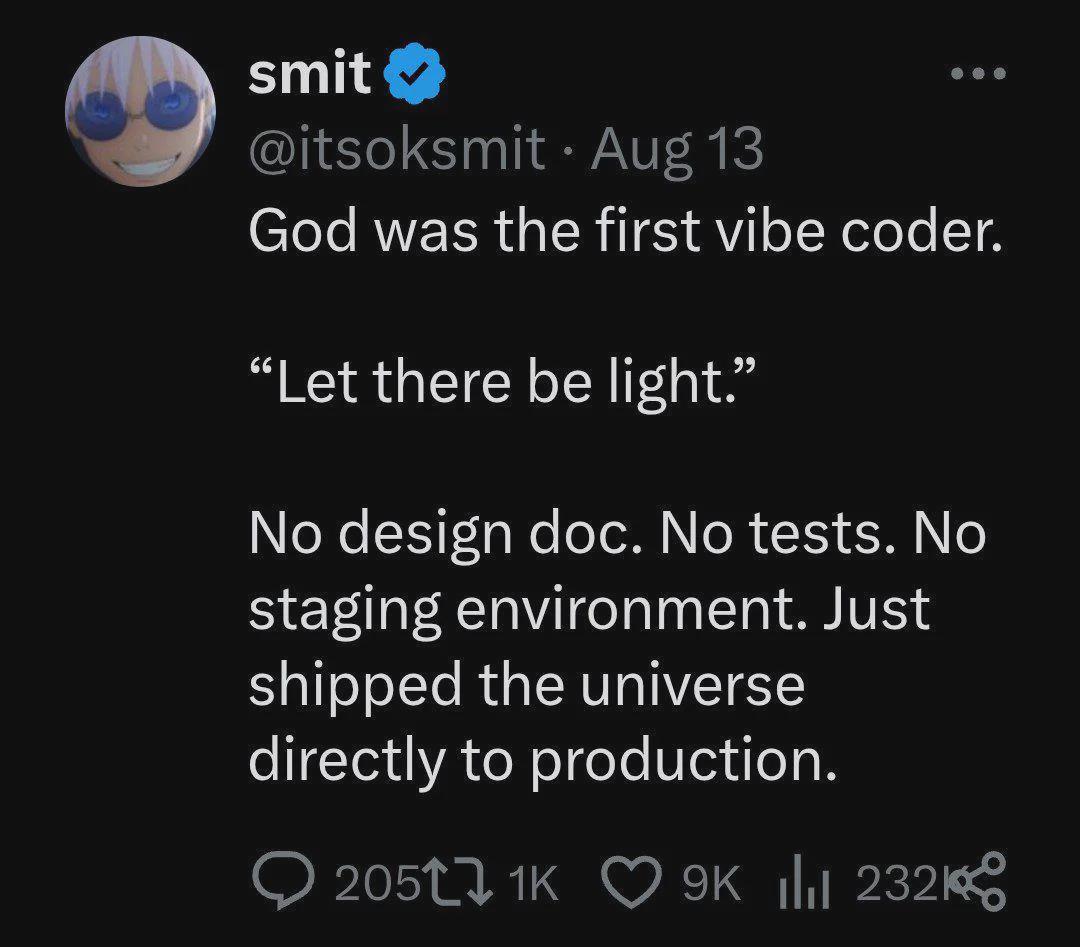
God Was The First Vibe Coder

God Was The First Vibe Coder
So apparently the Big Bang was just a Friday afternoon deployment with zero code review. No documentation, no unit tests, no staging environment—just straight to prod. And somehow it's been running for 13.8 billion years without a rollback. This is what happens when the senior dev has unlimited permissions and no PM breathing down their neck about sprint planning. Just vibes and divine inspiration. Meanwhile, we mortals need three approval gates and a risk assessment to change a button color. The real miracle isn't creation—it's that the production environment is still up without any monitoring dashboards or incident reports.

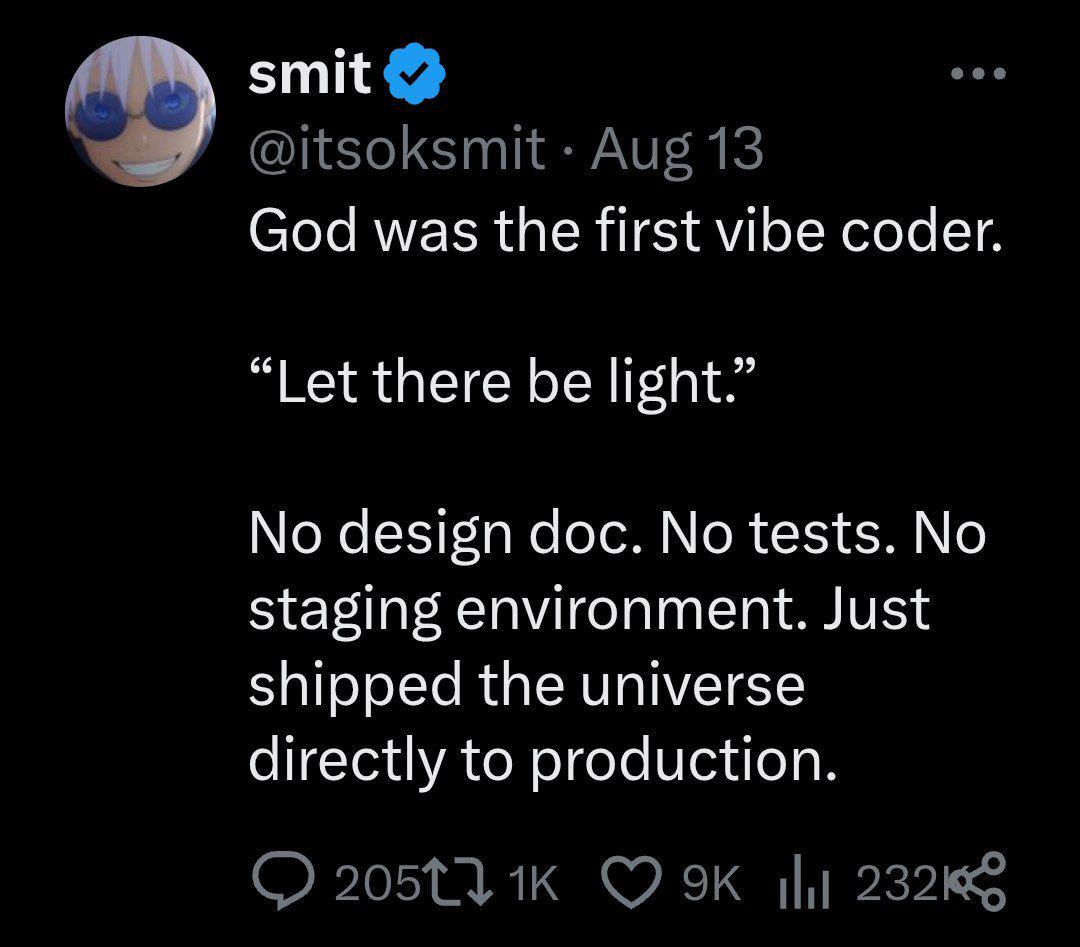
First Vibe Coder

First Vibe Coder
God really said "let there be light" and just yeeted the entire universe straight to prod. No design docs, no unit tests, no staging environment, no code review. Just raw vibes and a single command. Absolute chad energy. And somehow it's been running for billions of years with minimal downtime. Meanwhile, your carefully planned deployment with 47 approval gates still breaks on Friday at 4:59 PM. Really makes you think about our entire CI/CD philosophy.

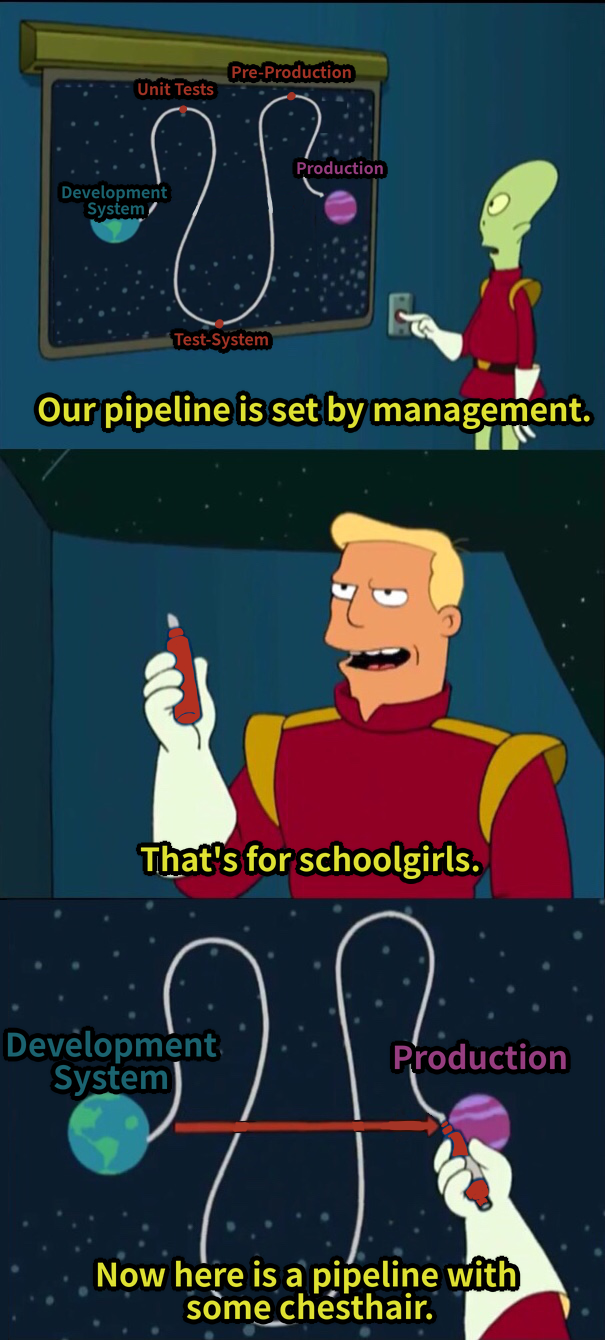
Git Yeet

Git Yeet
Management designs this beautiful, elaborate CI/CD pipeline with all the proper stages: Development System → Unit Tests → Test-System → Pre-Production → Production. A real work of art, following all the best practices. Then some absolute legend on the team just draws a straight line from Development straight to Production, bypassing literally everything. No tests, no staging, no safety nets—just raw, unfiltered code going straight to prod. git push --force origin main and pray. The "chesthair" comment is perfect because this approach requires either extreme confidence or complete recklessness. Probably both. And a lot of chesthair, apparently.

I Know Devs That Use Versioning And They Are All Cowards

I Know Devs That Use Versioning And They Are All Cowards
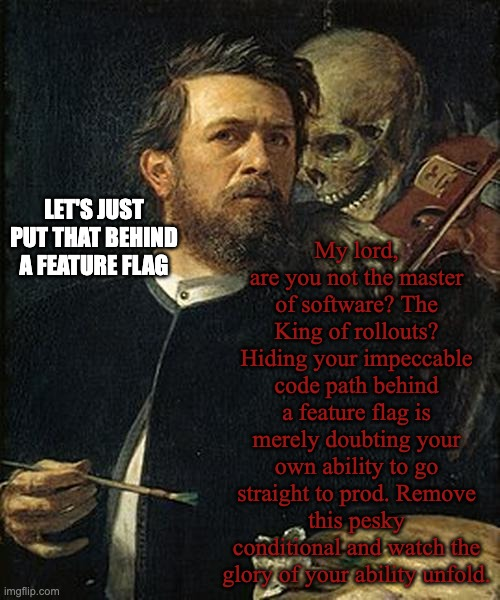
The classic standoff between the cautious developer who wants to hide risky code behind a feature flag and the absolute madlad who demands we ship directly to production. Feature flags are basically conditional statements that let you toggle functionality on/off without deploying new code—perfect for testing in prod or gradual rollouts. But our skeleton friend here is having none of it. Why waste time with safety nets when you could just YOLO your changes straight to production and watch the chaos unfold? It's the software equivalent of removing your training wheels by setting them on fire. The skeleton's dramatic monologue questioning your mastery of software and calling feature flags "pesky" is peak developer hubris. Sure, you *could* use proper deployment strategies and risk management... or you could just prove you're the King of Rollouts by deploying untested code on a Friday afternoon. What could possibly go wrong?

Vibe Coded App Security

Vibe Coded App Security
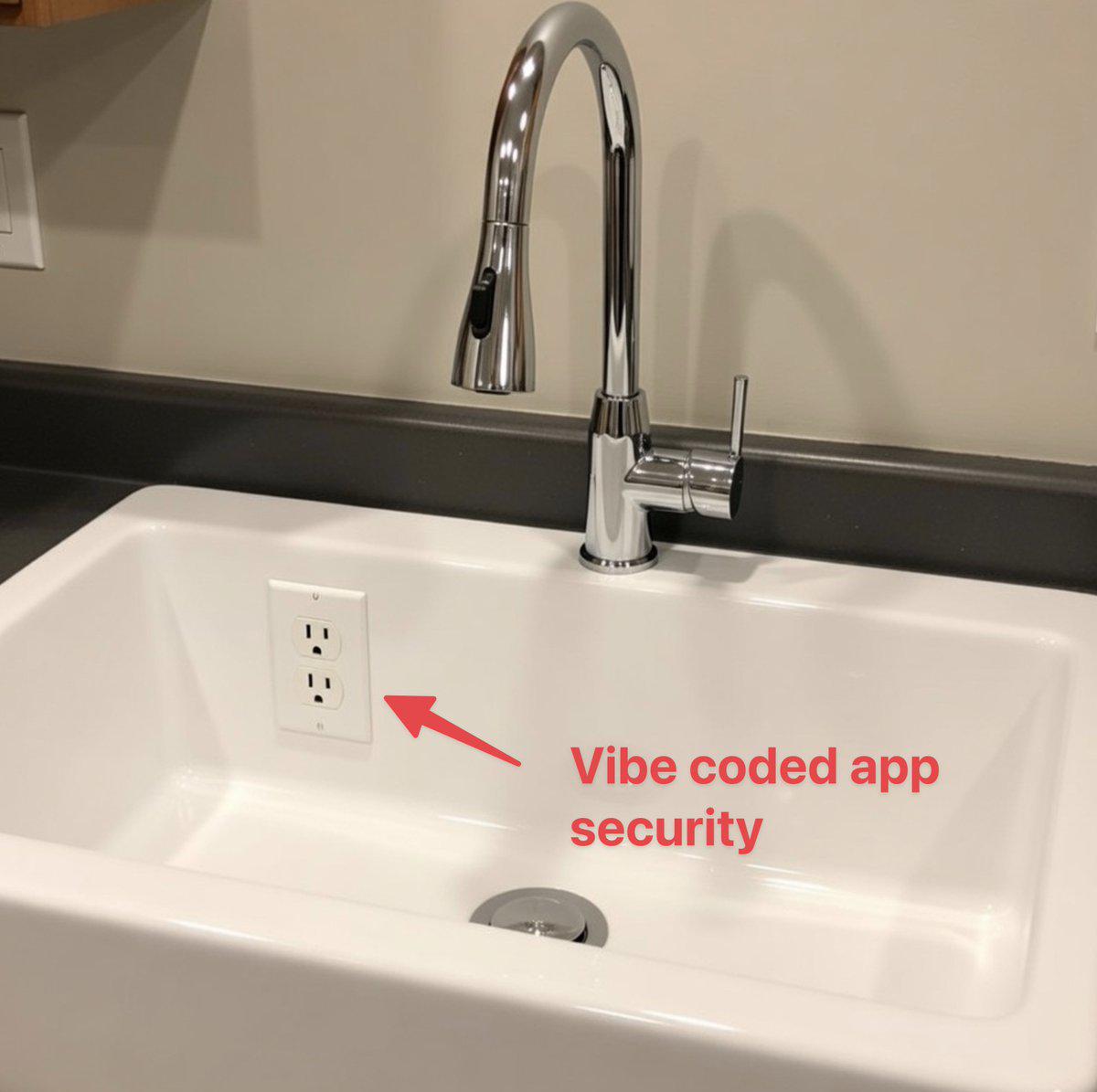
You know that startup founder who swears they "don't need a security audit" because their app just "feels secure"? Yeah, this is their production environment. An electrical outlet installed directly in a sink—technically functional, probably passes some vibe check, but one splash away from absolute catastrophe. This is what happens when you skip the boring stuff like input validation, SQL injection protection, and authentication best practices because "we need to ship fast." Sure, it works... until someone turns on the faucet. Then suddenly you're explaining to investors why your entire user database is on pastebin and your AWS bill is $47,000 because someone's mining crypto on your EC2 instances. Building code exists for a reason. So does OWASP Top 10. But hey, at least the sink looks modern and the vibes are immaculate.

Elgato XLR Dock – For Stream Deck +, XLR-to-USB Mic Interface, Customizable Audio Mixer, 75 dB Gain/Phantom Power/Clipguard – Mac/PC, Stream Deck Not Included (Renewed)

Elgato XLR Dock – For Stream Deck +, XLR-to-USB Mic Interface, Customizable Audio Mixer, 75 dB Gain/Phantom Power/Clipguard – Mac/PC, Stream Deck Not Included (Renewed)
Audio interface, For Stream Deck +: Connect an XLR mic to your computer via USB. Designed to replace standalone interfaces. · Loud and clear: 75 dB of gain to amplify your dynamic microphone. Brings …

The Only Thing Keeping Prod From Breaking Is Hope

The Only Thing Keeping Prod From Breaking Is Hope
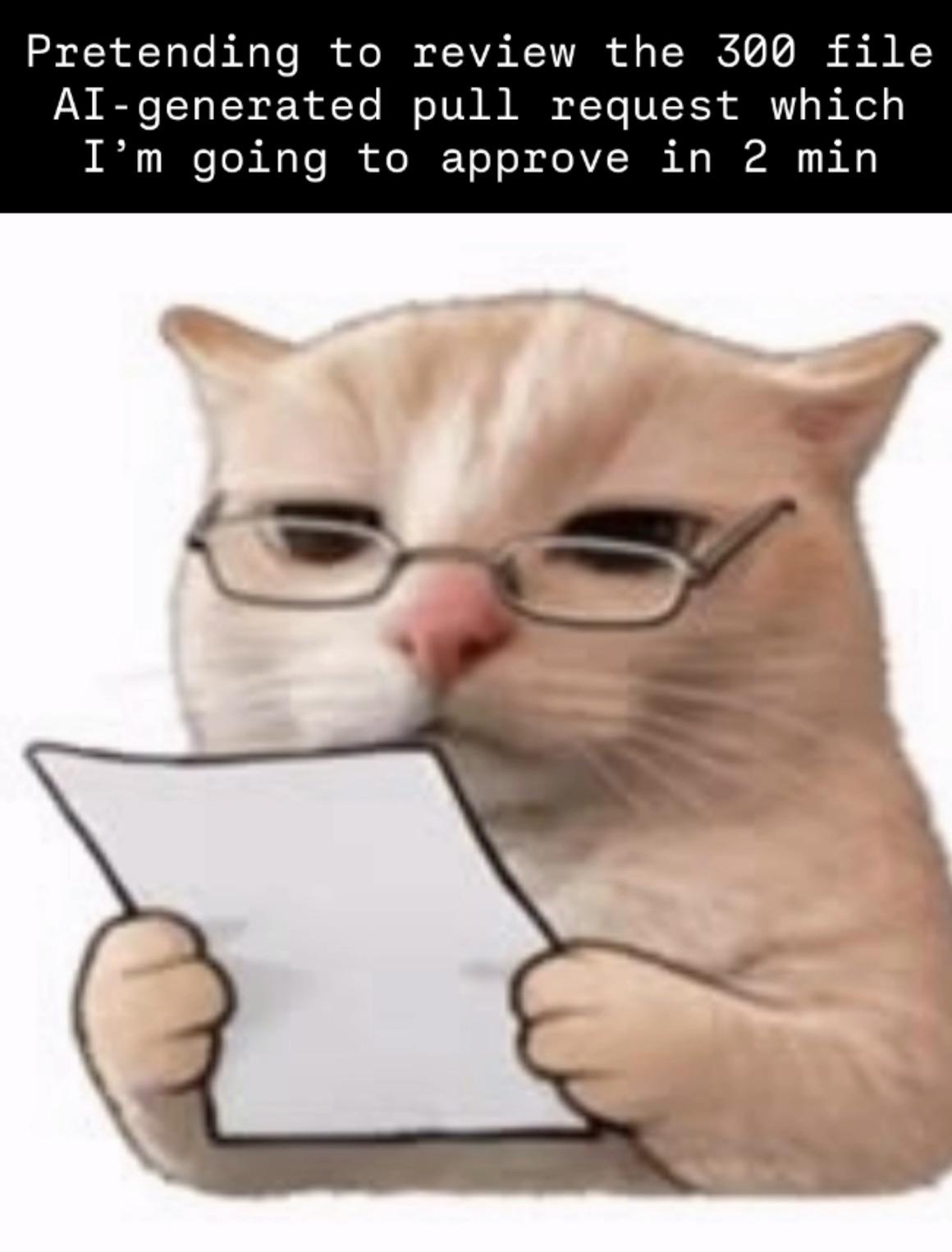
You know that Friday afternoon feeling when an AI-generated PR with 300 files lands in your lap and you've got a hot date in 2 hours? Just gonna skim through these changes real quick, trust the tests passed in CI, and smash that approve button. What could possibly go wrong? The real tragedy here is that AI code generators have somehow made rubber-stamping PRs even easier. Back in my day, we at least had to pretend to read the 50-line PR from our junior dev. Now we're pretending to review what's essentially a digital slot machine output that touched half the codebase. The glasses on the cat really sell it though. Looking professional while doing absolutely nothing is a core engineering skill.

Cp Prod Prod 2

Cp Prod Prod 2
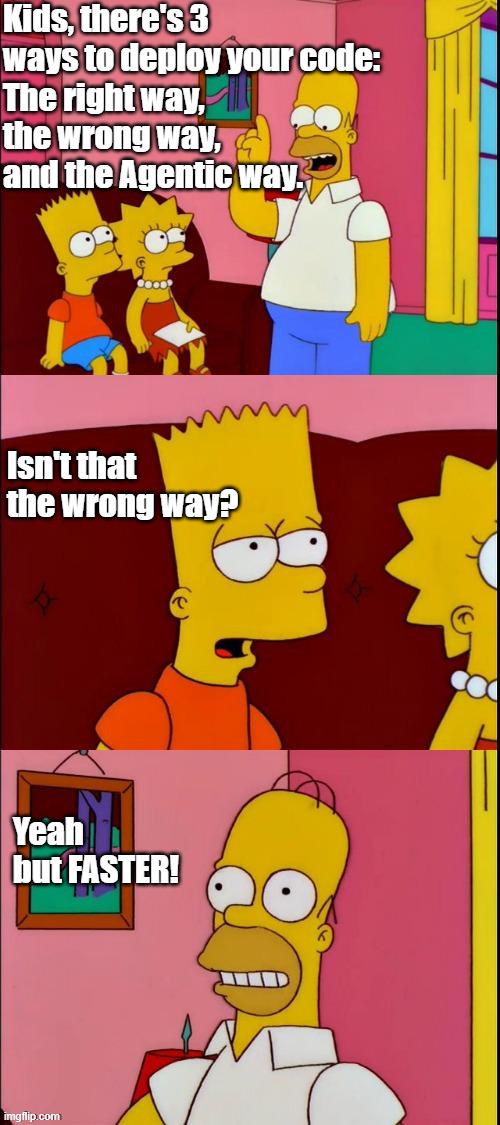
Homer Simpson dropping deployment wisdom on the kids: there's the right way (CI/CD pipelines, staging environments, proper testing), the wrong way (pushing untested code to production), and the Agentic way (copying production to production... twice). Bart's got a point though—isn't copying prod to prod just the wrong way? But Homer's got that senior dev energy: "Yeah, but FASTER!" Because nothing says efficiency like skipping all the steps and just yeeting files around in production. No rollback strategy, no version control, just pure adrenaline and the confidence of someone who's never been personally responsible for a 2 AM outage. The title "Cp Prod Prod 2" is *chef's kiss*—literally the command that makes DevOps engineers cry into their monitoring dashboards. It's the deployment equivalent of "it works on my machine" energy, except now it's "it works on prod 1, so let's just copy it to prod 2."

V For Vibe Coding

V For Vibe Coding
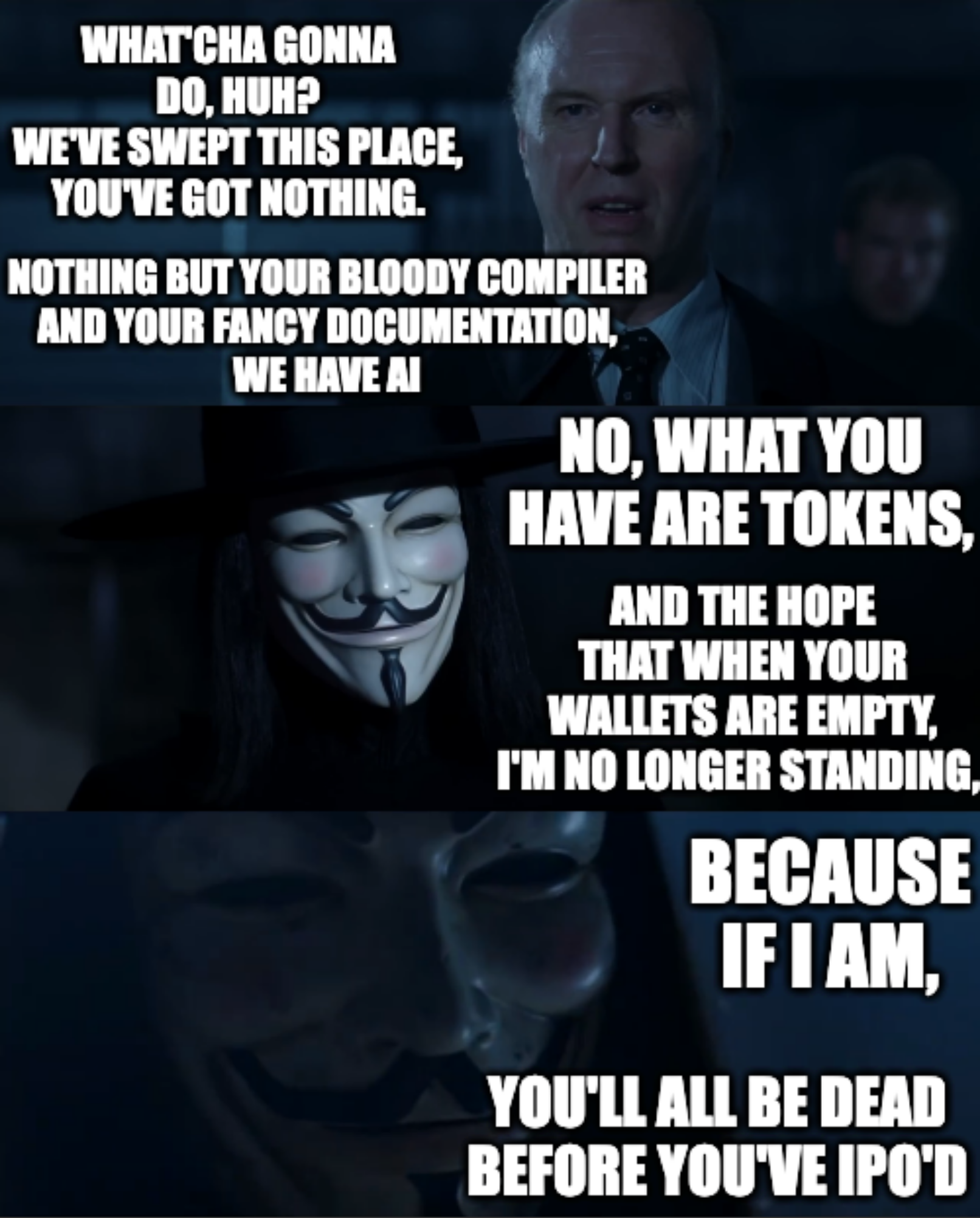
When your entire tech stack is held together by duct tape and prayer, but you're somehow still planning an IPO. The classic startup delusion: "We don't need proper error handling or unit tests—we've got AI and vibes!" Meanwhile, the codebase is one semicolon away from becoming sentient and filing for bankruptcy on its own. The progression from "your bloody compiler and fancy documentation" to "tokens and hope" is the entire crypto/AI startup journey in four panels. You start with actual engineering principles, then slowly descend into buzzword bingo and Hail Mary passes. By the time you're threatening people with your inevitable IPO, you're basically running on fumes and Medium articles. Fun fact: Most startups that skip the "boring" parts like documentation and proper tooling end up spending 10x more time firefighting production issues than they saved by moving fast and breaking things. But hey, at least the pitch deck looks good.

Cannot Exploit If No Security Is Applied

Cannot Exploit If No Security Is Applied
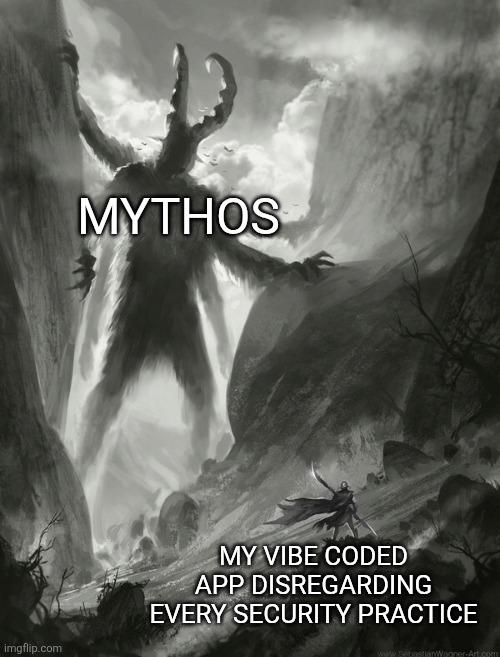
When you skip OAuth, JWT validation, input sanitization, HTTPS, rate limiting, CORS policies, and basically treat security headers like optional dependencies, you've achieved what cryptographers call "security through obscurity" but what we call "security through nonexistence." The logic is flawless: hackers can't find vulnerabilities in security measures that were never implemented in the first place. It's like saying you can't have a memory leak if you never free any memory—technically correct, but also... completely wrong. Your vibe-coded app standing there confidently while Mythos (representing actual security threats) looms overhead is the energy of every developer who's ever shipped to prod with "TODO: add auth later" still in the codebase.

LG 34U650A-B 34-inch UltraWide IPS WQHD 100Hz HDR10 Curved Monitor, Black

LG 34U650A-B 34-inch UltraWide IPS WQHD 100Hz HDR10 Curved Monitor, Black
Widescreen Workflows Made Effortless - Upgrade your desktop setup with a curved 34" 21:9 UltraWide QHD IPS display that lets you see more at once. Enjoy smooth 100Hz visuals, vibrant HDR color, and a…

Tech Lead Reviewed It

Tech Lead Reviewed It
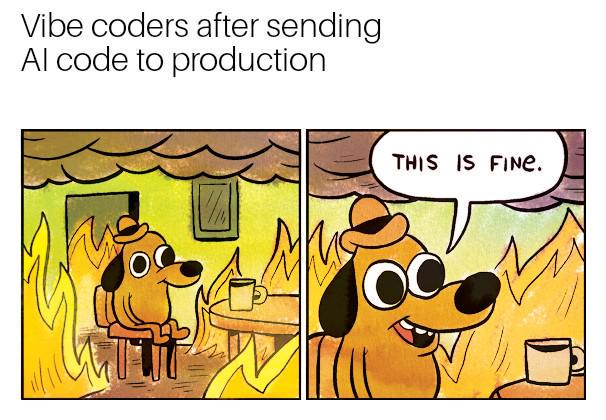
When you ship AI-generated code straight to prod and your tech lead gives it the rubber stamp with "looks good to me," you enter this beautiful state of denial where everything is definitely fine. The house is on fire, the coffee's still hot, and nobody's checking if the AI just reinvented bubble sort for the third time or hardcoded API keys directly into the frontend. But hey, the sprint's done and the velocity chart looks fantastic. The real kicker? That tech lead probably skimmed the PR in 30 seconds between meetings while thinking about their own production fire. Code review? More like code glance. The AI could've written the entire thing in COBOL and nobody would notice until 3 AM when PagerDuty starts screaming.

I Know Testing Is Important But Deploy And Pray Feels Right

I Know Testing Is Important But Deploy And Pray Feels Right
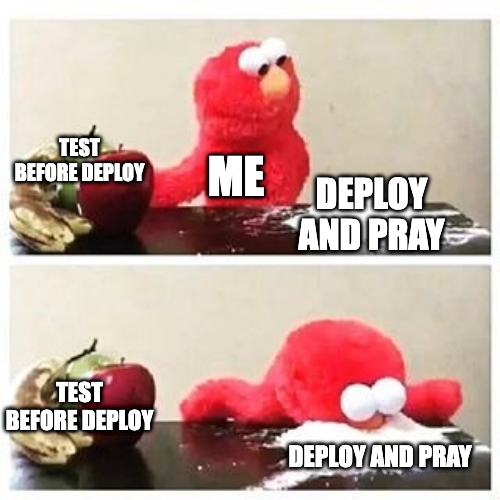
Listen, we all KNOW we're supposed to write tests, run them, and be responsible adults about our deployments. But there's something absolutely *intoxicating* about just yeeting your code straight into production and hoping the universe has your back. Elmo here is demonstrating the eternal struggle: that tiny, pathetic apple labeled "test before deploy" versus the GLORIOUS, MAGNIFICENT choice of just smashing that deploy button and offering a quick prayer to the coding gods. The second panel? Chef's kiss. That's you face-down on your desk at 2 PM when production is on fire and you're frantically rolling back while your manager asks "didn't we have tests for this?" Spoiler alert: we did not have tests for this. We had *vibes* and *confidence*, which, shockingly, don't prevent runtime errors.

Kim The First Vibe Coder

Kim The First Vibe Coder
When your product manager gives you requirements with absolutely zero room for error and the entire leadership team is watching your deployment. The stakes? Infinite cheeseburgers. The pressure? Maximum. The testing environment? Nonexistent. Nothing says "agile development" quite like five generals standing over your shoulder taking notes while you push to production. No pressure though—just code it perfectly the first time or face consequences that make a failed CI/CD pipeline look like a minor inconvenience. The developer's face says it all: "I should've written more unit tests." But when the Supreme Leader himself is your scrum master, you don't exactly get to negotiate sprint velocity.