

Sre Memes

Posts tagged with Sre
They Achieved Greatness

They Achieved Greatness
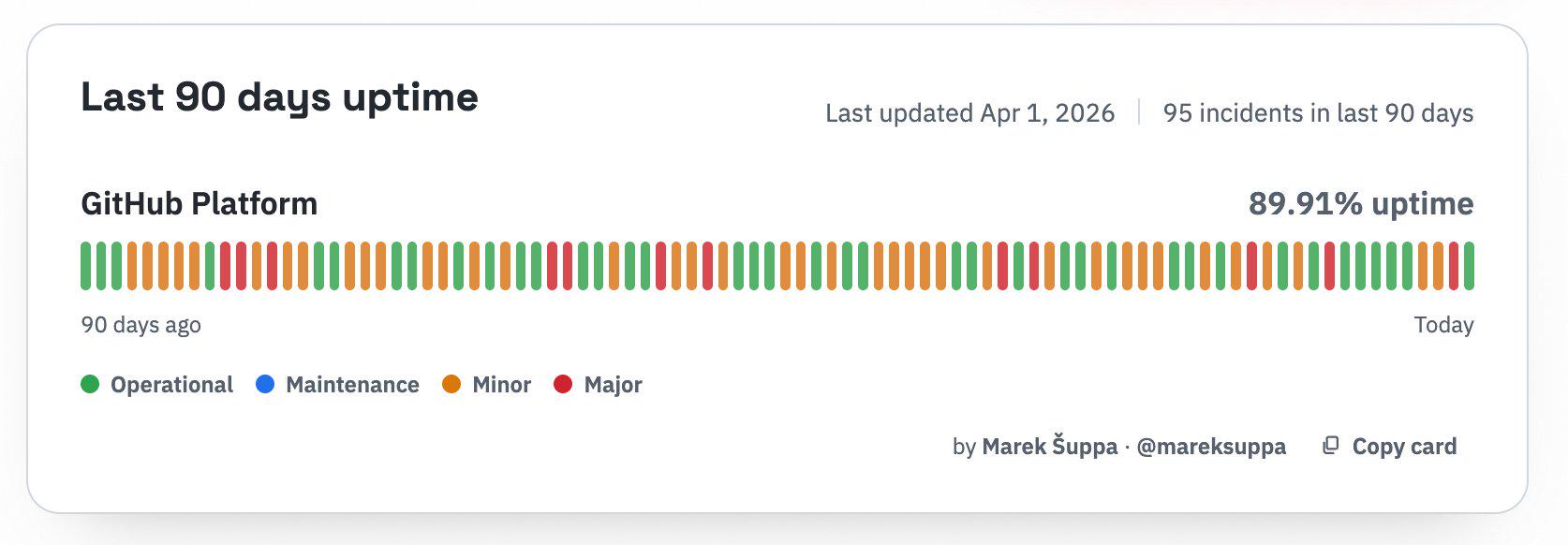
GitHub Platform flexing that sweet 89.91% uptime like it's a badge of honor. That's basically saying "we're only down 10% of the time!" which translates to roughly 9 days of downtime over 90 days. With 95 incidents sprinkled in there like confetti at a chaos party, this status page looks like a Christmas light display having an existential crisis. The bar graph is a beautiful mess of green (operational), orange (minor issues), and red (major outages) that screams "we're fine, everything's fine" while the building burns. For context, most enterprise SaaS platforms aim for 99.9% uptime (the "three nines"), so GitHub's sitting at a solid C+ here. But hey, when you're the monopoly of code hosting, who needs reliability? Developers will still push to main at 2 AM regardless.

There's A Mastermind Or A Dumbass Behind This Drama

There's A Mastermind Or A Dumbass Behind This Drama
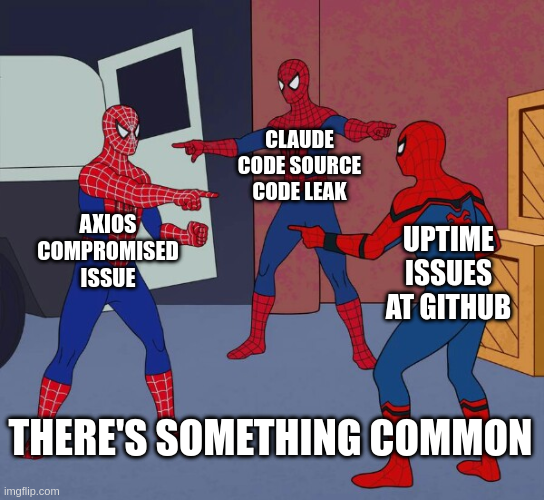
When multiple tech giants experience catastrophic failures simultaneously, you start wondering if it's a coordinated attack or just a really unfortunate Tuesday. Axios goes down with a compromised issue, Claude's source code leaks, and GitHub decides to take an unscheduled nap—all pointing fingers at each other like Spider-Men in an identity crisis. The beauty here is that nobody wants to admit they might be patient zero. Could be a supply chain attack, could be a shared dependency that imploded, or maybe—just maybe—they all use the same intern's Stack Overflow copy-paste solution that finally came back to haunt them. Either way, the SRE teams are definitely not having a good time. Plot twist: It's probably a DNS issue. It's always DNS.

Multi Billion Dollar Company

Multi Billion Dollar Company
Claude.ai proudly displaying their 98.98% uptime like it's something to celebrate. That's roughly 9 hours of downtime over 90 days. For a multi-billion dollar AI company that everyone's paying premium subscriptions for, that uptime graph looks like a Christmas light display having an existential crisis. The irony? Most indie devs running their side projects on a $5 DigitalOcean droplet have better uptime than this. Nothing screams "enterprise-grade infrastructure" quite like a status page that looks like it's been through a blender. Those red bars at the end marked "Major Outage" are just *chef's kiss*. Meanwhile, their marketing team is probably calling this "industry-leading reliability" while their DevOps team is stress-testing their resume templates.

Prompt Engineer Vs Sloperator

Prompt Engineer Vs Sloperator
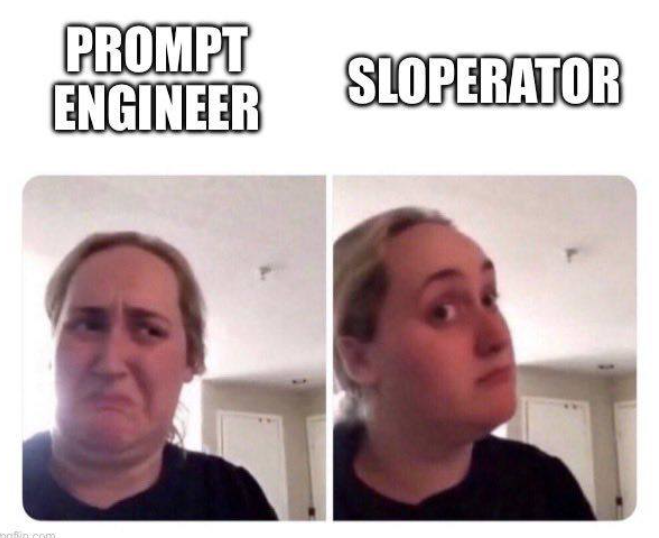
The tech industry's newest identity crisis captured in two faces. On the left, "Prompt Engineer" looks appropriately concerned about their job title that basically means "I'm really good at asking ChatGPT nicely." On the right, "Sloperator" is giving that smug look of someone who just realized they can combine "SRE" and "DevOps" into something even more pretentious. For context: A "sloperator" is the lovechild of a sysadmin, a developer, and an operations engineer who's too cool for traditional labels. They probably have kubectl aliased to 'k' and think YAML is a personality trait. Both roles are real, both sound made up, and both will be replaced by something even more ridiculous next year. Remember when we were just "programmers"? Simpler times.

It Happened Again

It Happened Again
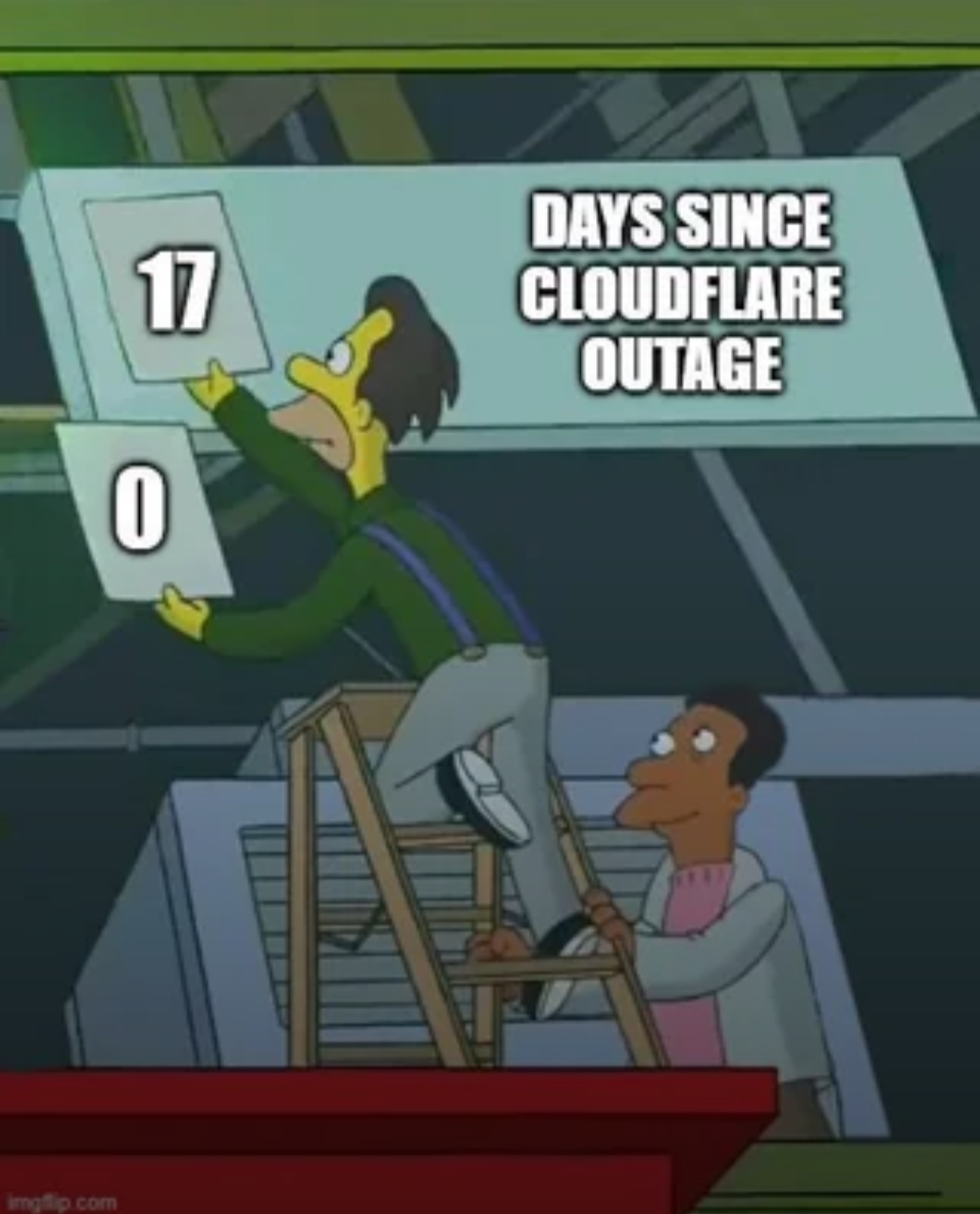
Ah yes, the classic "workplace safety sign" energy. You know that feeling when your entire infrastructure has been humming along smoothly for over two weeks? That's when you start getting nervous. Because Cloudflare going down isn't just an outage—it's a global event that takes half the internet with it. The counter resetting to zero is the chef's kiss here. It's like those factory signs that say "X days without an accident" except this one never gets past three weeks. And the best part? There's absolutely nothing you can do about it. Your monitoring alerts are screaming, your boss is asking questions, and you're just sitting there like "yeah, it's Cloudflare, not us." Then you watch the status page refresh every 30 seconds like it's going to magically fix itself. Pro tip: When Cloudflare goes down, just tweet "it's not DNS" and wait. That's literally all you can do.

You Dawg, I Heard You Like Downtime

You Dawg, I Heard You Like Downtime
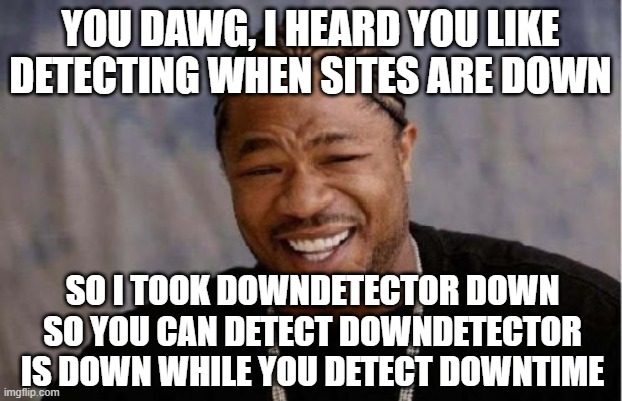
Recursive downtime monitoring at its finest. When your monitoring service fails, who monitors the monitor? It's like needing a smoke detector for your smoke detector. The irony of relying on downdetector.com only to find it's also experiencing the void of nothingness we call "unplanned service interruption." Just another day in the life of an SRE wondering if the internet is actually down or if it's just their ISP having a moment.

The Truly Terrifying AWS Pumpkin

The Truly Terrifying AWS Pumpkin
The SCARIEST jack-o'-lantern known to developer-kind! A pumpkin carved with the dreaded "US EAST-1" AWS region and flames above it is the ULTIMATE horror story! Nothing says "I've experienced TRUE TERROR" like having your entire infrastructure collapse because Jeff Bezos' primary data center decided to have a little afternoon nap. The flames are just *chef's kiss* - a perfect representation of the Slack channels, production dashboards, and developer sanity burning to the ground simultaneously while everyone frantically refreshes the AWS status page. Sweet dreams, cloud engineers!

The Universal Scapegoat

The Universal Scapegoat
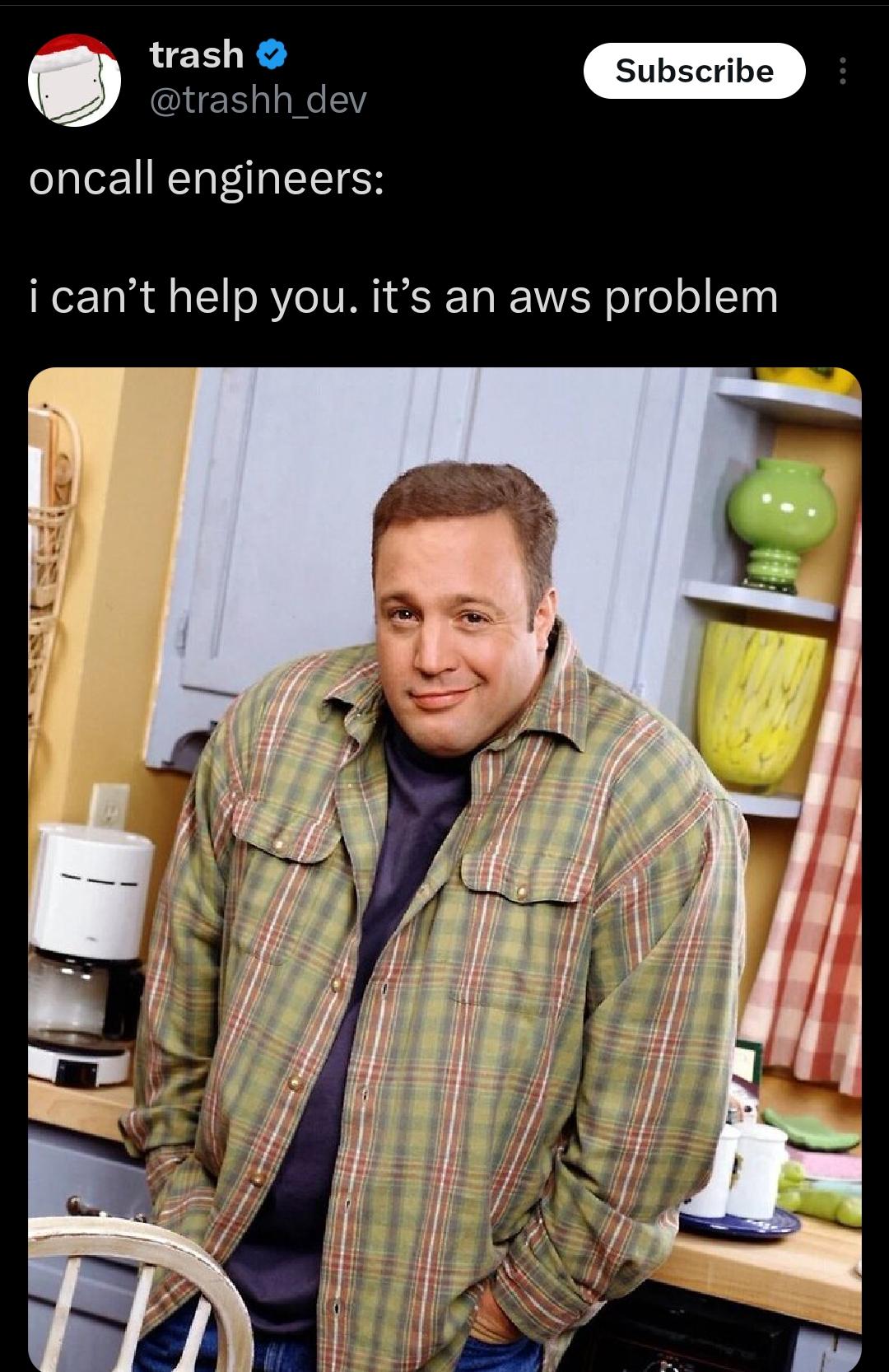
The universal scapegoat has arrived! Nothing says "not my problem" like blaming AWS for literally everything that breaks. On-call engineers have mastered the art of deflection with that smug "sorry, can't help" smile while your production site is burning to the ground. The best part? Nobody can prove them wrong because AWS status page will eventually show some obscure service in us-east-1 having "elevated error rates" approximately 6 hours after your CEO has already sent angry texts.

Had Todo It

Had Todo It
Ah, the sacred weekend on-call rotation—where pants become optional but existential dread is mandatory. Nothing quite captures the soul-crushing reality of DevOps life like getting that 2 AM alert because some intern pushed directly to production on a Saturday. There you sit, in your underwear, contemplating every career choice that led to this moment while Slack notifications light up your phone like a Christmas tree. The best part? Monday morning, management will ask why it took you 7 minutes to respond instead of 5. Because apparently sleep is just a suggestion when you've signed that SLA agreement with your soul.

Run An EC2 For 5 Mins And Win

Run An EC2 For 5 Mins And Win
The SRE just found the ultimate money hack. AWS is basically a financial black hole where your cloud budget goes to die. Launch a few over-provisioned instances, forget about that auto-scaling group for a weekend, or accidentally deploy to all regions simultaneously, and boom—you've burned through $100M faster than you can say "terraform destroy." The genie adding a fourth rule is just acknowledging the universal truth that AWS billing is basically legalized theft with a nice dashboard.

Nothing Is Wrong (Everything Is Fine)

Nothing Is Wrong (Everything Is Fine)
Ah, the classic "No major incidents" status page showing complete service outages across the board. That special moment when your cloud provider's dashboard says everything is fine while your production environment is literally on fire. The date is from the future (2025) which means we have exciting new catastrophic failures to look forward to! Nothing builds character like explaining to your CEO why the app is down while the status page cheerfully reports all systems normal. It's just a little apocalypse, nothing to worry about!

The Genie's Fourth Rule: No AWS

The Genie's Fourth Rule: No AWS
The SRE just found the ultimate loophole to the genie's billion-dollar challenge, and the genie immediately shut that down faster than you can say "unexpected billing alert." Anyone who's ever deployed anything on AWS knows that mysterious $100M bill is just a few forgotten EC2 instances away. One day you're launching a "small test environment," the next day you're explaining to your CEO why your startup needs another funding round just to pay this month's cloud bill. Even supernatural beings with infinite cosmic power know better than to mess with AWS pricing. The fourth rule? "No cloud services that scale automatically and drain your life savings while you sleep."