

Quality assurance Memes

Posts tagged with Quality assurance

When You Want More Work

When You Want More Work
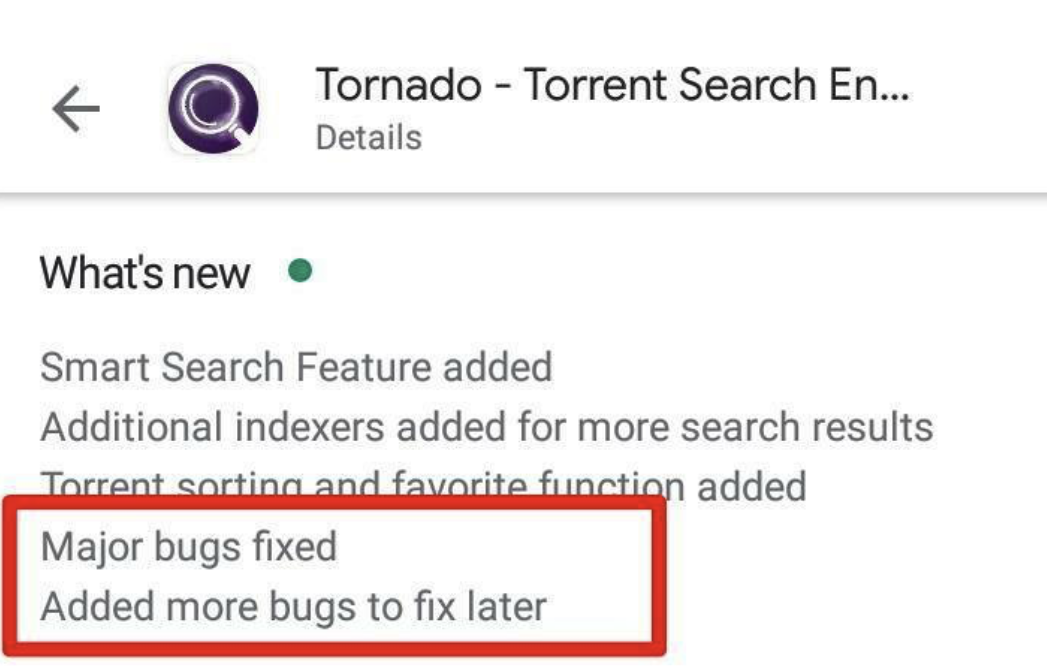
Nothing says "job security" quite like fixing major bugs by strategically introducing new ones for future you to deal with. It's the circle of life in software development—we fix bugs today so we can have bugs to fix tomorrow. The developer who wrote these patch notes basically admitted they're playing 4D chess with the backlog. "Major bugs fixed ✅ Added more bugs to fix later ✅" is honestly the most transparent changelog I've ever seen. At least they're honest about their technical debt accumulation strategy.

Ship Fast Fix Later If Not Arrested

Ship Fast Fix Later If Not Arrested
When "move fast and break things" takes on a whole new legal dimension. Turns out shipping buggy code in fintech doesn't just break your CI/CD pipeline—it breaks federal regulations too. The startup mantra of "ship it now, fix it later" hits different when your product handles actual money instead of just tracking which memes your users like. One misplaced decimal point and suddenly you're not debugging in production—you're explaining your architectural decisions to people with law degrees. Pro tip: When your standup updates start including phrases like "retained counsel" and "regulatory compliance," maybe that hotfix should've gone through QA after all.

This Is Why We Pay QA

This Is Why We Pay QA
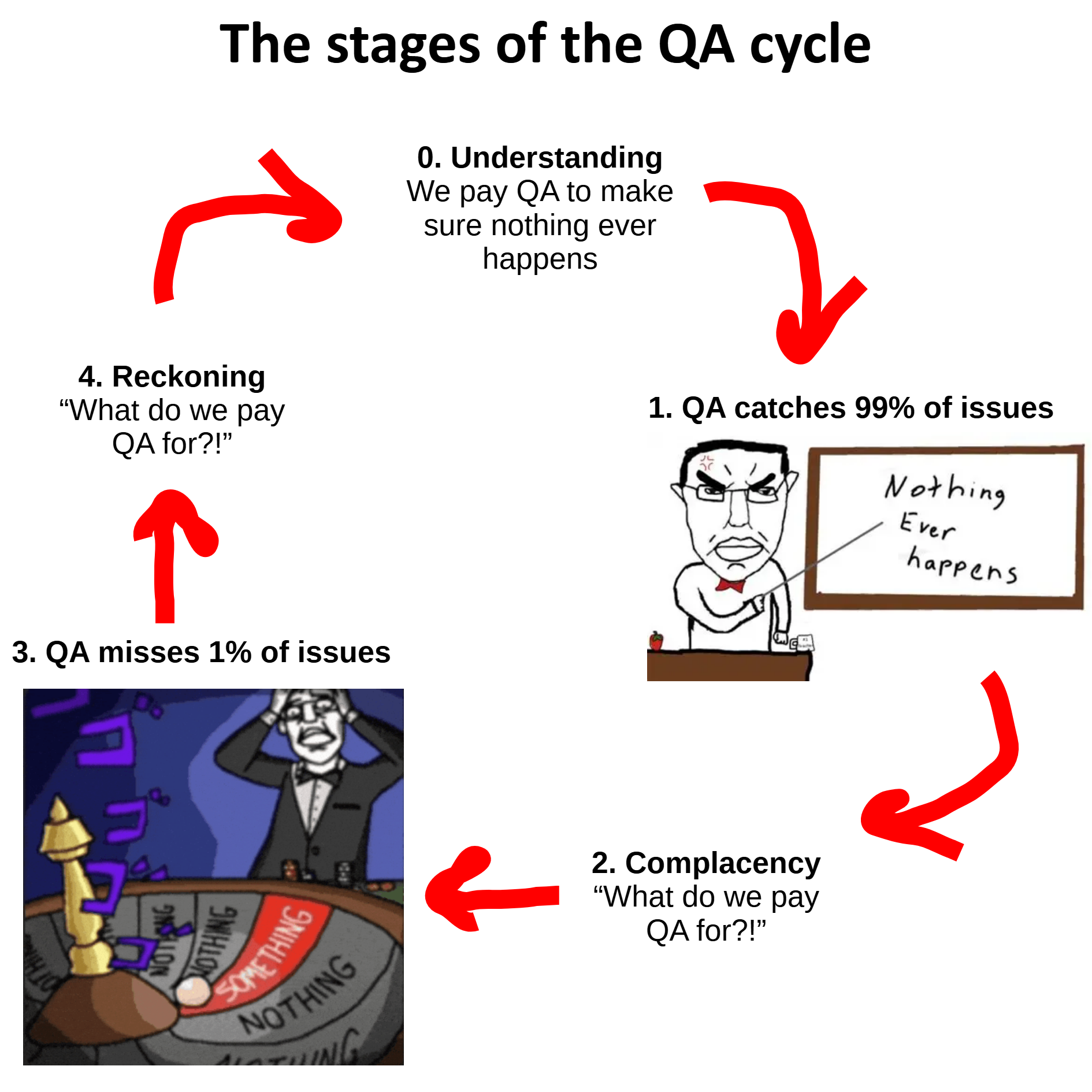
Oh, the beautiful cycle of developer delusion! You hire QA thinking they'll catch everything, they proceed to catch literally 99% of bugs, and suddenly you're wondering why you're paying them because "nothing ever happens" anymore. Then they miss ONE measly bug—just 1%!—and you're having a full existential crisis questioning their entire existence. But wait! Plot twist: you circle back to realizing you pay them to make sure nothing happens, which is... exactly what they're doing? It's like hiring a bodyguard and then being mad they're standing around doing nothing because nobody's attacking you. The irony is so thick you could deploy it to production. QA's greatest achievement is invisibility—when they're doing their job right, everything looks easy and you question their value. When they slip up once, suddenly the sky is falling. Choose your fighter: appreciate the silent guardians or spin the roulette wheel of production bugs. 🎰

The Moment When You Start Getting Funny While Writing Fake Reviews

The Moment When You Start Getting Funny While Writing Fake Reviews
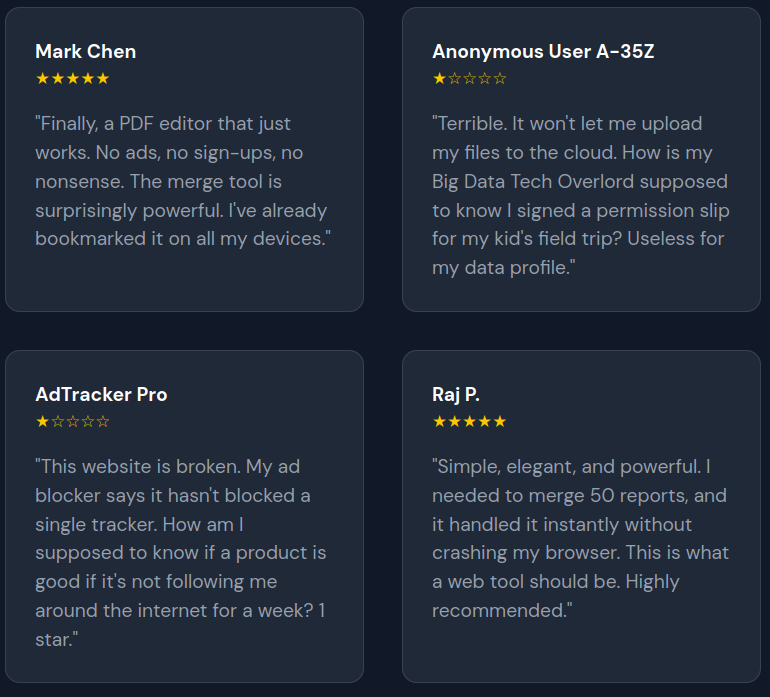
You know you've been writing fake product reviews for too long when you start channeling your inner comedian. Mark Chen is out here praising a PDF editor like it cured his existential crisis, while Anonymous User A-35Z is having a full meltdown about their data being held hostage by "Big Data Tech Overlord" who apparently needs permission slips for field trips now. Then there's the AdTracker Pro review—a beautiful 1-star rant about an ad blocker that's basically on vacation. The existential question "How am I supposed to know if a product is good if it's not following me around the internet for a week?" is pure gold. It's like Stockholm syndrome but for targeted ads. Meanwhile, Raj P. is living his best life giving 5 stars because the tool didn't crash his browser while merging 50 reports. The bar is literally on the floor and we're all celebrating when software does what it's supposed to do without setting the computer on fire. Every developer who's ever had to seed a database with dummy data or write test reviews knows exactly when the creativity kicks in and you start writing satirical masterpieces instead of "Great product, 5 stars!"

NordVPN

NordVPN
Encrypt your traffic on public Wi-Fi, stream from anywhere, and cover up to ten devices with one plan. 30-day money-back guarantee.

Who Told To Touch That Button Its Not A Bug Its A Feature

Who Told To Touch That Button Its Not A Bug Its A Feature
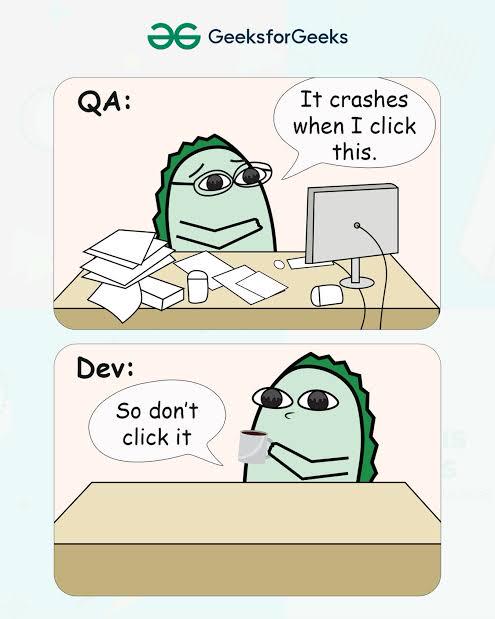
Oh, the AUDACITY of QA to actually test the application! How DARE they click on buttons that exist on the interface? The developer's solution is nothing short of GENIUS: instead of fixing the crash, just... don't click it? Problem solved! Ship it to production! This is the developer's equivalent of putting a "Do Not Touch" sign on a broken elevator button instead of, you know, actually fixing the elevator. Why waste precious time debugging when you can simply gaslight QA into thinking they're the problem? Revolutionary problem-solving right here. The button isn't broken if nobody clicks it, right? RIGHT? Fun fact: This is how we ended up with half the "undocumented features" in software today. One dev's "don't click that" became another generation's "wait, what does this button even do?"

No Git Revert Available

No Git Revert Available
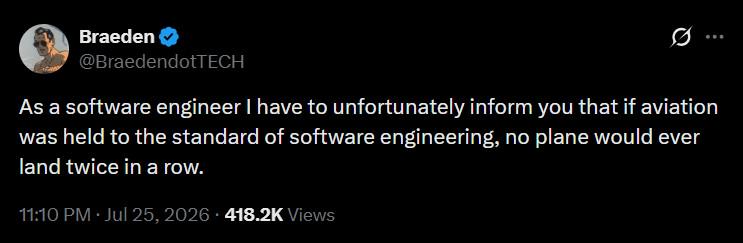
Brutal observation from the trenches. If planes had the same quality standards as production code, they'd be doing barrel rolls into the tarmac every Tuesday. The difference? Aviation has actual consequences for bugs, while software engineers just push to prod and hope the monitoring alerts go to someone else's Slack. No rollback strategy for a 737 doing a nosedive—just pure, unforgiving physics. Meanwhile, we're out here shipping features with "TODO: fix this later" comments from 2019.

Seems AI Generated?

Seems AI Generated?
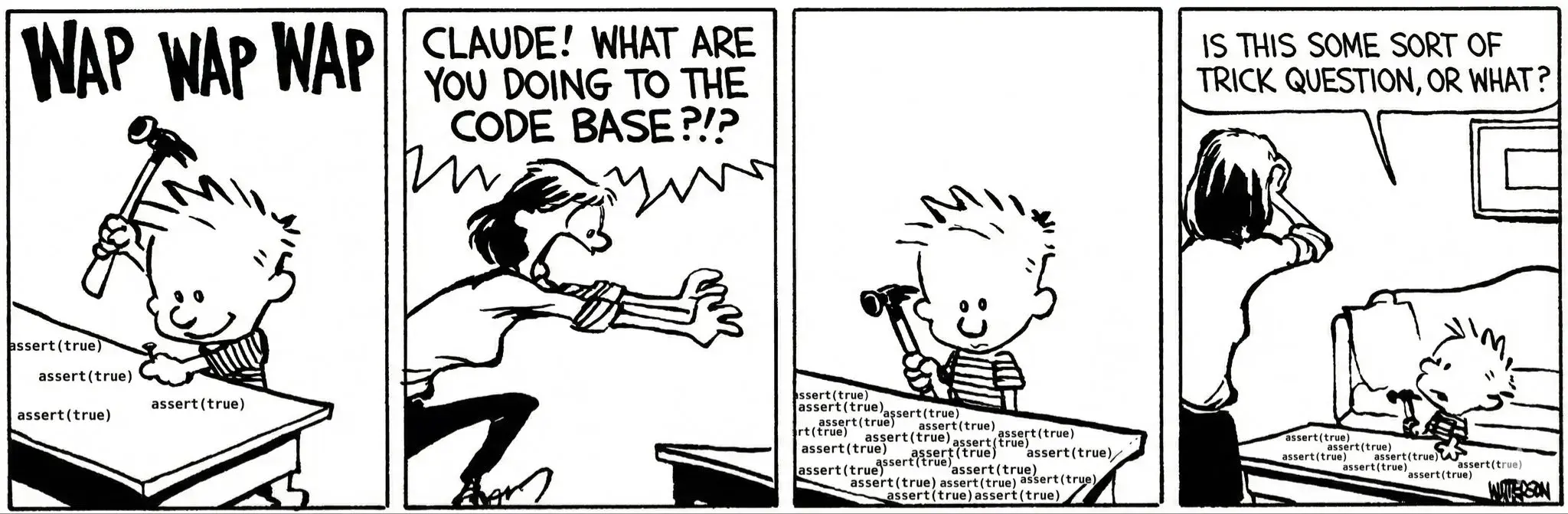
When you're absolutely DEMOLISHING your codebase with assert(true) statements like some kind of deranged testing deity, only for Claude to walk in and question your entire existence. The kid's just sitting there, hammer in hand, gleefully spamming the most useless assertion known to humankind – because nothing says "quality assurance" like asserting that true equals true approximately 47 times. The parent's horror is palpable, the confusion is real, and honestly? The kid's response is chef's kiss. "Is this some sort of trick question?" No sweetie, it's just your descent into madness disguised as unit testing. Those assert(true) statements will ALWAYS pass, making them about as useful as a chocolate teapot. But hey, at least your code coverage metrics look fantastic! 📈

It Is Good To Be Patient

It Is Good To Be Patient
The r/patientgamers philosophy in action right here. While everyone else is panic-buying on day one for $70, dealing with game-breaking bugs, and watching their frames drop to slideshow territory, you're sitting there like a distinguished gentleman, sipping whiskey and waiting. Fast forward a couple years: the game's on sale for pocket change, the devs have actually squashed the bugs (revolutionary concept, I know), there's a mountain of DLC and new content to explore, and the modding community has gone absolutely feral with creativity. You get the definitive edition experience while the early adopters were basically paid beta testers. It's the ultimate power move. You're not just saving money—you're getting a superior product. The gaming equivalent of waiting for production to stabilize instead of deploying on Friday afternoon.

Keep It

Keep It
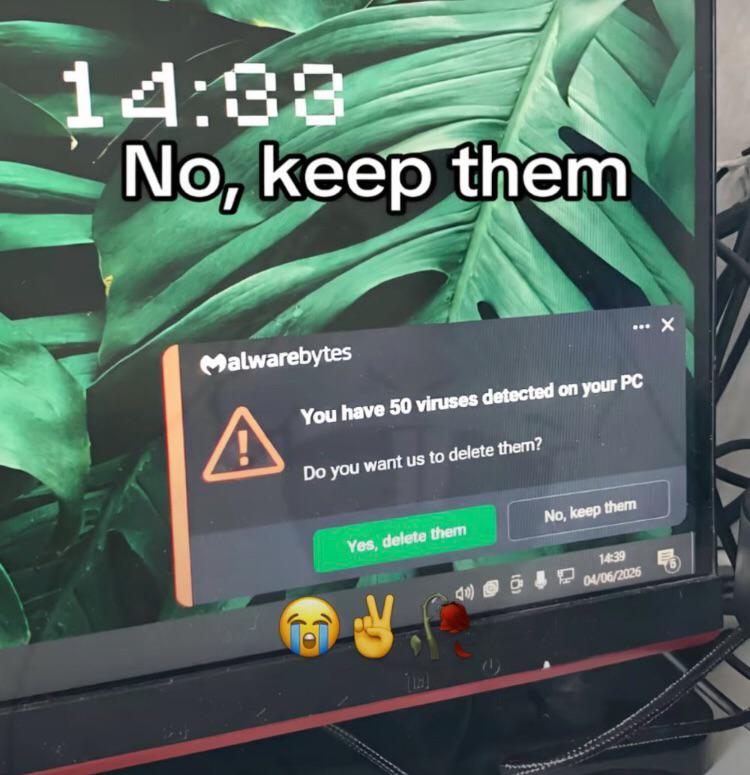
When Malwarebytes finds 50 viruses and politely asks if you'd like to delete them, but you're running a test environment and those viruses ARE your test environment. Nothing says "professional software tester" quite like deliberately hoarding malware like it's a Pokémon collection. Could also be a security researcher's daily reality—can't exactly study malware behavior if you keep deleting your research subjects. It's like asking a marine biologist if they want to flush their fish down the toilet. Hard pass, Malwarebytes. Those 50 viruses have names and families. Or maybe it's just someone who's given up on life and decided to embrace chaos. Either way, clicking "No, keep them" is an absolute power move that screams either genius or insanity—and honestly, in tech, those are basically the same thing.

Uncle Bob Becoming Even Worse

Uncle Bob Becoming Even Worse
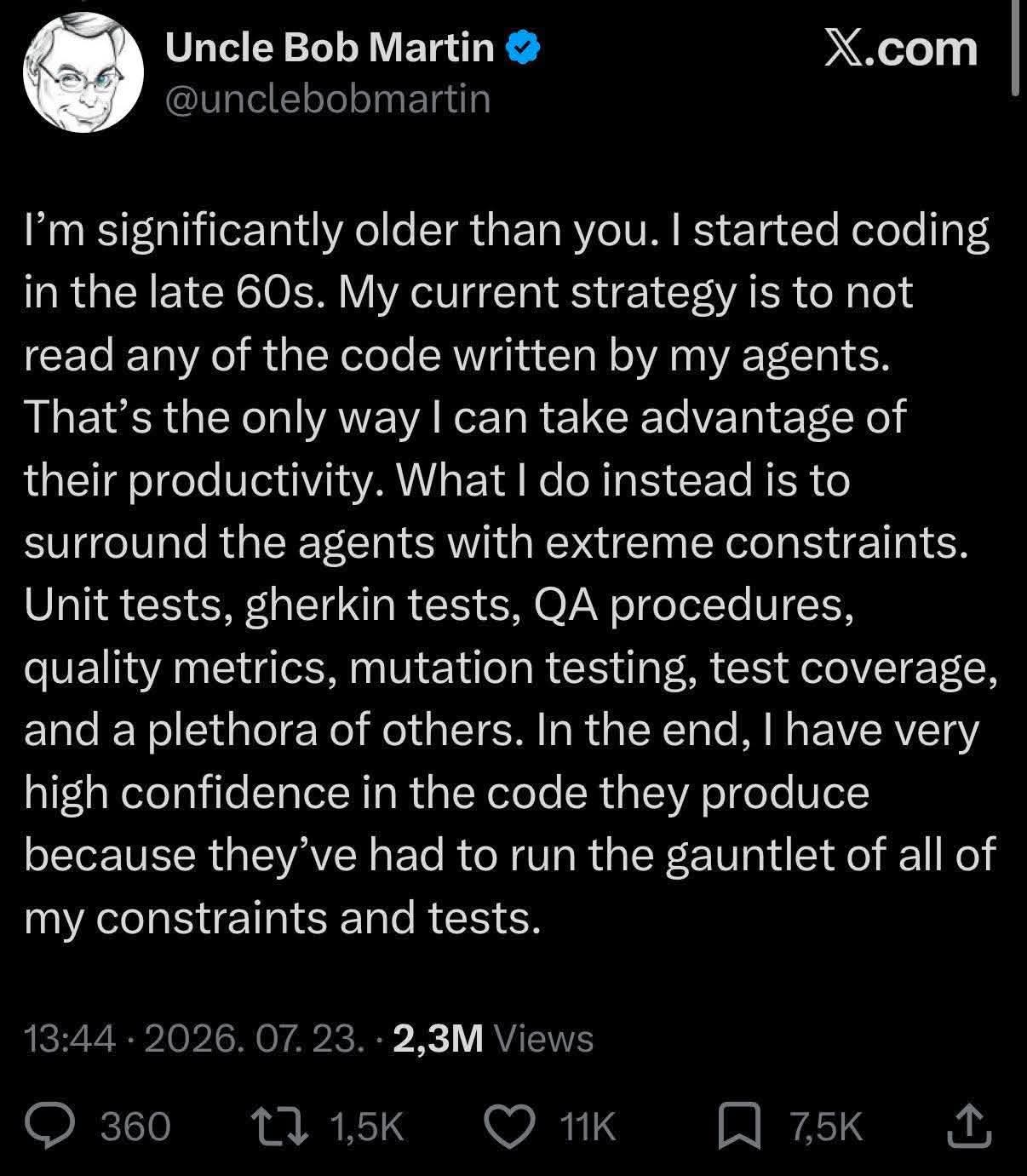
Uncle Bob Martin, the legendary author of "Clean Code," just admitted his management strategy is basically "trust but verify" taken to its most dystopian extreme. He's not reading his team's code to "take advantage of their productivity"—which is honestly the most polite way I've ever heard someone say "I don't trust you nerds to write anything decent without a bureaucratic stranglehold." Instead of code reviews, he's weaponizing the entire testing arsenal: unit tests, gherkin tests, QA procedures, mutation testing, test coverage metrics, and "a plethora of others." Dude's running a software development team like it's a maximum-security prison where the inmates must prove their innocence through an exhaustive gauntlet of automated checks. The irony? The guy who wrote the book on clean, readable code now refuses to read any code at all. It's like Gordon Ramsay saying he won't taste the food but trusts it's good because the kitchen passed health inspection. The real kicker: he has "very high confidence" in code he's never seen because it survived his testing thunderdome. That's not engineering leadership—that's process worship with extra steps.

Silicate Hill To Die On That Humans Need To Read And Review Code

Silicate Hill To Die On That Humans Need To Read And Review Code
So management discovered AI code generation and suddenly human code reviews are "inefficient" and "slowing down velocity." Meanwhile, they're pushing us to just trust the LLM output and ship it straight to prod because "it compiles, doesn't it?" The asbestos snow is *chef's kiss* perfect here. Just like how asbestos seemed like a miracle material until everyone realized it was slowly killing them, blindly trusting AI-generated code without human review might seem productive now, but wait until you're debugging hallucinated logic at 2 AM or explaining to the board why your "AI-optimized" codebase just leaked user data. Code review isn't just about catching bugs—it's knowledge transfer, mentorship, and the last line of defense against architectural disasters. But sure, let's skip all that because ChatGPT said the code looks good. What could possibly go wrong?

Apple 2020 Mac Mini with Apple M1 Chip, 16GB RAM, 1TB SSD Storage, Silver (Renewed)

Apple 2020 Mac Mini with Apple M1 Chip, 16GB RAM, 1TB SSD Storage, Silver (Renewed)
BTO Mac Mini Desktop Computer - Power Cord - Apple 1 Year Limited Warranty with 90 Day Free Technical Support · Apple M1 chip with 8-core CPU and 8-core GPU · 16-core Neural Engine · 16GB unified mem…

Every Time

Every Time
The developer's favorite magic trick: making bugs disappear by simply having QA look at them. It's like Schrödinger's bug—it exists in a superposition of "working" and "broken" until QA observes it, at which point it collapses into "works on my machine." The butterfly represents the bug's soul peacefully ascending to heaven, never to be reproduced again. QA will spend the next three hours trying to recreate it while you smugly sip your coffee, knowing full well it'll come back to haunt you in production at 3 AM on a Friday.