

Junior dev Memes

Posts tagged with Junior dev
Interviewing A Vibe Coder

Interviewing A Vibe Coder
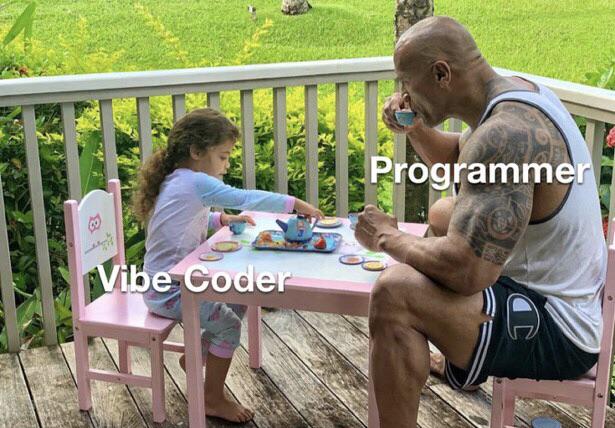
You know those developers who somehow got hired because they "vibe" with the team? Yeah, interviewing them is like having a tea party with a toddler. They're confidently serving you imaginary code solutions while you're sitting there, a battle-hardened programmer, trying to figure out if they actually know what a for-loop is or if they just watched a 10-minute YouTube tutorial on "coding aesthetics." The size difference is chef's kiss—you've got years of debugging nightmares, production incidents, and Stack Overflow addiction under your belt, while they're out here thinking CSS is a programming language and that "full-stack" means they can center a div AND make a console.log statement. But hey, you gotta play along professionally, sipping your metaphorical tea, nodding politely as they explain their "revolutionary" approach to solving FizzBuzz with nested ternary operators. The real question is: who's interviewing who here?

Commit And Pray

Commit And Pray
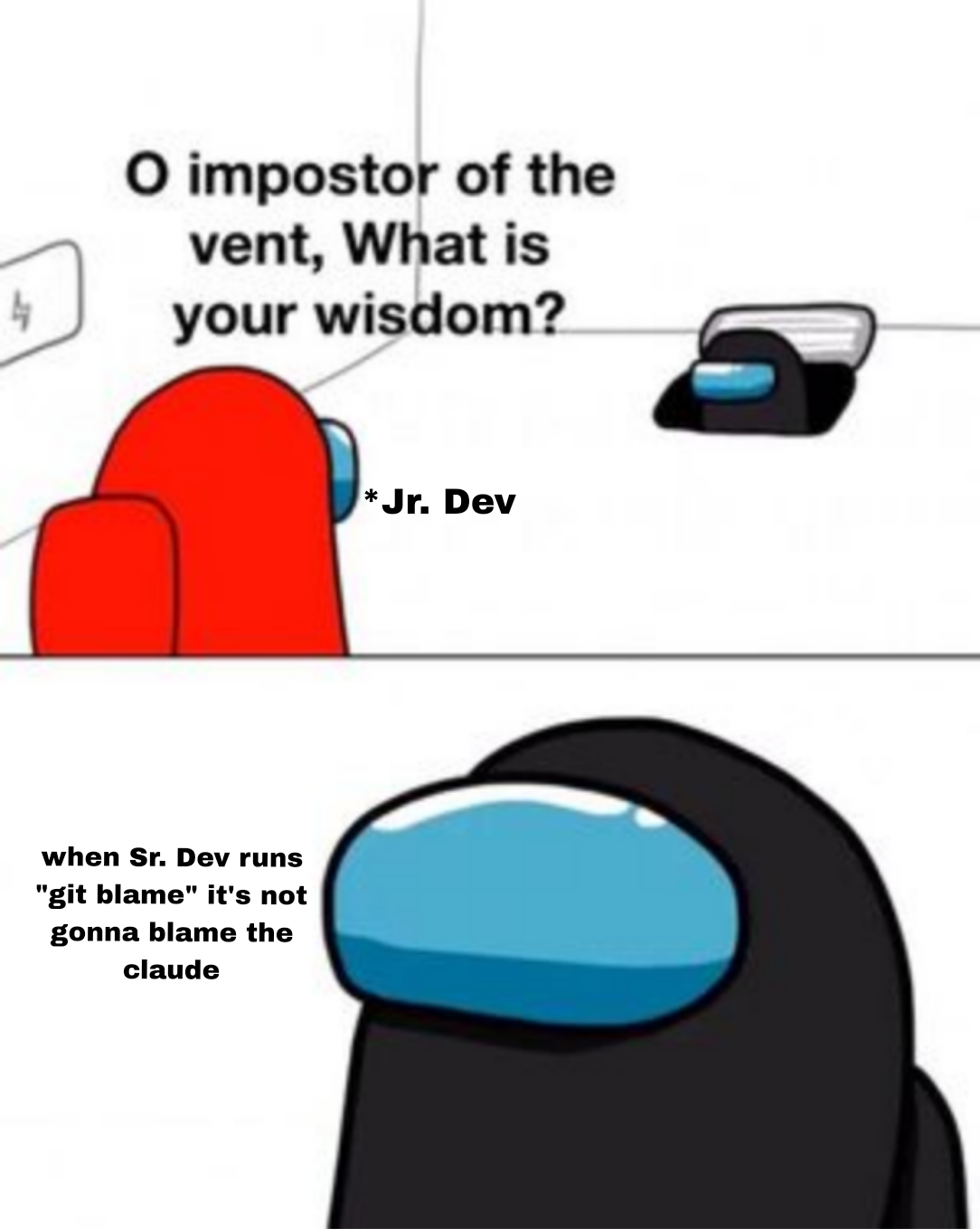
Junior dev wisdom: push code to production, hope for the best. Senior dev wisdom: when things inevitably break, run git blame and let Claude (or whatever AI assistant) take the fall for the buggy code it suggested. The impostor syndrome is real, but the blame deflection game is even realer. Fun fact: git blame shows who last modified each line of code, making it the perfect tool for finding scapegoats in your commit history—or in this case, your AI pair programmer. "Sorry boss, the AI told me to do it" is the new "it works on my machine."

Review Your AI Generated Code

Review Your AI Generated Code
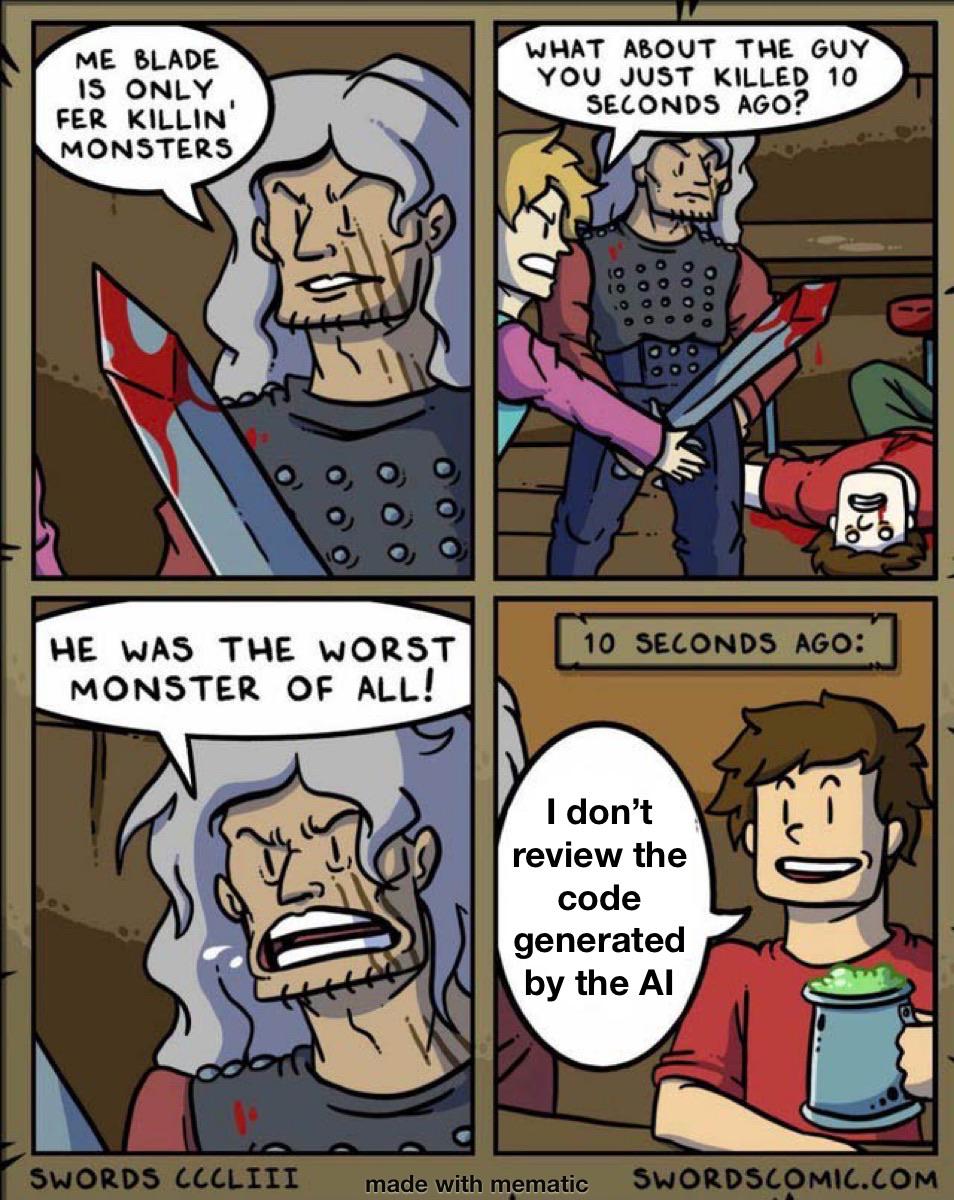
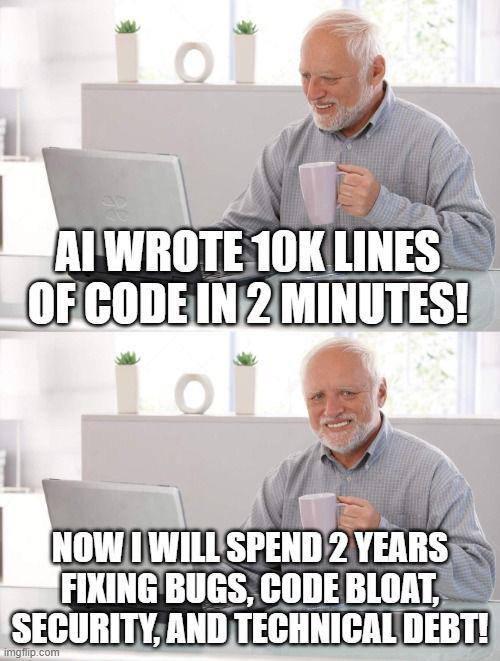
You know that feeling when your senior dev asks why production is on fire and you're just standing there with your ChatGPT-generated code like "the AI said it would work"? Yeah, that's this. The blind trust people put in AI-generated code is genuinely terrifying. Sure, Copilot can write a pretty decent function, but it can also confidently suggest using eval() on user input or creating a recursive function with no base case. The AI doesn't care if your app crashes—it has no stake in the on-call rotation. Code review exists for a reason. Even if an AI wrote it, you're still the one who's gonna get paged at 2 AM when it breaks. Read the damn code before you merge it.

Everyone Is A Dev Until The Tutorial Stops

Everyone Is A Dev Until The Tutorial Stops
You know what's hilarious? Watching someone copy-paste their way through a React tutorial, feeling like they just invented the internet, only to completely freeze when the instructor says "now try implementing this feature on your own." Following along with tutorials is like riding a bike with training wheels while someone holds the seat. Sure, you're moving forward and it feels great, but the second they let go? Face, meet pavement. The real learning starts when the video ends and you're staring at a blank IDE wondering why your code doesn't work when you changed literally one variable name. Pro tip: If you can't build something without the tutorial playing in the background, you didn't learn it—you just watched someone else do it. Close the video, break things, Google your errors, and suffer a little. That's how you actually become a developer instead of a professional code transcriber.

Forgotten Art

Forgotten Art
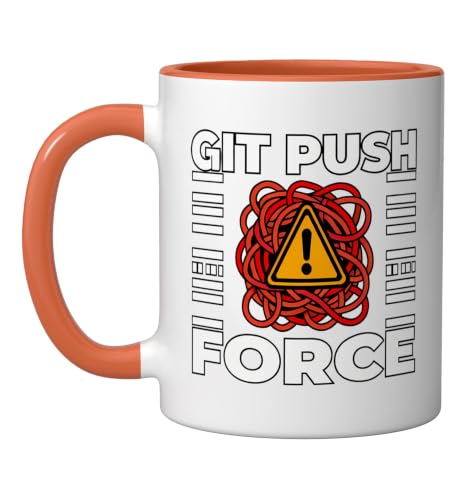
We've reached the point where actually knowing git commands is treated like some arcane wizardry. Junior devs today have grown up with AI assistants holding their hand through every rebase and cherry-pick, so watching someone type git rebase -i HEAD~3 from memory is basically witnessing sorcery. The real kicker? They're not wrong to be amazed. Most of us learned git through pain, tears, and accidentally force-pushing to main at 2 AM. They're learning it through conversational prompts. Different era, same destination—except they won't have the trauma-induced muscle memory we carry. Give it five years and "I learned git before LLMs" will be the new "I coded uphill both ways in assembly."

Mount-It! CLiX Series Dual Monitor Desk Mount with Full Motion Arms

Mount-It! CLiX Series Dual Monitor Desk Mount with Full Motion Arms
Mount-It! CLiX Series Dual Monitor Desk Mount With Full Motion Arms

Look At Me I Am A Senior Dev Now

Look At Me I Am A Senior Dev Now
Walking away from explosions in slow motion? Check. Sunglasses indoors? Check. Absolutely ZERO understanding of basic Linux system administration? Also check! Nothing screams "senior developer" quite like confidently deploying to production while having no earthly idea what a syscall is. You know, just those tiny little things that make literally EVERYTHING in your operating system work—the bridge between your precious code and the kernel. But who needs to understand the fundamental mechanisms of how programs interact with the OS when you've got three years of React experience and can center a div? The confidence-to-knowledge ratio here is absolutely *chef's kiss* catastrophic.

Robin Got Merge Conflicted In The Face

Robin Got Merge Conflicted In The Face
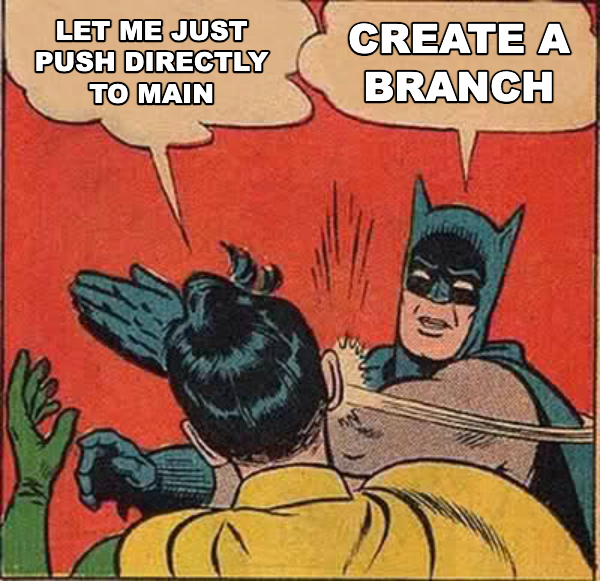
You know that junior dev who thinks they're saving time by pushing directly to main? Yeah, Batman knows too. And he's not having it. The classic Batman-slapping-Robin format perfectly captures every senior developer's reaction when someone suggests bypassing the entire branching workflow. Like, sure, let's just skip creating a branch, skip the pull request, skip code review, and YOLO our untested code straight into production. What could possibly go wrong? Spoiler: everything. Creating a branch isn't just best practice—it's the difference between "oops, let me fix that in my branch" and "oops, I just broke production for 10,000 users." Branches give you a safe sandbox to mess around in, get your code reviewed, run CI/CD checks, and generally not destroy everything your team has built. Plus, good luck explaining to your team lead why the entire main branch is now a dumpster fire because you couldn't be bothered to type git checkout -b feature/my-awesome-feature .

Absolute Cinema

Absolute Cinema
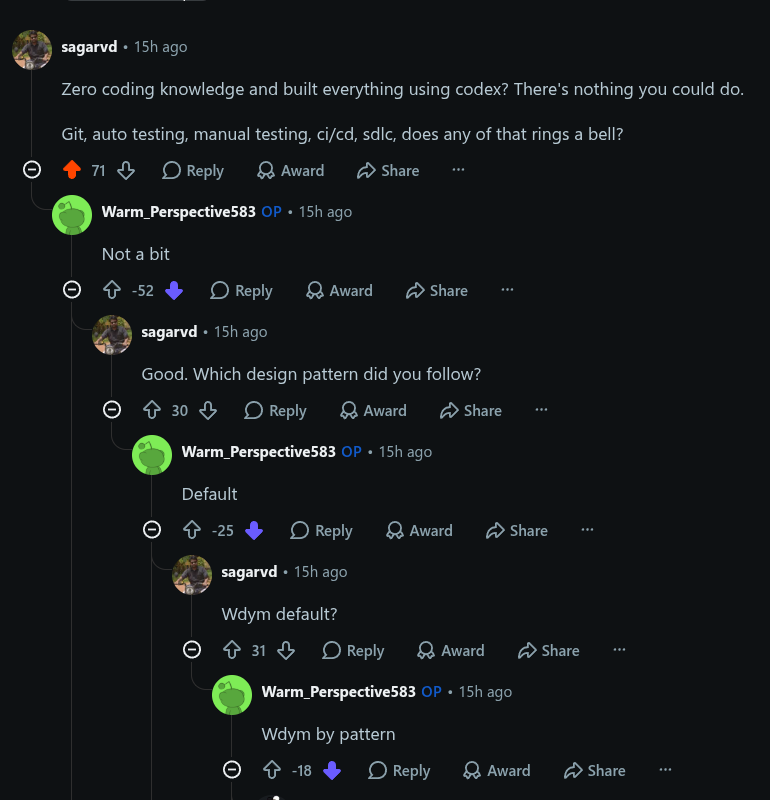
Someone built their entire project using Codex (GitHub Copilot's predecessor AI) with zero actual coding knowledge. When questioned about basic dev practices like Git, testing, CI/CD, or SDLC, they respond with "Not a bit." The follow-up is pure gold. "Which design pattern did you follow?" "Default." "What do you mean default?" "Whatever the pattern is called by default." This is the software engineering equivalent of someone building a house by asking an AI to describe each step while having no idea what a foundation is. The confidence is staggering. The technical debt is incalculable. The production incident is inevitable.

Then Please Provide Linter Config With Common Sense

Then Please Provide Linter Config With Common Sense
Junior dev asks for style guidance. Senior dev smugly says "just use common sense." Junior dev politely asks for actual linter config. Senior dev proceeds to forcefully inject "common sense" directly into their brain, which apparently translates to "whatever the LLM and linter say." Because nothing screams "common sense" like blindly following ESLint's 47 warnings about semicolons while your production server is literally on fire. The real kicker? Everyone's "common sense" is wildly different. One person's common sense is 2-space indentation, another's is tabs, and a third person's involves sacrificing a rubber duck to the code gods before every commit. Just give them the .eslintrc file, Karen. It takes 30 seconds and saves everyone from the philosophical debate about whether trailing commas are a war crime or a gift from the heavens.

Learned From Scratch

Learned From Scratch
Two developers bond over "learning programming from scratch" until they pull out their laptops and realize one learned actual computer science fundamentals while the other learned Scratch—the block-based visual programming language with the orange cat mascot. You know, the one designed for literal children. The miscommunication is chef's kiss. One person spent months grinding through data structures and algorithms, the other was dragging colorful blocks to make a sprite dance. Both technically correct, vastly different skill levels. It's like saying you're a chef because you can make toast. To be fair, Scratch is actually a decent introduction to programming logic for kids. But showing up to a tech conversation with it is like bringing a Fisher-Price toolkit to a construction site.

Luke

Luke
Luke's out here taking credit for implementing Tetris when ChatGPT wrote every single line. The kicker? He didn't even learn how the code works—just copy-pasted it like a pro and called it a day. We've all seen this guy in code reviews, nodding along while secretly having zero clue what his own PR does. The real tragedy isn't that AI wrote the code. It's that Luke now has "Tetris implementation" on his resume and will confidently explain it in interviews using words like "optimized block rotation algorithms" while internally panicking. Don't be like Luke. At least read what the AI gives you before you ship it to production.

Efficient Tokenmaxxing

Efficient Tokenmaxxing
When you're paying per token for AI API calls but your junior dev keeps asking ChatGPT basic questions like "how to exit vim." Brother, that's what StackOverflow is for. Or literally just pressing ESC then typing :q!. But no, let's burn through our $200 monthly OpenAI budget on the most Googled question in programming history. The real galaxy brain move is teaching people that not every problem needs an LLM. Some things are so well-documented that asking an AI is like hiring a consultant to tell you water is wet. Save those tokens for actual complex problems, not vim exit strategies that have been answered 47 million times since 1991.

NordVPN

NordVPN
Encrypt your traffic on public Wi-Fi, stream from anywhere, and cover up to ten devices with one plan. 30-day money-back guarantee.