

Http-status-codes Memes

Posts tagged with Http-status-codes
I Am Not A Teapot

I Am Not A Teapot
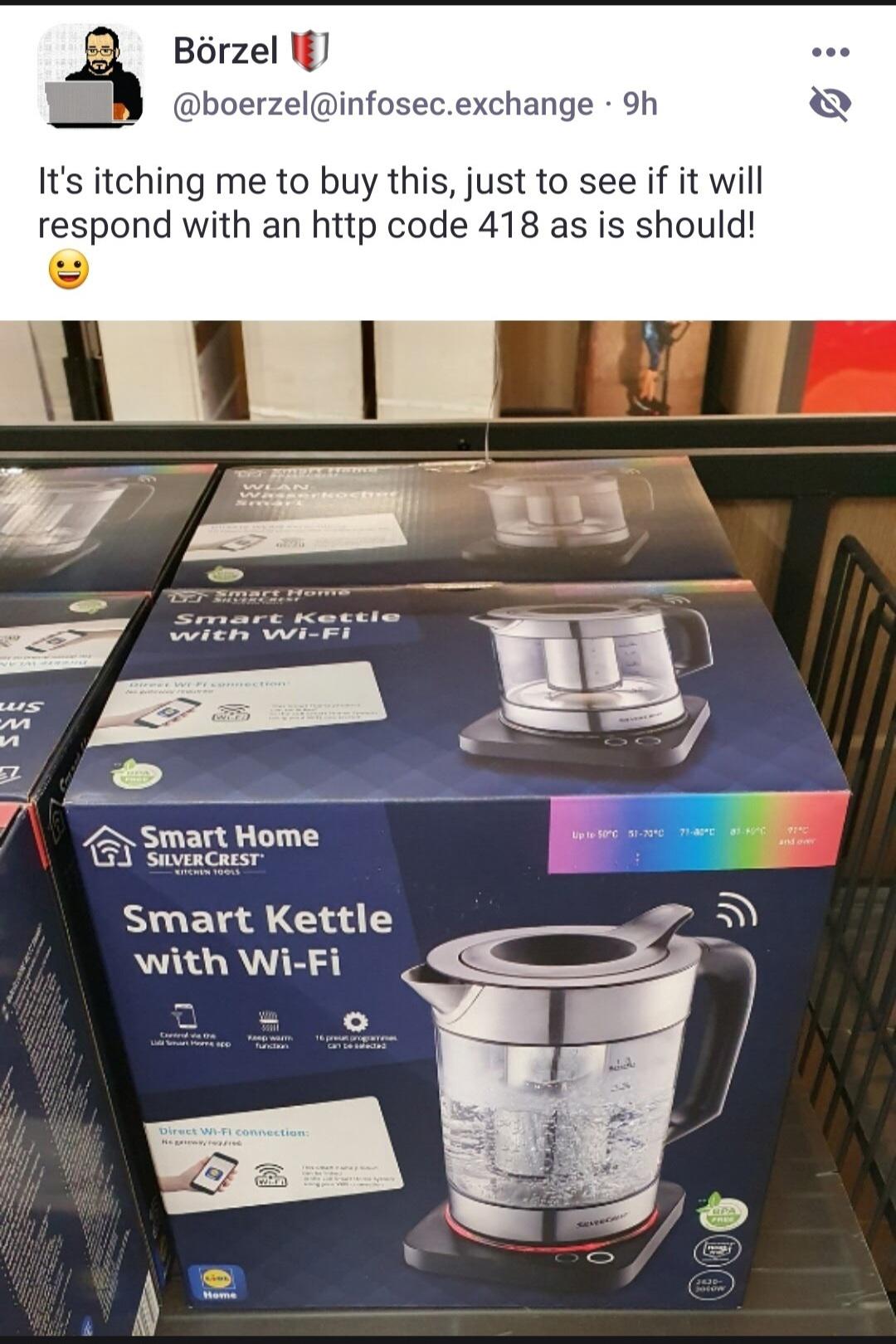
Someone found a Wi-Fi enabled smart kettle in the wild and immediately thought: "I need to test if this thing implements HTTP 418." For context, 418 "I'm a teapot" is an actual HTTP status code from an April Fools' RFC in 1998 (HTCPCP - Hyper Text Coffee Pot Control Protocol). It was meant as a joke about internet-connected coffee pots refusing to brew coffee because they're teapots. Now we've got IoT kettles with Wi-Fi, and some developer is genuinely considering dropping cash just to curl it and see if the engineers had a sense of humor. The real question is: would it be more disappointing if it returns 418, or if it doesn't? Either way, this is what happens when you give network engineers disposable income.

Error 404: Page Not Found

Error 404: Page Not Found
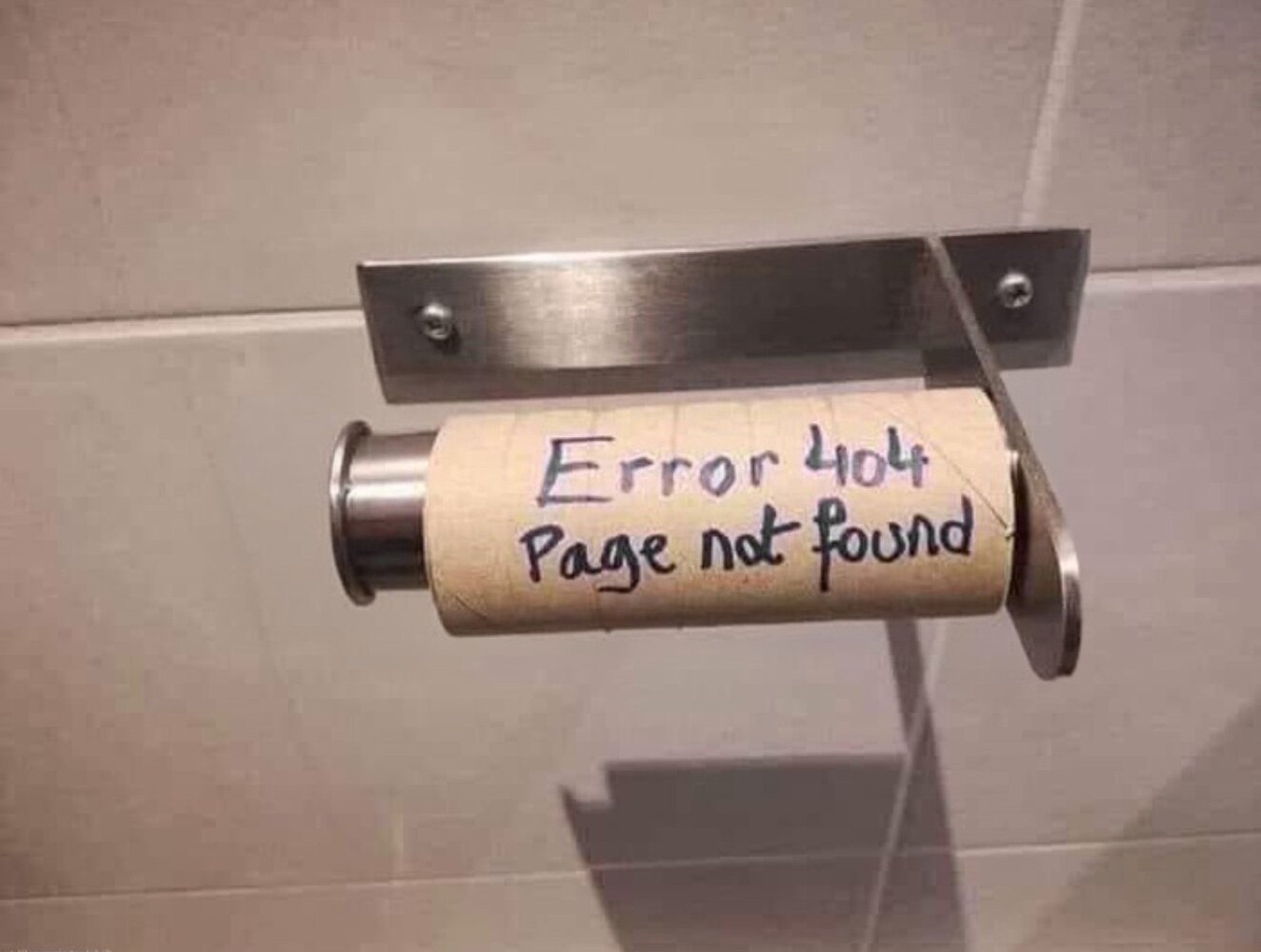
When you're so desperate for toilet paper that even the bathroom returns a 404 error. Someone literally wrote "Error 404 Page not found" on the cardboard tube because apparently even basic necessities need proper error handling now. The real tragedy here isn't the missing toilet paper—it's that whoever did this had enough time to write a perfectly formatted HTTP status code but not enough foresight to replace the roll. That's some serious commitment to the bit while simultaneously being the worst roommate imaginable. At least they could've gone with a 410 Gone (permanently deleted) or maybe a 503 Service Unavailable. But no, 404 implies the toilet paper might exist somewhere, you just can't find it. Which is somehow more frustrating.

Evo Lution

Evo Lution
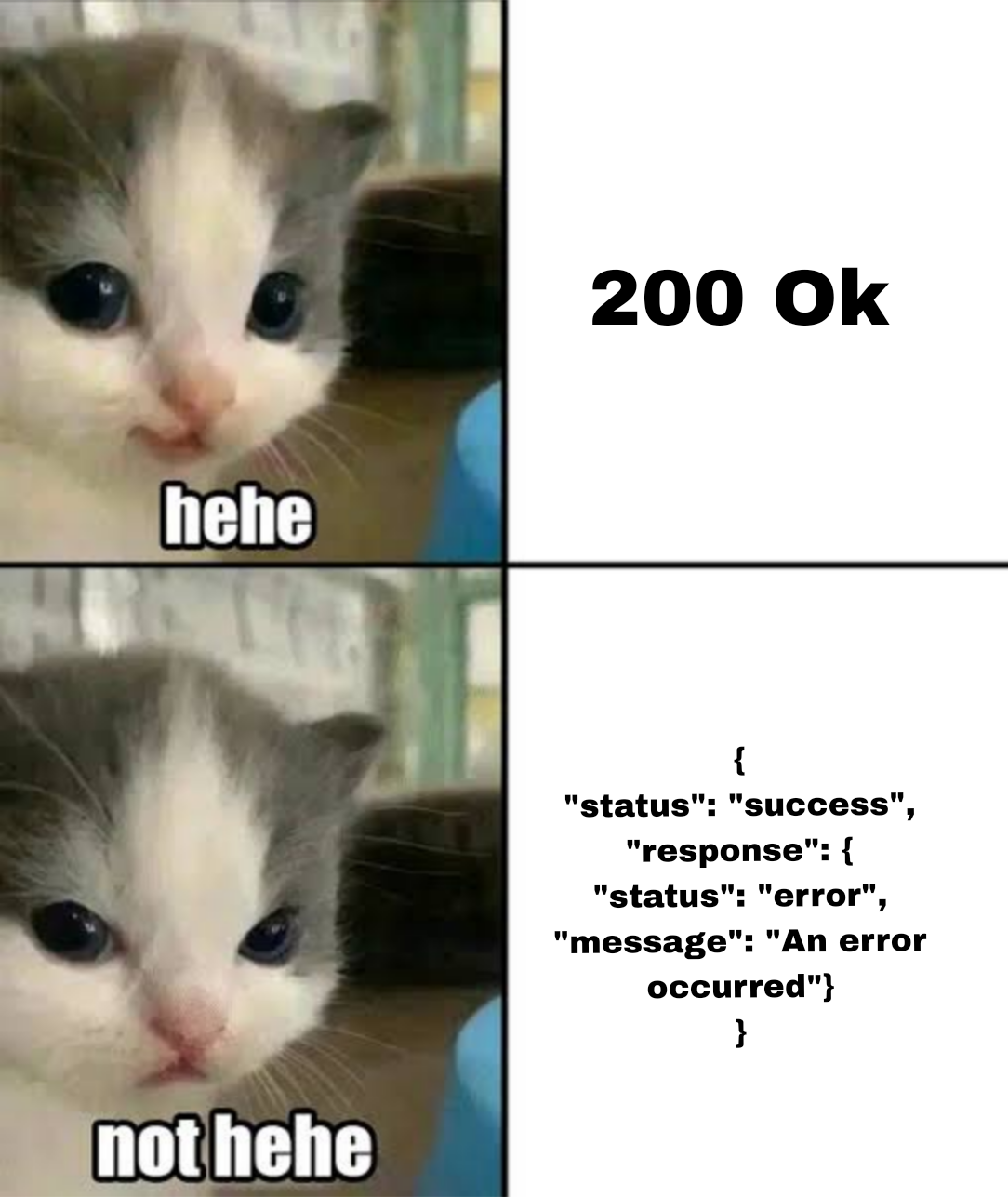
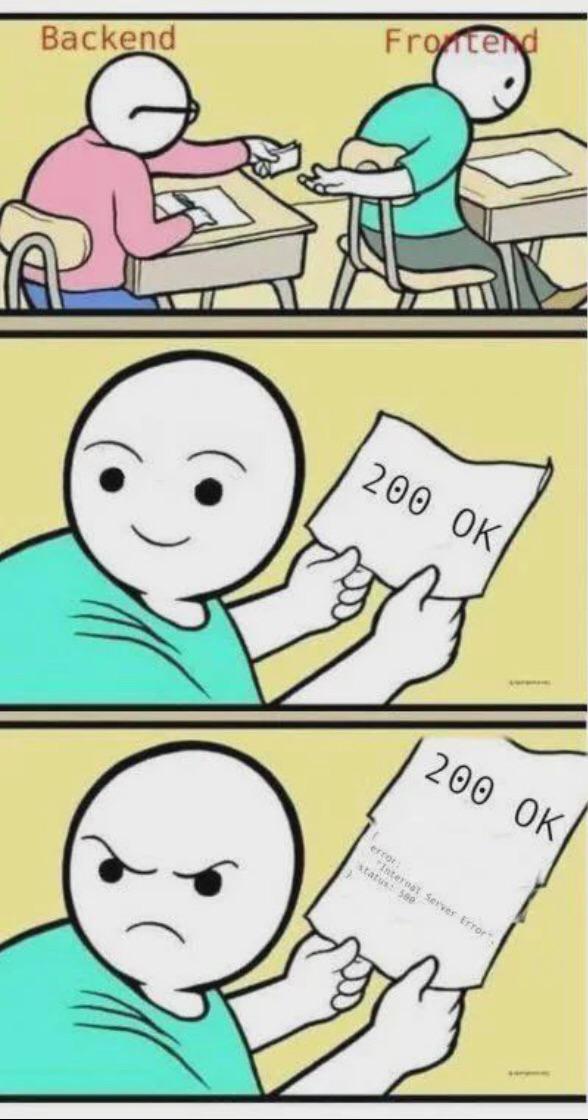
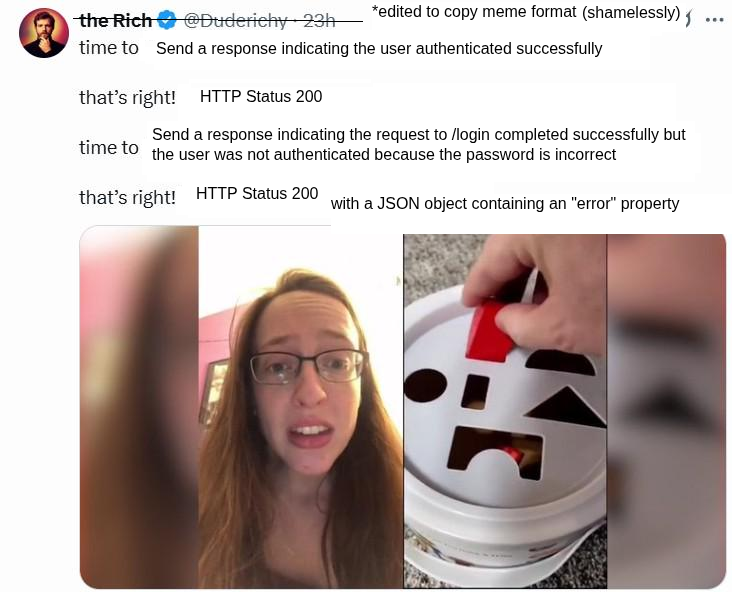
Backend casually hands over a perfectly clean 200 OK response to Frontend. Simple, elegant, beautiful. Then Frontend reads the actual error message buried inside that 200 OK body and realizes Backend just wrapped a failure in success clothing. Classic backend move—technically correct (the best kind of correct) but absolutely infuriating for anyone trying to handle errors properly on the client side. Nothing says "I don't understand HTTP status codes" quite like returning 200 for literally everything. Bonus points if the error details are nested 5 levels deep in the JSON response under a key called "status" or "success: false". Because why use the protocol as intended when you can reinvent the wheel inside the response body?

Evil Illusion

Evil Illusion
Backend dev passes a note to Frontend dev, who reads it and sees "200 OK" - everything looks fine! But then Frontend takes a closer look and realizes the response body says "Error: something went wrong." Classic backend move right there. This is the API equivalent of your friend saying "I'm fine" while clearly not being fine. The HTTP status code says success, but the actual payload is screaming failure. It's like getting a beautifully wrapped gift box that contains nothing but disappointment and poorly documented error messages. Pro tip: If you're returning errors in a 200 response, you're not building a REST API - you're building a trust issue generator. Status codes exist for a reason, people! Use 4xx for client errors, 5xx for server errors, and save 200 for actual success. Your frontend devs will thank you, and you won't have to dodge coffee mugs at standup.

503 Service Unavailable

503 Service Unavailable
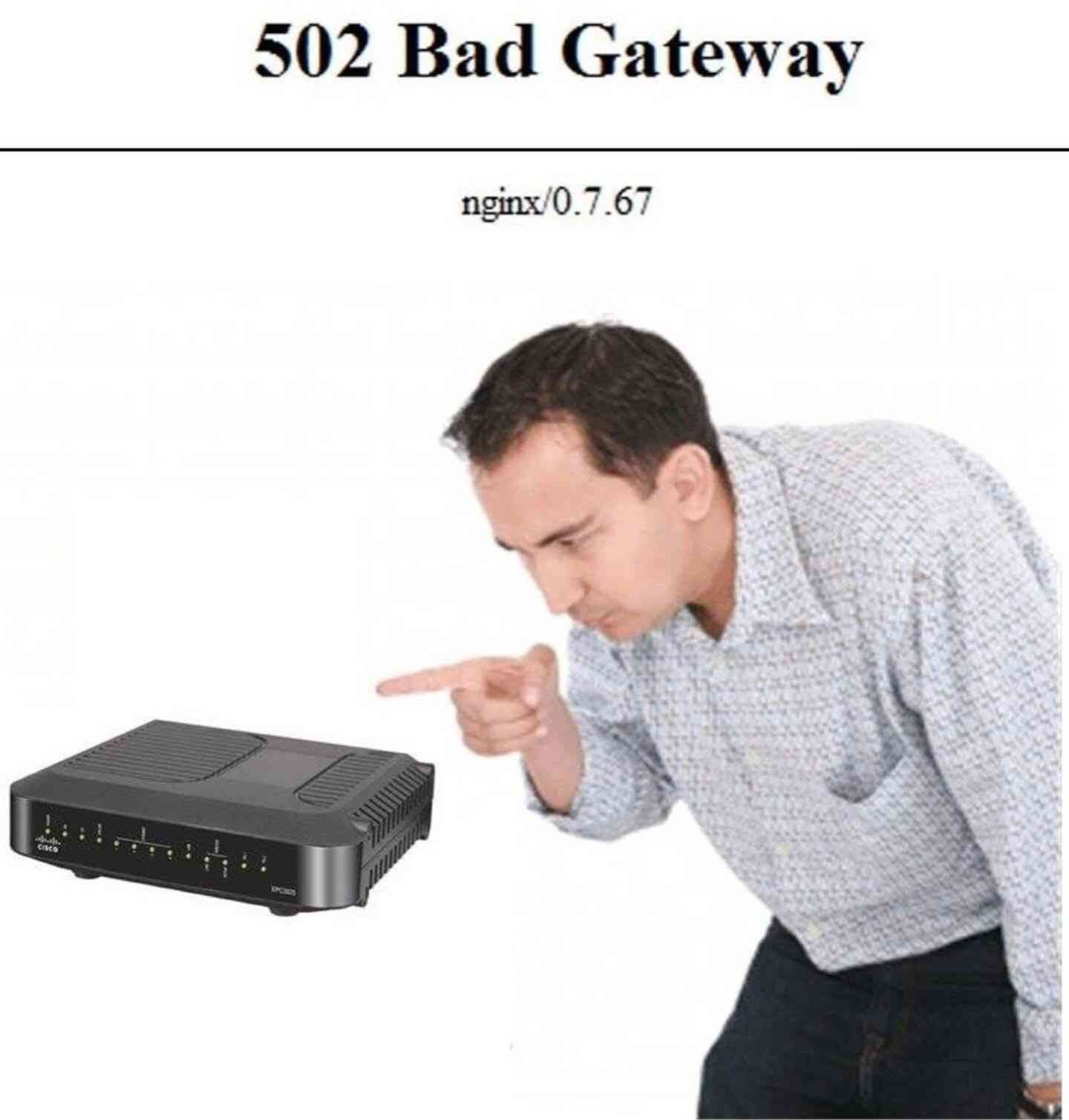
When your server throws a 502 Bad Gateway error, you know exactly who to blame. It's not the application server, it's not your code, it's that smug little network gateway sitting there pretending it did nothing wrong. The fury of a thousand suns directed at a piece of hardware that's just... forwarding packets. Or not, apparently. The best part? The title says 503 but the error is 502, which is peak developer energy—can't even get the error code right when complaining about errors.

Create New

Create New
You know that feeling when you're being all romantic and supportive with your partner, and then they hit you with a "201 Created" status code? Yeah, that's the HTTP response that tells you a new resource was successfully created on the server. So basically, you're out here being a wholesome boyfriend, and she just casually drops that she's pregnant. The smile-to-panic pipeline has never been more accurately documented. REST APIs and relationship anxiety—name a more iconic duo, I'll wait.

404: Room Not Found

404: Room Not Found
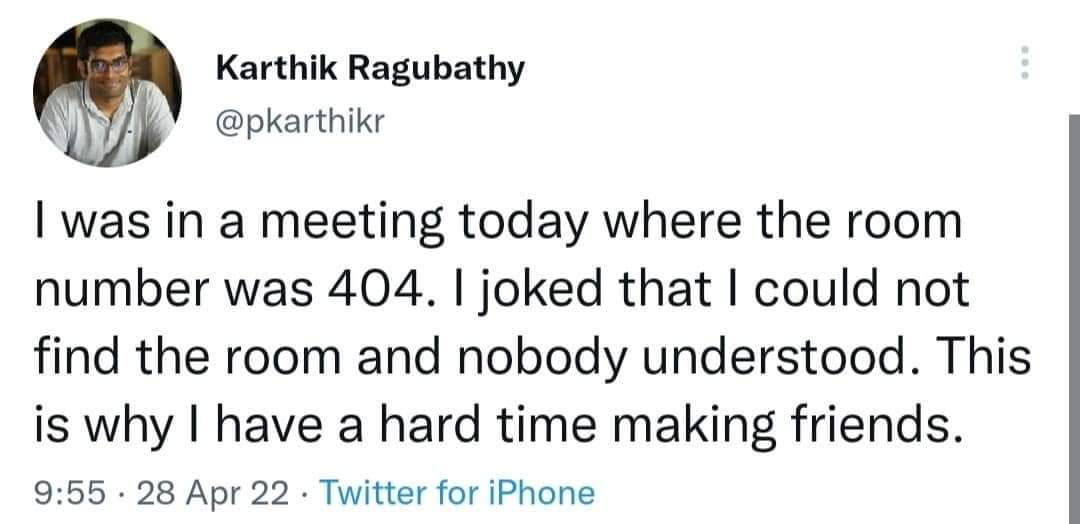
Making a 404 joke in real life and getting blank stares is basically the developer equivalent of showing up to a party in a costume when it's not a costume party. You think you're being clever, everyone else thinks you're weird. The brutal truth is that HTTP status codes are our inside language, and normal people don't spend their days debugging why resources can't be found. They just... go to room 404. Like normal humans. Meanwhile, we're over here dying inside because we've seen that error message approximately 47,000 times this week alone. Pro tip: Save your nerd jokes for Slack. Your coworkers in marketing don't care about your HTTP humor, and that's probably why you're eating lunch alone.

GK GAMAKAY Silicone Keyboard Wrist Rest, Soft Ergonomic Wrist Rest, Relax Your Wrist, for Laptop Computer Office & Home (Black-85%)

GK GAMAKAY Silicone Keyboard Wrist Rest, Soft Ergonomic Wrist Rest, Relax Your Wrist, for Laptop Computer Office & Home (Black-85%)
GK GAMAKAY Silicone Keyboard Wrist Rest, Soft Ergonomic Wrist Rest, Relax Your Wrist, for Laptop Computer Office & Home

Denied Access Is Funnier With 418 Instead Of 403

Denied Access Is Funnier With 418 Instead Of 403
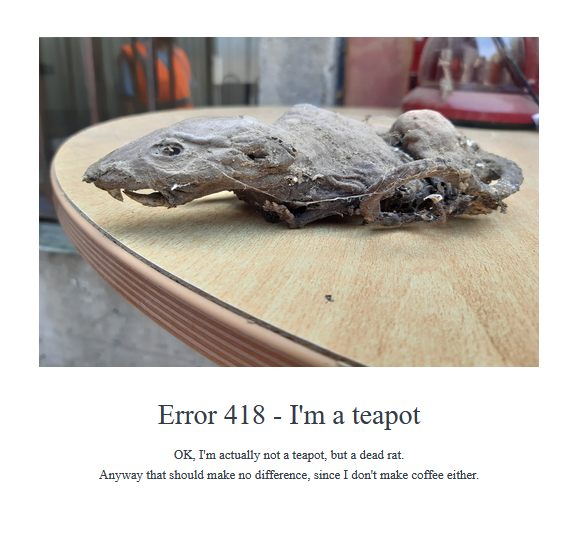
So someone decided to return HTTP 418 "I'm a teapot" for access denial, and honestly? Chef's kiss. Instead of the boring old 403 Forbidden, you get a dead rat explaining it's actually not a teapot, just deceased, and therefore can't brew coffee anyway. For context: HTTP 418 was created as an April Fools' joke in 1998 as part of the "Hyper Text Coffee Pot Control Protocol." It's meant to be returned by teapots when you try to brew coffee with them. Some devs actually implement it in production APIs as a playful easter egg or, apparently, as the world's most passive-aggressive access denial message. The rat's logic is flawless though: "I don't make coffee either" is technically a valid reason to return 418. Who needs proper HTTP semantics when you can confuse attackers and make your logs infinitely more entertaining? Security through absurdity is underrated.

Status Codes Cortisol Level

Status Codes Cortisol Level
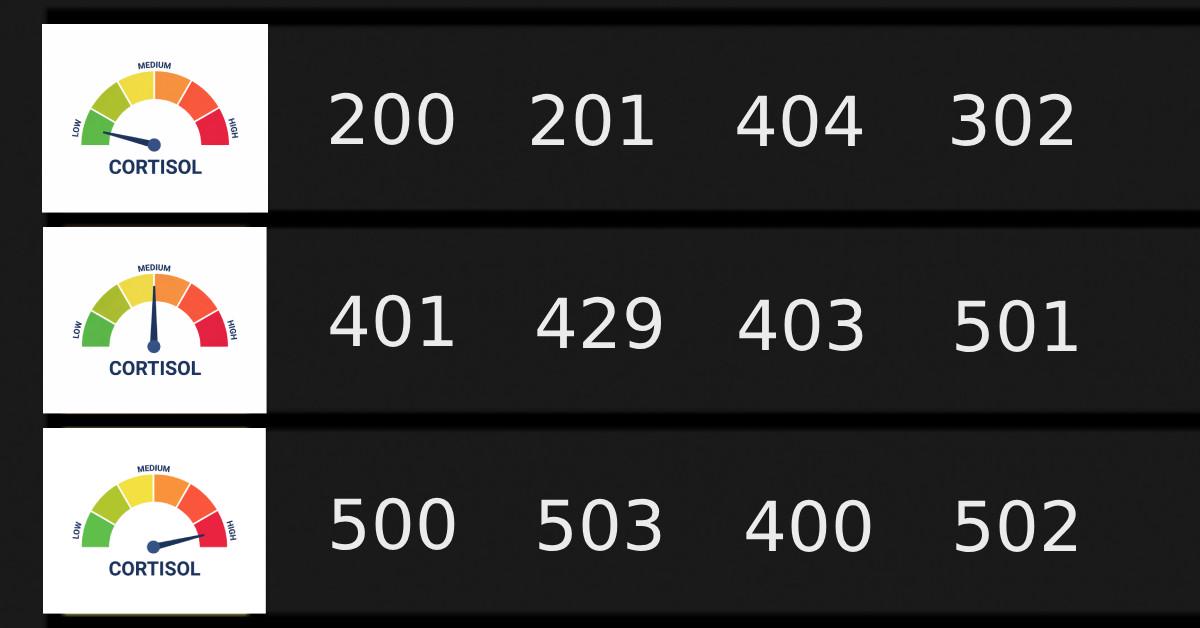
Your body's stress response mapped to HTTP status codes is painfully accurate. 200s and 404? Whatever, just another Tuesday. But those 4xx client errors and especially the 5xx server errors? That's when your heart rate spikes and you start questioning your career choices. Notice how 404 is basically chill - it's not your fault the user can't type a URL correctly. But 500? 503? That's YOUR code burning down in production while users are screaming and your phone won't stop buzzing. The 429 (Too Many Requests) sitting at medium stress is chef's kiss - you're getting hammered but at least your rate limiting is working as intended. The real kicker is 302 being low stress. Redirects just work, they're the reliable friend in the HTTP status family. Meanwhile 501 (Not Implemented) is maxing out because someone just discovered a feature you promised six months ago that doesn't actually exist yet.

Status 418

Status 418
Someone decided HTTP needed more personality, so they created status code 200 OK. You know, for when things actually work. The sheer audacity of letting users send a simple "I'm fine" response when we've got a perfectly good arsenal of error codes sitting unused. Meanwhile, we're out here with 418 I'm a teapot—an actual RFC standard from an April Fools' joke that refuses to die. It was supposed to be a gag about coffee-pot protocols, but it's still in the spec 25 years later because the internet has commitment issues with its jokes. The real kicker? We have status codes for "I'm a teapot" and "payment required" (which nobody uses), but apparently we needed to formalize "yeah everything's cool" too. Standards committees work in mysterious ways.

Going To The Supermarket Be Like

Going To The Supermarket Be Like
When you've spent enough time dealing with HTTP status codes, you start seeing them everywhere. Slot 404 is empty? Of course it is—resource not found. Classic. The fact that 403 and 405 still have drinks just makes it funnier because your brain immediately goes "forbidden" and "method not allowed" instead of just thinking "oh, they're out of Sprite." You know you're too deep in the backend trenches when a missing soda bottle at the grocery store triggers your API debugging instincts. Normal people see an empty shelf. We see error codes. This is what happens when you've written too many REST APIs and not touched grass in a while.

Introducing Http 402

Introducing Http 402
HTTP 402 "Payment Required" has been reserved since 1997 but never actually implemented. It's been sitting there for decades like that gym membership you keep meaning to use. Now someone's finally suggesting we dust it off to nickel-and-dime users one cent per download. The cat rolling in cash perfectly captures how every SaaS founder would react to this becoming standard. Forget subscriptions—imagine charging micropayments for every API call, every download, every breath your users take. It's the ultimate monetization fantasy. Fun fact: HTTP 402 was originally intended for digital payment systems but got shelved because nobody could agree on how to implement it. Turns out the real payment required was the standards committee meetings we attended along the way.

Git Commit Push Pray - Version Control Joke Ceramic Mug, Orange/White

Git Commit Push Pray - Version Control Joke Ceramic Mug, Orange/White
11-ounce ceramic mug is dishwasher and microwave-safe, lead and BPA free · Features glossy finish with accent colors on interior, handle, and rim of two-tone designs