


firefox Memes

Fox It

Fox It
A literal fox breaking into someone's house through a window? Yeah, that tracks for Windows security. Firefox finding yet another vulnerability in Microsoft's OS is basically a Tuesday at this point. The visual pun is chef's kiss – nothing says "security breach" quite like wildlife physically entering your home through an unsecured opening. At least the fox had the decency to use the window instead of a zero-day exploit.

HTML5 Accelerator Card

HTML5 Accelerator Card
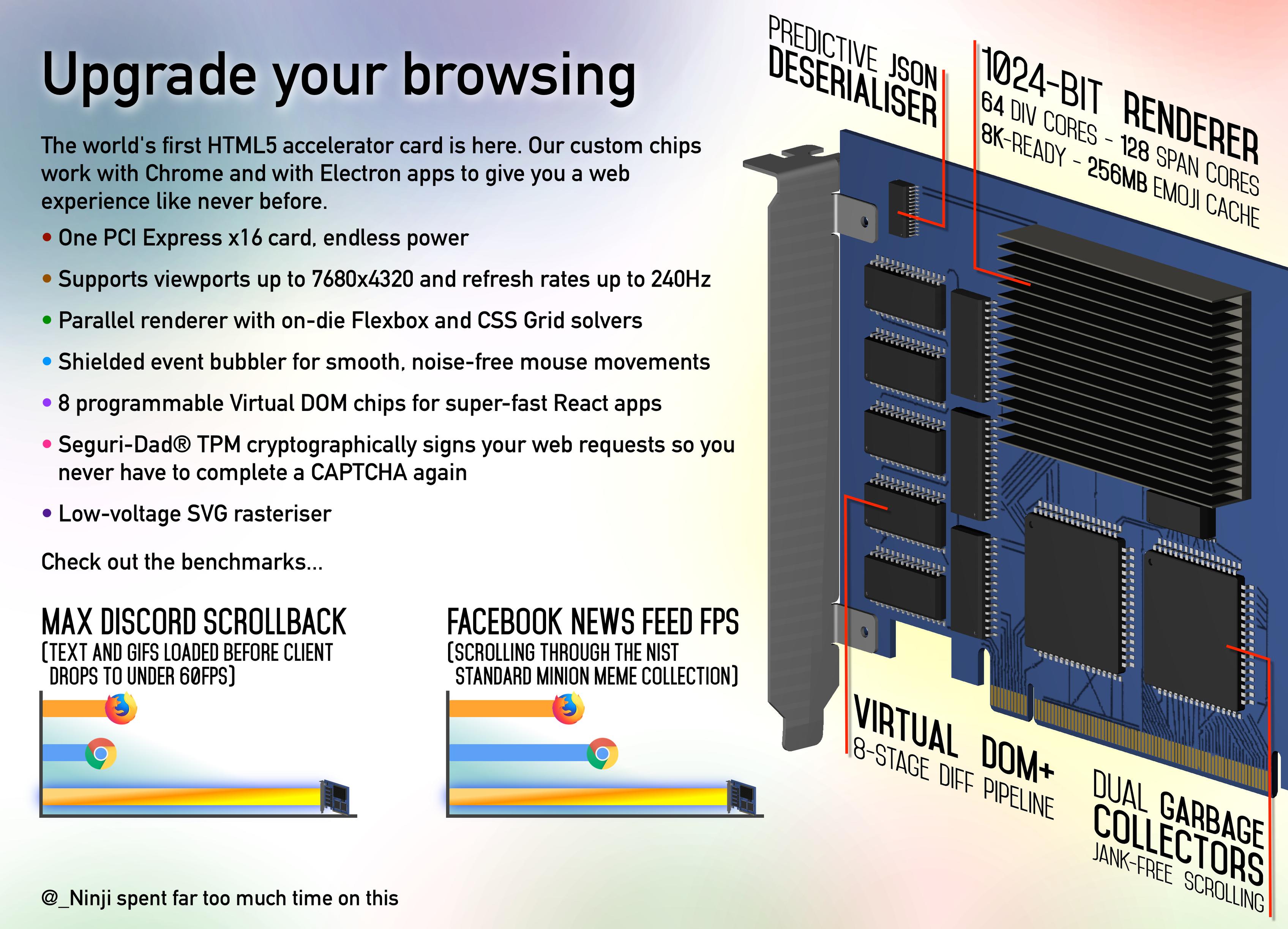
Someone made a hardware accelerator card for HTML5 rendering and honestly, the specs are sending me. We've got dedicated chips for Flexbox and CSS Grid solvers because apparently those need hardware acceleration now. There's a "shielded event bubbler" for mouse movements and "8 programmable Virtual DOM chips" for React apps. The benchmarks show it crushing Discord scrollback and Facebook feeds—you know, the real performance metrics that matter. The "Seguri-Dad® TPM" that cryptographically signs requests so you never see another CAPTCHA again is chef's kiss. And naturally it features dual garbage collectors with "jank-free scrolling" because we're treating JavaScript memory management like it's a graphics pipeline now. The fact that someone spent actual time designing this parody card with a 1024-bit renderer and 256MB emoji cache is both concerning and impressive. The benchmarks comparing Firefox and Chrome with what appears to be a literal GPU bar graph really drives home how bloated modern web development has become. We went from static HTML pages to needing theoretical dedicated hardware just to scroll through minion memes at 240Hz.

If We Just Vibe Coding Major Software Replacements Maybe It's Time To Revive This Masterpiece

If We Just Vibe Coding Major Software Replacements Maybe It's Time To Revive This Masterpiece
You know what? If we're out here casually rewriting entire operating systems in Rust and rebuilding browsers from scratch, maybe we should bring back Netscape Navigator. That ship's wheel logo was peak web design, and honestly, the browser wars never recovered from its loss. The nostalgia is real here—Netscape Navigator was THE browser that brought the internet to the masses in the '90s before Internet Explorer came along and... well, we all know how that story goes. But in today's world where devs are like "let's just rewrite everything in Rust for fun," maybe resurrecting a 90s browser isn't the wildest idea. We've already got Firefox (which is literally Netscape's spiritual successor), but imagine the memes if we actually brought back the OG with modern web standards support. The ship's wheel logo is calling to us from the depths of software history. Time to set sail again? ⛵

At Least Someone Took A Step

At Least Someone Took A Step
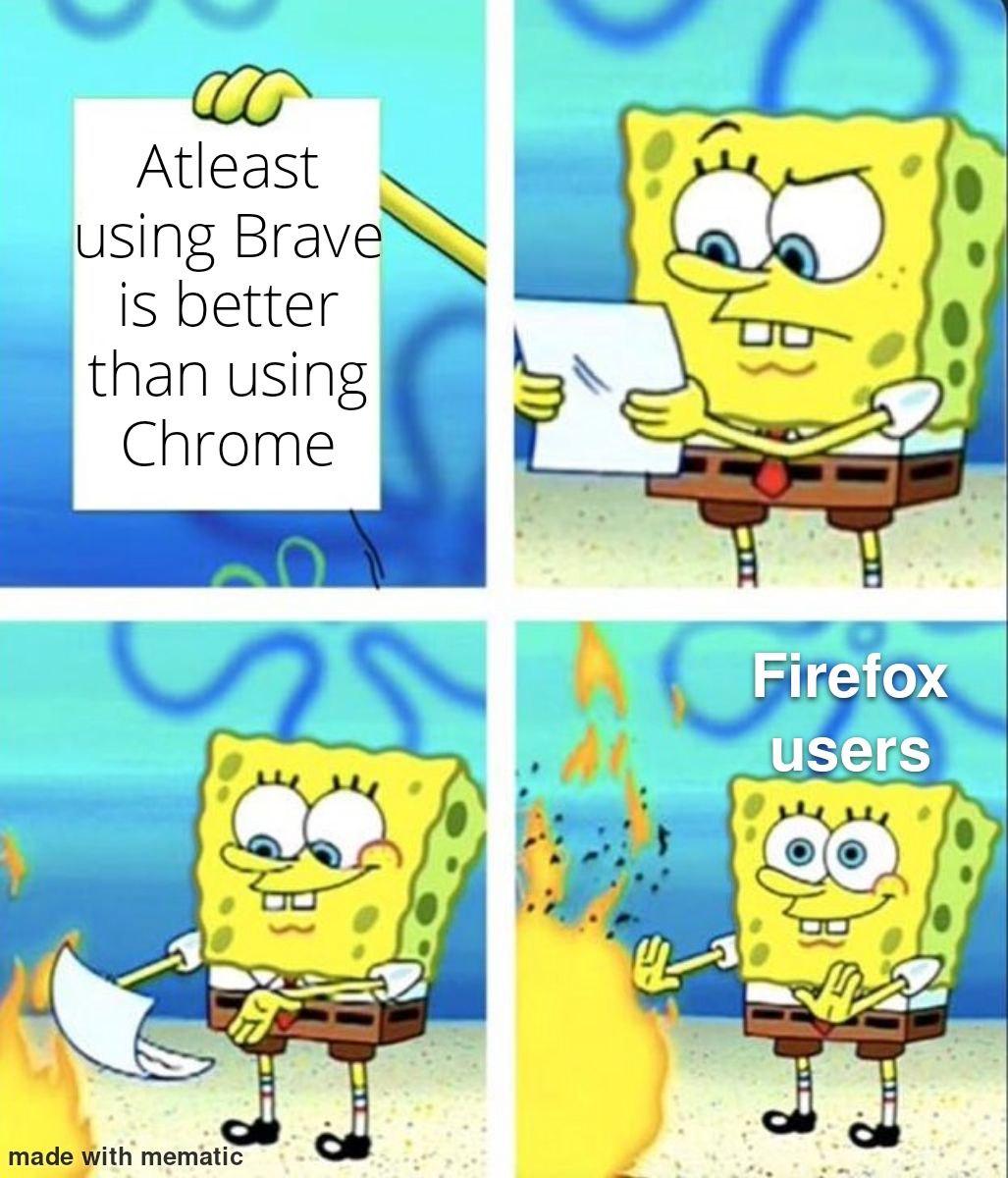
Chrome users reading "use Brave instead of Chrome" with mild interest, then watching in horror as Firefox users spontaneously combust from pure rage. Nothing triggers Firefox loyalists quite like someone suggesting Brave as the Chrome alternative instead of their beloved fox. They've been fighting the good fight against Chrome's monopoly for years, and here comes Brave waltzing in with its Chromium-based engine getting all the credit. It's like watching someone recommend a cover band when the original artist is standing right there. The real kicker? Brave is literally built on Chromium, so you're basically just switching from Google's surveillance capitalism to... a different flavor of the same engine. Firefox users have been screaming into the void about browser diversity and here we are, patting Brave on the back for being Chrome with ad-blocking.

Firefox Is The Key

Firefox Is The Key
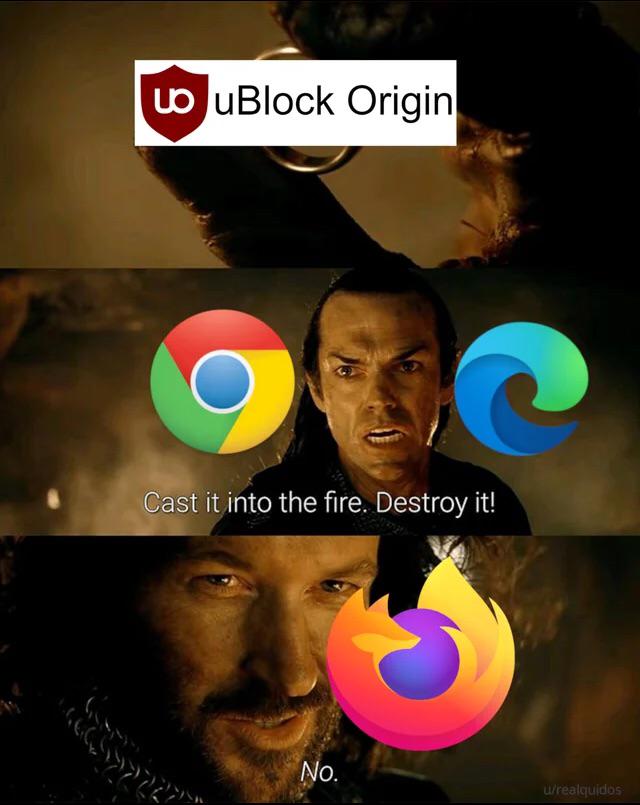
The privacy-conscious dev's holy trinity right here. uBlock Origin is treated like precious treasure while Chrome and Edge get the Mordor treatment they deserve. Firefox stands there like the last bastion of hope, refusing to be thrown into the fire. And honestly? Valid. While Chromium-based browsers are speedrunning the death of Manifest V2 and neutering ad blockers into glorified suggestion boxes, Firefox is out here still letting uBlock Origin flex its full power. Chrome's new Manifest V3 basically kneecapped proper ad blocking by limiting how extensions can intercept requests, but Firefox said "nah, we're good" and kept the good stuff working. It's 2024 and Firefox users are living in a parallel universe where the internet is still usable without being bombarded by seventeen auto-playing video ads.

Graceful Enough

Graceful Enough
Windows politely asks programs to shut down, sends WM_CLOSE messages, waits for cleanup routines, and gives applications time to save their state. Meanwhile, Linux just sends SIGKILL and yeeets processes into oblivion like they owe it money. Firefox with 47 tabs open? Gone. Unsaved work? Should've handled SIGTERM better, buddy. The penguin doesn't negotiate with terrorists—or hung processes. The image perfectly captures the energy: Windows is the diplomatic one trying to do things by the book, while Linux is straight up kicking Firefox off a cliff without a second thought. No mercy, no grace period, just pure kill -9 energy. And honestly? Sometimes that's exactly what you need when a process refuses to die.

Firefox

Firefox
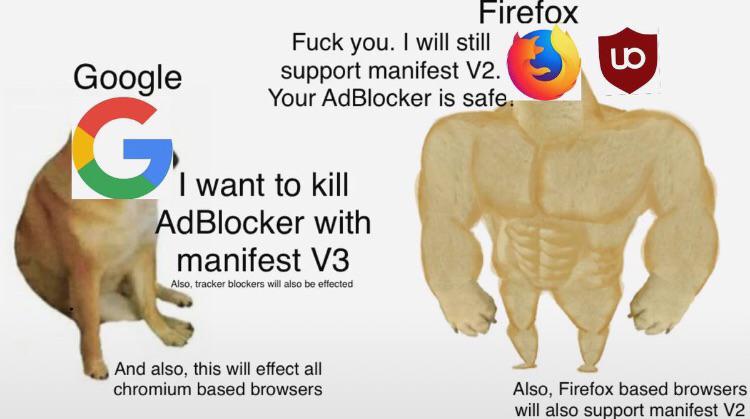
Google really said "let's nuke ad blockers for the good of... uh... security" with Manifest V3, basically crippling extensions like uBlock Origin because apparently protecting user privacy is just too much power for one browser. Meanwhile, Firefox is standing there like the last superhero in a dystopian movie, flexing its open-source muscles and refusing to bend the knee. They're keeping Manifest V2 alive like it's the sacred texts, ensuring your ad blocker stays strong and your browsing experience remains blissfully ad-free. The cherry on top? Google's changes don't just hurt ad blockers—they also mess with tracker blockers and affect ALL Chromium-based browsers (Edge, Brave, Opera, you name it). So while Chrome becomes the corporate sellout, Firefox is out here being the people's champion. The virgin corporate overlord vs. the chad privacy defender. Choose your fighter wisely.

Anker Prime TB5 Docking Station, 14-in-1 Thunderbolt 5 Dock for Laptops

Anker Prime TB5 Docking Station, 14-in-1 Thunderbolt 5 Dock for Laptops
14-in-1 Thunderbolt 5 Dock: Equipped with a Thunderbolt 5 upstream port, two Thunderbolt 5 downstream ports, two USB-C ports, three USB-A ports, SD and TF card readers, an AC input, a 2.5Gbps Etherne…

Say Goodbye To Ram

Say Goodbye To Ram
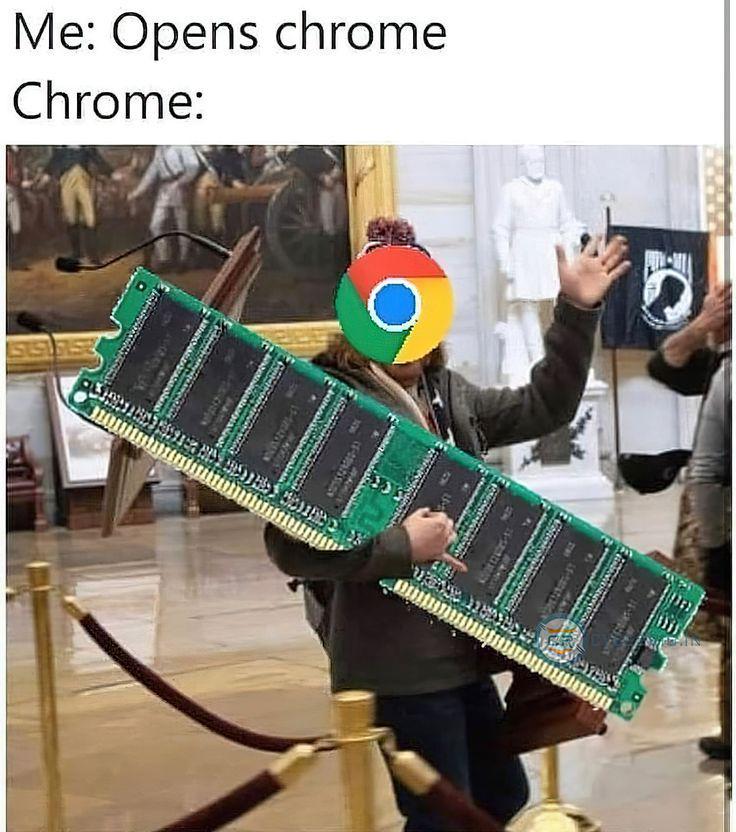
Chrome's appetite for RAM is legendary at this point. You open one tab to check your email and suddenly it's devouring memory like it hasn't eaten in weeks. Two tabs? Better upgrade to 32GB. Three tabs? Time to download more RAM. The beautiful irony is that Chrome was originally built to be lightweight and fast. Now it's basically a memory black hole that makes your $2000 machine sound like a jet engine taking off. Firefox users watching from the sidelines with their 8GB setups running just fine. Fun fact: Each Chrome tab runs in its own process for "security and stability," which is developer-speak for "we're gonna eat all your RAM and you're gonna like it." At least when it crashes, it only takes down one tab instead of your entire browsing session. Silver linings, right?

All Except For Firefox

All Except For Firefox
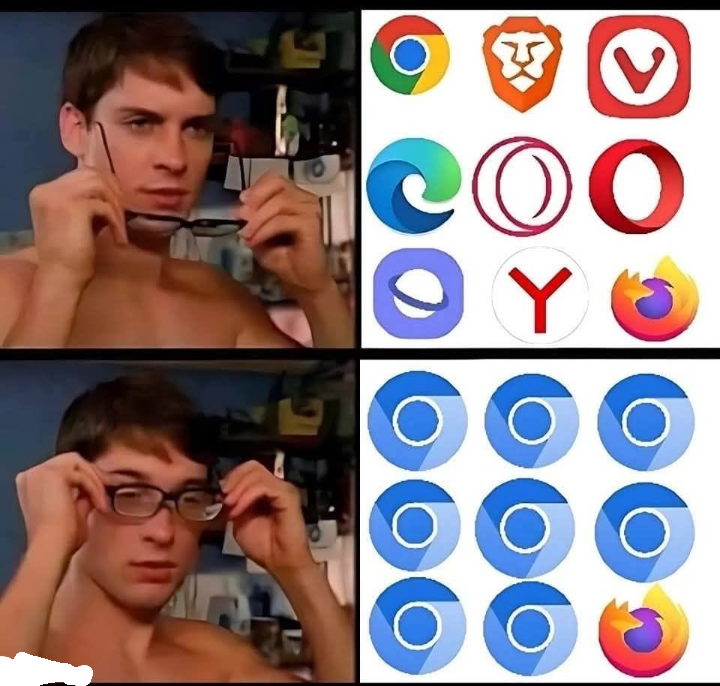
Top panel: squinting at a diverse browser ecosystem with Chrome, Brave, Vivaldi, Edge, Opera, and others. Bottom panel: putting on glasses only to realize they're all just Chromium in different costumes, with Firefox standing alone like the last Jedi. Google basically won the browser wars by open-sourcing Chromium and letting everyone build their "unique" browser on top of it. Edge? Chromium. Opera? Chromium. Brave? Chromium with crypto sprinkled on top. It's like going to a restaurant where every dish is just ramen with different toppings. Firefox remains the stubborn holdout with its Gecko engine, which is either admirable dedication to web standards diversity or digital masochism depending on how your latest CSS bug is going. Either way, Mozilla's out here fighting the good fight while the rest of us pretend our Chromium fork is "totally different."

Browsers In 1998, 2004, 2008 And 2026 Be Like

Browsers In 1998, 2004, 2008 And 2026 Be Like
The complete history of browser wars in five panels. Internet Explorer dominated so hard it got distracted by Netscape's corpse. Then Firefox showed up and IE suddenly remembered other browsers existed. Chrome entered the chat and Firefox became the side piece. Fast forward to 2026: Firefox is now the hot new thing again while Chrome sits there with its 47 background processes consuming 32GB of RAM wondering what went wrong. The final panel really sells it. Firefox rising from the ashes with that Thanos energy, basically telling Chrome "I am inevitable." Turns out killing off Manifest V2 and neutering ad blockers wasn't the galaxy brain move Google thought it was. Who knew users actually liked blocking ads? The cycle continues. Every dominant browser eventually becomes the villain long enough to see themselves replaced. Just ask Netscape. Or IE. Or... well, you get it.

There's Dozens Of Us

There's Dozens Of Us
Safari extension developers are basically the Arrested Development "dozens of us" meme in tech form. While Chrome and Firefox extension devs are living it up with millions of users, Safari extension folks are out here celebrating like they won the lottery when Apple throws them a bone at WWDC. The look of desperate hope mixed with existential dread really captures the energy of maintaining something for a platform where your user base could probably fit in a small conference room. But hey, at least Apple acknowledged your existence for 90 seconds during a keynote, right?

Ultimate Betrayal

Ultimate Betrayal
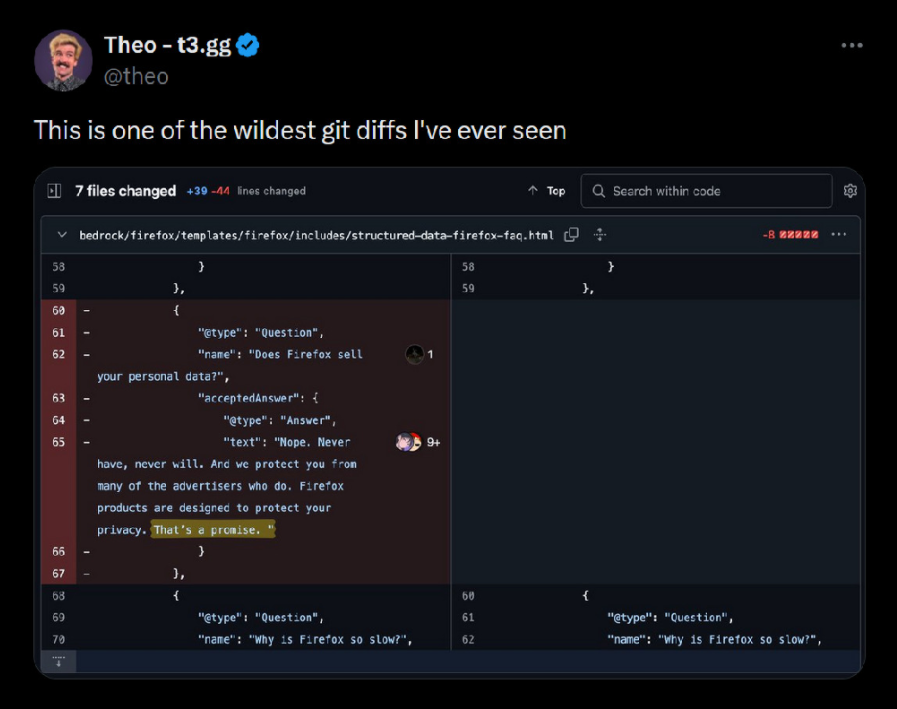
Firefox just nuked their entire "we protect your privacy" marketing campaign in one git diff. Someone deleted the FAQ answer that literally said "Nope. Never have, never will. And we protect you from many of the advertisers who do. Firefox products are designed to protect your privacy. That's a promise." And replaced it with... nothing. Just straight up removed the promise. That's like your partner deleting their "I'll love you forever" text messages while you're watching. The +39 -44 lines changed stat really tells the story here – they spent more effort removing promises than they did adding new features. The real kicker? This is in a file called structured-data-firefox-faq.html , so this wasn't some accidental commit. Someone consciously decided that privacy promise was... inconvenient. RIP the last browser we thought gave a damn.